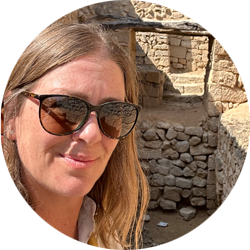
Dr Lynne Newton
Dr. Lynne Newton is an archaeologist, heritage specialist, and cultural historian whose work focuses on the archaeology, maritime culture, and cultural landscapes of Arabia and the Gulf, particularly the Sultanate of Oman.
She completed her PhD in Anthropology and Archaeology at the University of Minnesota in 2007. Her dissertation: A Landscape of Pilgrimage and Trade in Wadi Masila, Yemen: The Case of al-Qisha and Qabr Hud in the Islamic Period was published by Archaeopress in 2009.
Her research and field experience have explored the ways in which Oman developed as a crossroads of maritime and overland trade, linking Arabia with East Africa, Iran, South Asia, and the wider Indian Ocean world. Her work examines how geography, trade, and cultural exchange shaped the historical development of Oman and contributed to its enduring traditions and cosmopolitan identity.
Her academic and professional career has combined archaeology, museum curation, public history, tourism, and cultural diplomacy. Lynne co-directed six excavation seasons at the UNESCO World Heritage site of Al Baleed in Salalah, the medieval port city historically known as Zafar, contributing to archaeological research on one of the most important centers of the frankincense trade. Her fieldwork focused on the maritime and commercial networks that connected Dhofar to India, East Africa, the Persian Gulf, and the Mediterranean world through the movement of frankincense, horses, ceramics, and luxury goods. This long-term work at Al Baleed provided extensive experience with the archaeology of ports, trade systems, Islamic urbanism, and the cultural exchanges that shaped southern Arabia. She also conducted regional multi-period archaeological surveys in Dhofar to better contextualize the better-known port sites.
Lynne also served as Curator of Maritime History at the National Museum of Qatar, where she worked on the interpretation and presentation of Qatar’s maritime heritage, pearling traditions, seafaring culture, and Indian Ocean connections. Her museum work further strengthened her interest in the ways maritime communities across the Gulf and Arabian Sea preserved cultural traditions while participating in global networks of trade and exchange.
In addition to her archaeological fieldwork, Lynne has traveled extensively throughout Oman and the wider Middle East, studying the historical landscapes, coastal settlements, fortified towns, and cultural traditions that continue to define the region today. Her interests include maritime archaeology, Islamic history, ancient trade routes, and the relationship between environment and settlement across Arabia. She has a particular interest in Oman’s role as a seafaring nation and in the ways maritime traditions continue to shape communities from Musandam and Sur to Dhofar and the Indian Ocean coast.
Lynne’s publications and public presentations have explored themes including the archaeology of the frankincense trade, medieval maritime networks, cultural heritage interpretation, and the importance of Oman within broader regional and global histories. Her work frequently bridges scholarship and tourism, helping travelers and public audiences better understand the historical depth and cultural significance of the places they visit. Through lectures, presentations, and guided programs, she has interpreted archaeological sites, museums, forts, souqs, and cultural landscapes across Oman, with particular emphasis on UNESCO World Heritage sites including Al Baleed, Khor Rori, and Shisr.
Alongside her archaeological and heritage work, Lynne has extensive experience in municipal cultural affairs and diplomacy, international friendship initiatives, and public engagement projects. She is committed to fostering cross-cultural understanding through history, heritage, and storytelling, and she is passionate about making the archaeology and history of Arabia accessible to broader audiences. Her work emphasizes the enduring importance of Oman as a meeting place of peoples, ideas, and trade routes, a legacy that remains visible today in the country’s architecture, maritime culture, religious traditions, and diverse communities.
Professional Affiliations
- American Alliance of Museums
- New Mexico Association of Museums
- International Association for the Study of Arabia
- Middle East Studies Association
Academic Fellowships, Awards, Honors
- Fulbright-Hays Fellow, Sultanate of Oman, with 3 month extension, 2005 – 2006
- Foreign Language and Area Studies Fellow. Arabic. University of Chicago, 2005
- Visiting Scholar, Claremont Graduate School, Claremont, CA, 2000
- NMERTA Fellow, Arabic. American Institute for Yemeni Studies, Sana‘a, 2000
Books
- Ancient Zafar (Al-Baleed): An Historical and Archaeological Assessment. 2 Volumes. In preparation.
- Dhofar Through the Ages: An Ecological, Archaeological, and Historical Landscape. The Archaeological Heritage of Oman, Vol. 1, Ministry of Heritage and Culture: Muscat. With J. Zarins, 2017.
- Atlas of the Archaeological Survey in the Governorate of Dhofar, Sultanate of Oman. Officer of the Advisor to His Majesty the Sultan for Cultural Affairs: Muscat. With J. Zarins, 2012.
- A Landscape of Pilgrimage and Trade in Wadi Masila, Yemen: The Case of al-Qisha and Qabr Hud in the Islamic Period. British Archaeological Reports (BAR) International Series S1899. Archaeopress: Oxford, 2009.
Book Chapters
- Islamic Period Maritime Trade and Travel along the Southern Arabian Coasts of the Indian Ocean: The Case for Socotra, the Hallaniyat, Masirah and Mahut Islands. In: Studies on Ibadism and Oman. The Ports of Oman (Vol. 10). Edited by A. Al Salimi and E. Staples, pp. 89-116. Georg Olms Verlag: Hildesheim. With J. Zarins, 2017.
- Northern Indian Ocean Islamic Seaports and the Interior of the Arabian Peninsula. In: Studies on Ibadism and Oman: The Ports of Oman (Vol. 10), Edited by A. Al Salimi and E. Staples, pp. 57-88. Georg Olms Verlang: Hildesheim. With J. Zarins, 2017.
Refereed Journal Articles
- The ‘Triple R’ Approach on the Restoration of Archaeological Dry Stone City Walls: Procedures and Application to a UNESCO World Heritage Site in Oman, Conservation and Management of Archaeological Sites. 19/2:106-125. With M. Sassu and J. Zarins, 2017.
- A Possible Indian Quarter at al-Baleed in the Fourteenth-Seventeenth Centuries AD? Proceedings of the Seminar for Arabian Studies, 44:257-276. With J. Zarins, 2014.
- Shrines in Dhofar. In: L. Weeks, ed., Proceedings of Death, Burial and the Transition to the Afterlife in Arabia and Adjacent Regions, pp: 329-340. Society for Arabian Studies Monograph No. 10. Archaeopress: Oxford, 2010.
- Preliminary Results of the Dhofar Archaeological Survey, 2008-2009. Proceedings of the Seminar for Arabian Studies, 40:247-266. With J. Zarins, 2010.
- Al Qisha: Archaeological Investigations at an Islamic Period Yemeni Village. Proceedings of the Seminar for Arabian Studies, 37:171-186, 2007.
- Aspects of Bronze Age Art of Southern Arabia: The Pictorial Landscape and its Relation to Economic and Socio-Political Status. Arabian Archaeology and Epigraphy, 11:154-179. With J. Zarins, 2000.
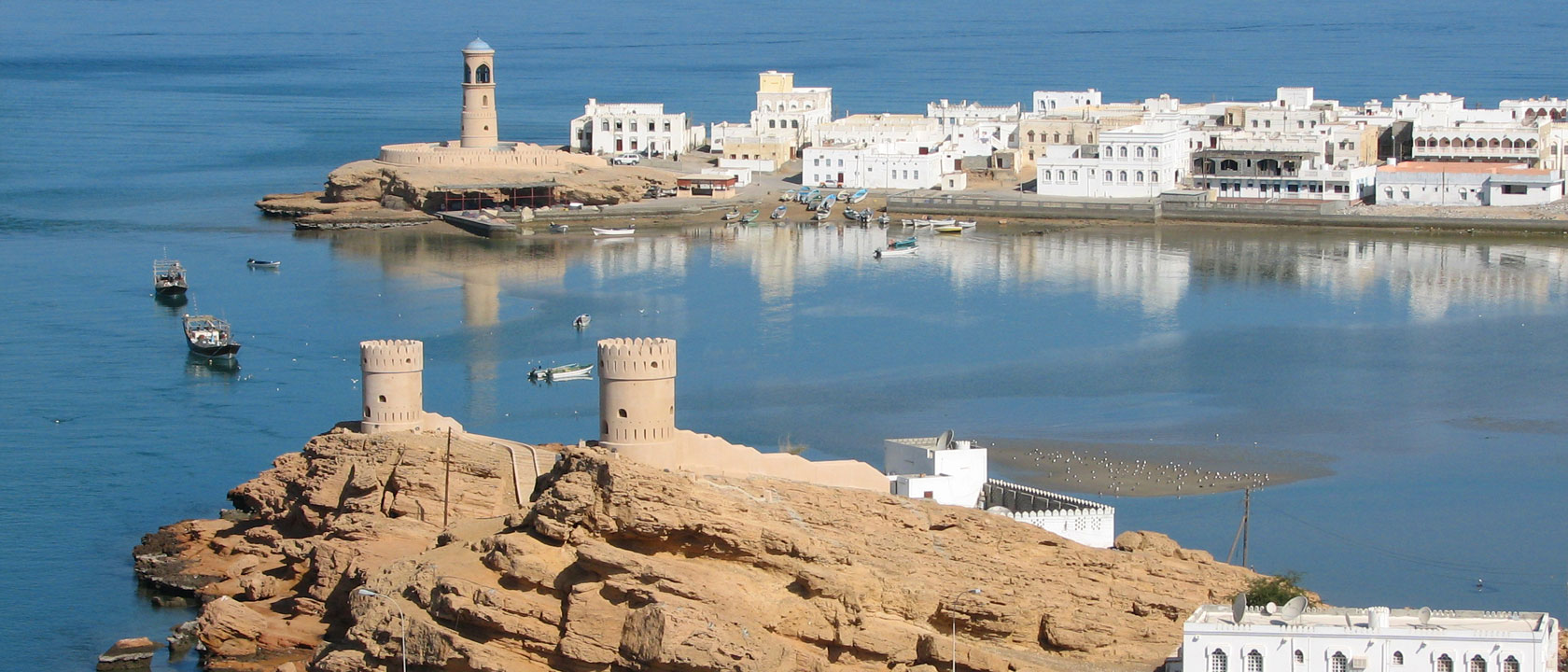 Oman: Arabia’s Ancient Emporium 2027