Hekate: A Transformational Journey from Carian Great Goddess into the Mistress of Magic, Witchcraft, Ghosts, and Crossroads
By Dr Christopher A. Tuttle
“…by the names of triple-form Hekate, the tremor-bearing, scourge-bearing, torch-carrying, golden-slippered-blood-sucking-netherworldly and horse riding one. I utter to you the true name that shakes Tartarus, earth, the deeps and heaven…” – from a curse tablet, in Sorita d’Este, Circle of Hekate – Volume I: History & Mythology (2017), p. 262.
A wide host of deities ruled the cosmos for the ancient peoples living around the Mediterranean Sea. Details for many of these gods and goddesses, about the realms they ruled and the powers they wielded, are largely lost to us today. From indigenous sources, we often get only glimpses of these early spiritual worlds based on what is preserved in the archaeological record, perhaps through a scattering of iconography preserved in decorative arts or by names, either written in inscriptions or recorded in historical events. In many cases what we do learn about these early deities comes to us from external sources, such as the extensive literature produced by the later Greeks and Romans. Helpful as these sources can be, it must be understood that external accounts can also be misleading, obfuscating, and even play active roles in reshaping these earlier deities into new beings that fit within the authors’ own worldviews rather than depicting them as they were originally.
The goddess Hekate (Hecate) is a splendid example of this phenomenon. She is thought to have originated in the southeastern region of Asia Minor (modern Türkiye) and was a Great Goddess for the people who would become the Iron Age kingdom of Caria. Although a variety of theories exist, we do not actually know when Hekate first manifested or by what name and epithets she was natively called, but we do have some suggestions that she may have been closely associated with child-rearing. Our name of Hekate comes to us from Greek sources, from the word hekatos meaning ‘worker from afar’, which may reflect more on the role she would come to play in Greek mythology rather than who and what she represented to the Carians.
The first Greek writing about Hekate is in Hesiod’s Archaic period epic 1,022 line poem Theogony (ca. 730-700 BCE), in which his “Hymn to Hekate” devotes some 40 lines (lines 411-452) to praising the goddess. No other deity except Zeus (the leader of the Olympian Pantheon) receives as much attention. Hesiod tells us that Hekate is a pre-Olympian goddess, daughter of the Titans Perses and Asteria, and that she was granted “A share of the earth as her own, and of the barren sea. / She has received a province of the starry heaven as well… / She has a share of the privileges of all the gods (lines 415-416, 423-424).” In Greek accounts when the rising Olympian deities defeated the preceding Titans, they locked them away in a hellish underworld place called Tartarus. Hesiod recounts, however, that Hekate was the sole Titan spared this fate and that she was not only allowed to keep her existing titles and honors but was also bestowed with additional ones by the new ruling god, Zeus. We are told that she was an essential intermediary between the mortal and heavenly realms for eight specific groups of people: kings, warriors, cavalrymen, athletes, herdsman, fishermen, participants in sacrificial rituals, and kouroi/korai (pubescent youths transitioning to adulthood). Regarding her role in interceding on behalf of kouroi/korai, Hesiod twice grants her the title of kourotrophos (protector of youths); he gives this title to none of the Olympian goddesses in the poem, so this may hearken back to one of Hekate’s original roles as a Carian great goddess.
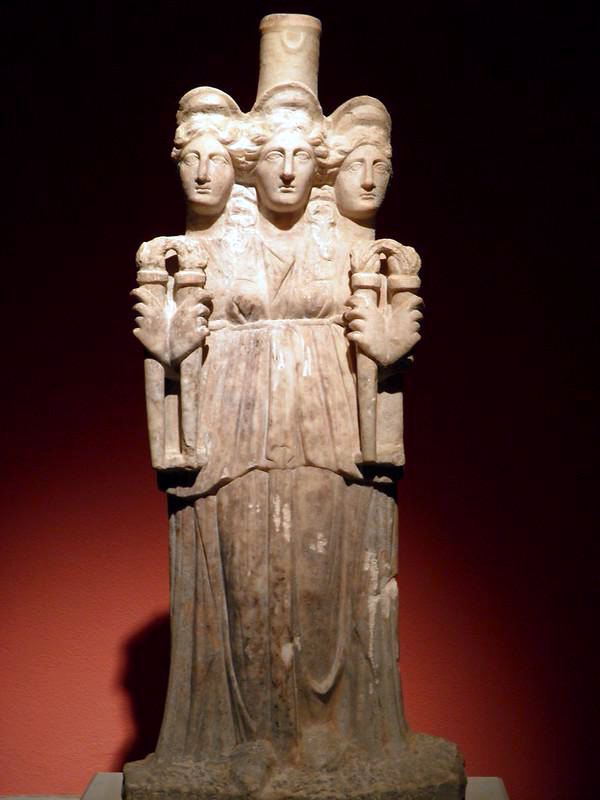
In his second epic poem Works and Days, Hesiod lays the foundation for Hekate becoming a goddess of the liminal places and circumstances in the world, and an aide to people undergoing transitions. In this poem he elaborates on some of her roles in protecting households and supporting humans in their domestic lives and daily labors, especially for agriculture and animal husbandry–both essential livelihood endeavours that were subject to liminality, being dependent on uncontrollable forces such as the weather or disease. Hesiod encourages people to make offerings to Hekate at dawn and dusk–notable daily, transitional boundaries, or thresholds, that are implicitly cyclical symbols of passage.
In the following centuries we find she is granted a wide range of epithets that reflect these aspects of her power; among others, these titles include ‘key-bearer’ (Kleidouchos), ‘of the ways’ (Enodia), ‘light-bearer’ (Phosphoros), ‘of the three ways’ (Trioditis), ‘before the gates’ (Propylaia), ‘companion’ (Propolos), ‘saviour’ (Soteira), and ‘torch-bearer’ (Dadouchos). Quite a few of her titles become linked to Hekate as her worship spread across the Greek world and she gets associated with other regional goddess, such as the Thracian goddess of childcare, Enodia or Thessalian goddess of witchcraft, Einodia.
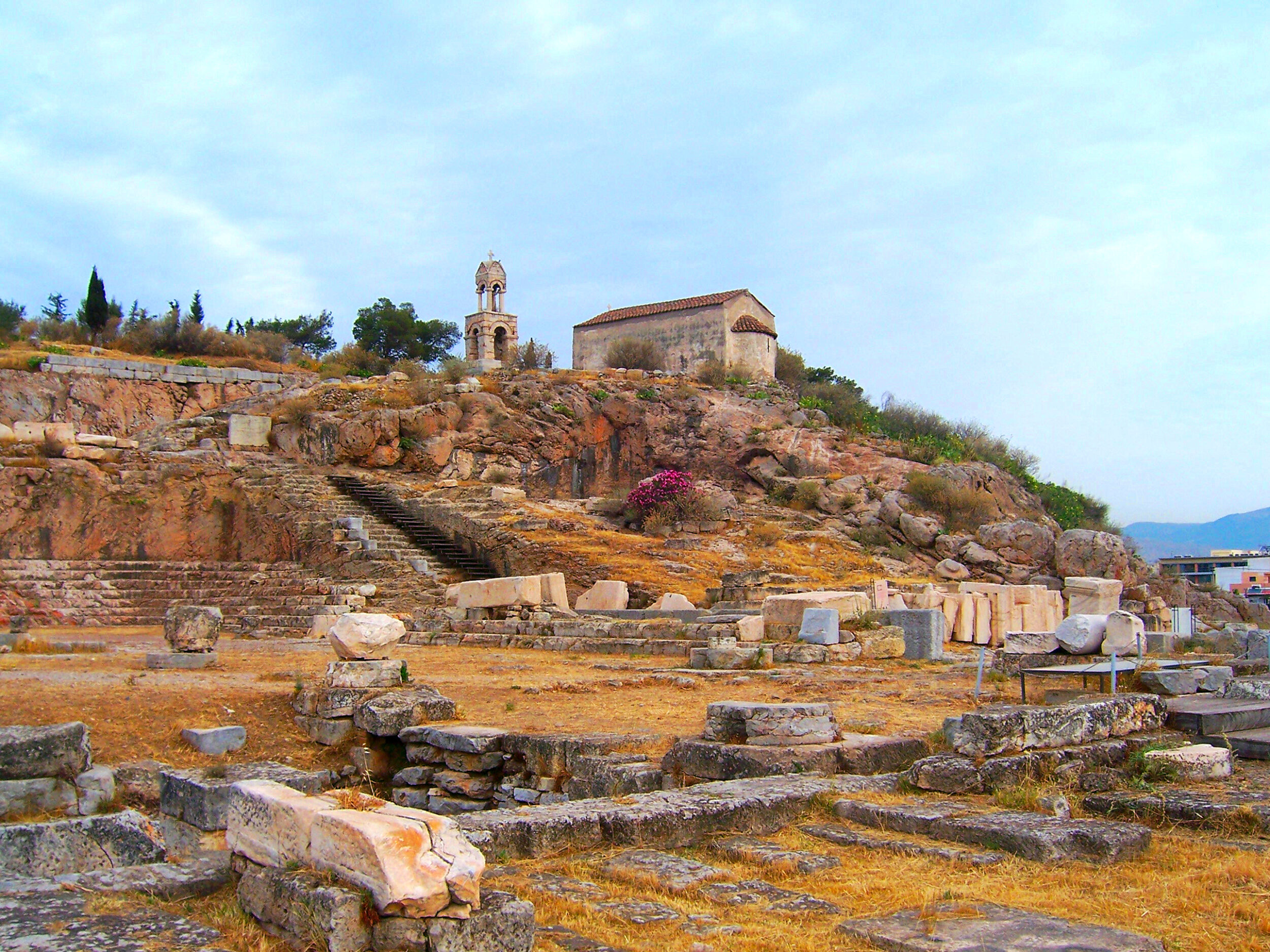
The next step in Hekate’s own transformation in the world of the Olympian pantheon takes place about a century after Hesiod’s poem. She is given a pivotal role in the story of Persephone’s abduction by Hades into the underworld in the so-called “Homeric” Hymn to Demeter, which is thought to have been written down somewhere in the period between 650-550 BCE. Following the abduction of her daughter, the Olympian goddess Demeter searches for her throughout the dark places of the world with the assistance of Hekate who carries torches to light their way. At the end of the story when Zeus decrees that she must spend the winter months each year ruling in the underworld beside her husband Hades, Hekate the ‘torch-bearer’ goes with her as her attendant. This annual journey to and from Hades begins Hekate’s explicit role as an intermediary to assist with the transition between life and death. Because of her role in this myth, she would later be added as central figure to the famed Eleusinian Mysteries, joining the original goddesses Demeter and Persephone of the older iteration of the mysteries that began in the Bronze Age. She even received her own temple at the site of Eleusis. The exact nature of what was experienced by the celebrants in this ‘mystery cult’ remains a mystery. It is thought by many to have entailed some form of religious experience that mirrored the journey to and from the underworld, and that Hekate (with her torches) was likely the figure who functioned as the celebrants’ escort (psychopompos). Her transformation to being seen as a goddess between the lands of the living and the dead was well underway.
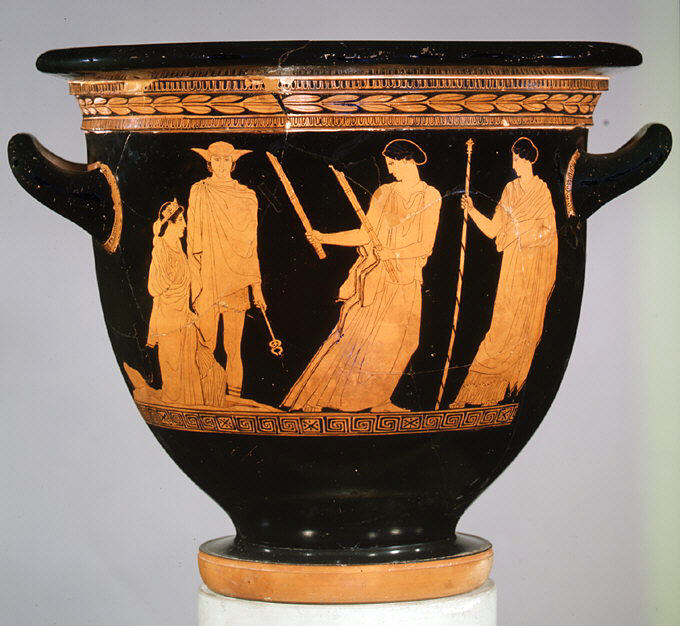
Hekate’s associations with crossroads, magic, witchcraft, and different types of undead figures were greatly elaborated upon by numerous authors during the Greek Classical (ca. 500-323 BCE) and Hellenistic (323-30 BCE) periods. The classical playwrights Sophocles and Euripides both played major roles in transitioning attention toward Hekate’s darker aspects, leaning heavily into the dramatic elements of her links to magic, witchcraft, and particularly the Keres, female deities linked to violent deaths and battlefields. Euripides’ Medea and the later 3rd century BCE Hellenistic Argonautika by Apollonius Rhodius are particularly influential in evoking many of the goddess’s darker aspects, as it is through Hekate that Medea is said to have derived her powerful magic and witchcraft.
This trend to emphasise Hekate’s identity as the goddess of magic, witchcraft, and the realm of the undead persisted in subsequent centuries. She is linked to numerous ‘secret societies’ throughout Late Antiquity and the European Medieval period. Perhaps the most famous instances of Hekate as the goddess of witches appear in the Early Modern period, in Shakespeare’s A Midsummer Night’s Dream (1594-1596) and Macbeth (1605).
In more recent eras, the development of the Neopagan and Wicca religious traditions have seen some efforts to rehabilitate Hekate’s image, with attempts to evoke her Great Goddess aspects as well as her aspects of magic and witchcraft. In these modern traditions, she is often viewed as the wise, elderly aspect for the Triple Goddess image of ‘maiden’, ‘mother’, and ‘crone’.
Of all the goddesses in the vast world of Graeco-Roman mythology, few can be said to be as complicated as Hekate. She is both a great protector and a great threat. This duality is, however, essential to understanding her attraction. She can be both and thus can serve many roles in the lives of the people who worshipped her. It is important to recall that she was given some authority over all three realms of the world: earth, sea, and sky. This universality is her power. “[Hekate] was a liminal goddess who was present at all the boundaries and transitional moments in life. She was also an apotropaic (‘evil-averting’) protector and guide…. [Her] triple form emphasized her power over the three realms, these being the heavens, sea, and earth.” (S. d’Este, Hekate Liminal Rites: A Study of the Rituals, Magic and Symbols of the Torch-bearing Triple Goddess of the Crossroads (2009).
Join one of our tours exploring the ancient mediterranean world – Greece, Türkiye, Cyprus – and discover the cult of Hekate.
Article Images
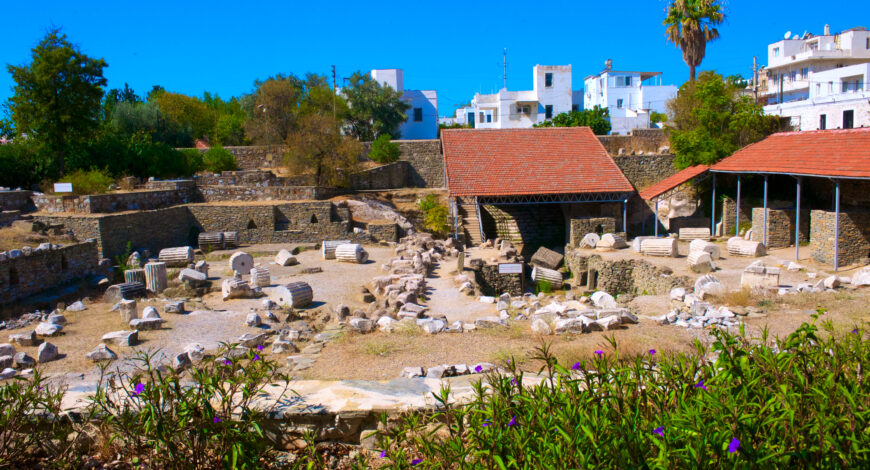
Halicarnassus, photo by Kristen Hellstrom
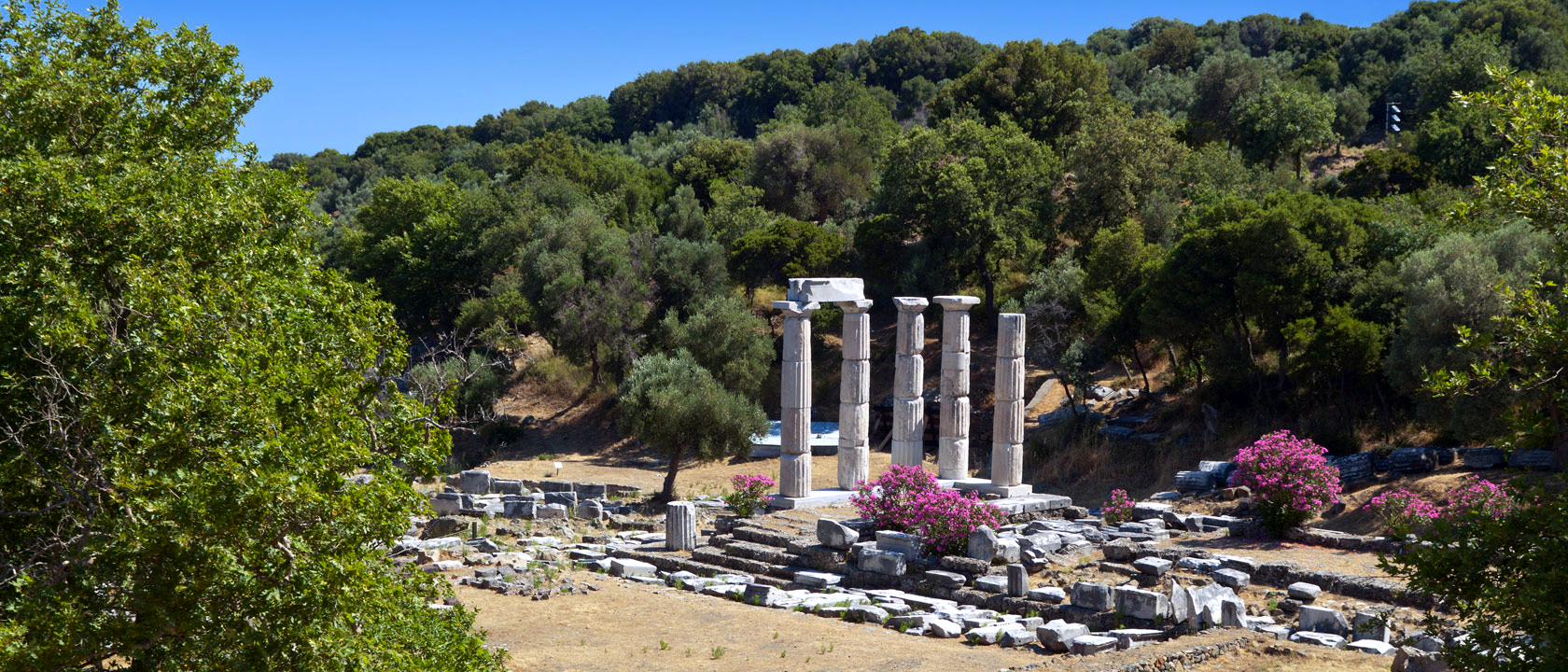
Temple of the Great Gods Samothraki Greece ID20248706 by Panagiotis Karapanagiotis on Dreamstime.com
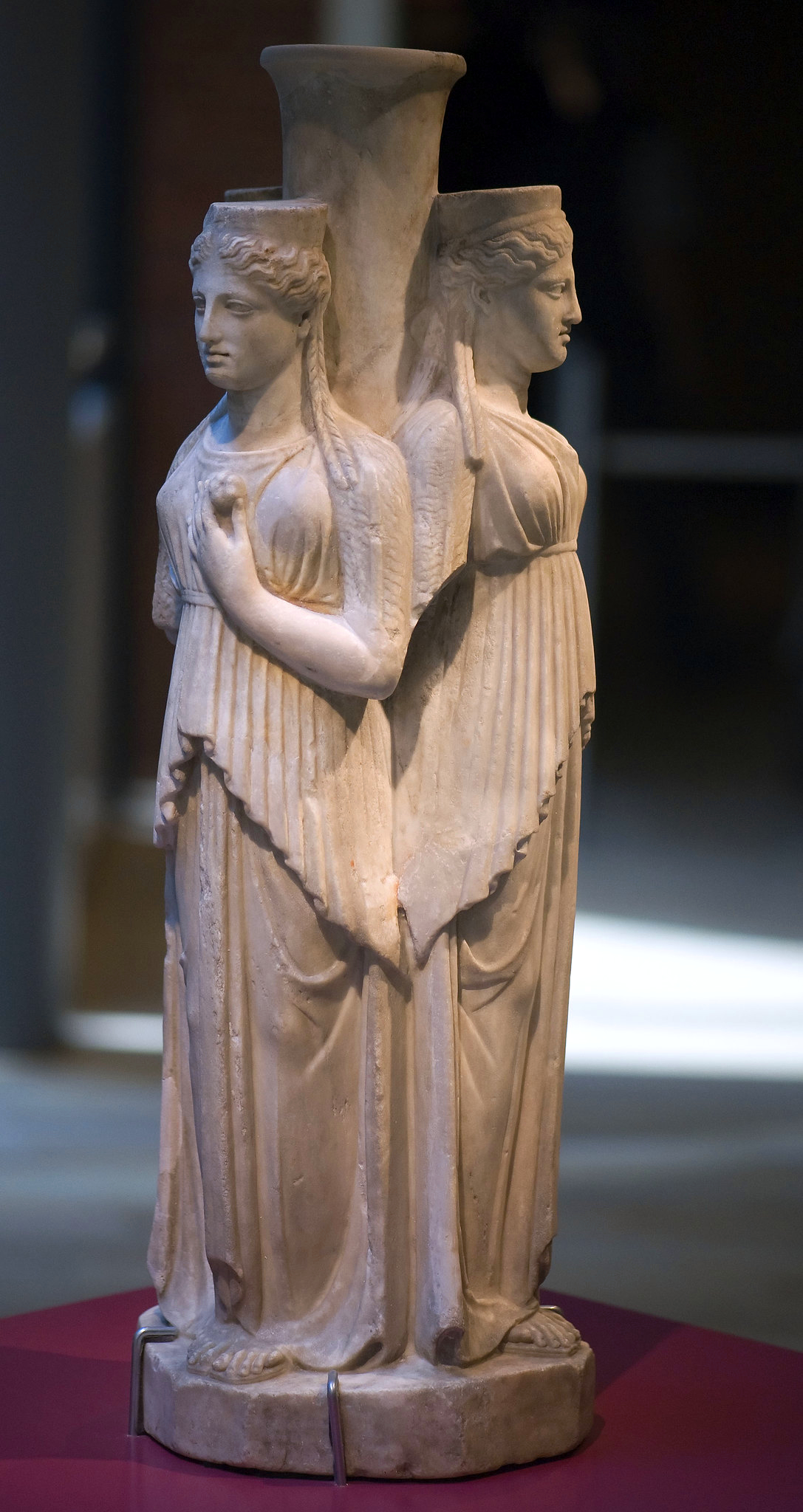
Hekate (RMO Leiden) by Rob koopman from Leiderdorp, netherlands, CC BY-SA 2.0 <https://creativecommons.org/licenses/by-sa/2.0>, via Wikimedia Commons
Statue of Hekate, Antalya Museum by Chris Tuttle
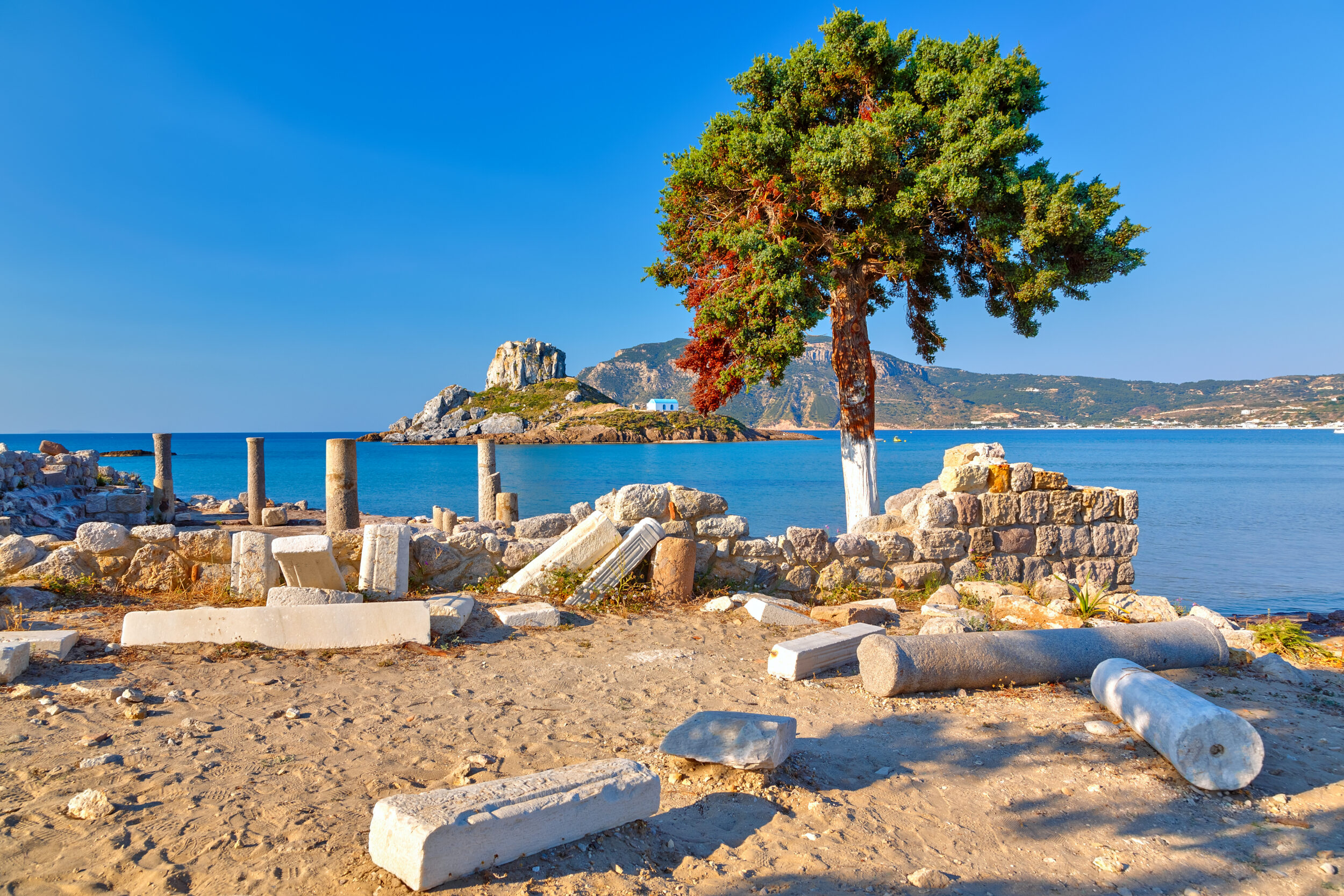
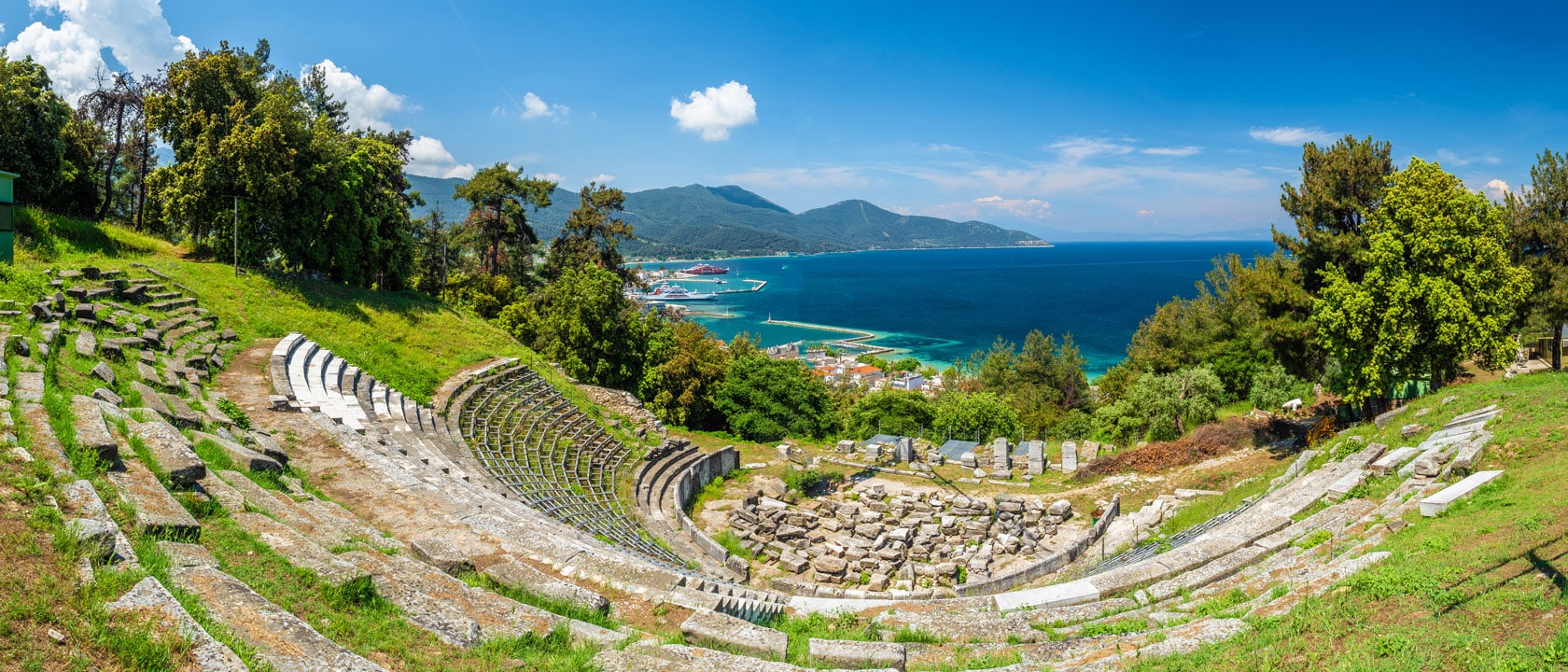
Ancient ruins on Kos, Greece. Image ID: 26696319 Copyright Sborisov | Dreamstime.com https://www.dreamstime.com/sborisov_info
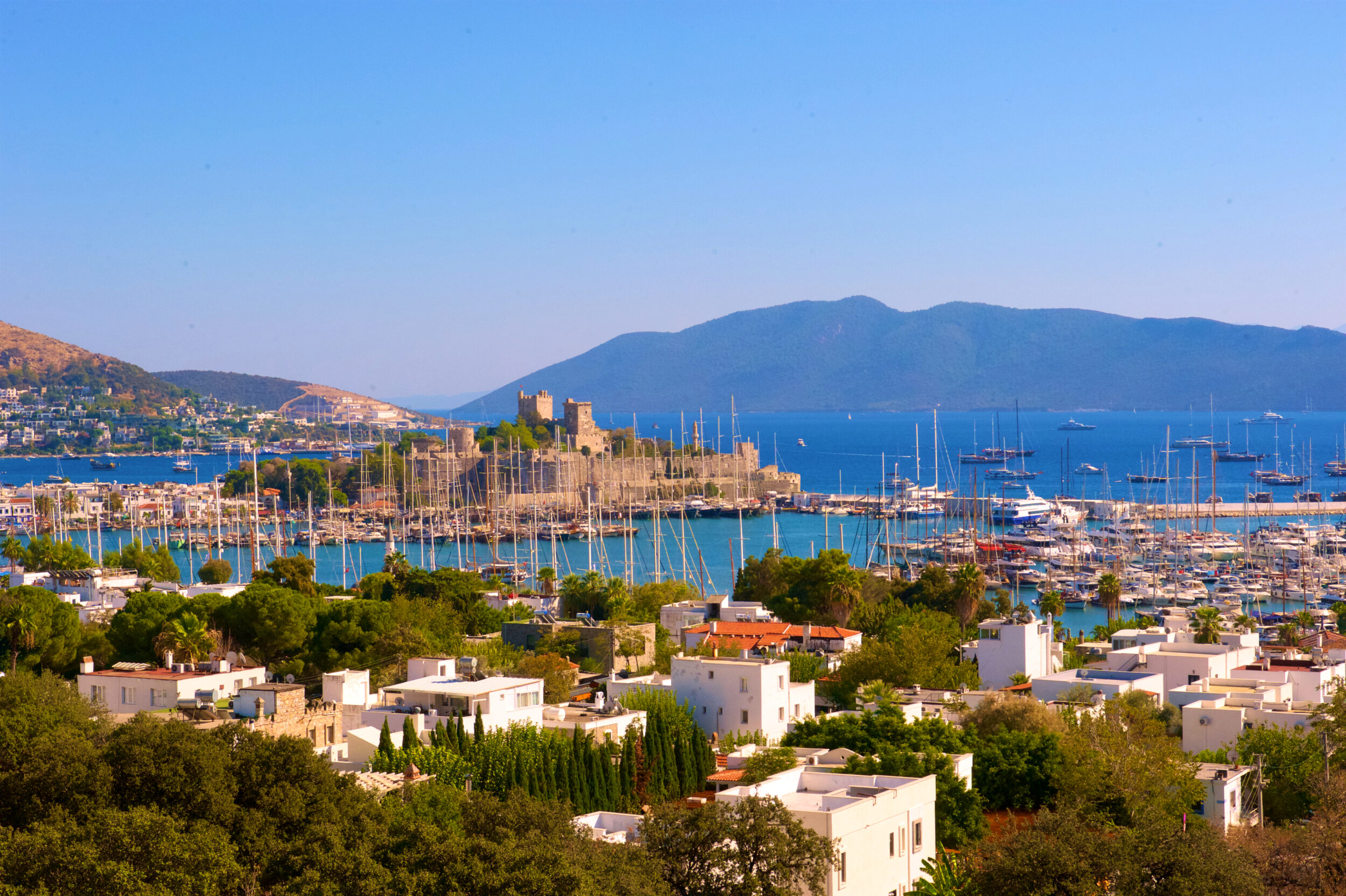
Bodrum castle, Türkiye by Kristen Hellstrom
 Between Sea and Sky: Homer’s Greek Islands 2026
  Türkiye: The Ages of Anatolia 2027
  Between Sea and Sky: Homer’s Greek Islands 2027
  Northern Greece and the Aegean Islands: Alexander’s Heartlands 2028