
Japanese Castles: Authenticity and Paradox
by Dr Mark K Erdmann
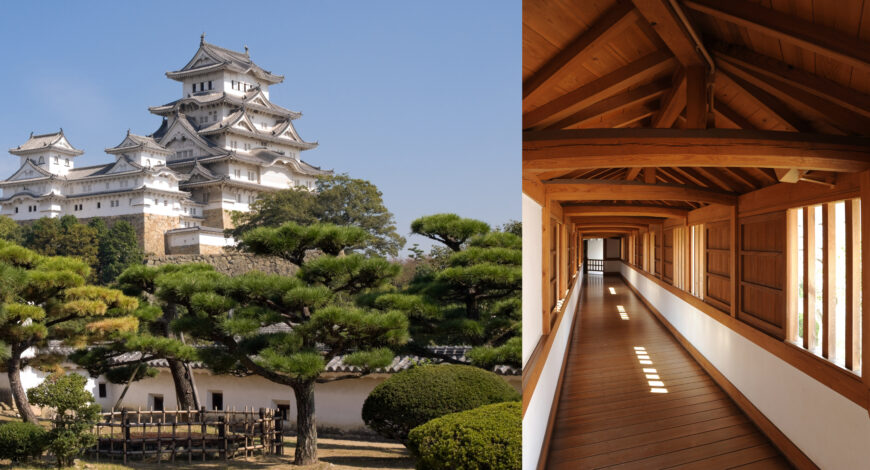
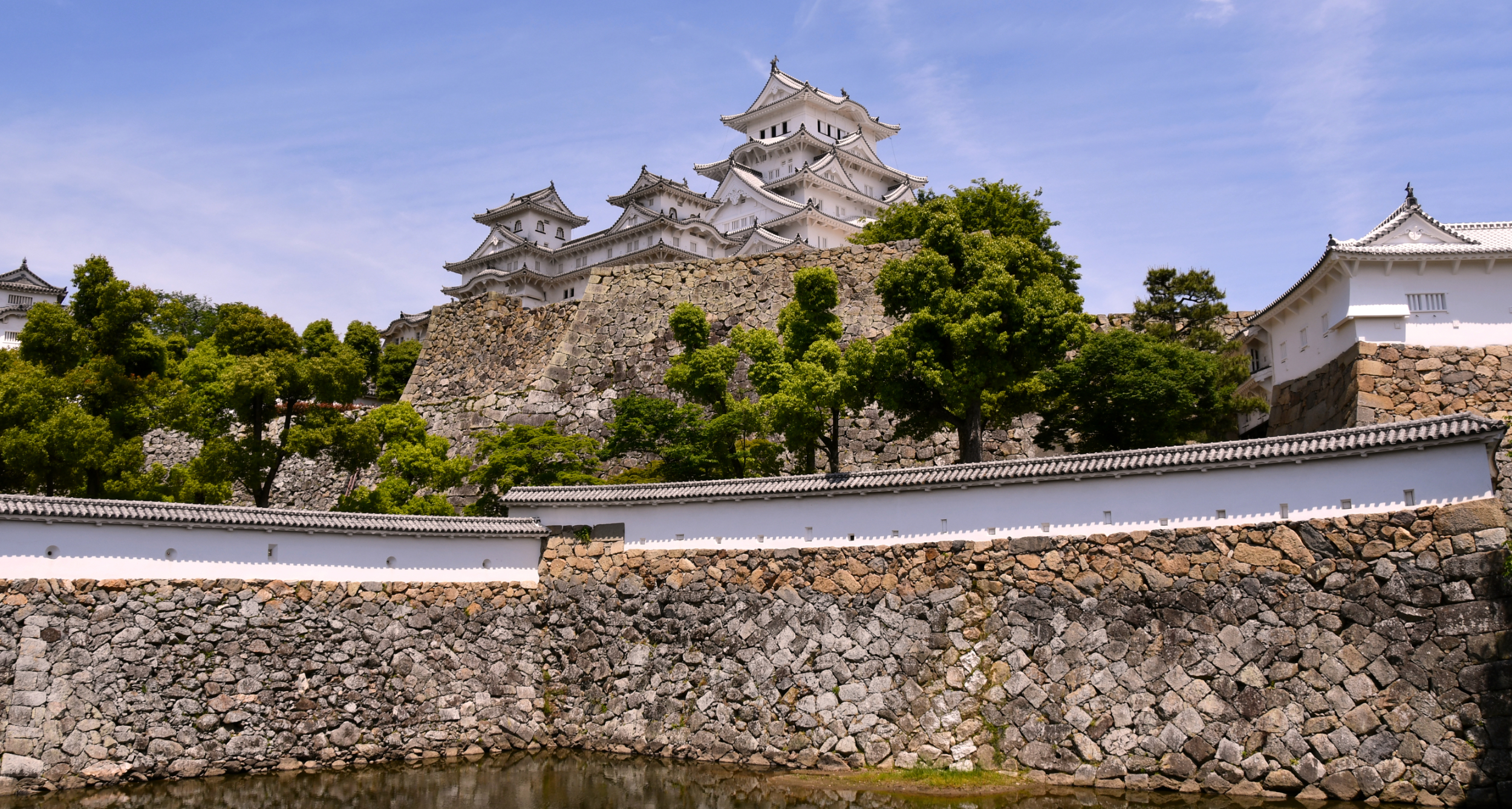
The Japanese castle is one of the most iconic and seemingly eternal fixtures of Japan, but it is also a mess of contradictions. Publications and online sources purport thousands of castles scattered across the country. Yet, for the intrepid tourist who is keen to see the most authentic of these “thousands,” there appear to be only twelve “original” castles including the famous Himeji Castle (figure 1) as well as other well-known sites such as Nijō, Matsumoto, Inuyama, and Hikone. The construction dates for these structures, in turn, reveal them to have been all constructed within a quarter-century period at the start of the seventeenth century. Herein lies the paradox: within a culture that is closely associated with warriors and martial traditions, the only castles of the thousands that are seen as “original” or authentic date to a remarkably short moment. The explanation for this phenomenon reveals the unique nature of these structures as an anomaly in both Japanese and world history.
Japan represents a remarkable exception in that, for most of its history, military architecture—that is, walls, gates, turrets, towers, amongst other constructions that functioned to facilitate defensive or offensive military action—was ignored as a source of symbolic power. In other words, unlike most cultures in which the monumentality of strong, tall walls begot strong rulers and transformed that architecture into symbols of that ruler in a feedback loop from prehistory on, it took until the sixteenth century for this to happen in Japan. The reasons for this are multifold. First, as an island nation, Japan was largely protected from foreign invasion. Second, the warriors that did emerge, namely the samurai, were hired mercenaries whose value had been initially derived from their skill as mounted archers. This skill allowed them to dominate challengers, but it also made for a culture that privileged offensive speed over defensive resilience. Third, owing to the existence of a central authority—initially the imperial throne and later a military government known as a shogunate—building fortifications was a resource waste. In the case of an incursion, the aggrieved party could petition the central authority for redress and lands of the aggressor’s property was redistributed to the warriors who aided in the restoration of order.
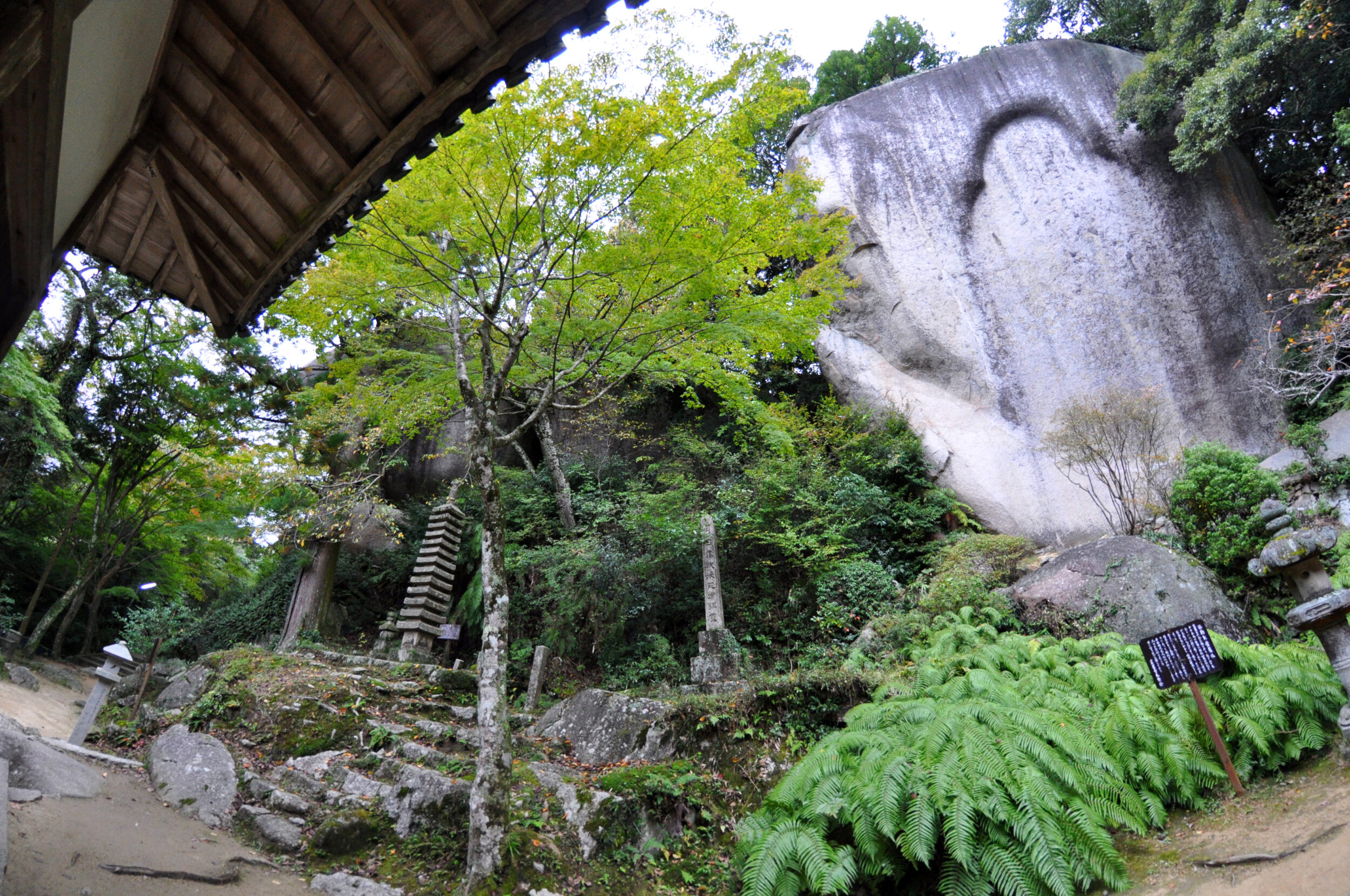
To be sure, siege warfare did occur prior to the sixteenth century. Indeed, it is these battles that form the foundation for the claim that thousands of castles exist in Japan. One of the most famous of these battles is the 1331 siege of Mount Kasagi and its example can help to explain the absence of castles or forts that remain from this earlier era. The siege was brought about by Emperor Go-Daigo (1288–1339) when his plans for a coup d’etat were exposed and, consequently, he fled to Kasagidera, a monastery on Mount Kasagi. Fortifying the site, he held out for a month against overwhelming odds and forced a Pyrrhic victory. Go-Daigo’s strategy was a tried and true one. The same as a provincial lord whose land had been seized by a neighbour, the goal was to survive until either funds ran out to pay for the attacker’s mercenary armies or long enough to see a petition heard. In Go-Daigo’s case, these were short- and long-term strategies: first bankrupt the enemy, then become the new central authority and redistribute lands to his allies. To accomplish this, Go-Daigo off-set his costs by relying on dramatic natural fortifications (figure 2)—the same dramatic topographical features that had attracted a religious community to settle on the site. While ideal for a monastery and to thwart attackers, the same topography was, however, wholly unsuited to the development of a city. Mount Kasagi and sites of refuge like it, on top of a mountain or in the centre of a marsh, were unable to grow a community that could serve witness to military architecture and thereby justify development beyond a primary function of defence.
This dynamic was so deeply entrenched in medieval Japanese society that it would take almost a century of civil wars to break from it. In the wake of the Ōnin War (1467–1477), a conflict started over a shogunal succession dispute, the centre that had long been held as a reliable arbiter was exposed as a paper tiger. No longer able to rely on or be constrained by a central authority, warlords as well as religious groups vied for territory and the country was divided into regional competitions. Remarkably though, the lack of security did not immediately cause a construction boom in fortifications to protect elites and their families, but for decades warriors continued to rely on the same cost-offsetting, short term approach of fleeing to more defensible locations in case of an incursion.
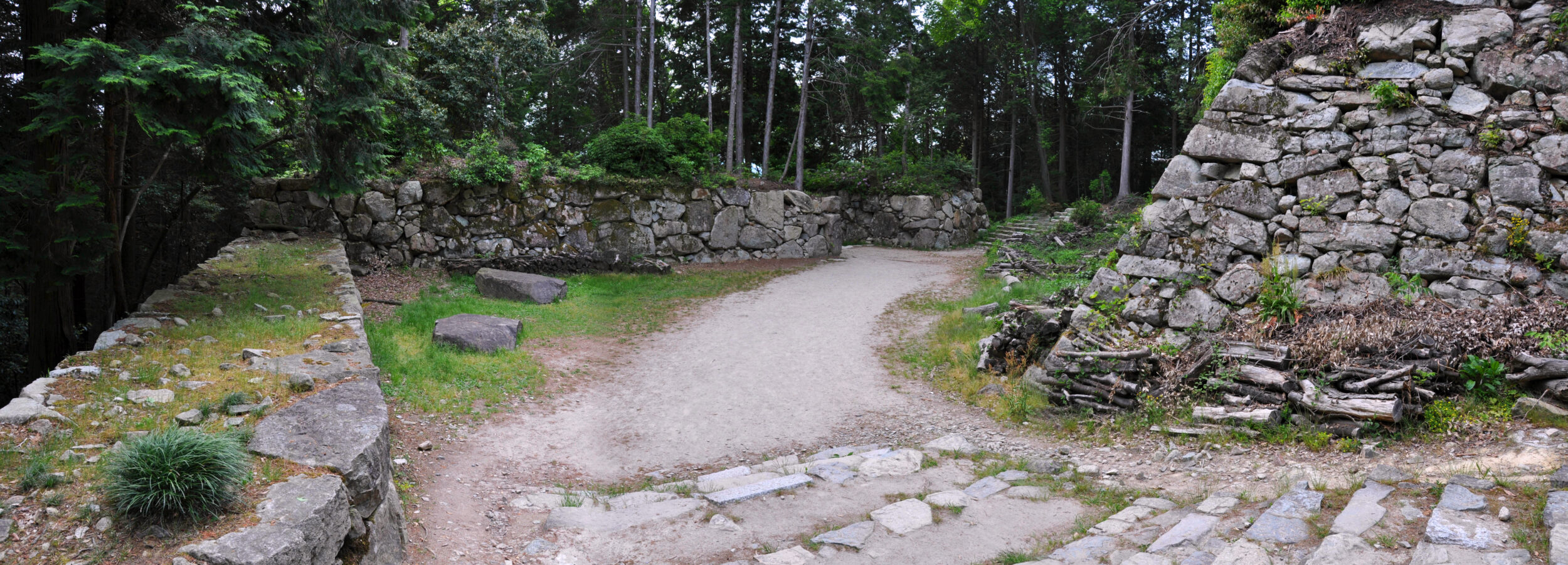
Japanese castles as we known them were ultimately born of the later stages of this era and the question that arose once these warlords found themselves in a position to claim regional or national hegemony: why did they deserve this position? From the mid-1560s, the first castles emerged that make an architectural argument, using the tools of awe and dwarfing to subjugate and inculcated allies and subjects, for the worthiness of their owners to rule. The construction of Azuchi Castle (figure 3), competed in 1579, was a watershed in this direction. Built by the warlord Oda Nobunaga (1534–1592), the first of the so-called “Three Great Unifiers of Japan,” Azuchi was initially a grand show of architectural process—that is, a demonstration of labour and resource mobilisation. Upon completion, the citadel sat upon steep dry-stone walls, a nascent technology that was deployed on an unprecedented scale. Punctuated with looming gates and towers, these walls demarcated the outer and inner baileys buildings below and corralled an array of opulently decorated structures inhabited by an abundance of lacquering, metal fittings, and colourful, goldleaf-backed paintings on sliding doors. On full display to the town that surrounded it, the castle projected wealth, sophistication, strength, and technological prowess by way of its monumentality and opulence.
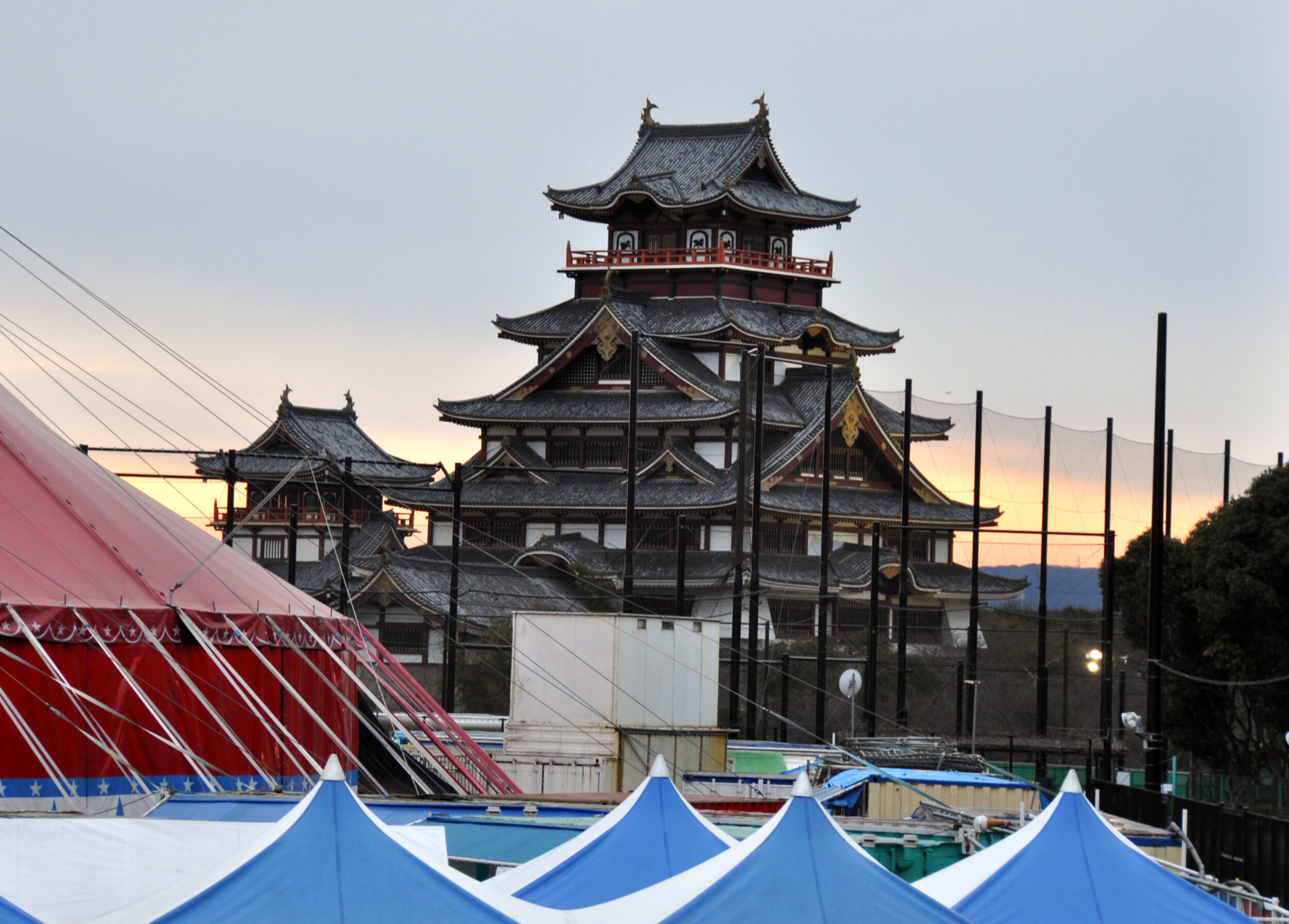
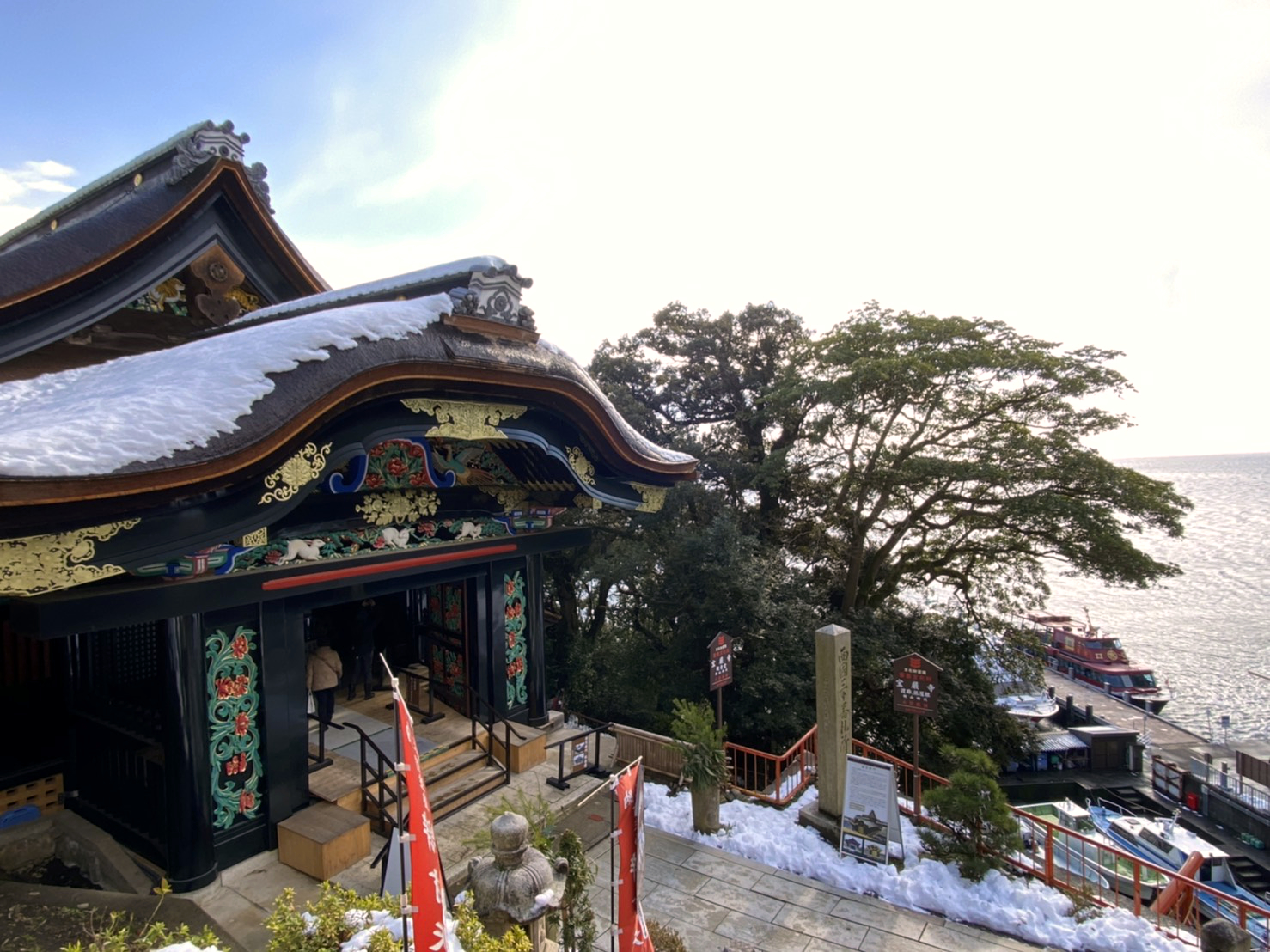
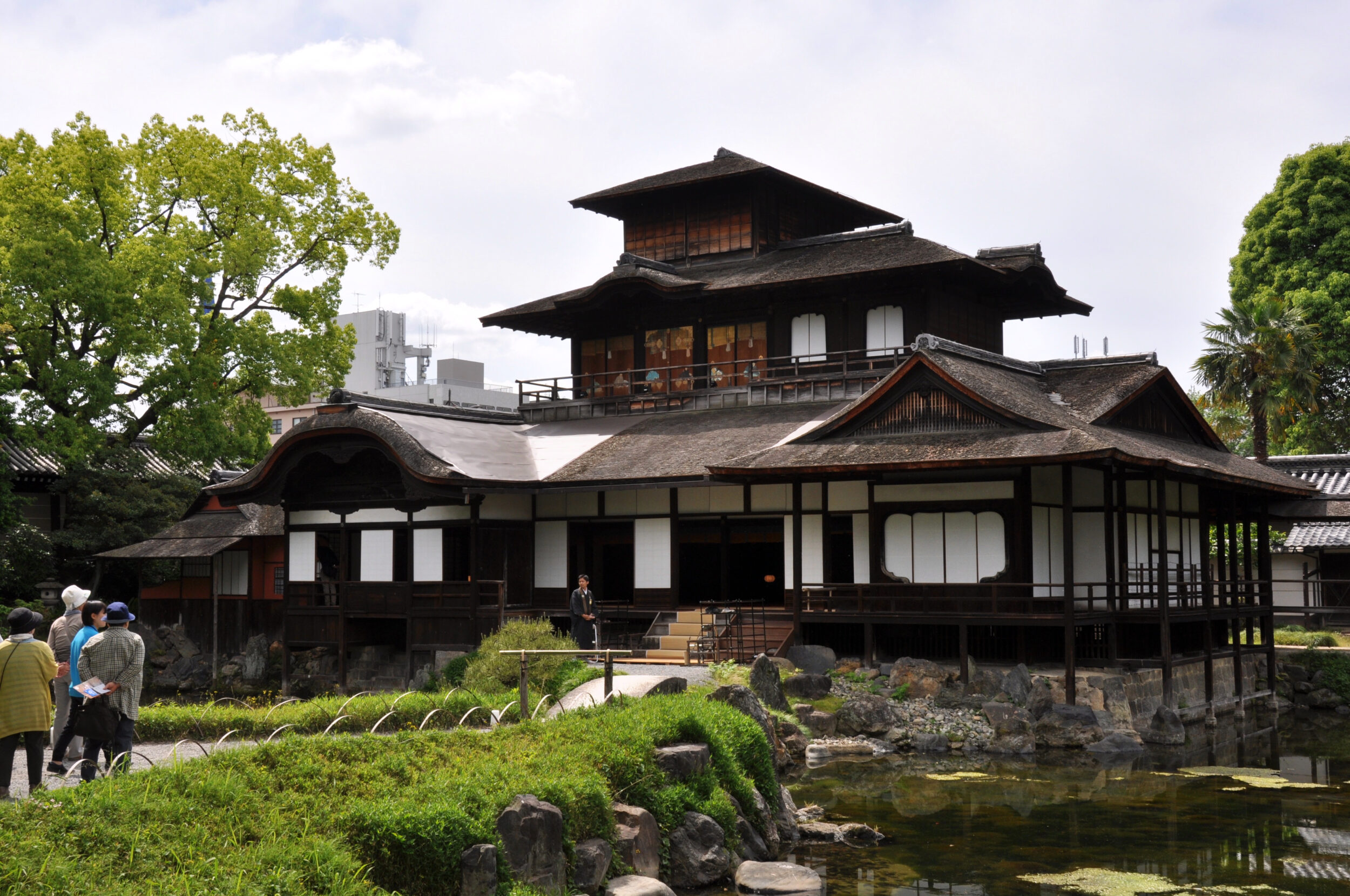
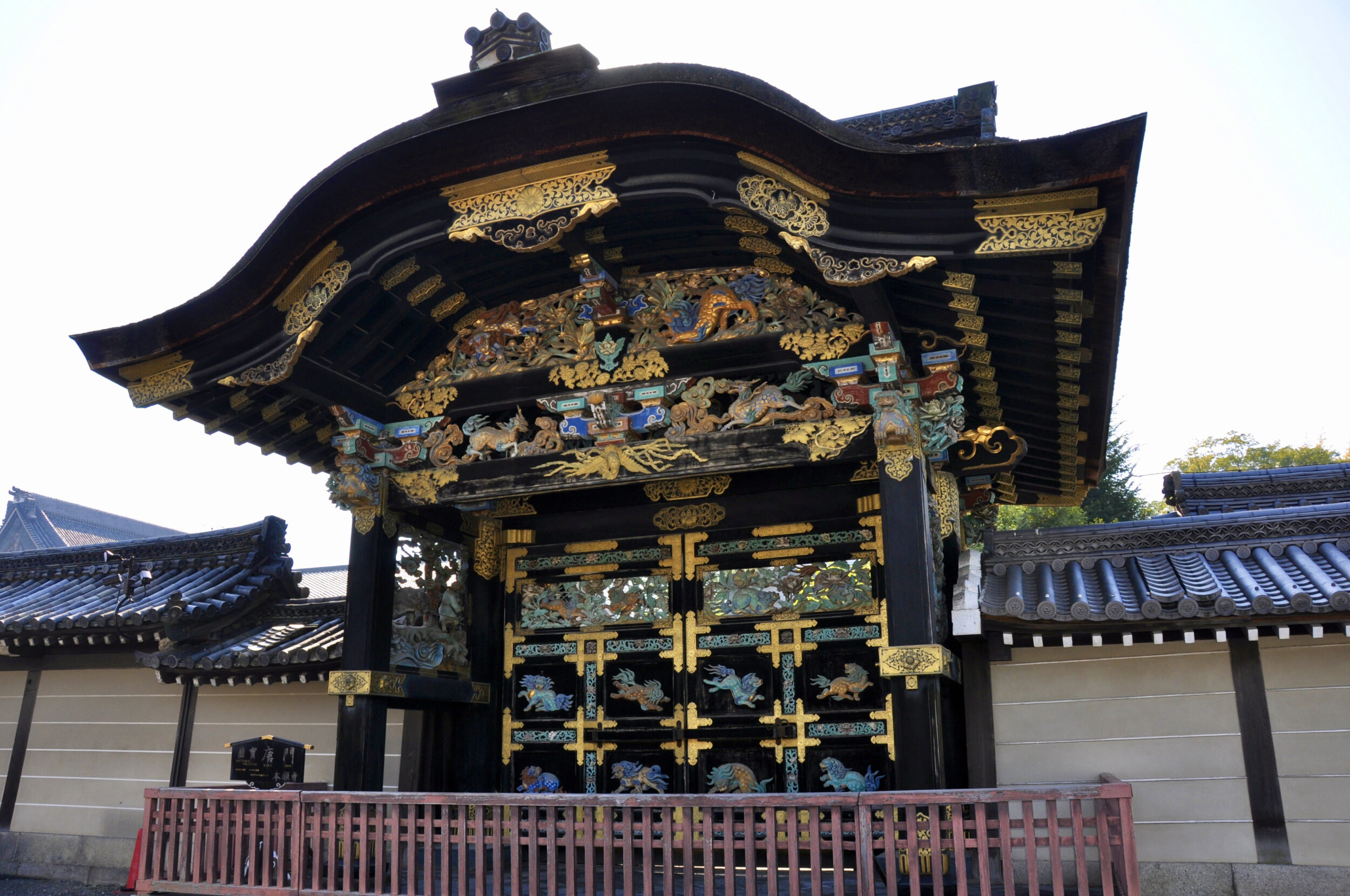
Azuchi only existed in completed form for three years before it was burned down in the wake of Nobunaga’s assassination, but it set the standard and ushered in a century of intensive castle building on the Japanese archipelago. Nobunaga’s successor and the warlord who completed the project of unifying Japan, Toyotomi Hideyoshi (1543–1598), immediately set about to emulate Nobunaga’s example at Azuchi first at Osaka, then with a castle in Kyoto called Jurakutei, and finally Fushimi (figure 4). Unfortunately, none of these main buildings from these complexes remain, but some gates and teahouses were repurposed and are now scattered around Japan in locations such as Tsukubushima (figure 5) and Nishi-Honganji (figure 6, 7).
The final stage of castle building and the age from which the “original” castles remain arrive with the death of Hideyoshi in 1598 and an ensuing power struggle. The final “unifier” Tokugawa Ieyasu would cement his position as the undisputed military hegemon at a decisive battle against his peers in 1600. However, Hideyoshi’s young heir remained and for the next sixteen years, a cold war between the Tokugawa and Toyotomi loomed. Regional warlords in preparation for a final showdown prepared their fiefdoms constructing massive moats, dry-stone walls, and highly visible towers that might both preclude a war through intimidation or serve as defensive keeps. The largest of all these was Edo Castle (figure 8), the remains of which remain in the centre of Tokyo albeit reinvented in the late nineteenth century as the Imperial Palace. Its main tower, twice the size of Azuchi, once loomed over the entirety of the city and, despite being burned down in 1657, still appears in woodblock prints produced in subsequent centuries as a lingering icon and symbol of the city as the seat of the Tokugawa Shogunate.
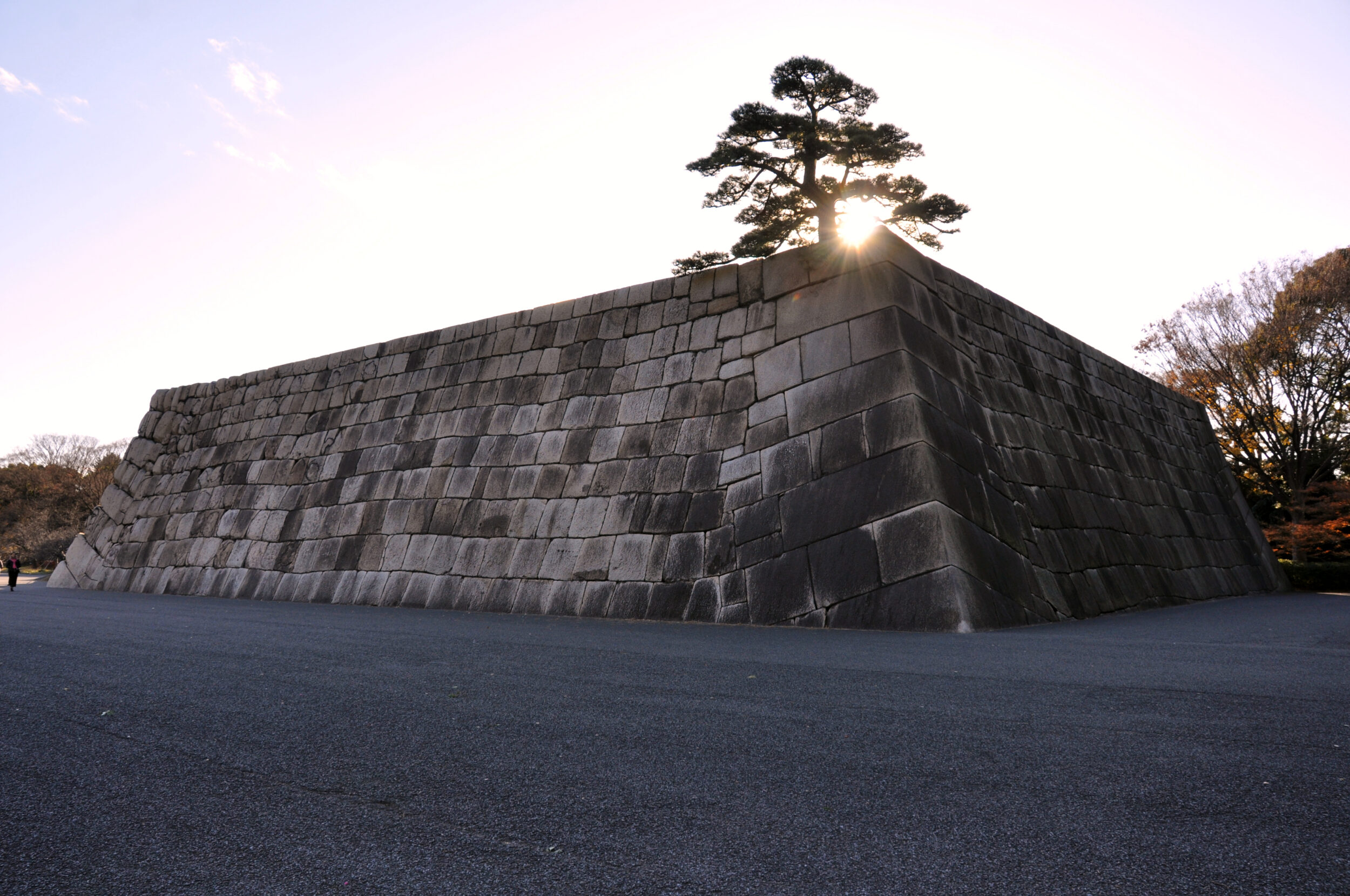
Despite the great emphasis that is put on their martial function by local tourism bureau signs, Edo and the many other castles constructed in the early seventeenth century, never saw battle. The Tokugawa vanquished the Toyotomi in a decisive siege at Osaka Castle in 1616 and with this, a new stable order emerged in which castles were no longer needed. Fearful of usurpation themselves, the Tokugawa instituted strict regulations about new castles being built and demanded funds be used to maintain old castles—that is, so that those fund not be used for raising an army. This strategy would be the foundation for the preservation of these architectural treasures for the next two and a half centuries and into the present day.
Travel with Dr Mark Erdmann, an expert on Japanese art and architecture, as he explores the country through the lens of its artistic traditions, from the art and architecture of ancient temples, to the current cutting edge creative scene on our tour Art, Architecture and History of Japan.
Top image : Exterior, Himeji Castle, Japan. Photo by Martin Mette, Dreamstime 3621691 | Dreamstime.com Interior Himeji Castle, Japan. Photo by Nathan, Dreamstime 9423553 | Dreamstime.com
 Art, Architecture and History of Japan 2026
  Art, Architecture and History of Japan 2027