
Professor Mark G. Macklin FRGS, FBSG
Professor Mark Macklin (Emeritus Professor of River Systems and Global Change, University of Lincoln, UK; Senior Research Fellow, University of Exeter, UK) is internationally recognised as one of the leading authorities on river science and riverine archaeology. His career spans more than four decades of research across five continents, with a particular focus on how rivers preserve the history of climate change and human settlement. With over 250 peer-reviewed publications—including landmark studies in Science, Nature, and Proceedings of the National Academy of Sciences—and more than 20,000 scholarly citations, he is among the most influential geoarchaeologist working today.
Professor Macklin’s research reveals how rivers are both storytellers and shapers of civilisation. They record floods, droughts, and environmental shifts, while also nourishing the fields, cities, and trade routes that depended on their waters. In Central Asia, his studies illuminate how the Amu Darya, Syr Darya, Ili and their tributaries sustained oasis towns, enabled caravans to cross vast deserts, and underpinned the prosperity of empires from the Persians to the Timurids. Their shifting courses even contributed to the decline of once-great cities.
Honoured with the Murchison Award of the Royal Geographical Society (with IBG) and elected an inaugural Fellow of the British Society for Geomorphology, Professor Macklin has also held senior academic chairs in the UK, Europe, Australia, and New Zealand. He has acted as an expert advisor to UNESCO and national governments on flood risk, river heritage, and environmental change.For travellers, his guidance offers a rare depth of insight: as you journey across Central Asia’s dramatic river landscapes, Professor Macklin brings them vividly to life—linking their physical beauty to the grand sweep of Silk Road history, culture, and exchange. ASA is delighted to announce that in 2027 Prof. Mark Macklin will join the ASA team as tour lecturer for Kazakhstan.
Summary of education and work experience
Education: 1976-1980 The University College of Wales Aberystwyth – BSc. (Hons) 1st class; 1980-1983 The University College of Wales Aberystwyth – PhD.
Employment: 2025-present, Senior Research Fellow University of Exeter; 2024-present, Adjunct Research Professor Naresuan University Thailand; 2023-present, Adjunct Research Professor Fiji National University; 2022-present, Founding Co-Director of Water and Planetary Health Analytics; 2020-2024, Distinguished Research Professor in River Systems and Global Change University of Lincoln; 2018-present, Adjunct Professor, Centre for the Inland, La Trobe University; 2016-2020, Founding Head, School of Geography, University of Lincoln; 2013-present, Professor of Fluvial Geomorphology, Massey University; 2006-2016, Founding Director of the Centre for Catchment and Coastal Research, Aberystwyth University; 1999-2016, Founding Head of the River Basin Dynamics and Hydrology Research Group, Department of Geography and Earth Sciences, Aberystwyth University; 1999-2016, Chair and Professor of Physical Geography, Department of Geography and Earth Sciences, Aberystwyth University; 1994-1998, Reader in Fluvial Environmental Change, School of Geography, the University of Leeds; 1987-1993, Lecturer in Geography, Department of Geography, the University of Newcastle; 1986-1987, NERC Research Fellow, Department of Geography and NERC Water Resource Systems Research Unit, Department of Civil Engineering, the University of Newcastle.
Honours and awards: 2024 Emeritus Professor of River Systems and Global Change, University of Lincoln; 2020 Distinguished Research Professor in River Systems and Global Change, University of Lincoln; 2018 Murchison Award from the Royal Geographical Society “for pioneering research in fluvial geomorphology and its environmental applications”; 2016 Discovery International Fellowship from Australian Research Council; 2014 Elected as an inaugural Fellow of the British Society for Geomorphology “in recognition of significant contributions to the advancement of geomorphological research”; 2011 Utrecht University, Belle van Zuylen Chair; 2005 Elected Chair of the British Geomorphological Research Group; 1997 Fellow of the Institute of Advanced Study, University of Indiana; 1993 Gordon Warwick Award from the British Geomorphological Research Group “in recognition of an outstanding contribution to geomorphological research and scholarship with particular reference to fluvial geomorphology”.
Teaching
Undergraduate: 40 years’ experience.
Postgraduate: Supervision of 40+ PhD students to completion, 6 of which now hold chairs in UK universities. External examiner at Univ. Edinburgh, Univ. Manchester, Univ. College Dublin, Univ. Exeter, Univ. Brunel, Macquarie Univ., Univ. Tasmania, Univ. Newcastle, Queen’s Univ. Belfast, Utrecht Univ., Catholic Univ. Leuven, Durham Univ., Univ. Camerino and VU Univ. Amsterdam.
Research
River system responses to climate change; long-term human-river environment interactions; alluvial archaeology; flood-risk assessment; metal mining pollution and impacts on ecosystem and human health; and the hydrological controls of malaria. Research is conducted worldwide with ongoing projects in Australia, Chile, Fiji, Greece, India, Kazakhstan, New Zealand, Romania, Sudan, Tanzania, Uzbekistan, Zambia, and the UK. 400+ peer-reviewed articles (Google Scholar: h-index 85 – 21,545 citations) with external grant capture > £25 million, including 21 RCUK (20 NERC, 1 ESPRC), 5 EU, 4 ARC and 3 Leverhulme research grants.
Research supervisory and managerial experience
2022-present, Trustee West Wales River Trust; 2022-present, UKRI Planetary Health Advisory Committee; 2015-present, steering committee of Past Global Changes (PAGES) Floods Working Group; 2012-present, member of NERC Peer Review College; 2011-present, member of the Climate Change Expert Panel advising the Health and Safety Executive on climate change risk for nuclear sites in the UK; 2009-2012, Research Council of Norway, International Panel Member for Quaternary Sciences; 2009-2012, Portuguese Foundation for Science and Technology, International Panel Member for Anthropology and Sociology; 2007-2010, INQUA-Hydrology and Global Change Focus Area Committee; 2006-2016, Flood Risk Management Wales Executive Committee, Welsh Assembly Government; 2004-2009, UK National Commission for UNESCO, Natural Sciences Committee; 2005 Chair of the British Society for Geomorphology; 2002-2004, international adviser to Irish Research Council for Science, Engineering and Technology.
Selected recent publications
- Hudson-Edwards KA, Kemp D, Torres-Cruz LA, Macklin MG et al. (2024) Tailings storage facilities, failures and disaster risk. Nature Reviews Earth and Environment, 5(9), 612-630.
- Macklin MG et al. (2023) Impacts of metal mining on river systems: a global assessment. Science, 281, 1345-1350.
- Macklin MG et al. (2022) How have Cretan rivers responded to late Holocene uplift? A multi‐millennial, multi‐catchment field experiment to evaluate the applicability of Schumm and Parker’s (1973) complex response model. Earth Surface Processes and Landforms, 47(9), 2178-2197.
- Ghirardelli A, et al., Macklin MG, Masin R (2021) Organic contaminants in Ganga basin: from the Green Revolution to the emerging concerns of modern India. iScience, 102122.
- Toonen WHJ, Macklin MG et al. (2020) A hydromorphic re-evaluation of the forgotten river civilizations of Central Asia. Proceedings of the National Academy of Sciences of the United States of America 117(52), 32982-32988.
- Smith MW, et al., Macklin MG, Thomas CJ (2020) Incorporating hydrology into climate suitability models changes projections of malaria transmission in Africa. Nature communications, 11(1),1-9.
- Macklin MG, Lewin, J (2019) River stresses in anthropogenic times: Large-scale global patterns and extended environmental timelines. Progress in Physical Geography, 43(1), 3-23.
- Macklin JE, Macklin MG (2019) Art-geoscience encounters and entanglements in the watery realm. Journal of Maps, 15(3), 9-18.
- Byrne P, Hudson-Edwards KA, Bird G, Macklin MG, et al. (2018) Water quality impacts and river system recovery following the 2014 Mount Polley mine tailings dam spill, British Columbia, Canada. Applied Geochemistry 91, 64-74.
- Toonen WHJ, Foulds SA, Macklin MG et al. (2017) Events, episodes and phases: Signal from noise in flood-sediment archives. Geology 45(4), 331-334.
- Foulds SA, Macklin MG (2016) A hydrogeomorphic assessment of 21st Century floods in the UK. Earth Surface Processes and Landforms 41(2), 256–270.
- Benito G, Macklin MG et al. (2015) Recurring flood distribution patterns related to short-term Holocene climatic variability. Scientific Reports 5, 16398.
- Macklin MG et al. (2015) A new model of river dynamics, hydroclimatic change and human
- settlement in the Nile Valley derived from meta-analysis of the Holocene fluvial archive. Quaternary Science Reviews 130, 109-123.
- Macklin MG, Lewin J (2015) The rivers of civilization. Quaternary Science Reviews 114, 228-244.
- Foulds SA, Brewer PA, Macklin MG et al. (2014) Flood-related contamination in catchments affected by historical metal mining: an unexpected and emerging hazard of climate change. Science of the Total Environment 476-477, 165-180.
- Smith MW, Macklin MG, Thomas CJ (2013) Hydrological and geomorphological controls of malaria transmission. Earth-Science Reviews 116, 109–127.
- Giosan L, Clift PD, Macklin MG et al. (2012) Fluvial landscapes of the Harappan civilization. Proceedings of the National Academy of Sciences of the United States of America 109(26), 1688-1694.
- Macklin MG et al. (2012) The fluvial record of climate change. Philosophical Transactions of the Royal Society A 370, 2143-2172.

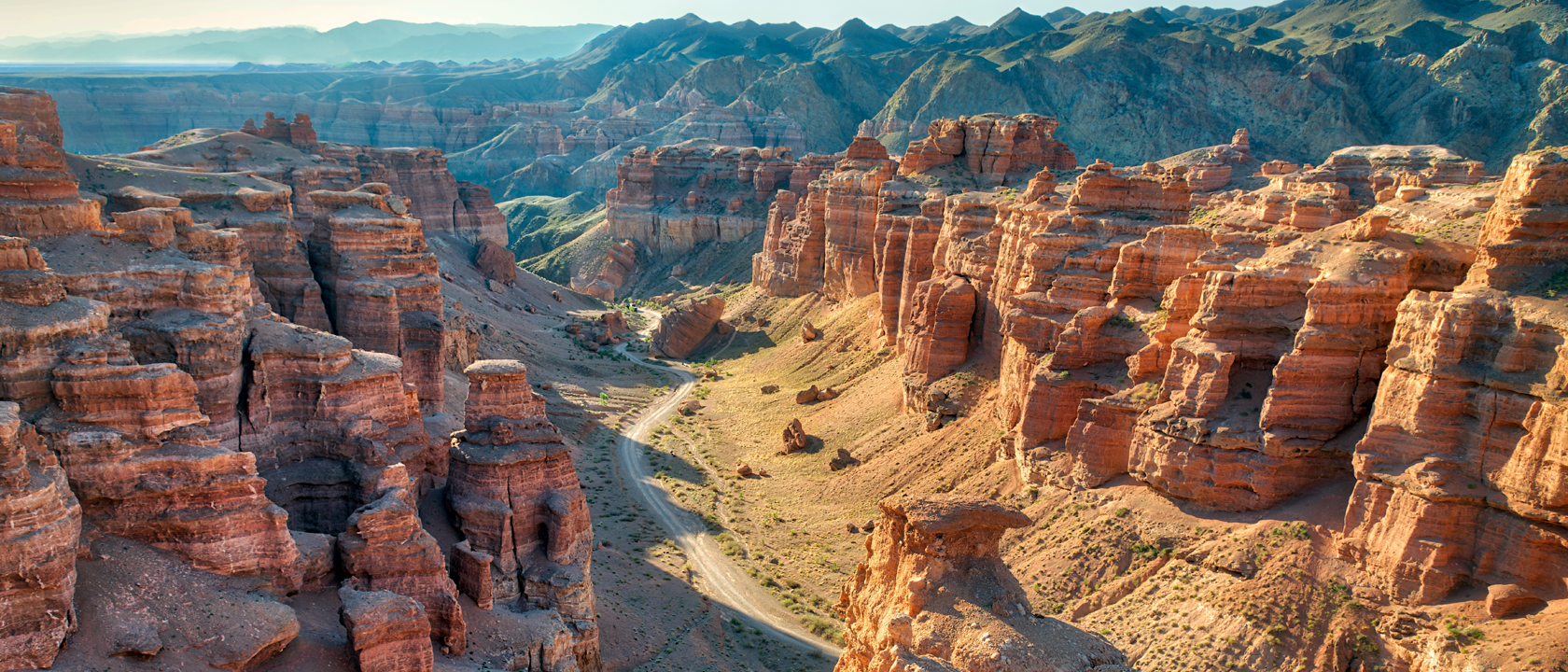 Kazakhstan: from Steppe to Silk Road Cities 2027