The Asklepieion of Kos: Ancient Sanctuary & Therapeutic Centre
by Dr Christopher A. Tuttle
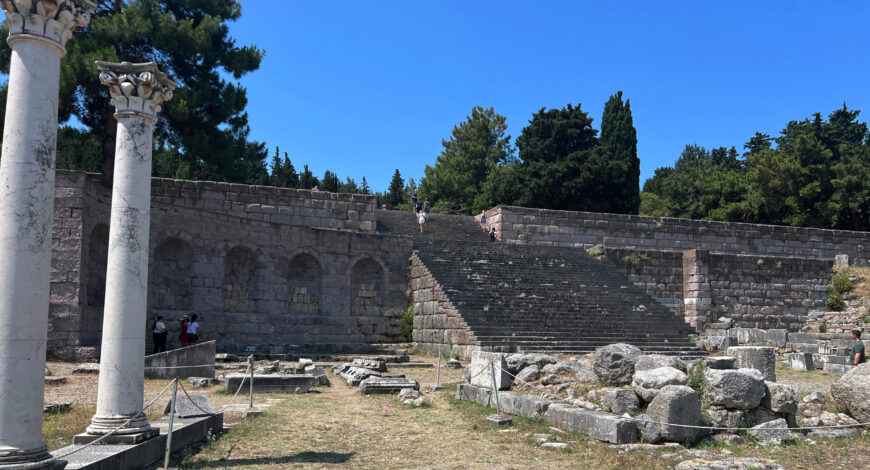
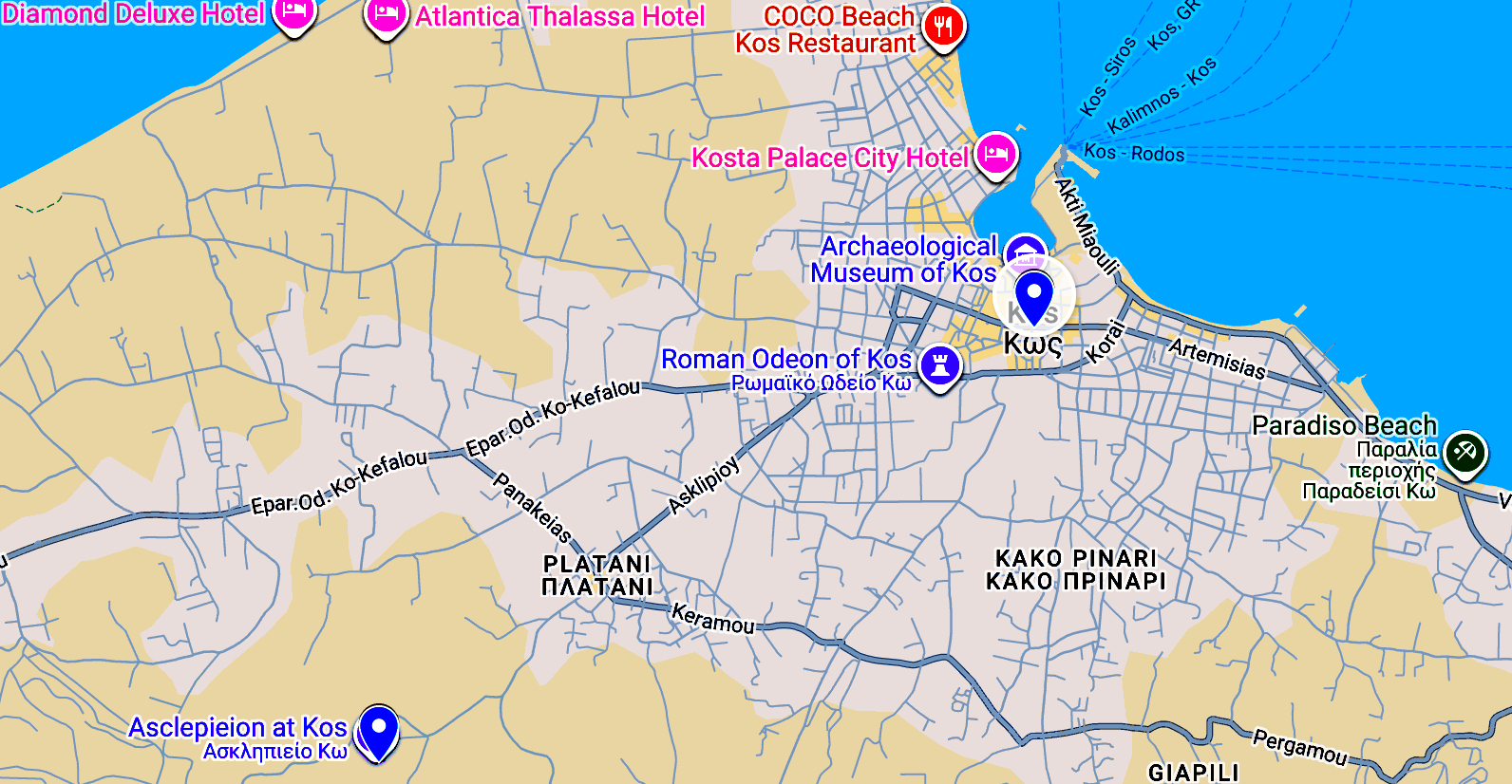
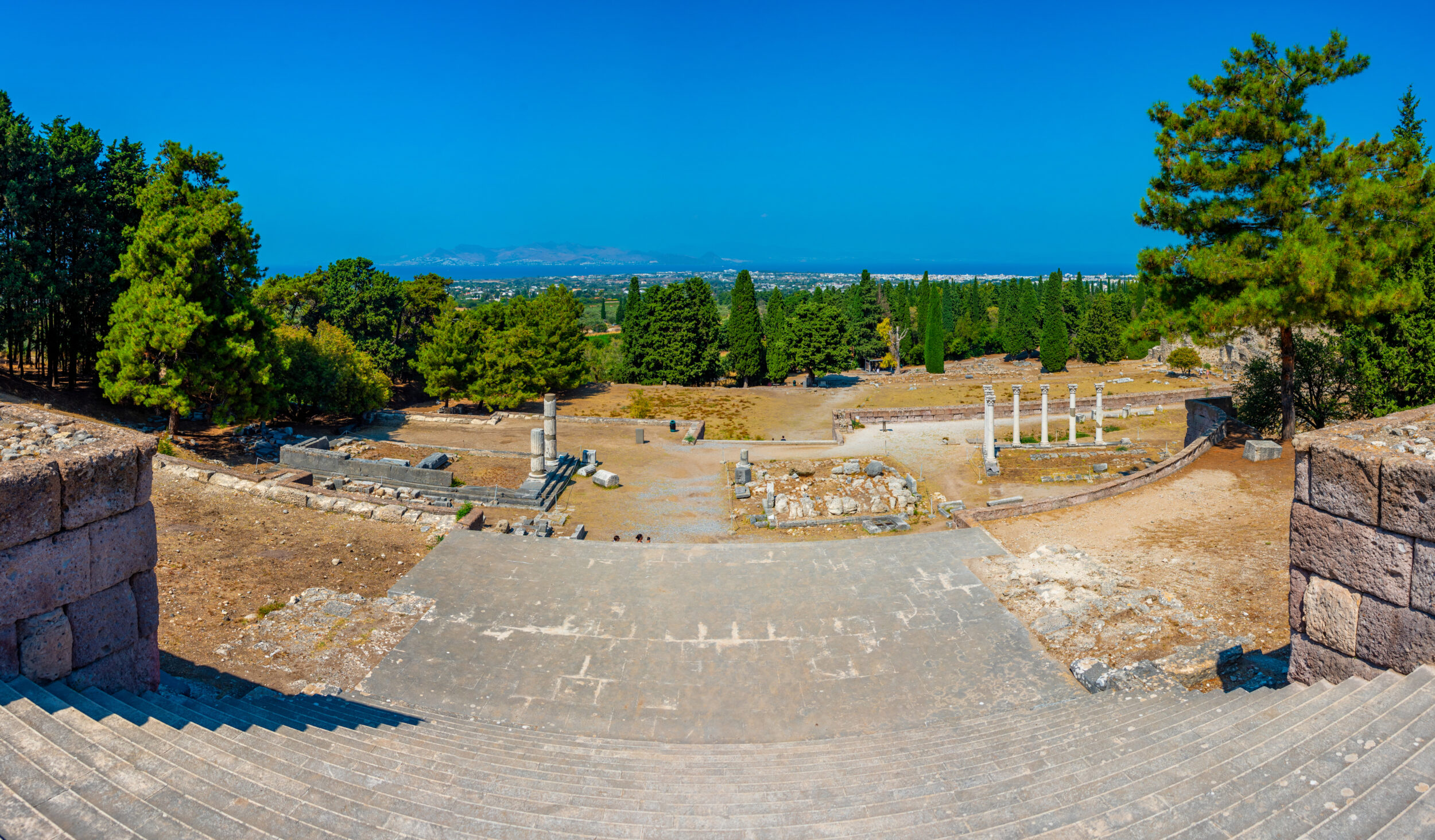
Located about 4 km from the Kos town city centre is the renowned Asklepieion of Kos. The spot was originally a site sacred to Apollo Cyparissius, or ‘Apollo of the sacred cypresses’, groves of which still encircle the hillside on which the monument was built. Asklepios is the demi-god son of Apollo with a mortal woman named Coronis. One interpretation of Asklepios’ name is that it means “to cut open”, because some of the myths tell us that Coronis was unable to birth him naturally, so he was delivered by cutting open his mother’s womb.
In the Olympian pantheon, Apollo was the god associated with medicine. In Greek mythology one of the most skilled healers was the wise centaur Chiron, who was taught medicine directly by Apollo. It is said that Chiron became so adept at healing that Apollo tasked the centaur with teaching the healing sciences to Asklepios as he grew to maturity.
Asklepios was a natural healer, and eventually his skill in medicine surpassed that of his teacher. Tradition held that he was particularly deft with surgeries, so much so that he could even restore life to the dead. He was said to embody compassion and that he was devoted to serving all people regardless of their class, social standing, or economic status. His symbol was a staff with a serpent coiled along its length.
Asklepios appears to have been elevated in human minds to full divine status himself sometime before the 5th century BCE. His cult began at Epidaurus on the Argolid peninsula, in the east Peloponnese area of the Greek mainland. This was the city that also had dispatched the first Doric Greek colonists who settled Kos, possibly bringing a nascent reverence for the god with them.
Asklepieia were the religious complexes built throughout Greece where the cult was celebrated and where healing services were provided. More than 300 asklepieia are known throughout Greece that possibly spread out from Epidaurus, which was home to the first and largest. These complexes are usually situated near places that were already thought to have healing potential, like mountain caves, sacred tree groves, and springs or grottos. The asklepieia all had various buildings and spaces devoted to specific steps in the process of healing, such as purification (e.g., bathing, restricted diets, art therapy, meditation, etc.) and incubation (sleeping in special areas thought to invoke healing dreams).
The Asklepieion of Kos is amongst the larger complexes known and was one of the centres in which members of the Aklepiadai lived. These were an exclusive group of hereditary healer-priests believed to be direct descendants of the god, who were responsible for overseeing the treatments.
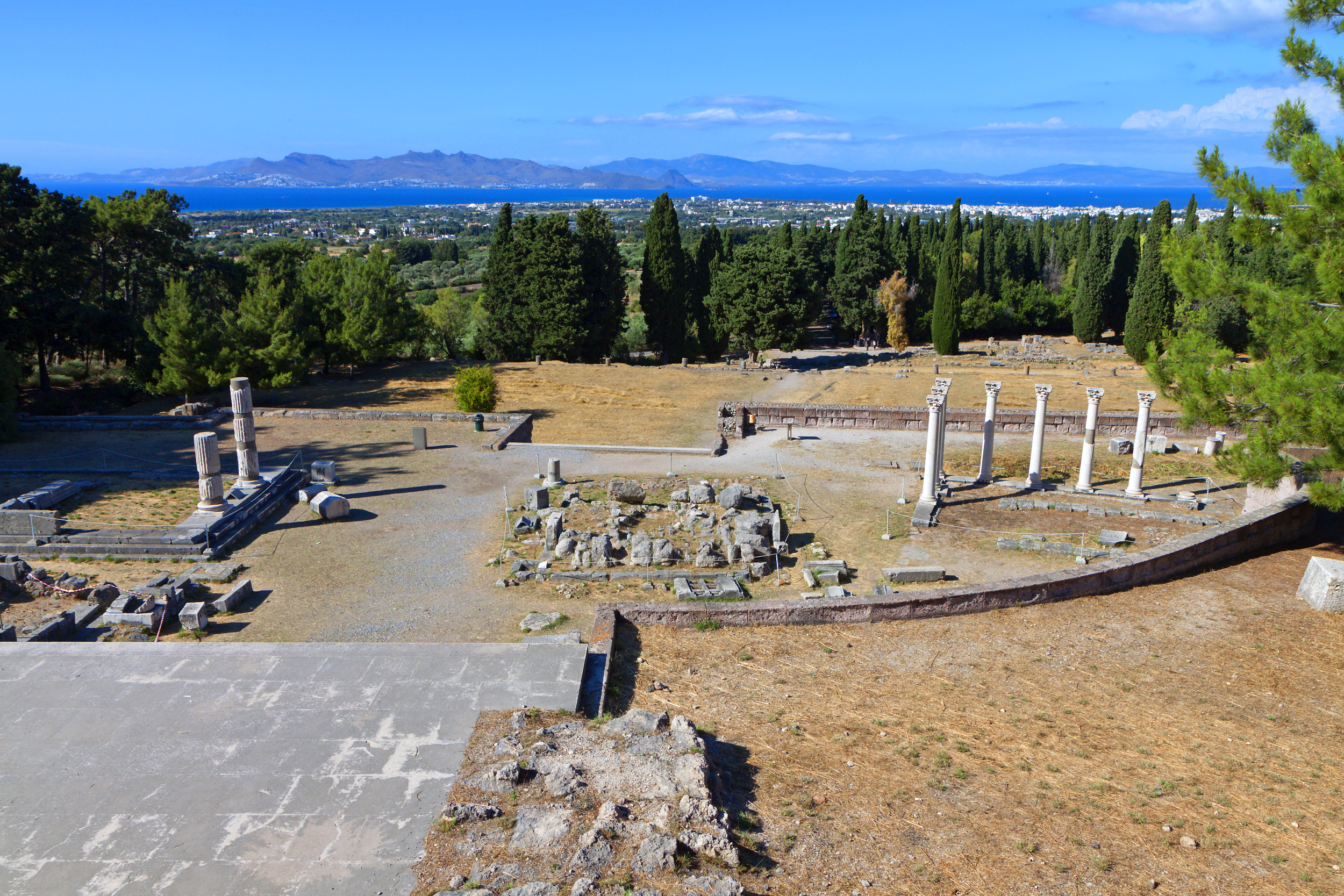
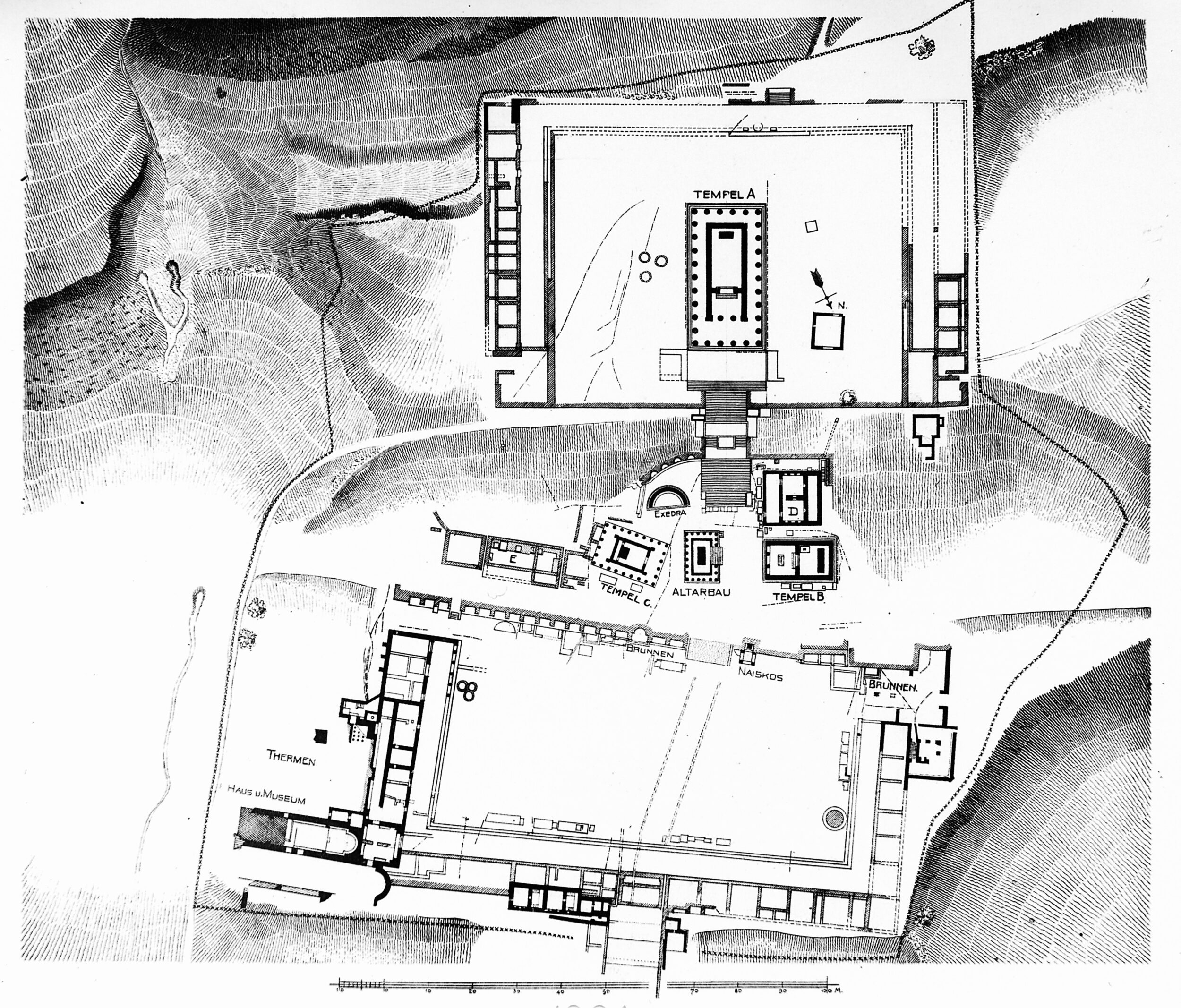
The oldest feature of the Asklepieion on Kos is a simple altar thought to date to the late 4th century BCE. The next addition was the small Ionic temple dedicated to Asklepeios in the late 4th-early 3rd centuries BCE. During the 2nd century BCE, King Eumenes II of Pergamon funded the construction of a large Doric temple that was based on the one at Epidaurus.
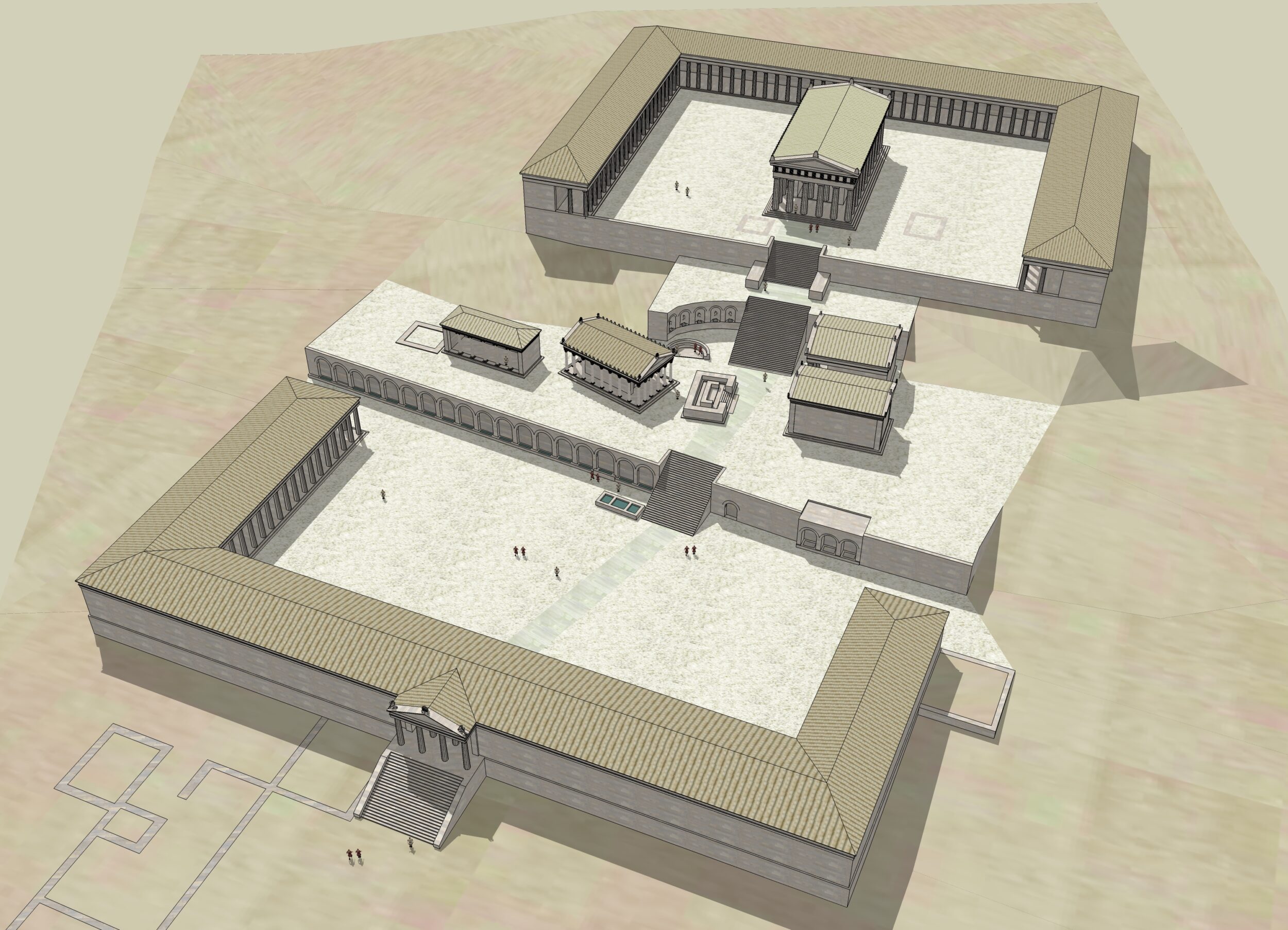
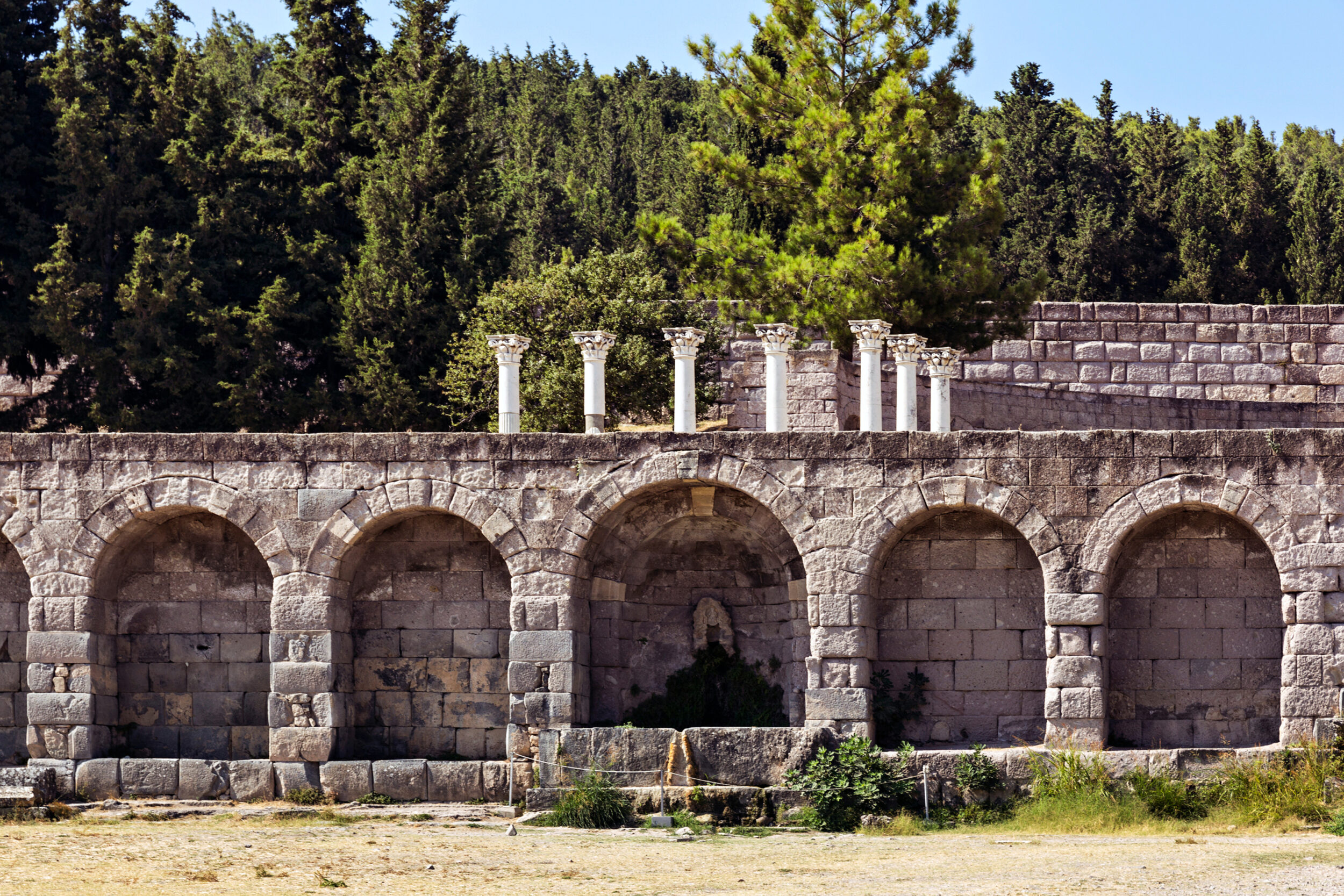
Over the centuries the sacred precinct grew, expanding over three terraces on the side of the hill, each having different facilities related to the different types of healing treatments, rituals, and communal activities. These include baths (and latrines), fountains, temples, stoas, a library and a gymnasium. The largest temple on the upper terrace was dedicated to Apollo and built by the Romans in the 2nd century CE.
Kos Archaeological Museum
The Archaeological Museum of Kos houses significant artefacts and findings from the Asclepieion of Kos. Key items originating from the sanctuary include a rich collection of epigraphical inscriptions (decrees, laws, and honourifics for doctors), statues, and various votive offerings dedicated to the god of healing, Asclepios.
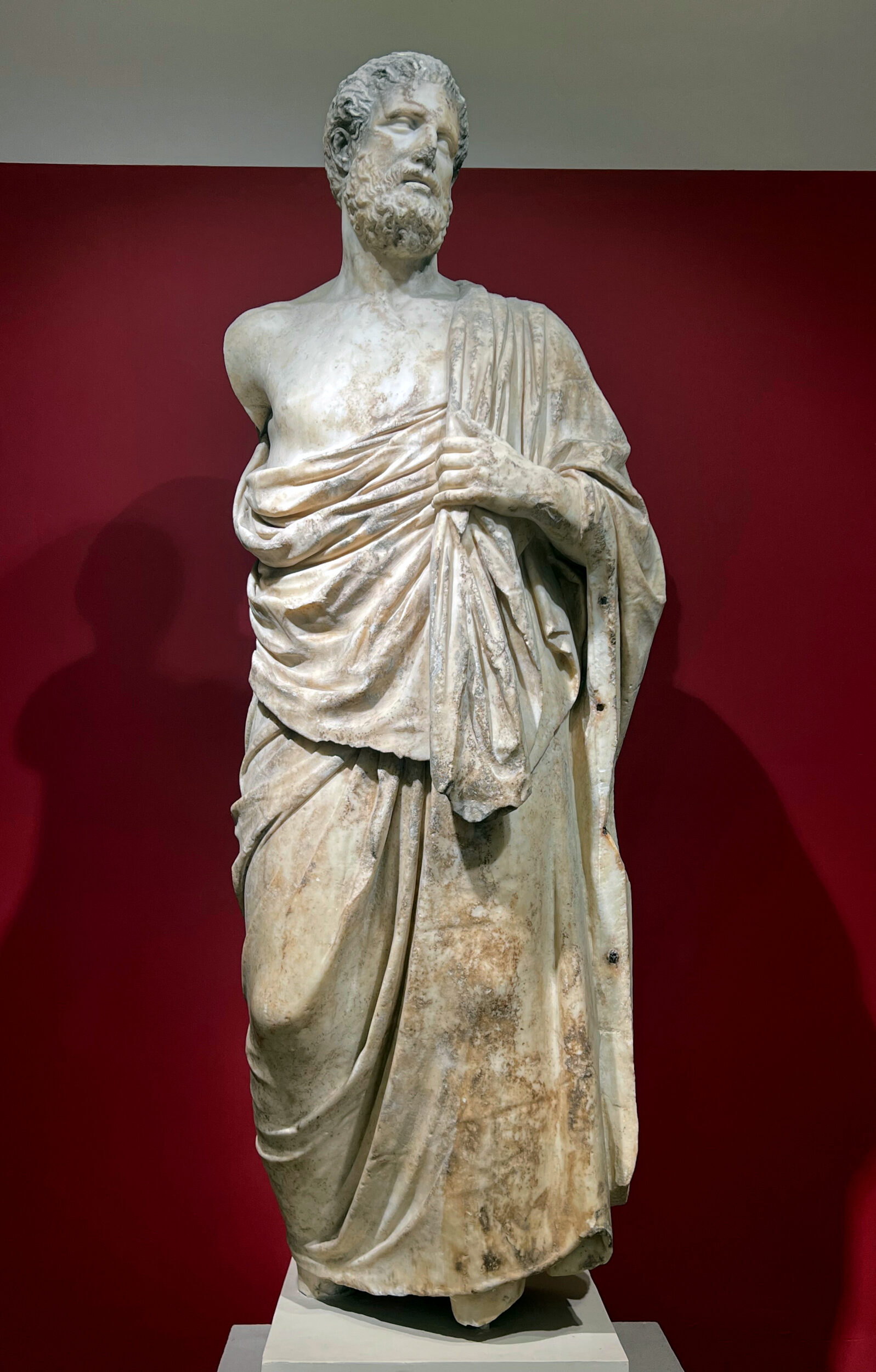
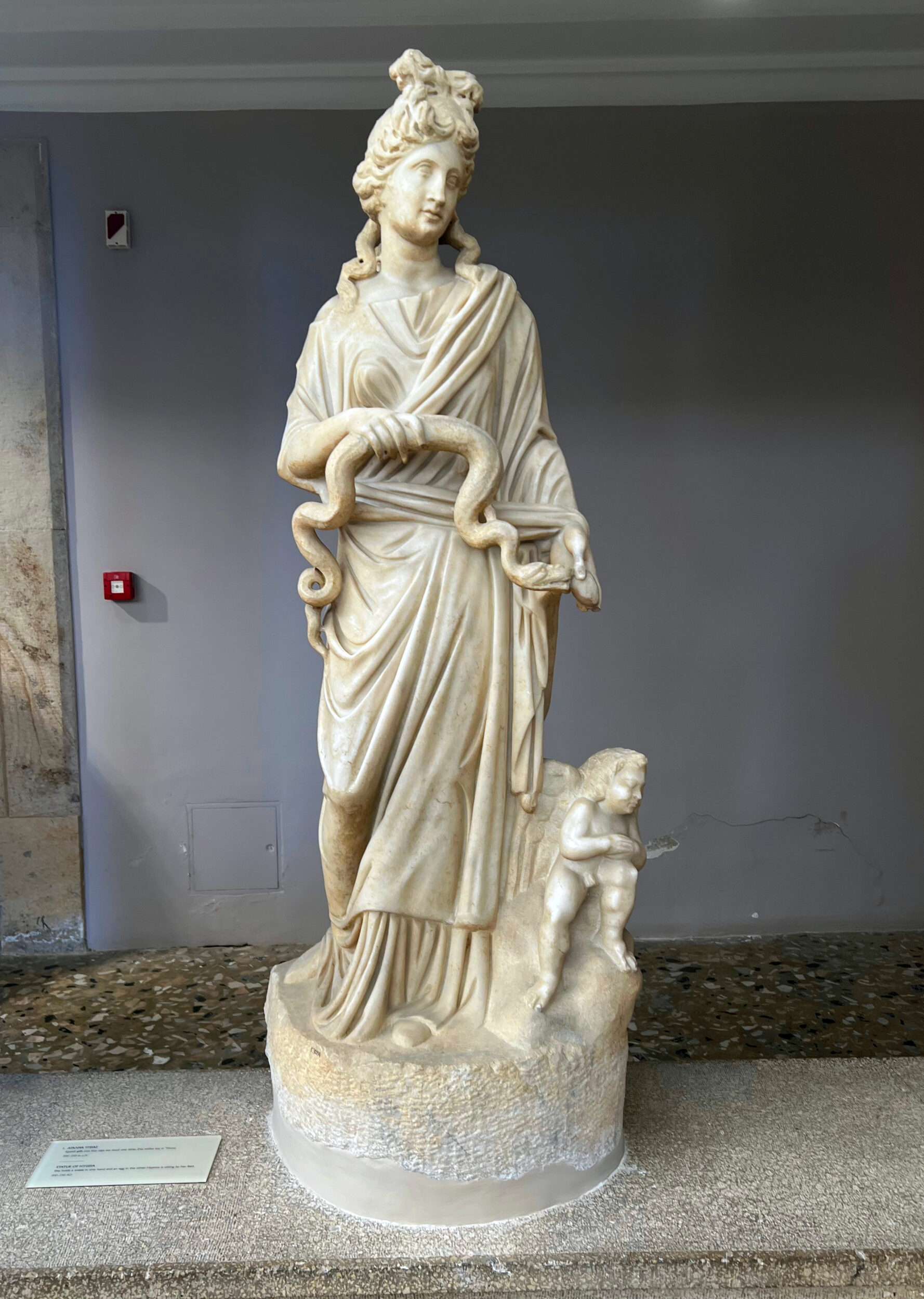
Left: Statue of Hippocrates; Right: Statue of Hygieia, daughter of Asclepius
To know more about the history of Kos, join Dr Christopher Gribbin on our tour Cyprus, Kos & Rhodes: Civilisations of the Eastern Mediterranean and explore the rich history of the Eastern Mediterranean. Visit spectacular archaeological sites, crusader castles, Byzantine frescoed churches and extraordinary maritime museums with shipwrecks and cargo dating back to Alexander the Great.
Or travel on Greek Islands of the Aegean: Minoans to Crusaders with Dr Christopher A. Tuttle who will share with you his extensive knowledge about the ancient and medieval periods in the Aegean and Mediterranean Seas as we journey through Crete; the diverse islands of the Cyclades archipelago, visiting Santorini, Naxos, Paros, Antiparos, Tinos, Delos and Mykonos; and the Dodecanese islands of Kos, Symi and Rhodes.
 Greek Islands of the Aegean: Minoans to Crusaders 2027