The Mozabites of the M’Zab Valley: Cultural Continuity in the Algerian Sahara
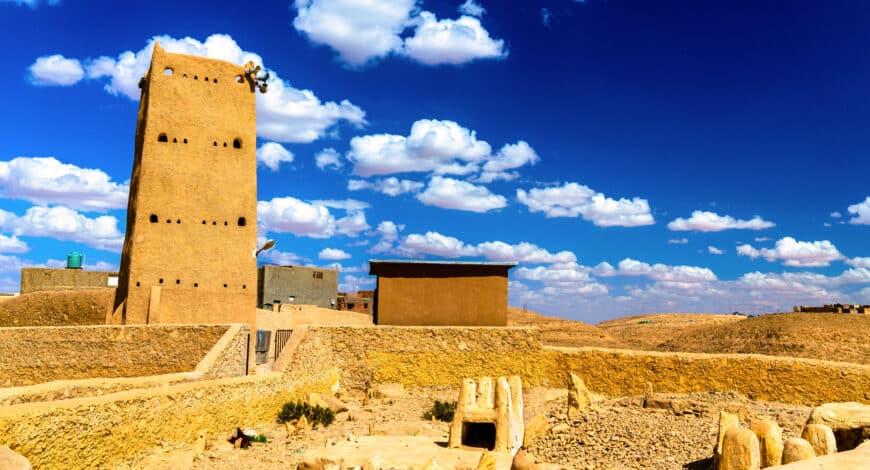
Located 600 km south of Algiers, in the heart of the Sahara Desert, the M’Zab Valley forms an extraordinarily homogenous ensemble with an original culture that has preserved its cohesion throughout the centuries. Separated by both distance and culture from the Mediterranean north, or even the Algerian Sahara of Tamanrasset, Ghardaia, as the M’Zab valley is usually called (after its largest city), is unlike anywhere else in Algeria.

The rocky landscape is irrigated by ingenious indigenous techniques, creating huge palm groves harvested by the local Mozabite people. The Mozabites are a branch of a large Berber tribe, the Iznaten, which lived in large areas of middle southern Algeria. After the Muslim conquest of the Maghreb, the Mozabites became Muslims of the Mu’tazili school known for its neutrality in the dispute between Ali and his opponents after the death of the third caliph, Uthman. By the 10th century the term al-muʿtazilah had come to refer to a distinctive Islamic school of theology, kalām, the scholastic, speculative, and rational study of Islamic theology. The fall of the Rustamid state in 909, at the hands of the Fatimids, led the royal family and some of their citizens to choose the M’Zab Valley as their refuge. The Rustamids were Ibadi and successfully converted the indigenous Mozabites.


These hardy folk still follow the Ibadi sect of Islam today and have constructed five fortified cities (ksours) in the valley. Comprised of El-Atteuf, Bounoura, Melika, Ghardaïa and Beni-Isguen (founded between 1012 and 1350), the M’Zab Valley has conserved practically the same way of life and the same building techniques since the 11th century. Ordered as much by a specific social and cultural context as by the need for adaptation to a hostile environment, this choice responded to a historic need for withdrawal and a defensive imperative.
The Traditional Architecture of the M’Zab Valley
The Mozabites built concentric fortified cities, surrounding central, fortress-like mosques whose minarets were used as watchtowers. The mosque is conceived as the last bastion of resistance in the event of a siege and comprises an arsenal and a grain store. Dwellings, storerooms, and other structures ring the main mosque in expanding clustered circles, emphasising family privacy and communal egalitarianism. Some of the towns are still protected by high walls.
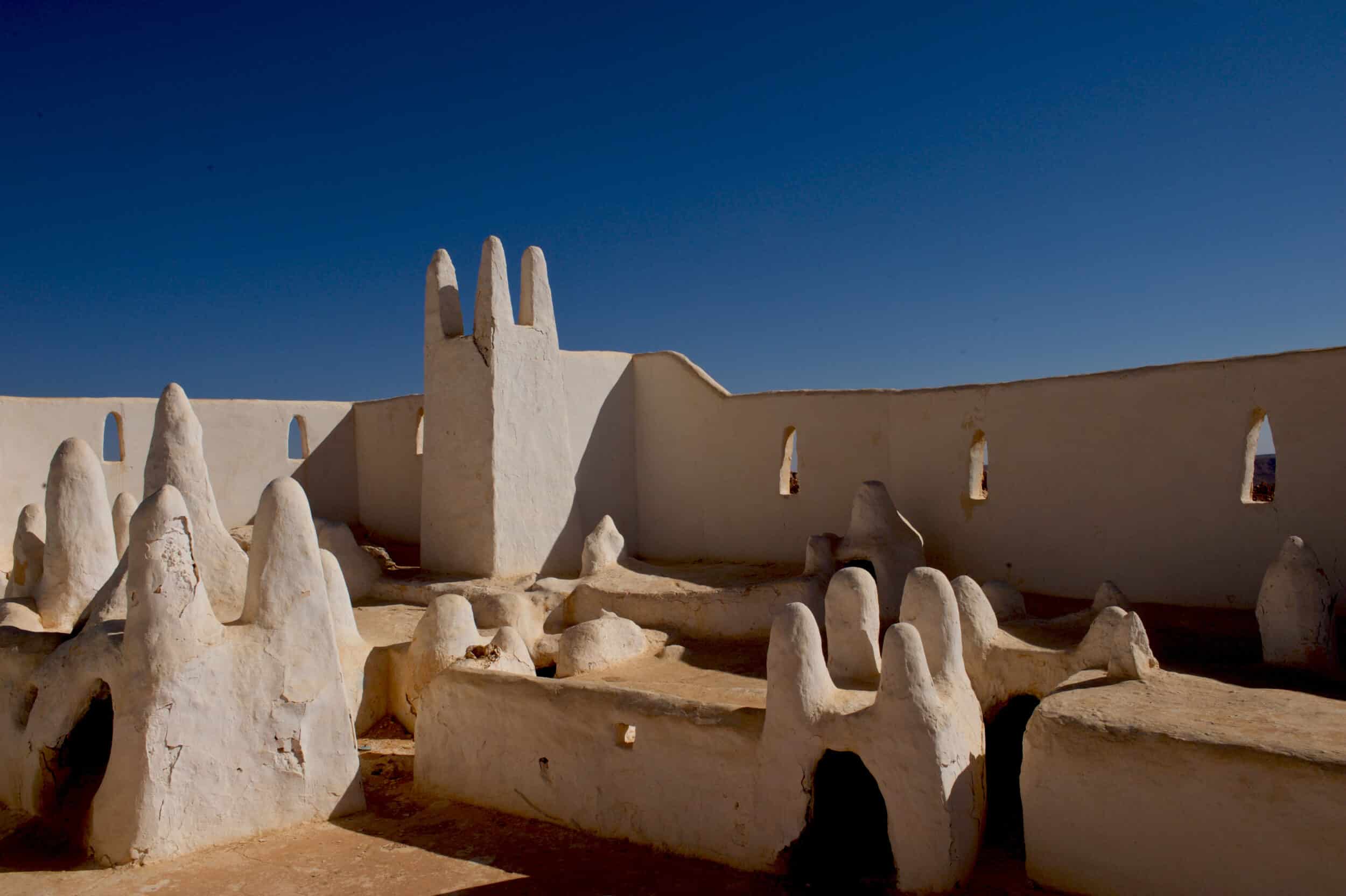
The fortified ‘towns’ of El Atteuf, Bounoura, Ghardaia and the ‘Holy City’ of Beni Isguen all present an austere face to an unsympathetic world, and this functional architecture was a great inspiration for contemporary architecture and town-planning, and to Le Corbusier who visited in 1931. The aesthetic of the M’Zab towns played a substantial role in the formulation of his Athens Charter. The M’Zab Valley was listed as a UNESCO World Heritage Site in 1982 as an intact example of traditional human habitat perfectly adapted to the environment.
The Social Practices of the Mozabites
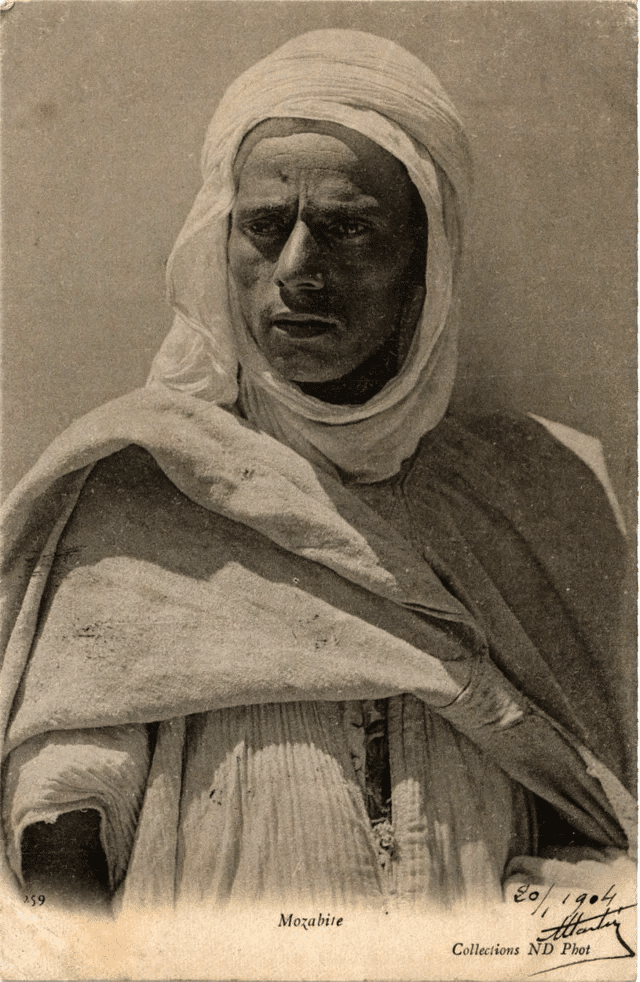 The Mozabite culture finds the foundation of its cohesion in the richness of its historical, legendary, and doctrinal traditions, which define a unique lifestyle. Mozabite society is divided into several factions that unite several extended families. Each faction generally has its own neighbourhood, cemetery, eponymous ancestor, and heritage. It has a social council that has its own assembly house and manages matters of common interest. Family cohesion remains extremely strong.
The Mozabites were isolated from the rest of the Maghreb for many years and are proudly Berber, rather than Arab. The Ibadi sect emphasises the aspect of peace in Islam, and the community is very welcoming to outsiders who respect their religious and cultural traditions. The insular nature of the Ibāḍiyya has preserved the area and its social life. A federal council, Majlis Ammi Said, unites representatives of the seven settlements as well as Ouargla, an ancient town located 200 km South-East of the M’Zab valley. This council forms a federative body for religious, social and cultural matters that is unique today. Numerous aspects of Ibāḍiyya social life are ruled by this government, even with the economic, social, and political integration to Algeria.
The Mozabite population of Berber descent still speaks its vernacular language, Mozabite, spoken by approximately 200,000 speakers and related to the Berber languages (Tamazight). All of these populations speak Arabic, the language of commerce, business, and civil relations.
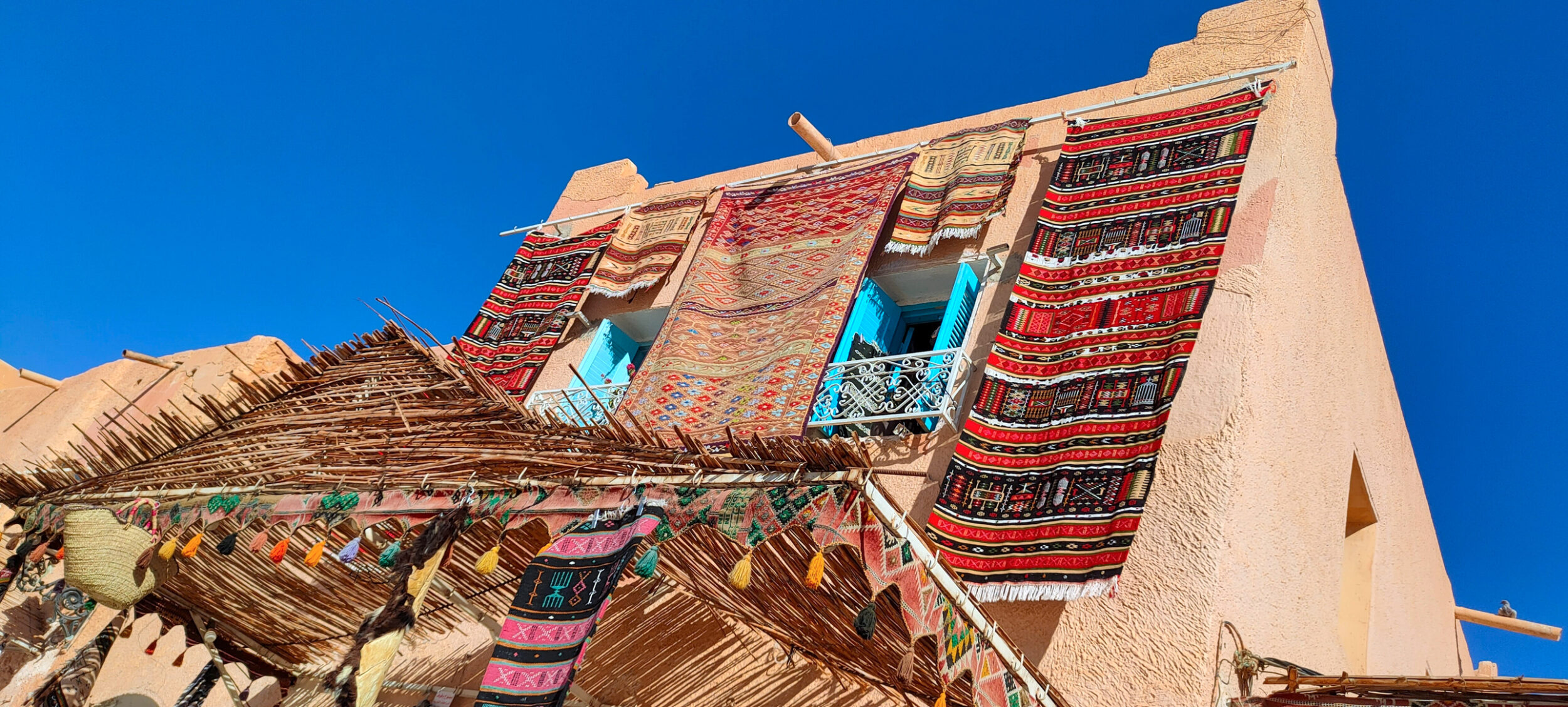
Oasis of Exchange, the Mozabite Trading Tradition
Originally farmers, the Mozabites have become very skilled traders. Indeed, for the Mozabites, work is a religious act and duty; worldly success can only be based on work, piety, and respect for Quranic precepts. By tradition, education is very important, and they have been able to master modern business techniques and accounting. The business is organized “in the family” which allows Mozabite traders to achieve competitive prices.
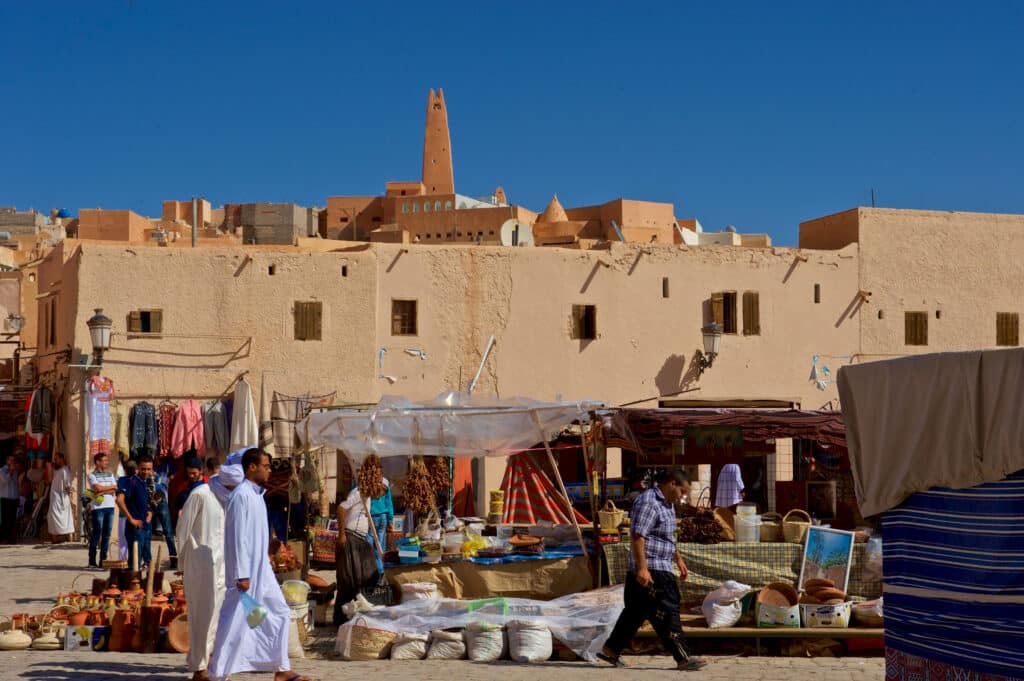
The market of the gateway town of Ghardaia provides an opportunity to explore a traditional Algerian Maghrebi souk, with all the colour and variety of its larger Moroccan counterparts and with none of the hassle or touts – an experience unlike anywhere else in North Africa: haggling, for example, is not only unwelcome but also considered impolite, and prices are both low and fair. The market place in the town of Beni Isguen is one of the liveliest and most exciting places in the whole valley. It is an auctioneer’s paradise, selling everything from spices to household goods, with items left on the ground for individuals to show an interest in purchase and prices policed by Ibadi authorities to ensure the poorest members of the community are not simply outbid by the wealthiest.

Despite their status as a religious and linguistic minority, the Mozabites participate fully in Algerian political life and occupy influential positions in the Algerian administration.
The Mozabite people stand as a testament to human resilience and cultural adaptation. Their centuries-long history in the harsh Saharan environment has forged a unique identity, shaped by intricate social structures, innovative water management techniques, and a distinct architectural style. While modernization and globalization present ongoing challenges, the Mozabite community continues to demonstrate a remarkable capacity for navigating change while preserving its core values and traditions. Their story offers valuable lessons for understanding the dynamic interplay between human societies and their environments and the enduring power of cultural heritage in the face of adversity.
Discover the Mozabiet culture on our tour Roman Algeria, the Sahara & the M’Zab Valley with archaeologist and museum professional Tony O’Connor.
Article Images
Borj Cheikh el Hadj in Beni Isguen ID 122843334 © Leonid Andronov | Dreamstime.com
M’zab Valley map by Peter Fitzgerald CC BY-SA 2.0 https://creativecommons.org/licenses/by-sa/2.0 via Wikimedia Commons
El Atteuf, an old town in the M`Zab Valley in Algeria ID 122966417 © Leonid Andronov | Dreamstime.com
Ksar Bounoura, an old town in the M`Zab Valley in Algeria ID 122930635 © Leonid Andronov | Dreamstime.com
Tombs, Melika, M’Zab Valley, Algeria by Kristen Hellstrom
Mozabite man vy Neurdein, Public domain, via Wikimedia Commons
Market square in the city center of Ghardaia, Algeria ID 305523699 © Hocine Haroun | Dreamstime.com
Market square, Ghardaia by Kristen Hellstrom
Streets of Ghardaia by Krsiten Hellstrom
These images have been resized and edited for this website