
Iconic Gardens, Celebrated Plant Collections & Natural Landscapes of Ireland 2027
Status: limited
27 Jun – 14 Jul 2027


Your leaders


Iconic Gardens, Celebrated Plant Collections & Natural Landscapes of Ireland 2027
Tour Highlights
Led by Stephen Ryan, with the assistance of Craig Lidgerwood, explore the Emerald Isle, home to the world’s greenest and breathtaking landscapes, historic castles, UNESCO World Heritage listed monuments, and iconic gardens with celebrated plant collections.
- Tour award-winning private gardens with their owners, including Patthana, home to artist TJ Maher; The Victory Garden developed by plantsman Dave Victory; Douentza, home to plant-enthusiast, Rachel Darlington; Kilgar Gardens designed by Paula Byrne and Carl Wright’s Caher Bridge Garden located in the heart of the Burren.
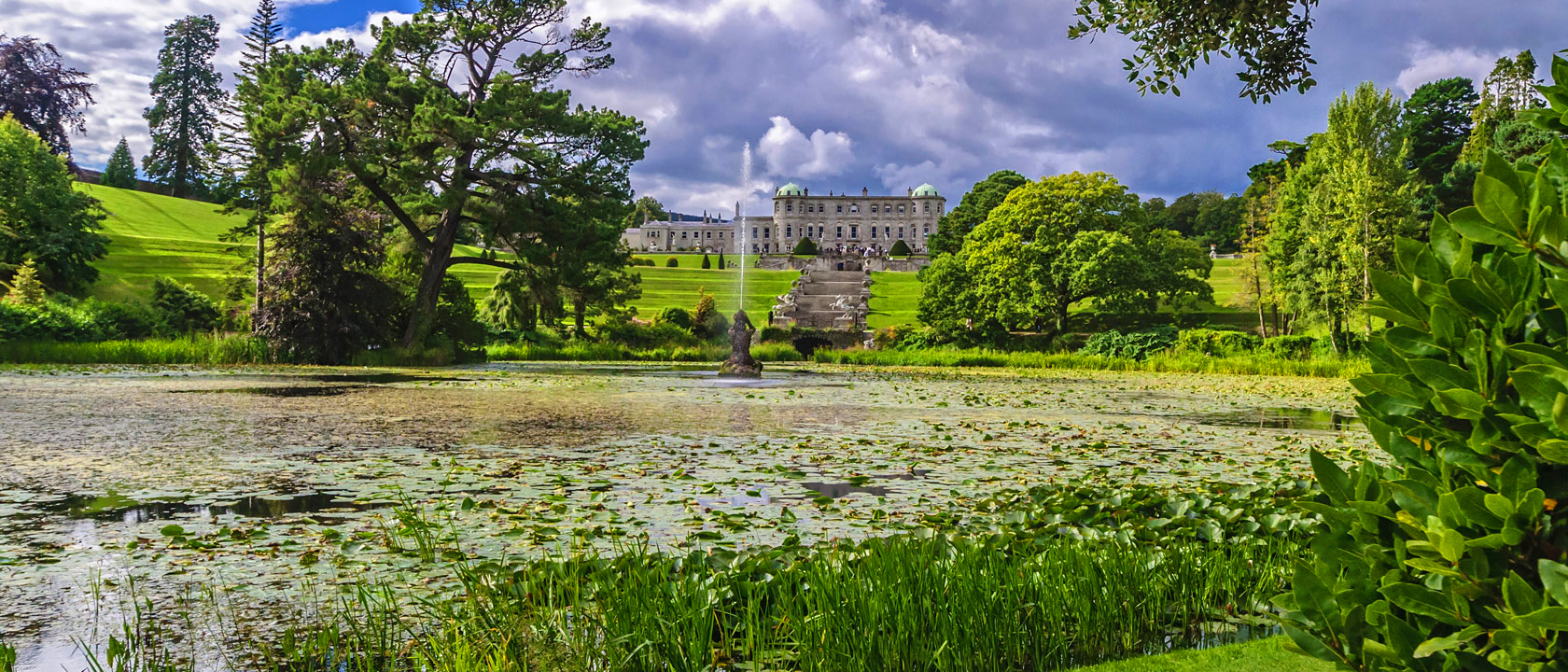
- Journey south through the wild Wicklow countryside to Powerscourt, whose carefully curated gardens were voted the 3rd Best Garden in the World by National Geographic.
- Explore the National Botanic Gardens in Glasnevin, home to over 16,000 plant species and cultivars from a variety of habitats from around the world.
- Tour historic houses and castles including: Bantry House, Blarney Castle, Birr Castle and Fota House.
- At Birr Castle Demesne explore 48 hectares of award-winning formal gardens, the castle, Ireland’s Historic Science Centre, and the Great Telescope – once the largest in the world.
- Travel through Connemara National Park to Kylemore Abbey which features a magnificent Victorian Walled Garden created in 1868.
- Journey through the karst landscape of The Burren to learn about the area’s unique natural history; view the prehistoric, Poulnabrone Dolmen; and visit medieval churches with carved stone crosses.
- Enjoy an eco-cruise to Little Skellig famed for its 35,000 pairs of gannets and resident colony of puffins; and the UNESCO World Heritage Site of Skellig Michael whose northern peak features a Gaelic monastery founded between the 6th and 8th centuries.
- While based in Kenmare, explore private gardens along The Ring of Kerry; and take a small boat to Garnish Island whose renowned gardens were designed by Harold Peto.
- Tour the organically managed gardens of The Ballymaloe Cookery School founded by celebrity chef, Darina Allen.
- Tour the historic garden at Lismore Castle. First constructed in about 1605, the Upper Garden is considered the oldest continuously cultivated garden in Ireland.
- Explore the entrancing 18th-century landscape at Heywood Gardens whose formal gardens were designed by Sir Edwin Lutyens; and tour the gardens of Mount Congreve Estate, home to one of “The Great Gardens of the World”.
- Irish gardener and horticultural writer, William Robinson (1838 -1935), is often referred to as ‘the father of the English flower garden’. His books The English Flower Garden and The Wild Garden, challenged the formality of High Victorian patterned gardening and popularised more natural planting of hardy perennials, shrubs and climbers. We view a number of gardens in the ‘Robinsonian-style’ including those at Altamont and Mt Usher.
- Brú na Bóinne is Ireland’s richest archaeological landscape. Tour the UNESCO World heritage listed prehistoric passage tombs of Newgrange and Knowth.
- Drive through the scenic glaciated valleys of the Wicklow Mountains and explore Glendalough where St Kevin founded his monastery in the 6th century. In Dublin, visit the Trinity College Library to see the Book of Kells, made by Columban monks around the year 800.
- Tour Hunting Brook Gardens by talented contemporary designer, Jimi Blake. This fascinating and flamboyant garden has one of Ireland’s largest private collections of plants. We also view the gardens of Airfield Estate whose gardens came into prominence under Jimi’s leadership, and were later redeveloped by Arabella Lennox Boyd and Dermot Foley.
Overnight Dublin (2 nights) • Galway (2 nights) • Kenmare (4 nights) • Cork (3 nights) • Kilkenny (3 nights) • Dublin (3 nights)
Itinerary
The following itinerary describes a range of monuments and gardens which we plan to visit. Many are accessible to the public, but others require special permission which may only be confirmed closer to the tour’s departure. The daily activities described in this itinerary may change or be rotated and/or modified in order to accommodate alterations in opening hours, flight schedules and confirmation of private visits. Participants will receive a final itinerary together with their tour documents prior to departure. The tour includes breakfast daily, lunches & dinners indicated in the detailed itinerary where: B=breakfast, L=lunch and D=dinner.
Dublin - 2 nights
Day 1: Sunday 27 June, Dublin – Dundrum – Enniskerry – Dublin
- Tour commences at 10am in the foyer of the hotel
- Airfield Estate Gardens, Dundrum
- Powerscourt House & Garden, Enniskerry
- Welcome Dinner
Meeting Point: please meet your tour leaders and fellow travellers in the foyer of the hotel at 10am.
Following a short welcome meeting, we depart Dublin for Airfield Estate, a working farm whose gardens came to prominence under the leadership of renowned plantsman Jimi Blake. Garden and landscape designers, Arabella Lennox Boyd and Dermot Foley, played a key role in the redevelopment of the gardens in 2012. Spread over 6 acres, the gardens are composed of diverse spaces including an ornamental walled garden, an orchard border, a greenhouse garden, a sunken garden and an extensive organic certified fruit, vegetable and edible flower garden. A light lunch will be served in the estate’s restaurant.
Next, we journey south through the wild Wicklow countryside to Powerscourt, whose carefully curated gardens were voted the 3rd Best Garden in the World by National Geographic. Highlights include the Italian Garden which features ornate terraces, sculptures and beautiful views of Sugarloaf Mountain; Ireland’s longest herbaceous border containing over 700 varieties of plants; the exquisite Japanese Garden; the Walled Gardens containing hundreds of heritage roses; and the Triton Lake whose magnificent fountain is based on that of the Piazza Barberini in Rome.
Upon returning to Dublin, we enjoy a welcome dinner at a local restaurant. (Overnight Dublin) LD
Day 2: Monday 28 June, Dublin – Glasnevin – Howth Peninsula – Dublin
- National Botanic Gardens, Glasnevin
- Fishing village of Howth
- Medina Garden, Howth Peninsula
- Ardán Garden, Howth Peninsula
This morning, we visit the National Botanic Gardens in Glasnevin, renowned for their exquisite plant collections. They are home to over 16,000 plant species and cultivars from a variety of habitats from around the world. This includes over 300 endangered plant species, six of which are already extinct in the wild. The jewel in the Gardens’ crown is a set of exquisitely restored and planted historic glasshouses. Most notable among these are Richard Turner’s Curvilinear Range and the Great Palm House, Ireland’s only tropical rainforest. Outdoor features include the rose and rock gardens; double herbaceous borders; the pond and river walks; an organic fruit and vegetable garden; wild Ireland the native conservation area; and a grand row of yew trees planted when the gardens were laid out in 1795.
Midday we continue to the fishing village of Howth, located on the peninsula of Howth Head. This scenic harbour is known for its resident seals, pretty beaches and wildflower-covered sea cliffs. Following a light lunch at a local inn we visit two private coastal gardens.
The coastal, Medina Garden, of Karl and Marcella has a tropical feel, specialising in palms, tree ferns, bamboo and other architectural plants. The award-winning garden is a RHSI Partner Garden and has featured on RTE’s Garden Passions, in Shirley Lanigan’s book entitled Guide to Irish Gardens and in Irish Garden Magazine. The garden is on one-third of an acre (1350 square meters), set out in various small compartments, and includes a small Japanese style garden, woodland area, water feature, patio areas and various mixed borders. The back garden is southeast facing and slopes towards the back of the house. Despite its exposed location, the garden finds refuge behind deep, towering hedges which create a unique microclimate and protect the delicate flora from the coastal winds.
Ardán Garden is a dynamic, contemporary and ever-evolving garden which includes an eclectic botanical collection, artistically arranged. Spread over half an acre, the garden includes large densely planted herbaceous areas; a white garden; an exotic garden with a pond and bog garden; a vegetable garden and a small woodland. Ardán is gardened organically and is part of the UNESCO Dublin Bay Biosphere. (Overnight Dublin) BL
Galway – 2 nights
Day 3: Tuesday 29 June, Dublin – Kilcock – Birr – Galway
- Kilgar Gardens, Kilcock
- Birr Castle Demesne: award-winning gardens, castle, Great Telescope & Historic Science Centre
We depart Dublin early this morning for a visit to Kilgar Gardens. This three-acre garden, lovingly designed and maintained by Paula Byrne, comprises a series of themed, interconnected garden rooms. The first room is a blaze of colour with calla lilies, dahlias and poppies. Next, is the Urn Walk, a shaded garden planted with ferns, acers, tulips and alliums. There is also a Rose Garden featuring David Austen roses; a Mediterranean room which brims with pots and colourful annuals; a meadow garden with its winding grass paths and natural planting which then open into the natural garden, filled with cherry blossom tress. The final room is the serenity garden, the most recent of Paula’s designs, inspired by a trip to Normandy.
This afternoon we explore Birr Castle Demesne whose 48 hectares of award-winning formal gardens, surrounded by the hornbeam cloister walk, boast the world’s tallest box hedges along with an impressive plant collection of rare species from around the world. We tour the Castle and visit Ireland’s Historic Science Centre, and the Great Telescope, once the largest in the world, created by the 3rd Earl of Rosse in the 1840’s. (Overnight Galway) BL
Day 4: Wednesday 30 June, Galway – Kylemore Abbey – Cong – Galway
- Kylemore Abbey and Victorian Walled Garden
- Historic village of Cong
This morning we visit the Benedictine Abbey of Kylemore. Our journey takes us through Connemara National Park, with its varied landscape and its wild Connemara ponies, said to be descended from Arab horses that survived the Armada shipwrecks along the Galway coast.
The magnificent Kylemore Castle, later to become popularly known as Kylemore Abbey, was built between 1864 and 1871 for Dr Mitchell Henry, who was from a wealthy family of cotton magnates in Manchester. In 1920 the estate was purchased by Benedictine nuns, who needed a base as they were fleeing the dangerous violence of Ypres, Belgium during WWI. It is still owned and run by the nuns. A highlight of the estate is the Victorian Walled Garden which was created in 1868 and once boasted 21 heated glasshouses and a team of 40 gardeners. Comprised of roughly 2.5 hectares, the garden is divided in two by a beautiful mountain stream. The eastern half includes the formal flower garden and glasshouses while the western part includes a vegetable garden, herbaceous border, fruit trees and a rockery and herb garden. There is also a shaded fernery, an important feature of any Victorian Garden. Following our tour led by Anja Gohike (schedule permitting), there will be free time to explore the house and the beautiful little Gothic Church.
After lunch we return to Galway via the historic village of Cong in Co. Mayo, set picturesquely on a narrow isthmus (conga) between Lough Mask and Lough Corrib. The village, with its ruined medieval abbey, was the setting for John Ford’s dual-Oscar winning 1952 film, The Quiet Man, based on a story by the Irish writer Maurice Walsh. (Overnight Galway) B
Kenmare – 4 nights
Day 5: Thursday 1 July, Galway – The Burren – Kenmare
- Caher Bridge Garden
- The Burren Centre, Poulnabrone Dolmen & carved stone crosses of Kilfenora
Leaving Co. Galway, we head south into Co. Clare to explore the Burren, an area of great geological and botanical significance. Pastures and shallow lakes are interspersed with wide flat areas of eroded limestone, formed by past glacial activity, which gave rise to the name boireann (rocky place). These limestone pavements are criss-crossed with grykes (crevices), creating a unique micro-climate pattern in which Alpine gentians and Mediterranean geraniums grow side by side, attracting a great variety of butterflies, birds, and other wildlife.
We begin with a visit to Caher Bridge Garden, a private, award-winning garden created from what was once a dense hazel and blackthorn scrub. The garden includes large collections of snowdrops and daffodils, hostas, daylilies, crocosmia, and woodland plants and ferns. It has been featured in The Irish Times, The Irish Garden Magazine, and is included in the book ‘The 100 Best Gardens in Ireland’.
At the Burren Centre in Kilfenora, we learn more about the area’s unique natural history. There are also fascinating reminders of Neolithic settlement in the Burren, including the Poulnabrone Dolmen, as well as medieval churches and carved stone crosses.
After lunch, we continue our journey south to Kenmare, a charming small town in the south of County Kerry. (Overnight Kenmare) BL
Day 6: Friday 2 July, Kenmare – Ring of Kerry – Kenmare
- Kells Bay House Gardens, Kells
- Gearha Garden, Blackwater Valley
Today, we explore a magnificent corner of The Ring of Kerry. We begin with a visit to Kells Bay House Gardens, which command a wonderful vista overlooking Dingle Bay and the peninsula. The gardens, covering 20 hectares in a short V-shaped valley leading down to the sea, contain one of the finest collections of southern hemisphere plants in Europe. The centrepiece, Tree-fern Forest, which has attracted horticultural enthusiasts for decades, is comparable to similar forests in Tasmania. With its unique micro-climate and fabulous canopy, there are plants here of every description from around the world. We shall explore various walking routes designed to access the major features of the garden including the Sky Walk Rope Bridge – Ireland’s longest. Lunch will be served in the Salla Thai Restaurant.
This afternoon we visit Gearha Garden, a private garden owned by Louise and Stephen Austen who have lived here for more than 20 years. Located in Blackwater Valley, they have created an idyllic rural oasis looking onto the Ballaghbeama Gap. The garden, which contains many unusual plants and shrubs, stretches into the native bog to a newly planted arboretum. (Overnight Kenmare) BL
Day 7: Saturday 3 July, Kenmare – Garnish Island – Bantry – Kenmare
- Garnish Island, Bantry Bay
- Bantry House and Garden, Bantry Bay
We begin today by taking a small boat to Garnish Island (also known as Ilnacullin) which is nestled in the sheltered coastal harbour at Glengarriff in Bantry Bay. The garden was designed by Harold Peto, acclaimed architect and designer (1854–1933), for its owner John Bryce who purchased the island from the War Office in 1910. Spread over 15 hectares, the garden is renowned for its diverse plant life, seasonal colours, and features like the Grecian temple, Italianate Loggia Garden, and Martello Tower which dates from the time of the Napoleonic wars.
Midday we continue to Bantry House and Garden, a historic stately home overlooking Bantry Bay along the Wild Atlantic Way. Owned by the White family (formerly Earls of Bantry) since 1739, this elegant estate combines a richly decorated Georgian mansion with Italianate gardens. A tour of the house showcases rooms filled with treasures collected by the 2nd Earl of Bantry during his European Grand Tour and include Aubusson tapestries originally made for Marie Antoinette as well as an Arab chest from the Sultan of Zanzibar. There is also a cobalt-blue dining hall adorned with portraits and a majestic library.
The Italianate gardens, designed by Richard White, 2nd Earl of Bantry, and his wife Mary, cascade over seven terraces, with the house on the third. The Parterre, a sunken garden with intricate box hedges and a fountain surrounded by Wisteria sinensis and Wisteria floribunda, dominates the southern aspect. The iconic “Hundred Steps,” a steep stone staircase flanked by azaleas and rhododendrons, leads to woodland with Scots pines. The north terraces feature 14 round beds flanked by statues and pots Richard White brought from his travels. The gardens, restored since 1997, are vibrant from April to October, especially in spring and summer when wisteria, magnolias, and subtropical plants thrive. (Overnight Kenmare) BL
Day 8: Sunday 4 July, Kenmare – Skellig Islands – Kenmare
- Day at leisure in Kenmare OR optional Eco Cruise around Little Skellig and the UNESCO World Heritage site of Skellig Michael
Today you have the option to explore Kenmare at leisure. This charming town blends breathtaking scenery with a mighty food and pub scene. You may wish to take the walking trail that takes you through the best of Kenmare including the stone circle and the scenic Reenagross Park. This route is a leisurely 3.6km loop on mostly flat terrain, taking about 1.5hrs to complete. The Kenmare Stone Circle is easily reached from the town centre. It includes 15 boulders in an ellipse-shaped circle believed to date back to the Bronze Age (2200 to 500 BC). You may also wish to go seal-spotting in Kenmare Bay.
Alternatively, weather-permitting, you can join Stephen on an eco-boat cruise around the Skellig Islands – two small, steep, and rocky islands lying about 13km west of the Iveragh Peninsula. From Kenmare we journey approximately 1.5 hours to the small fishing village of Portmagee where we board small boats (usually 12 passengers per boat) for a cruise to both Little Skellig and the larger, Skellig Michael.
Our cruise will take us first to Little Skellig, which is an iconic BirdWatch Ireland Nature Reserve. Little Skellig is famed for its massive colony of some 35,000 pairs of Gannets, the largest breeding colony in Ireland and among the largest in the world, that make for an awe-inspiring sight from a boat. The island also houses a resident puffin colony during the breading season between April and July, and a colony of grey seals.
We then continue to the UNESCO World Heritage Site of Skellig Michael, named after the archangel Michael. Here we may also view gannets, puffins and a colony of razorbills and the island’s famous Gaelic monastery which is located on the northern peak of the island at an elevation of 170 to 180m. Founded between the 6th and 8th centuries, it became a place of refuge from the world for a small settlement of ascetic months. It comprises six beehive cells and two oratories; and probably housed no more than 12 monks and one abbot at any given time. Note: the duration of the excursion is weather dependant and varies between 2.5 and 3hrs. Anyone wishing to take this option should bring suitable wet-weather jackets as the boats are open and exposed to the elements. (Overnight Kenmare) B
Cork – 3 nights
Day 9: Monday 5 July, Kenmare – Dawros – Cork
- Dawros Gallery & Gardens
- Afternoon at leisure in Cork
This morning, we visit the private garden and studio of artist, Charlotte Verbeek. This five-acre contemporary garden is set in native woodland along the Dromoughty river and waterfall. It includes Piet Oudolf inspired drifts of grasses and perennials, natural bog, wildlife ponds and orchard. There are also areas of woodland garden displaying collections of trees and shrubs which all blends seamlessly into the wild countryside of the Beara peninsula.
Following morning tea in Dawros Gardens, we continue our journey east to the historic city of Cork which has a strong seafaring and trading tradition. The remainder of the day is at leisure. For lunch you may wish to visit The English Market – a roofed food market that has been trading since 1788. Nearby is St Patrick’s Street. Initially conceived in the early 18th century by wealthy merchants, today this is Cork’s main shopping hub. You may also wish to visit the Cork City Gaol which opened in 1824 and closed in 1923. The gaol contains fascinating displays, which not only bring to life the harshness of Irish prison life, but also provide remarkable insights into Irish society, particularly under British rule. (Overnight Cork) B
Day 10: Tuesday 6 July, Cork – Ballylanaders – Blarney – Cork
- O’Mahoney Garden, Ballylanaders
- Blarney Castle
Today we begin with a journey one hour north of Cork to visit the award-winning gardens created by Mossie and Siobhan over the last 35 years. This one-acre ornamental garden overlooks the Galtee Mountains and consists of several garden areas. These include the Original Garden with trees, shrubs and herbaceous perennials; the circular Kitchen Garden, the formal Pitch Garden with 3 coloured themed borders; and a fruit and vegetable area. There is also a small woodland and wildflower meadow.
Following morning tea in the gardens, we move onto what is possibly Ireland’s most famous attraction, Blarney Castle. You will have the opportunity to explore this romantic ruin and, of course, to kiss the Blarney stone. From the castle’s battlements there is a perfect view over the estate’s 60 acres of sprawling parklands. We will tour the gardens which have been significantly developed over recent years. The extensive network of paths connects various gardens and avenues. Highlights include a 100-metre double herbaceous border topped by an 80-metre rose pergola; the Carnivorous Courtyard; a Water Garden whose raised boardwalk is surrounded by Gunnera manicata and water loving plants; and an exceptional collection of specimen trees, some the largest of their kind in Ireland. (Overnight Cork) B
Day 11: Wednesday 7 July, Cork – Shanagarry – Fota Island – Cork
- Ballymaloe Cookery School Organic Farm and Gardens, Shanagarry
- Fota House, Arboretum & Gardens
This morning, we depart for Ballymaloe Cookery School Gardens located on a 40-hectare organic farm in County Cork. Founded in 1983 by Darina Allen, Ballymaloe is unique in being the only residential cooking school underpinned by a sustainable paddock-to-plate philosophy. We will take a guided tour of these organically managed gardens which include: The Water Garden, The Soft Fruit Garden, The Celtic Maze and Wildflower Meadow, Topiary and Shell House, The Old Pleasure Garden, The Herb Garden, Lydia’s Garden, The Ornamental Fruit Garden and The Kitchen Potager.
Midday we continue to Fota Island located on the northern shore of Cork Harbour, where we tour Fota House and its gardens. Fota House was the former residence of the Smith-Barry family (Earls of Barrymore since 1627), descendants of Philip de Barry. Originally a hunting lodge, it became the family’s main residence in the 1820s when the architect, Sir Richard Morrison, created the present regency mansion with over 70 rooms. The Fota Gardens, which consist of a structured arboretum, walled garden and terraces, include rare and exotic shrubs and trees, along with an extensive rose garden. The layout and structure of the arboretum and gardens date largely from the tenure of the Smith-Barry family, who recognised the significance of Fota’s sheltered location and warm soil – “Fota” is derived from the Irish “Fód te” meaning warm soil – which provide ideal conditions for cultivating rare and exotic trees and plants from around the world. (Overnight Cork) BL
Kilkenny – 3 nights
Day 12: Thursday 8 July, Cork – Lismore – Kilmeaden – Kilkenny
- Lismore Castle Gardens
- Mount Congreve Gardens, Kilmeaden
Today we explore two magnificent gardens in County Waterford. We begin with a visit to Lismore Castle, the Irish residence of the Dukes of Devonshire (Chatsworth being their English seat). We will take a tour through its historic gardens with head gardener Colm O’Driscoll (schedule permitting). The 3 hectares of ornate and manicured gardens are thought to be the oldest cultivated gardens in Ireland. Set within the outer defensive walls, the gardens are divided into three distinct parts: the Reilig Garden, the Upper Garden, and the Lower Garden. The Reilig Garden, so-called because there is a medieval graveyard in this area, is surrounded by walls that date to the 13th century. The walled Jacobean Upper Garden was first constructed by Richard Boyle, the 1st Earl of Cork in about 1605. While most of the walls and terraces remain the same, the plantings have changed and now include a mix of ornamental borders and productive areas, with vegetables, herbs, fruit and flowers grown for the kitchen and house. The less formal Lower Garden was mostly created in the 19th century for the 6th Duke of Devonshire, Sir Joseph Paxton’s patron. Meandering paths lead you through this informal setting of trees and shrubs and out onto open lawns. The historic yew avenue in the heart of the garden is much older than the garden itself.
Midday we head west to Kilmeaden to visit the Mount Congreve Estate, home to one of “The Great Gardens of the World”. Mount Congreve House, residence to six generations of Congreves, was built in 1760 by the celebrated local architect John Roberts. Accompanied by the head gardener, we will tour the gardens which comprise around 28 hectares of intensively planted woodland, a 1.6 hectare walled garden and 16 kilometres of walkways. Planted on a slight incline overlooking the River Suir, Mount Congreve’s entire collection consists of over three thousand different trees and shrubs, more than two thousand Rhododendrons, six hundred Camellias, three hundred Acer cultivars, six hundred conifers, two hundred and fifty climbers and fifteen hundred herbaceous plants.
In the late afternoon, we arrive in Kilkenny, a lovely town on the River Nore, dominated by its grand 12th century Norman castle, and famous also for its historic streets which include approximately eighty pubs! (Overnight Kilkenny) BL
Day 13: Friday 9 July, Kilkenny – Bunclody – Kiltegan – Tullow – Kilkenny
- Douentza Garden, Bunclody
- Patthana Garden, Kiltegan
- Altamont Gardens, Tullow
Today we visit three private country gardens located in the neighbouring counties of Wexford, Wicklow and Carlow.
We begin with a visit to Douentza Garden, the creation of plant-enthusiast, Rachel Darlington. Rachel is a columnist for the Irish Garden magazine, author and horticultural YouTuber. Douentza is divided into several garden rooms, each one having its own distinctive character. The garden includes expansive herbaceous borders, clipped hedging, bog planters, arches and paths and a large glasshouse of rare and ornamental plants. It is now an RHSI partner garden.
Midday we continue to the award-winning Patthana Garden, a small village garden which is home to artist TJ Maher and Simon Kirby. Set on over a third of an acre, the garden is laid out in a series of different garden spaces comprising of a lower cobbled courtyard with its Potting shed and a sunken meditation room leading to the main courtyard with a small wildlife pond. Both these areas house an extensive collection of plants from the hardy to the tender and exotic. Circular granite steps lead to the Inner Garden with its borders of herbaceous perennials, tender plants and annuals and unusual shrubs and trees. Patthana is gardened organically with many plants chosen for their attraction to wildlife. In 2021 a new exciting garden called the ‘Torc’ garden was created. The garden is described in TJ Maher’s book ‘Grounded in the Garden: An artist’s guide to creating a beautiful garden in harmony with nature’. Most recently the garden was featured in ‘RHS Gardens of Great Britain and Ireland: Your Guide to 100 of the Most Beautiful Gardens’, published in 2025.
We end the day with a visit to Altamont Gardens, a large and beautiful estate covering 16 hectares. The Robinsonian-style gardens are often referred to as ‘the jewel in Ireland’s gardening crown’. There are lawns and sculpted yews that slope down to a lake ringed by rare trees and rhododendrons. A fascinating walk through the Arboretum, Bog Garden and Ice Age Glen, sheltered by ancient oaks and flanked by huge stone outcrops, leads to the banks of the River Slaney. Some of the oaks are believed to be over 500 years old. The gardens also feature a Wellingtonia, the Sequoiadendron giganteum or Giant Redwood, planted to commemorate the Battle of Waterloo. (Overnight Kilkenny) BL
Day 14: Saturday 10 July, Kilkenny – Heywood Gardens – Abbeyleix – Kilkenny
- Heywood Gardens
- Lunch at Bramley Abbeyleix
- Afternoon at leisure in Kilkenny
This morning, we journey 29kms north to Heywood Gardens which form the grounds of a now vanished house. The great park was initially landscaped, in the Capability Brown style, in the late 18th century by Frederick Trench. Inspired by his Grand Tour of Europe, Trench moved hills, dug lakes, planted trees and placed follies – creating what was considered the most exquisite romantic landscape of the time. In the early 20th century Sir Hutcheson Poë commissioned Sir Edwin Lutyens to create formal gardens around the house. It is said that Lutyens engaged his long-time collaborator, Gertrude Jekyll to oversee the planting. Today the formal gardens as created by Lutyens are said to be the finest example of his work in Ireland.
We continue to the heritage town of Abbeyleix for lunch at a Michelin-listed neighbourhood restaurant. In the early afternoon we return to Kilkenny where the remainder of the day is at leisure. (Overnight Kilkneny) BL
Dublin – 3 nights
Day 15: Sunday 11 July, Kilkenny – Glendalough – Wicklow Mountains – Ashford – Dublin
- Glendalough Monastic Site
- Wicklow Mountains scenic drive
- Mount Usher Gardens, Ashford
Leaving Kilkenny, we travel north to Glendalough in Co. Wicklow, where St Kevin founded his monastery in the 6th century. Set picturesquely amid steep wooded hills, the monastery of Glendalough – which in Irish means ‘valley of the two lakes’ – flourished for over 600 years, and became an important medieval pilgrimage centre. We visit the lower valley of this beautiful site, where the main monastic buildings, including the strange chapel known as St Kevin’s Kitchen, are clustered around the tall stone round-tower. This is a place which has long inspired poets, from the Early Christian monks who wrote of their joy in its natural beauty, to Yeats who imagined the Sun and the Moon as a golden king and a silver queen dancing crazily on the point of the round-tower, to Seamus Heaney who has written about the miracle of St Kevin and the Blackbird. Of all Irish monastic sites, Glendalough is the one that most readily evokes the 6th- century description of Irish Christian asceticism as ‘the green martyrdom’.
Following a light pub lunch, we take a scenic drive through the Wicklow Mountains up to Sally Gap and around to the small village of Roundwood. The ‘Sally Gap Drive’ stretches for around 26km and takes in fine views of the surrounding blanket bog, lakes including Lough Tay, Glenmacnass Waterfall and countless viewpoints.
Then we visit Mount Usher Gardens which are considered amongst the greatest surviving wild romantic gardens of the ‘Robinsonian’ style. William Robinson who studied at the National Botanic Gardens in Glasnevin, was a fine gardener and author of numerous books including The Wild Garden and The English Flower Garden. He was a strong believer that gardens should be expressive and free from imposed order. The 22 acres of free-flowing gardens stretch along the River Vartry and contain a rare collection of over 5,000 species of mature trees, flowers and shrubs. Monty Don described them as one of his favourite gardens in the world. (Overnight Dublin) BL
Day 16: Monday 12 July, Dublin – Newgrange – Balbriggan – Dublin
- Brú n Bóinne (Newgrange)
- The Victory Garden & Balbriggan Coastal Walk
We begin with a visit to the prehistoric site of Brú na Bóinne and its great chambered cairn of Newgrange, which features in Irish mythology as the palace of Bóann, goddess of the River Boyne and consort of the sun-god. One of Europe’s most significant Neolithic cult sites, dating from over 5,000 years ago, Newgrange is the oldest solar observatory in the world: the rising sun on the winter solstice shines down the passage and illuminates the central chamber. We examine the construction of the cairn and its astronomical significance, both from the outside, and also on the inside during a memorable guided journey deep into the central chamber.
From Newgrange we journey to the seaside town of Balbriggan where we visit Antoinette and Dave Victory’s coastal garden which has been extensively developed from a former potager to a half-acre garden over the past ten years. Designed to have interest all year round, this is very much a plantsman’s garden. The garden was featured in The Irish Garden magazine in 2023.
Following our tour of the gardens and a light lunch (and time-permitting), Dave will accompany us for a short walk along Balbriggan beach whose headlands should have many emerging species at this time of the year. (Overnight Dublin) BL
Day 17: Tuesday 13 July, Dublin – Tinode – Dublin
- Hunting Brook Gardens, Tinode
- June Blake’s Garden, Tinode
- Trinity College Library (Book of Kells), Dublin (Pending renovation works in the Old Library of Trinity College)
- Farewell Dinner
We begin today with a visit to Jimi Blake’s famous garden, Hunting Brook. We will explore this fascinating, flamboyant garden which has one of Ireland’s largest private collections of plants. The gardens are described in A Beautiful Obsession: Jimi Blake’s World of Plants at Hunting Brook Gardens” co-authored by Jimi Blake and Knoel Kingsbury in 2020.
Afterwards, we head ‘next door’ to see Jimi’s sister at the delightful and contemporary June Blake’s Garden – a rare fusion of inspired design and painterly planting.
In the afternoon we return to Dublin to visit the Trinity College Library to see the Book of Kells, made by Columban monks around the year 800, and the even older Book of Durrow. These beautiful, illuminated manuscripts of the Four Gospels are among the greatest surviving treasures of Irish art and writing, the Book of Kells being described in the medieval Annals of Ulster as ‘the chief relic of the western world’. We also visit the Old Library of Trinity College, a marvellous repository of literature and scholarship. Its Long Room, one of the world’s most atmospheric interiors, is lined floor to vaulted roof with leather-bound volumes, many of them centuries old, and brooded over by marble busts of scholars.
This evening, we regather for a farewell dinner at a local restaurant. (Overnight Dublin) BD
Day 18: Wednesday 14 July, Dublin, Tour Ends
- Tour concludes in the morning
- At leisure/Check out
Our tour ends in Dublin after breakfast. In the morning you will be required to check out of the hotel. Please contact ASA if you require assistance with a transfer to Dublin Airport. B
Accommodation
ASA has selected 4-star hotels that are themselves historical buildings and/or are located in historical centres. All hotels provide rooms with en suite bathroom.
- Dublin (2 nights): The Trinity City Hotel – a 2-minute walk from Trinity College.
- Galway (2 nights): Leonardo Hotel Galway – overlooking Galway Bay in the historic centre.
- Kenmare (4 nights): The Lansdowne Kenmare – a boutique hotel housed in the former 18th-century residence of the 2nd Earl of Shelburn.
- Cork (3 nights): The Imperial Hotel & Spa – in the heart of the city.
- Kilkenny (3 nights): Pembrooke – just steps from Kilkenny Castle.
- Dublin (3 nights): The Trinity City Hotel – as above.
Single Supplement
Payment of this supplement will ensure accommodation in a double (or twin) room for single occupancy throughout the tour. The number of rooms available for single occupancy is extremely limited. People wishing to take this supplement are therefore advised to book well in advance.
How to Book
ASA RESERVATION APPLICATION FORM
Please complete the ASA RESERVATION APPLICATION and send it to Australians Studying Abroad together with your non-refundable deposit of AUD $1000.00 per person payable to Australians Studying Abroad.
Practical Information
Fitness Criteria
Level 2 INTERMEDIATE
For people with energetic lifestyles and very good mobilityYou must be able to:
- manage at least five to six hours of physical activity per day with ease.
- walk at a regular to moderate pace on flat or undulating terrain; some stretches may include steeper slopes or several flights of stairs.
- stand for one to two hours during visits to galleries and museums without the need to sit.
- manage your own luggage at some hotels.
Fitness Levels
Please also view the fitness criteria required for our tours, graded from Level 1 to Level 3, at www.asatours.com.au/fitness-level/
All ASA tours are active programs suitable for people with a good level of mental and physical fitness and good mobility. They are not suitable for people who lack stamina, have difficulty walking at the group’s pace or who have mobility issues. An unavoidable aspect of every tour is the need to manage walking, stair-climbing and standing for long periods of time.
It is a condition of travel that all participants agree to accept ASA’s directions in relation to their suitability to participate in activities undertaken on the tour, and that ASA retains the sole discretion to direct a tour participant to refrain from a particular activity on part of the tour. Before enrolling on an ASA tour please read the fitness requirements carefully.
Tour Price & Inclusions
AUD $13,980.00 Land Content Only – Early-Bird Special: Book before 31 March 2026
AUD $14,380.00 Land Content Only
AUD $3560.00 Single Supplement
Tour Price (Land Content Only) includes:
- Accommodation in twin-share rooms with private facilities in 4-star hotels
- Meals as indicated in the tour itinerary where: B=breakfast, L=lunch & D=dinner
- Drinks at welcome and farewell meals. Other meals may not have drinks included
- Transportation by air-conditioned coach
- Airport-hotel transfers according to the times as outlined in the tour itinerary
- Lecture and site-visit program
- Entrance fees
- Use of audio headsets during site visits
- Tips for the coach driver, local guides and restaurants for included meals
Tour Price (Land Content Only) does not include:
- Airfare: Australia-Dublin, Dublin-Australia
- Personal spending money
- Luggage in excess of 20kg (44lbs)
- Travel insurance
- Visas (if applicable)
- Porterage at hotels
Tour Map
Gallery
Deposits
A non-refundable deposit of $1000.00 AUD per person is required to reserve a place on this ASA tour.
Cancellation Fees
If you decide to cancel your booking the following charges apply:
- More than 75 days before departure: your initial deposit of $1000.00 is non-refundable.**
- 75-31 days prior 50% of total amount due
- 30-0 days prior 100% of total amount due
**$500.00 of this amount (ie 50% of your deposit) may be credited to another ASA tour departing within 12 months of the original tour you booked. We regret, in this case early-bird discounts will not apply.
We take the day on which you cancel as being that on which we receive written confirmation of cancellation.
Unused Portions of the Tour
We regret that refunds will not be given for any unused portions of the tour, such as meals, entry fees, accommodation, flights or transfers.
Will the Tour Price or Itinerary Change?
If the number of participants on a tour is significantly less than budgeted, or if there is a significant change in exchange rates ASA reserves the right to amend the advertised price. We shall, however, do all in our power to maintain the published price. If an ASA tour is forced to cancel you will get a full refund of all tour monies paid. Occasionally circumstances beyond the control of ASA make it necessary to change airline, hotel or to make amendments to daily itineraries. We will inform you of any changes in due course.
Travel Insurance
ASA requires all participants to obtain comprehensive travel insurance. A copy of your travel insurance certificate and the reverse charge emergency contact phone number must be received by ASA no later than 75 days prior to the commencement of the tour.
Final Payment
The balance of the tour price will be due 75 days prior to the tour commencement date.
Limitation of Liability
ASA is not a carrier, event or tourist attraction host, accommodation or dining service provider. All bookings made and tickets or coupons issued by ASA for transport, event, accommodation, dining and the like are issued as an agent for various service providers and are subject to the terms and conditions and limitations of liability imposed by each service provider. ASA is not responsible for their products or services. If a service provider does not deliver the product or service for which you have contracted, your remedy lies with the service provider, not ASA.
ASA will not be liable for any claim (eg. sickness, injury, death, damage or loss) arising from any change, delay, detention, breakdown, cancellation, failure, accident, act, omission or negligence of any such service provider however caused (contingencies). You must take out adequate travel insurance against such contingencies.
ASA’s liability in respect of any tour will be limited to the refund of amounts received from you less all non-refundable costs and charges and the costs of any substituted event or alternate services provided. The terms and conditions of the relevant service provider from time to time comprise the sole agreement between you and that service provider.
ASA reserves the sole discretion to cancel any tour or to modify itineraries in any way it considers appropriate. Tour costs may be revised, subject to unexpected price increases or exchange rate fluctuations.
Interested in this tour?
Take the next step
or alternatively Download PDF Reservation Application