
Southern Japan: Kyushu’s Ancient Forests, Mountain Shrines & the Spirit of the Samurai 2028

Your leaders


Southern Japan: Kyushu’s Ancient Forests, Mountain Shrines & the Spirit of the Samurai 2028
Tour Highlights
Travel with Jim Fogarty on a journey through Japan’s Southern island of Kyushu, from the bustling metropolis of Fukuoka to Yakushima, an exquisite island of ancient cedar forests off the south coast. Jim is an award-winning landscape architect and author, and one of Australia’s most knowledgeable experts on Japanese gardens. He won the award for Best Design at the 2009 World Garden Competition in Shizuoka Prefecture, and Gold and Best in Show at the 2011 Gardening World Cup Nagasaki.
- Enjoy Kyushu’s glorious flower gardens – the large swathes of flower fields at Kuju and the exquisite wisteria displays at Kawachi. Visit stroll gardens, delicate moss gardens and precise dry gardens with immaculately raked sand.
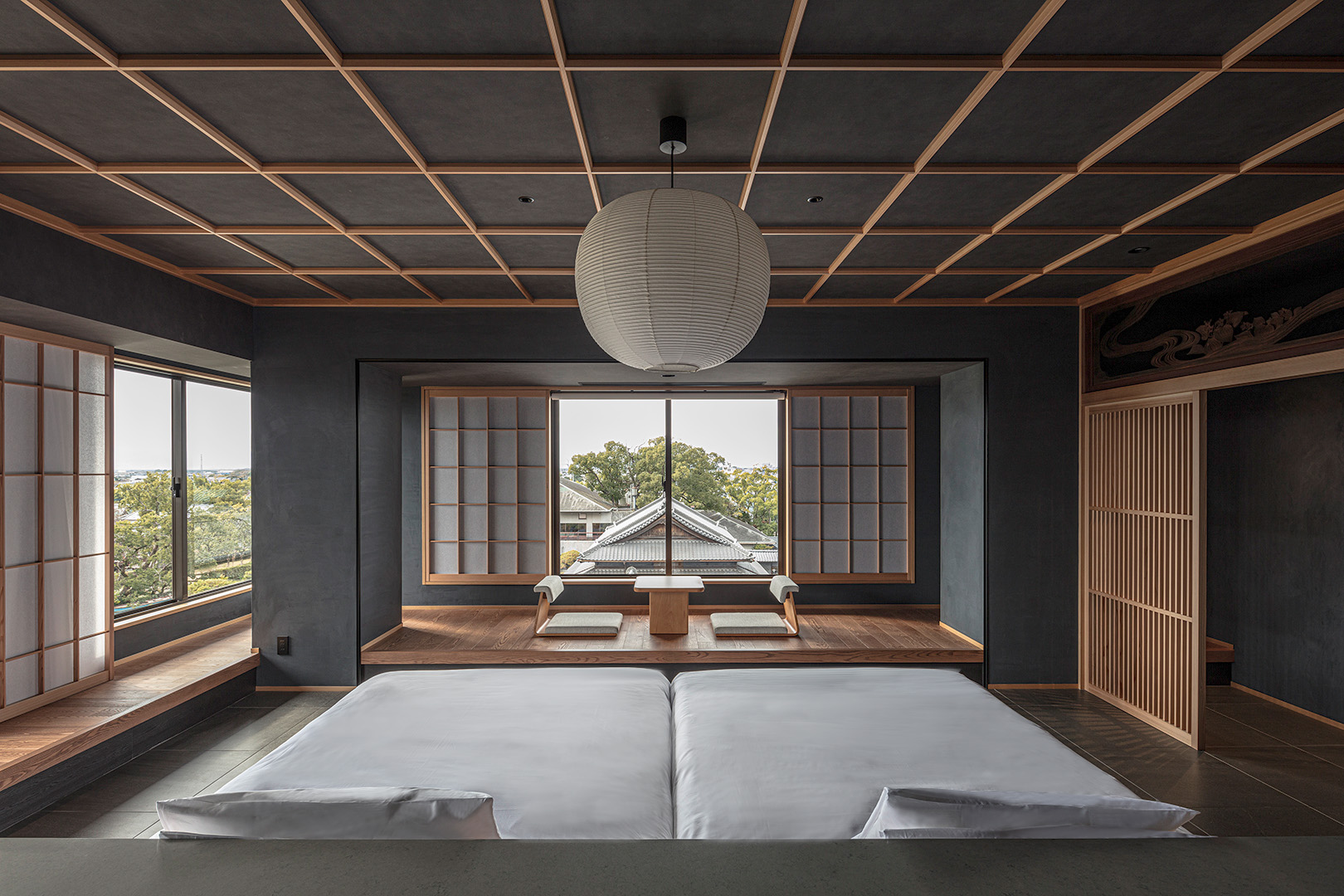
- A special highlight of this tour is a 2-night stay at the historic Ohana Ryokan in Yanagawa which is set within a tranquil garden alongside a canal. Enjoy a keiseki dinner, relax in the lounge bar and library, and contemplate the garden from the tatami-matted hall.
- Visit the Former Residence of Den’emon Ito, a large home built in the traditional style surrounded by a large stroll garden that blends Japanese and Western elements.
- Explore the well-preserved villages of Kitsuki and Usuki, where Samurai houses line cobbled streets leading to the castles, and wander amongst the stone Buddhas of Usuki.
- Discover the history of Kyushu’s ceramic traditions at Okawachiyama, known as the Village of Secret Kilns, where blue and white ceramics are used to adorn bridges and shrines.
- Visit the Kyushu National Museum that traces the art and history of Japan through its cultural interaction with other parts of Asia, particularly Korea, China and even Central Asia.
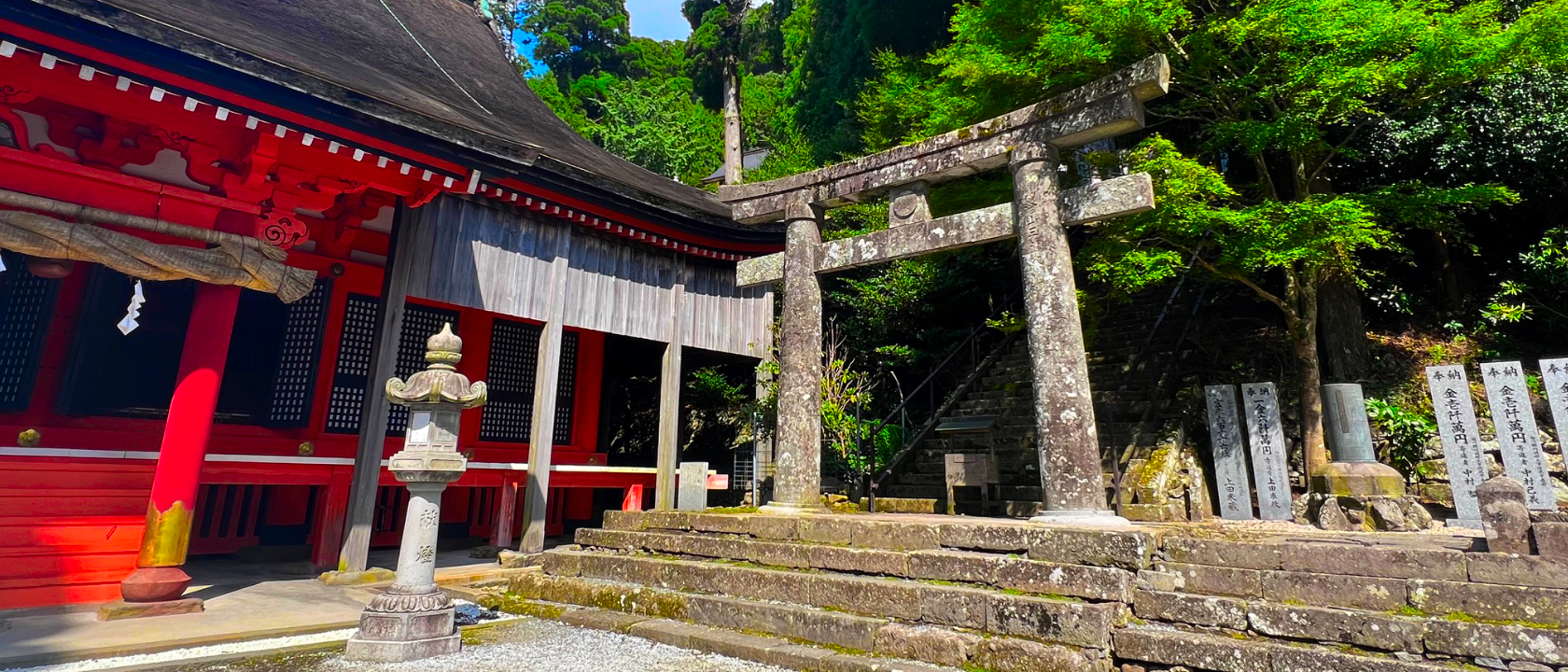
- Stroll the streets of a traditional onsen town in the mountains, and visit Mount Hikosan where red lanterns line paths to Shinto shrines with glorious views over the landscape.
- Spend 2 days on Yakushima, an exquisite island off the southern tip of Japan. Walk amongst the ancient moss-covered cedar trees and lush, verdant foliage found on this UNESCO World Heritage Listed island.
Overnight Fukuoka (2 nights) • Yanagawa (2 nights) • Nagasaki (2 nights) • Mount Aso (2 nights) • Kagoshima (1 night) • Yakushima (2 nights) • Fukuoka (2 nights)
Itinerary
The following itinerary describes a range of gardens, museums and other sites which we plan to visit. Many are accessible to the public, but others require special permission which may only be confirmed closer to the tour’s departure. The daily activities described in this itinerary may change or be rotated and/or modified in order to accommodate alterations in opening hours, flight and train schedules and confirmation of visits. Participants will receive a final itinerary together with their tour documents prior to departure. The tour includes breakfast daily, lunches & dinner indicated in the detailed itinerary where: B=breakfast, L=lunch and D=dinner.
Fukuoka - 2 nights
Day 1: Monday 10 April, Arrive Fukuoka
- Tour commences at the Hotel New Otani Hakata at 10.00am
- Tocho-ji Shrine
- Kushida Shrine
- Ohori Park – Japanese Garden
- Naka River Walk
- Welcome Dinner at a local restaurant
Meeting Point: The tour commences at 10.00am in the foyer of the Hotel New Otani Hakata.
After a brief introductory meeting we board our coach to visit two temples located nearby.
We first visit two small temple complexes nestled amongst the office and apartment buildings of central Hakata. Tocho-ji Shrine, distinguished by its colourful five-storey pagoda that soars above the site, was founded in 806 by Kobo-Daishi (also known as Kukai), the Buddhist monk, scholar, poet and calligrapher who is one of the most revered figures in Japan’s cultural and spiritual history. Nearby is the Shinto Kushida Shrine, the oldest in the Hakata and known as the guardian shrine of the city where worshippers come to pray to the enshrined god of longevity and business success.
We then travel by coach to Ohori Park, a large public space with a central lake that once served as part of the Fukuoka Castle’s moat. Within the park is the Japanese Garden, laid out in 1984 in a traditional manner with a pond, artificial hills, precisely positioned rocks and dense forests that cut-out the sounds of the modern city. There is a dry landscape garden, tea houses and a meandering watercourse.
Historically, Fukuoka and Hakata were two separate cities divided by the Naka River– Fukuoka was a castle town with samurai and Hakata was a merchant town. The cities merged in 1899 and Hakata became a principal ward of Fukuokoa city. We take an afternoon walk along the Naka Riverbank, a lively pedestrian zone that hosts the city’s famed yatai – the openair foodstalls that serve delicious, simple fare, each with its own specialities. You may wish to return to enjoy tis dining experience on a free evening in Fukuoka.
This evening we gather to enjoy a Welcome Dinner in a local restaurant. (Overnight Fukuoka) D
Day 2: Tuesday 11 April, Fukuoka – Dazaifu – Fukuoka
- Kyushu National Museum
- Dazaifu Tenmangu temple complex, including Tenkai Inari Shrine
- Komyozen-ji Garden
This morning we transfer to Dazaifu where we visit the excellent Kyushu National Museum that takes you on a journey through the art and history of Japan through the lens of its cultural interaction with other parts of Asia. In addition to displays of beautiful Japanese painting, metalwork and lacquer ware, there are textiles from Central Asia that travelled along the Silk Route, ceramics from Korea, and delicate calligraphy scrolls from China.
From the museum we walk down to Dazaifu Tenmangu, a Shinto temple complex dedicated to Heian era scholar Sugawara Michizane, and the complex is a popular place for students who come here to pray for success in their studies. The shrine is approached through a series of torii gates and a large ceremonial gateway surrounded by traditional gardens. Part of the complex is the Tenkai Inari Shrine where a tunnel of vermillion torii gates lead visitors up to the main shrine.
Nearby is Komyozen-ji Temple, a Zen temple of the Rinzai sect and founded in the 12th century. It has two very beautiful gardens. The front dry garden is formed with raked pebbles surrounding 15 rocks positioned to form the Japanese character for ‘light’. The rear moss garden is designed to be viewed form the temple’s main building. Here, in contrast to the verdant plants, stones and pebbles are used to create an abstract representation of water and land.
Before returning to Fukuoka there will be time to explore Tenjinsama-dori, a pedestrian street lined with shops and cafes. (Overnight Fukuoka) B
Yanagawa - 2 nights
Day 3: Wednesday 12 April, Fukuoka – Hikosan – Yanagawa
- Slope car up Mt Hikosan
- Hikosan Jingu Hoheiden
- Walk down stone staircase to Kaneno Torii (410 steps, 800 meters)
- Akizuki Castle Town
- Tour of Ohana Ryokan Historical Buildings
This morning we depart Fukuoka and drive to Mt Hikosan, a sacred mountain with ancient shrines offering glorious views over the Yaba-Hita Hikosan Quasi National Park. We take the slope car up to Hikosan Jingu Houheiden (the main shrine of the mountain), and then walk down the steps and paths to the Kaneno Torii, the copper gate built in 1637 that marks the entrance to the sanctuary.
We continue to Akizuki, a beautifully preserved 800-year-old castle town, the stronghold of the Akizuki and Kuroda clans. The town is dotted with the ruins of the castle and old samurai residences surrounded by clay moats and moss-covered stone walls. There will be time to explore this hidden gem, stroll along its cobbled streets and purchase your lunch at one of its traditional eateries.
In the afternoon we travel to Yamazawa where we will stay in the Ohana Ryokan, a traditional inn that maintains many historical features. The Ohana was once the residence of the Tachibana clan, a samurai family who were the overlords of the area and whose descendants still manage the ryokan. The oldest areas are now preserved as a museum with artefacts displaying the long history of the Tachibana clan and we will take a tour of the historical area before enjoying a traditional kaiseki dinner of many small, exquisite dishes that celebrate the cuisine and ingredients of Kyushu. (Overnight Yanagawa) BD
Day 4: Thursday 13 April, Yanagawa – Yoshinogari – Yanagawa
- Yoshinogari Historical Park
- Yanagawa Canal Cruise
- Afternoon at Leisure
This morning we visit the fascinating Yoshinogari Historical Park to encounter the Yayoi Period (300BC to 300AD). Here archaeologists uncovered a series of sprawling settlements, excavating pit dwellings, elevated storehouses, moats and tombs. Within the site are careful reconstructions of settlements and fortifications, along with displays of artifacts, allow visitors a glimpse into Ancient Japan.
On our return to Yanagawa we take a canal cruise in a traditional wooden punt, enjoying the town from its willow-lined waterways. The rest of the afternoon is at leisure to enjoy the facilities of the ryokan. You may wish to relax on the tatami mats in the magnificent hall that looks out to the traditional garden, enjoy a refreshment in the lounge, or explore the historic centre of Yanagawa on foot. (Overnight Yanagawa) BD
Nagasaki - 2 nights
Day 5: Friday 14 April, Yanagawa – Okawachiyama – Nagasaki
- Okawachiyama Village
- Lunch at a local Restaurant
- Tozan Shrine
- Mihara Gardens
This morning we visit Okawachiyama, known as the Village of Secret Kilns. It was a porcelain production centre from the 17th to 19th centuries for the Imperial Course, Nabeshima shogunate and other nobles. In order to preserve the secret techniques of the potters, the village was tucked away in hilly terrain with a guard post at its entrance.
At the nearby Tozan Shrine, we will see beautiful examples of ceramics from this region as the porcelain has been incorporated into its structure replacing the traditional stone, including in the torii gates and guardian statues.
We then visit Mihara Garden designed by world-renown designer Kazuyuki Ishihama. On a hill overlooking the city, this is a sanctuary of calm and beauty. Paths lead past ponds and garden beds planted to provide interest throughout the year, whether it is the sculptural forms of bare winter trees, delicate spring blossoms, the vibrance of summer flowers, or magnificent autumn foliage. (Overnight Nagasaki) BL
Day 6: Saturday 15 April, Nagasaki
- Atomic Bomb Museum
- Hypocentre Park and Nagasaki Peace Park
- Nagasaki Prefectural Art Museum
- Glover Garden
- Dejima (Dutch Island)
On 9 August 1945, three days after the first atomic bomb was dropped on Hiroshima, a B-29 bomber dropped a second bomb on Nagasaki. Cloud cover meant the pilots had limited visibility and the bomb exploded to the northwest of the city centre destroying 40 percent of the city and causing a catastrophic loss of civilian life.
The hypocentre of the explosion was transformed into a place of peace and beauty. The Atomic Bomb Museum tells the story of this dark day in Nagasaki’s history and its displays include many ordinary objects that were affected by the blast. Emerging from the museum, we walk through the Hypocentre Park and Nagasaki Peace Park, places of reflection that highlight the importance of peace and the resilience of the citizens.
We continue to the Nagasaki waterfront to visit the Prefectural Art Museum, designed by Kuma Kengo and opened in 2005. It houses a fascinating and unexpected collection of Spanish art, collected by Suma Yakichiro who was a special envoy to Spain during the Second World War.
This afternoon we explore the story of Europeans in Nagasaki. Portuguese merchants arrived in Japan in the 16th century, bringing with them new technologies, Christianity and trade. The Portuguese were expelled in 1639 and were replaced by the Dutch, and Nagasaki became the only Japanese harbour that the foreign traders could use. This seclusion ended in the mid-19th century, and more European traders established homes here. We visit the Glover Garden, an open-air museum that includes the Glover House that belonged to Scottish merchant Thomas Glover. We make our way down the hill to visit the fan-shaped artificial island of Dejima that was built in the 17th century to house the Europeans and control the spread of their religion. (Overnight Nagasaki) B
Mount Aso - 2 nights
Day 7: Sunday 16 April, Nagasaki – Kurokawa Onsen – Aso
- Ferry Across the Ariake Sea (Taira to Nagatsu)
- Kurokawa Onsen
- Kuju Flower Garden
Today we depart Nagasaki and travel to the beautiful Mount Aso National Park. We first transfer to the heart of Kyushu to the mountain village Kurokawa Onsen. This is one of Japan’s most attractive hot spring towns, where the traditional guesthouses and atmosphere of a mountain retreat have been preserved. There will be some time to stroll the cobbled laneways that meander through the village, lined with public onsen (hot spring bath houses), shops, café and shrines, before we drive to Mount Aso. On the way we will visit the Kuju Flower Garden, a spacious park with over 500 different varieties of plant. Wide paths lead us through flower fields, and the plantings were planned so that flowers can be enjoyed throughout the year. This evening we dine together at the hotel. (Overnight Aso) BLD
Day 8: Monday 17 April, Aso – Kitsuki – Usuki – Kurokawa Onsen
- Kitsuki historic village, including Kitsuki Castle and Samurai Houses
- Usuki historic village, including Samurai Houses
- Stone Buddhas, Usuki
On the east coast of Kyushu we find two fascinating villages steeped in history with well-preserved samurai districts. At Kitsuki we find a rare example of two samurai districts to the north and south, with a narrow commercial district between and the castle at the eastern end. The town’s historic character is preserved by ensuring modern ‘distractions’ such as powerlines do not impinge on the vista. Several of the Samurai Residences have been restored and now serve as museums.
Stone alleyways also lead through Usuki, principally the Nioza Historical Road, lined with temples, houses and little shops. The main place of interest is a little out of town – the Usuki Stone Buddhas. Designated as National Treasures in a country where Buddha statues are more commonly made of wood or metal, these statue date to the late Heian Period (794-1185). The 61 statues, some retaining their painted decoration, are carved into a cliff-face and set in four clusters linked by a path. (Overnight Aso) BD
Kagoshima - 1 night
Day 9: Tuesday 18 April, Aso – Kumamoto – Kagoshima
- Scenic Drive through Mount Aso National Park
- Suizenji Jojuen, Kumamoto
- Shinkansen Kumamoto to Kagoshima
- Chiran Peace Museum
This morning we then take a scenic drive through the Mount Aso National Park to Kumamoto. On the eastern side of the city is Suizenji Jojuen, a charming Edo period stroll garden built around a pond. A striking feature of the garden is the conical artificial mountain that evokes Mount Fuji.
We then travel to the very southern end of Kyushu. Before we embark on the last stage of our journey south we will visit the beautifully presented and poignant Chiran Peace Museum. Located on the Satsuma Peninsula, this was once the Chiran airbase which served as the departure point for kamikaze sorties in the final months of World War Two. The kamikaze are one of the most potent symbols of the war in Japan – young men with patriotic valour who were asked to sacrifice their lives to destroy the enemy. They were celebrated as cherry blossoms – a brief, fleeting existence marked by exquisite beauty. The buttons on the kamikaze uniforms were embossed with a blossom. (Overnight Kagoshima) B
Yakushima - 2 nights
Day 10: Wednesday 19 April, Kagoshima – Yakushima
- Early morning ferry Kagoshima to Yakushima Island
- Coach tour around Yakushima Island, visiting waterfalls, beaches, villages and shrines
This morning we travel by ferry to Yakushima, an island famed for its towering mountains, lush vegetation and ancient forests of Japanese cedar. The island is home to hundreds of endemic flowers, shrubs and trees, and is a spawning ground for loggerhead turtles. In 1993 it was declared a World Heritage Site of Natural Beauty.
Archaeologists have found traces of human habitation of the island that can be traced back 6000 years, and the island is mentioned in records from the 8th century. Yakushima was heavily logged during the Edo period, a time when a great number of castles, temples and monuments were built throughout the country, and the valuable lumber industry was established under the control of the powerful Shimazu clan. Fishing and agriculture were other important industries for the islanders.
We will follow the 100km long coastal road around the island. We visit waterfalls, beaches, villages and shrines, such as the Yahazudake Shrine on Cape Yahazu, with a red torii gate marking the entrance to a vast cave, believed to be the home of the gods of fishing and marriage. (Overnight Yakushima) BLD
Day 11: Thursday 20 April, Yakushima
- Morning program of walking the island trails to explore the ancient cedar forests
- Afternoon at leisure on Yakushima Island
This morning we take a guided walk into the forest to encounter the ancient Yakusugi (Japanese cedar) trees. The most accessible place to visit these moss-covered giants is along the boardwwalks and walking trails of a nature park called Yakusugi Land. In addition to the spectacular plant life, the forests are also home to Japanese macaques, Sika deer, Tanuki (Japanese raccoons) and Japanese weasels.
The afternoon is at leisure to relax after the morning walk. (Overnight Yakushima) BLD
Fukuoka - 2 nights
Day 12: Friday 21 April, Yakushima – Fukuoka
- Morning flight Yakushima to Fukuoka
- Yusentei Park
We return to Kyushu on a midday flight and transfer to Yusentei Park, a large historical garden loved by the local people of Fukuoka. It dates to the mid-Edo period when it formed part of the home of the Kuroda family. This is a contemplative garden, with tea houses, a lake filled with carp, moss-covered stone lanterns and ancient trees.
We then transfer to our hotel and the evening is at leisure. If the weather is fine, you may wish to return to the Naka River and experience the city’s street food at the waterside yatai. (Overnight Fukuoka) B
Day 13: Saturday 22 April, Fukuoka – Izuka – Kawachi – Fukuoka
- Former Den-emon Ito Residence, Izuka
- Kawachi Wisteria Garden
- Farewell Dinner at a Local Restaurant
This morning we travel to Izuka to the grand Former Den-emon Ito Residence. Originally a more modest traditional dwelling, the house was renovated in 1911 when the very wealthy 50 year-old industrialist Ito Den-emon, married a young and beautiful poetess named Yanagihara Byakuren. The original house was incorporated into a 25 room mansion and surrounded by a beautiful garden that blends Japanese and Western gardening traditions, with large expanses of lawn leading to a charming lake, lantern flanked paths and a tranquil summer house.
We continue to Kawachi Wisteria Garden, one of the most beautiful places on Kyushu. This private garden is only opened for a few weeks twice a year – once when the wisteria are in bloom and again when the autumn leaves are at their most colourful. The garden is filled with exquisite displays of wisteria, ranging in colour from deep purples to vivid white, particularly its two 100-meter-long tunnels.
We return to Fukuoka where we gather for a farewell dinner at a local restaurant. (Overnight Fukuoka) BLD
Day 14: Sunday 23 April, Depart Fukuoka
- The tour ends at the hotel after breakfast B
Our tour ends in Fukuoka after breakfast. You may wish to extend your stay in Japan or return home. You should find your own way to the airport or consult ASA for transfer assistance. B
Accommodation
All hotels are rated 3-, 4- or 5-star locally and have an en suite bathroom.
- Fukuoka (2 nights): Hotel New Otani Hakata
- Yanagawa (2 nights): Ohana Ryokan – a historic inn, situated on the bank of a canal within a charming garden, offers contemporary western accommodation with Japanese decor. A keiseki dinner is served each evening to showcase local and seasonal produce. The traditional breakfast includes a series of small dishes of soup, rice, fish, fruit and pickles.
- Nagasaki (2 nights): Nagasaki Marriott Hotel
- Mount Aso (2 nights): Aso Plaza Hotel – offering Western and Japanese rooms with views over Mount Aso National Park. Several onsen are available at the hotel.
- Kagoshima (1 night): Shiroyama Hotel
- Yakushima (2 nights): Yakushima Iwasaki Hotel
- Fukuoka (2 nights): Hotel New Otani Hakata
Single Supplement
Payment of this supplement will ensure accommodation in a room for single occupancy throughout the tour. The number of rooms available for single occupancy is extremely limited. People wishing to take a Single Supplement are therefore advised to book well in advance.
Image: Ohana Ryokan, Yanagawa, Japan
How to Book
ASA INTENTION TO TRAVEL APPLICATION FORM
Some ASA tours fill almost immediately. Don’t miss out! You can register your ‘Intention to Travel’ by completing this application and returning this to ASA with a AUD $200.00 per person deposit. Once the tour price has been published, the itinerary and ASA Reservation Application Form will be sent to you. From the time you receive the itinerary you will have two weeks to either:
- Send us a completed ASA Reservation Application Form together with an additional deposit of AUD $800.00 per person. On receipt of this Reservation Application and deposit, ASA will process your booking and if approved, send you a tour confirmation. At this time your deposit of AUD $1000.00 is subject to the tour’s Booking Conditions.
Or
- CANCEL your Intention to Travel in writing. ASA will refund your AUD $200.00 per person deposit, less a $66.00 service fee (including GST).
Practical Information
Fitness Criteria
Level 2 INTERMEDIATE
For people with energetic lifestyles and very good mobilityYou must be able to:
- manage at least five to six hours of physical activity per day with ease.
- walk at a regular to moderate pace up to 5-7km per day on flat or undulating terrain; some stretches include steeper slopes or several flights of stairs (eg at temple complexes). Walking excursions include mountain trails outside Kyoto and Okayama, and through sub-tropical forests in Yakoshima.
- keep up with the group at all times.
- stand for one to two hours during visits to galleries and museums without the need to sit.
- board/alight coaches, trains and ferries with steep steps unassisted. The program includes rail travel between Kumamoto and Kagoshima (Day 9) and a domestic flight between Yakushima and Fukuoka (Day 12).
Fitness Levels
Please also view the fitness criteria required for our tours, graded from Level 1 to Level 3, at www.asatours.com.au/fitness-level/
All ASA tours are active programs suitable for people with a good level of mental and physical fitness and good mobility. They are not suitable for people who lack stamina, have difficulty walking at the group’s pace or who have mobility issues. An unavoidable aspect of every tour is the need to manage walking, stair-climbing and standing for long periods of time.
It is a condition of travel that all participants agree to accept ASA’s directions in relation to their suitability to participate in activities undertaken on the tour, and that ASA retains the sole discretion to direct a tour participant to refrain from a particular activity on part of the tour. Before enrolling on an ASA tour please read the fitness requirements carefully.
Overnight Bags & Luggage Transfer
This tour involves four journeys on Japan’s high-speed bullet trains. Larger suitcases are not permitted on these trains; the group’s main luggage will therefore be transferred by truck to the hotel.
Tour Price & Inclusions
AUD $TBA Land Content Only – Early Bird Special: Book before 31 March 2027
AUD $TBA Land Content Only
AUD $TBA Single Supplement
- Accommodation in twin-share rooms with private facilities in hotels generally of 3- or 4-star standard (5-star in Nagasaki)
- Buffet or served breakfast, lunches & evening meals as indicated in the itinerary where: B=breakfast, L=lunch & D=dinner
- Drinks at welcome and farewell meals. Other meals may not have drinks included
- Transportation by air-conditioned coach and rail as outlined in the itinerary
- Economy class domestic flight Yakushima – Fukuoka
- Porterage of one piece of luggage per person at hotels where available (not at airports or train stations)
- Lecture and site-visit program
- Entrance fees to all sites
- Use of audio headsets during site visits
- Tips for the coach driver, local guides and restaurants for included meals.
Tour Price (Land Content Only) does not include:
- International Airfare: Australia-Fukuoka, Fukuoka-Australia
- Personal spending money
- Airport-hotel transfers
- Luggage in excess of 20kg (44lbs)
- Travel insurance.
Tour Map
Gallery
Deposits
A non-refundable deposit of $1000.00 AUD per person is required to reserve a place on this ASA tour.
Cancellation Fees
If you decide to cancel your booking the following charges apply:
- More than 75 days before departure: your initial deposit of $1000.00 is non-refundable.**
- 75-31 days prior 50% of total amount due
- 30-0 days prior 100% of total amount due
**$500.00 of this amount (ie 50% of your deposit) may be credited to another ASA tour departing within 12 months of the original tour you booked. We regret, in this case early-bird discounts will not apply.
We take the day on which you cancel as being that on which we receive written confirmation of cancellation.
Unused Portions of the Tour
We regret that refunds will not be given for any unused portions of the tour, such as meals, entry fees, accommodation, flights or transfers.
Will the Tour Price or Itinerary Change?
If the number of participants on a tour is significantly less than budgeted, or if there is a significant change in exchange rates ASA reserves the right to amend the advertised price. We shall, however, do all in our power to maintain the published price. If an ASA tour is forced to cancel you will get a full refund of all tour monies paid. Occasionally circumstances beyond the control of ASA make it necessary to change airline, hotel or to make amendments to daily itineraries. We will inform you of any changes in due course.
Travel Insurance
ASA requires all participants to obtain comprehensive travel insurance. A copy of your travel insurance certificate and the reverse charge emergency contact phone number must be received by ASA no later than 75 days prior to the commencement of the tour.
Final Payment
The balance of the tour price will be due 75 days prior to the tour commencement date.
Limitation of Liability
ASA is not a carrier, event or tourist attraction host, accommodation or dining service provider. All bookings made and tickets or coupons issued by ASA for transport, event, accommodation, dining and the like are issued as an agent for various service providers and are subject to the terms and conditions and limitations of liability imposed by each service provider. ASA is not responsible for their products or services. If a service provider does not deliver the product or service for which you have contracted, your remedy lies with the service provider, not ASA.
ASA will not be liable for any claim (eg. sickness, injury, death, damage or loss) arising from any change, delay, detention, breakdown, cancellation, failure, accident, act, omission or negligence of any such service provider however caused (contingencies). You must take out adequate travel insurance against such contingencies.
ASA’s liability in respect of any tour will be limited to the refund of amounts received from you less all non-refundable costs and charges and the costs of any substituted event or alternate services provided. The terms and conditions of the relevant service provider from time to time comprise the sole agreement between you and that service provider.
ASA reserves the sole discretion to cancel any tour or to modify itineraries in any way it considers appropriate. Tour costs may be revised, subject to unexpected price increases or exchange rate fluctuations.
Interested in this tour?
Take the next step
or alternatively Download PDF Reservation Application