
Philippi: Christianity from the Blood of Legionaries
by Dr Andrew Farrington
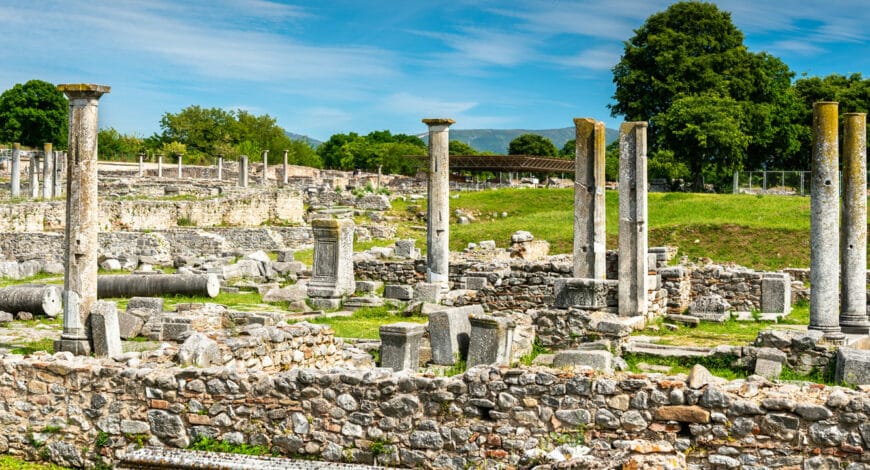
Ancient Philippi lies about 15 km inland from today’s harbour town of Kavala in northern Greece. It sits on the lower edges of one side of a rock cone and looks out over a rich plain that its retired Roman legionary inhabitants once cultivated. On the far side of the plain sits the looming shape of Mt. Pangaion, famed in antiquity for its goldmines. Philippi itself sits astride a main arterial road of the Roman empire, the Via Egnatia, that bound the western and eastern part of the empire together. This ancient super-highway brought a current of trade flowing through all the towns and cities that straddled it, including Philippi, but above all it allowed the Roman legions to move with lightning speed to hotspots in the east that needed attention.
An Ancient City Conquered by the Macedonians

This plain, fertile and mineral-rich, was originally part of the mainland territory of the island of Thasos, just across the bay from Kavala, which from 6th century BCE onwards drew from its mainland possessions an enormous income in the form of gold and silver. There may have been something on the site of what became Philippi before the Thasians founded Krenides in 359 BCE, but very soon, in 356 BCE, Philip II, the dangerously dynamic king of a resurgent Macedonia, absorbed the place, which lay on the eastern fringes of his expanding kingdom, and suitably renamed it.
Philip was engaged on a long-term campaign of neutralizing all the enemies that had threatened Macedonia since the 5th century BCE. Possession of Philippi gave him access to the gold of Mt. Pangaion. This he needed for his growing war-machine, which was based on the deadly, but expensive sarissa.
The End of the Liberators’ Civil War and the Foundation of a Roman Colony
 Philippi next comes onto the radar screen of history during the death throes of the Roman Republic. From the late 2nd century BCE Rome had been convulsed by political violence, which by the early 1st century BCE had developed into armed conflict between political dynasts and their private armies. During this century of turmoil, in 44 BCE Julius Caesar had been slaughtered by senators in Rome and the obscure teenager Octavian, whom Caesar had adopted and named as his heir, decided, together with Mark Antony, to avenge his ‘father’.
In 42 BCE, Antony and Octavian clashed on the plain of Philippi, defeating Cassius and Brutus, the leaders of the ‘Assassins’. Victory, however, brought with it the problem of settling veterans whose turn had come to retire and who relied on their commander to see that they got a block of land so they could spend their retirement as a peasant farmer, as tradition and the economy dictated. The solution the Romans usually applied was to found a colony, which settled the problem and offered other advantages, too. Colonies were peopled by tough veterans, used to military ways, and so were useful, because they provided a reserve of trained manpower than might prove handy in times of trouble.
Hence Antony and Octavian founded a colony at Philippi in 42 BCE. Things change, however, especially in the brutal violence of Roman politics, and in 31 BCE at the battle of Actium Antony, now Octavian’s enemy and now allied to Cleopatra, the last of the Ptolemies of Egypt, was defeated by his old comrade. After his victory, Octavian, the last man standing, again faced the problem of how to keep his demobilized troops happy and so in 27 BCE re-founded the colony at Philippi.
 What we see today at Philippi is much more grandiose than what stood in the time of Octavian’s veterans and what even St. Paul, who visited the place twice, would have seen some eighty or ninety years later. The majestic central plaza that occupies the centre of town, through which the Via Egnatia passed, and its accompanying public buildings, was laid out towards the end of the 2nd century CE. The Roman empire was then edging past its peak, but this would not have been apparent from the civic grandeur of the architecture at Philippi. Roman Philippi was well equipped, too, with all the other hallmarks of Greco-Roman urban culture – gymnasia, palaestras and Roman-style bath buildings.
The Influence of Saint Paul and the First Christian Church in Europe
Yet it is not an emperor or dynast, who puts Philippi on the map, but St. Paul. He does not seem to have been there very long. Yet his faith, after it triumphed under Constantine in the early 4th century CE and his successors, left its monumental mark on the cityscape of Philippi.
On the terrace above the central plaza, where the most important temples of the Roman colony probably stood, an enormous Christian basilica (‘Basilica A’) was erected in 4-5th century CE in a very clear statement of Christian power and supremacy. On the far side of the plaza, another basilica (‘Basilica B’), this time with a dome, arose on the site of a pagan bathhouse and palaestra. In what looks like a dry run for the construction of Hagia Sophia in Constantinople, the building collapsed under the weight of its dome (which Hagia Sophia triumphantly didn’t) but was still too good not to use. Lastly, there is the metropolitan church of St. Paul himself. No-one could deny now that Christianity had won and won magnificently.

Explore the history of Philippi as you travel through Macedonia and Thrace on our tours Macedonia and Thrace: Where Myth Becomes History and Along the Via Egnatia: Macedonia, Albania and Corfu and enjoy talks and lectures by Dr Andrew Farrington, Associate Professor in Ancient Greek History, Democritus University of Thrace.
Images
Top. Ruins of the ancient city of Philippi. UNESCO World Heritage site in Macedonia, Greece. Image ID: 163276097 Copyright Leonid Andronov | Dreamstime.com https://www.dreamstime.com/electropower_info
1. Statue of the Fortuna of Philippi (?), Philippi Museum: From Hellenistic times (323-31 BCE) onwards, Fortune was personified as a goddess who had to be placated. The Fortune of a particular city often wears a crown depicting the walls of the city.
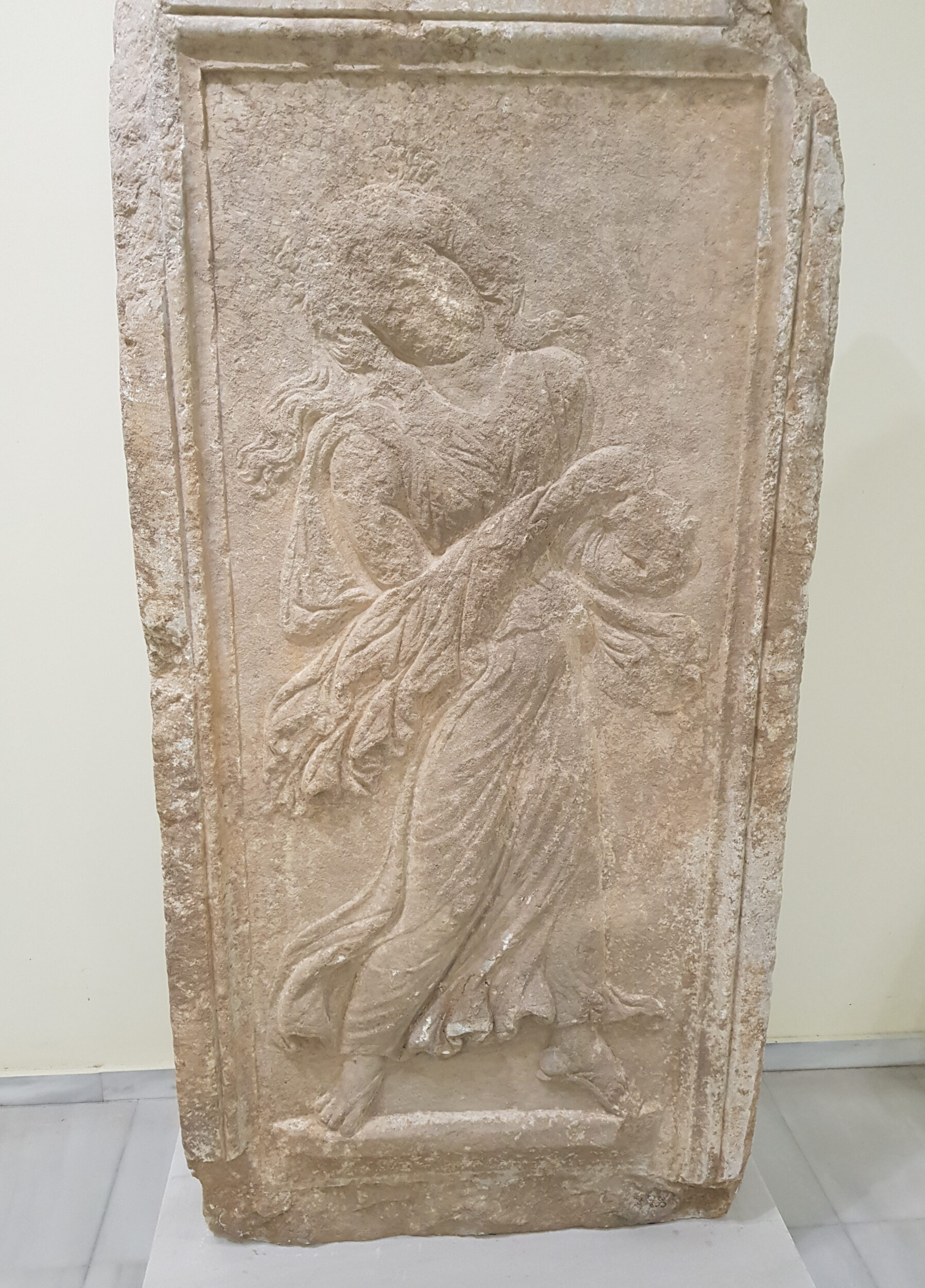
2. A Maenad from the Roman phase of the theatre, Philippi Museum: Maenads were the female followers of Dionysus, a god deeply associated with Macedonia and Thrace.
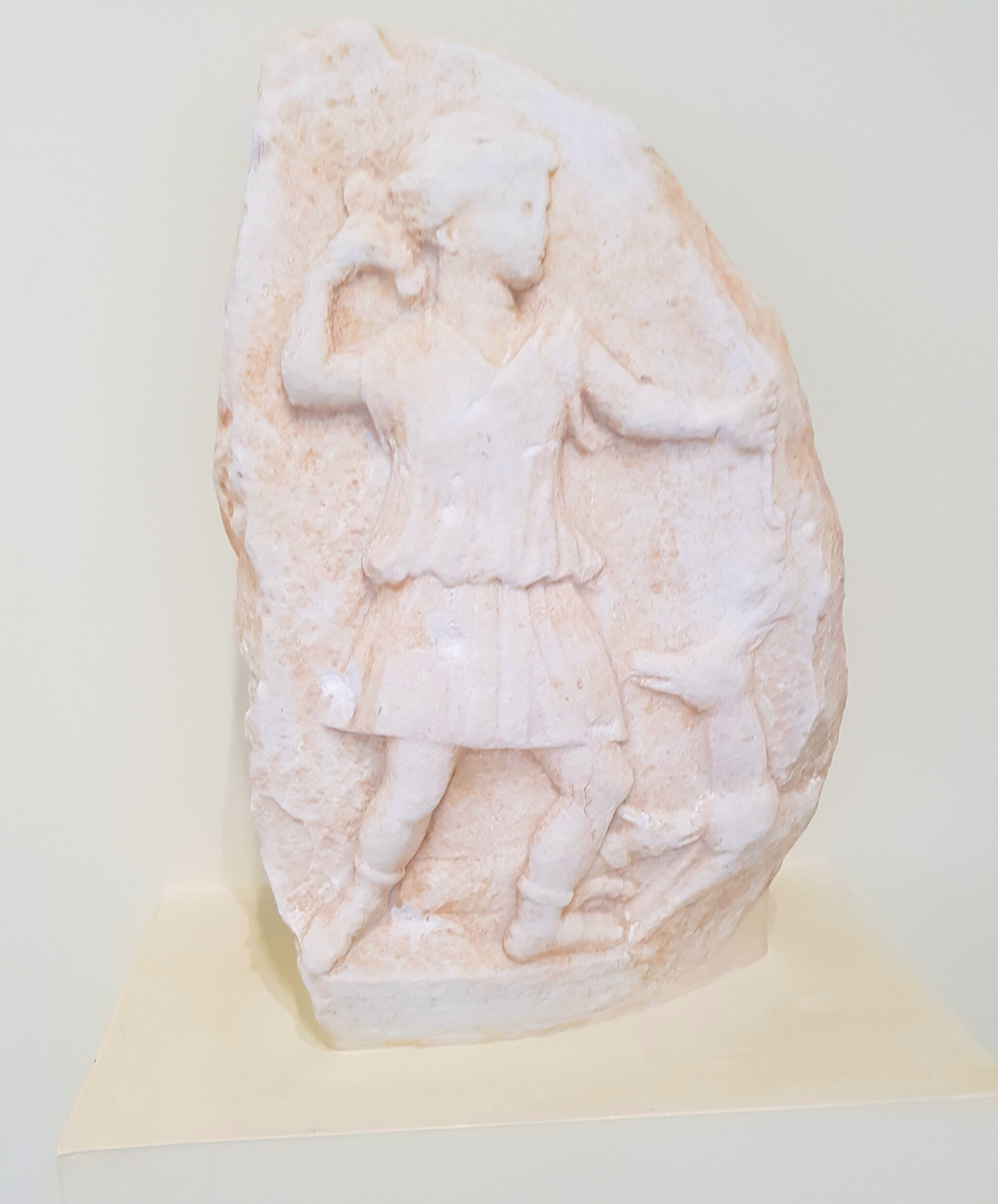
3. Relief of Artemis, Philippi Museum: The Greek goddess Artemis was assimilated the local Macedonian and Thracian goddess Bendis.
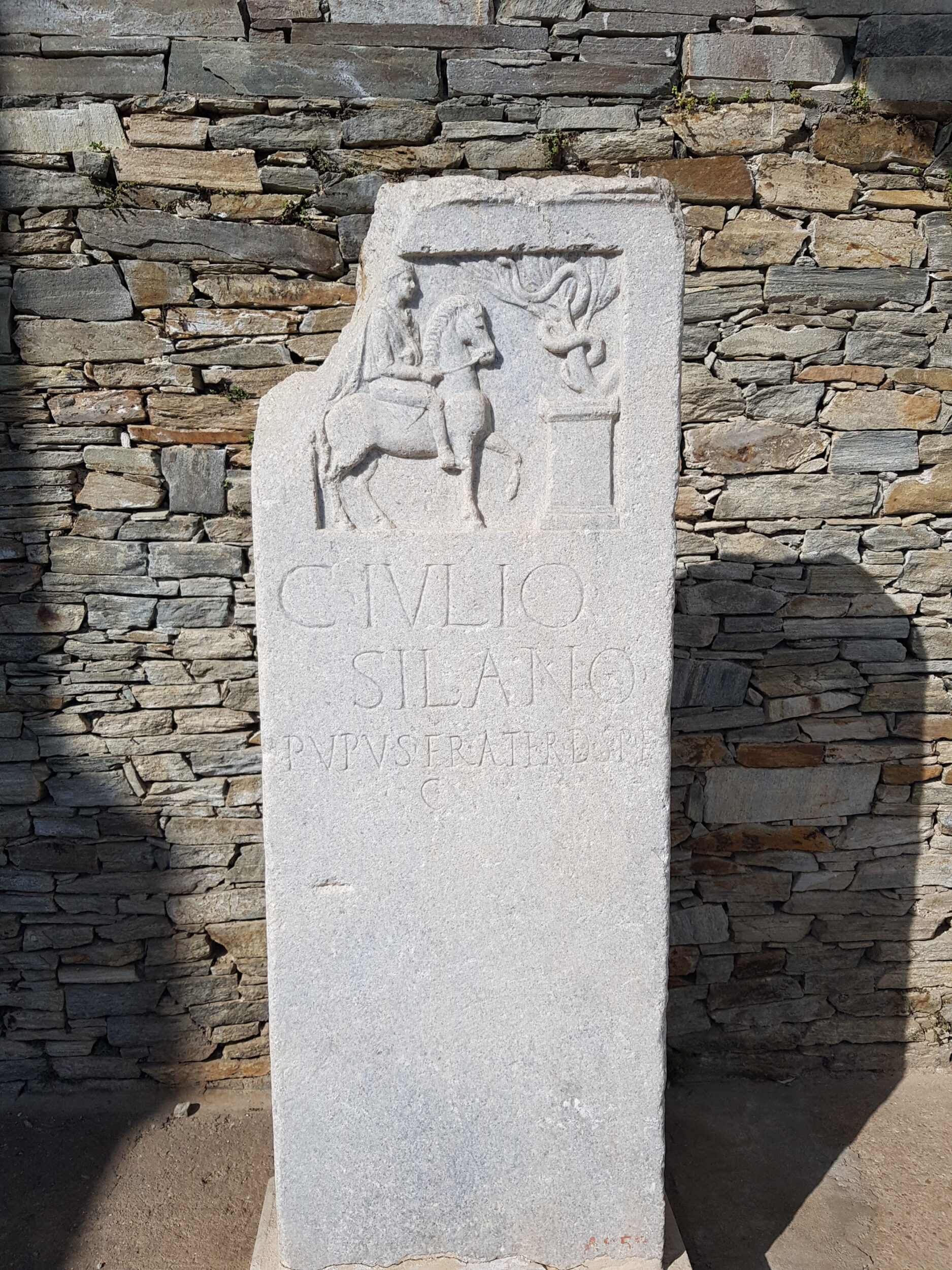
4. Dedicatory Relief, Philippi Museum: The relief shows the so-called ‘Thracian Horseman’. He was clearly popular throughout the Greco-Roman Balkans, but almost nothing is known of him, because he did not attract the attention of Greco-Roman writers. The inscription is in Latin, the language of the Roman colony founded at Philippi, not Greek.
 Along the Via Egnatia: Macedonia, Albania and Corfu 2027
  Northern Greece and the Aegean Islands: Alexander’s Heartlands 2028