
Sacred Stones and Settlements: The Neolithic World of Orkney
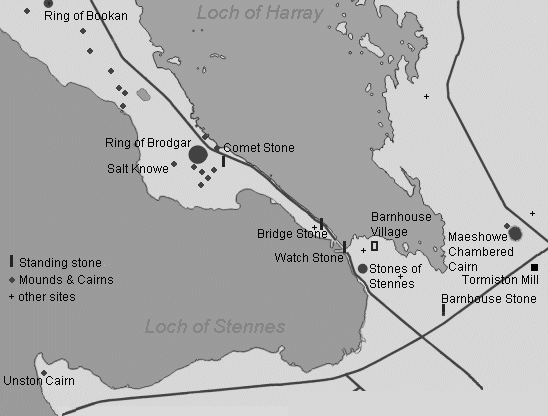
Some of Orkney’s most important archaeological sites lie in the ‘Heart of Neolithic Orkney’, the collective name given to a group of Neolithic monuments found on the mainland, which was proclaimed a UNESCO World Heritage Site in 1999. This ceremonial landscape and group of monuments consists of four sites: Maeshowe – a unique chamber cairn and passage grave; the Standing Stones of Stenness – four remaining megaliths of a henge; the Ring of Brodgar – a stone circle forming a henge monument; and Skara Brae – a cluster of eight houses reputed to be the best-preserved Stone Age village in Europe.
Maeshowe Chambered Cairn
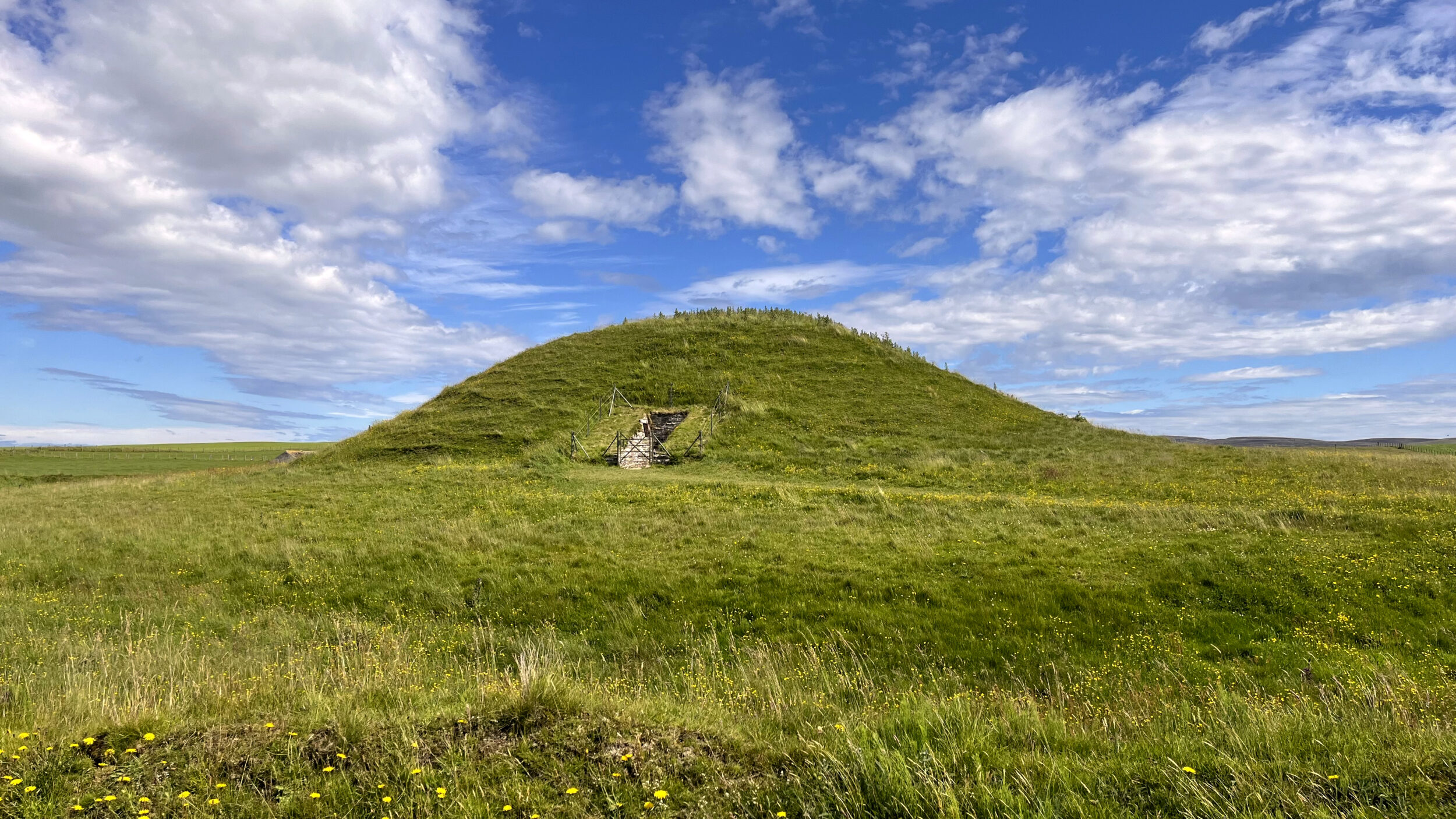
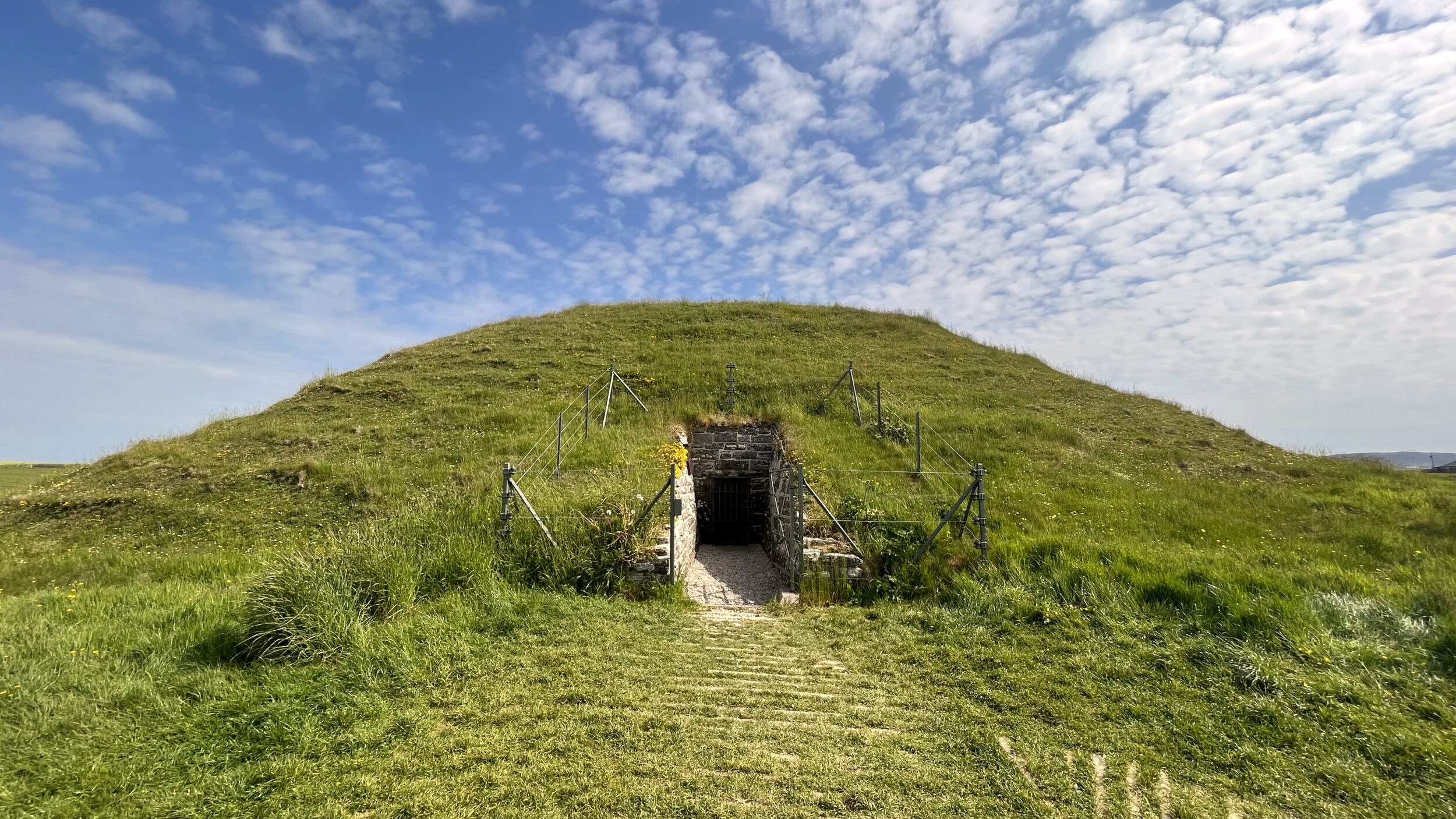
The cathedral-like Maeshowe Chambered Cairn is considered the finest chambered tomb in Northwest Europe; it is more than 5000 years old. In the archaeology of Scotland, it gives its name to the Maeshowe type of chambered cairn, and it is a significant example of Neolithic craftsmanship. This impressive monumental tomb also features runic graffiti left by 12th-century Norse crusaders on the walls of the main chamber.
The grass-covered mound that encloses the tomb is roughly 35 metres in diameter and stands about 7.3 metres high. Beneath it lies a carefully built stone structure consisting of an entrance passage and a central chamber constructed from large slabs of local flagstone, some weighing up to 30 tonnes. The monument is aligned so that sunlight at the winter solstice shines down the passage and illuminates the back wall of the central chamber. Reaching the chamber requires stooping or crawling through the entrance passage, which is about 11 metres long and only 1 metre high. Estimates of the labour involved in building Maeshowe differ. One widely cited estimate suggests around 39,000 hours of labour, while archaeologist Colin Renfrew proposed that at least 100,000 hours may have been necessary. These estimates indicate that the monument was likely constructed through the organised efforts of a large community over a significant period of time.
The Standing Stones of Stenness and Barnhouse Settlement
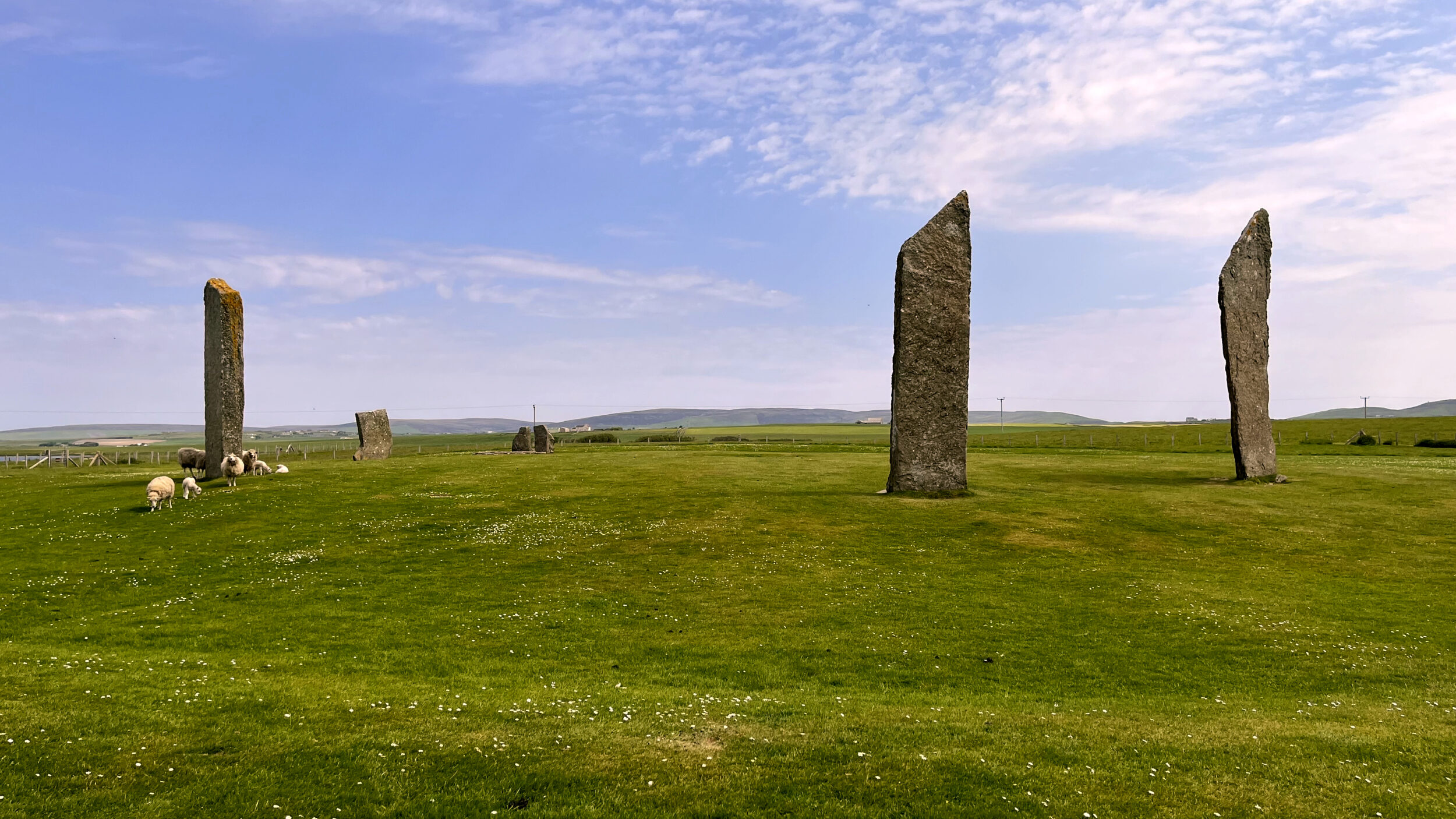
The nearby Standing Stones of Stenness constitute one of the earliest stone circles on Orkney. Over 5000 years old, four of the original 12 stones still stand, each reaching a height of 6 metres. Although the site today lacks the encircling ditch and bank, excavation has shown this site was a henge monument, possibly the oldest in the British Isles. The pottery found on site links the monument to Skara Brae and Maeshowe. Based on radiocarbon dating, it is thought that work on the site had begun by 3100 BCE. Various traditions associated with the stones survived into the modern era.
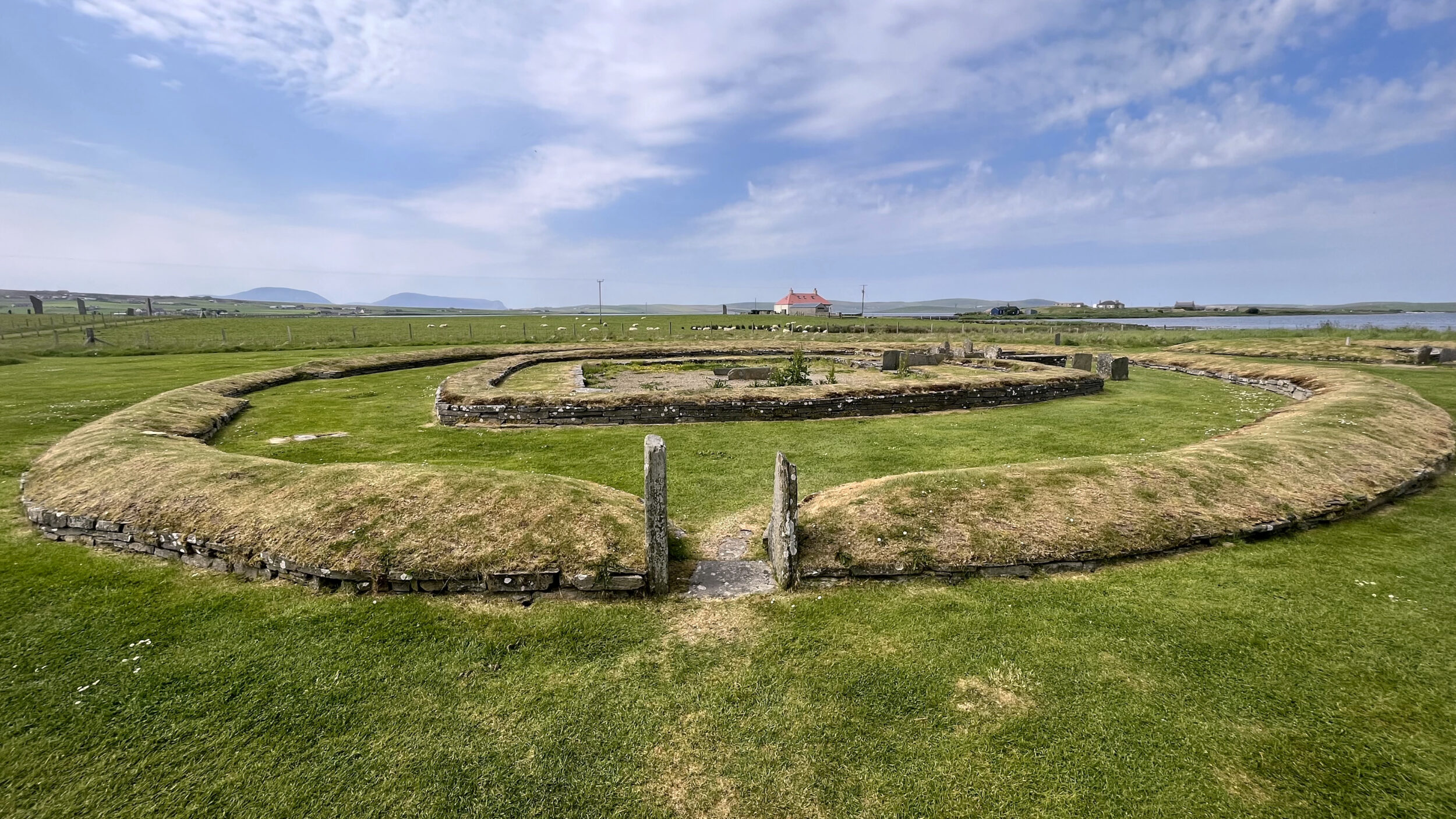
Just yards away lies the Barnhouse Neolithic settlement, perched on the edge of the loch. It was discovered in 1984, and excavations were conducted between 1986 and 1991, over time revealing the base courses of at least 15 houses. The houses have similarities to those of the early phase of the better-known settlement at Skara Brae in that they have central hearths, beds built against the walls and stone dressers, and internal drains, but differ in that the houses seem to have been free-standing.
The houses were clustered around a central open area which was divided into areas for making pottery and the working of flint, bones and hides. The settlement dates to around 3000 BCE, but evidence suggests that it was abandoned around 2600 BCE. After Barnhouse ceased to be occupied, another structure was added, known as Structure 8. The entrance through this was aligned with Maeshowe. The structure is assumed to have served as a ceremonial site rather than as a dwelling.
The Ring of Brodgar and Ness of Brodgar
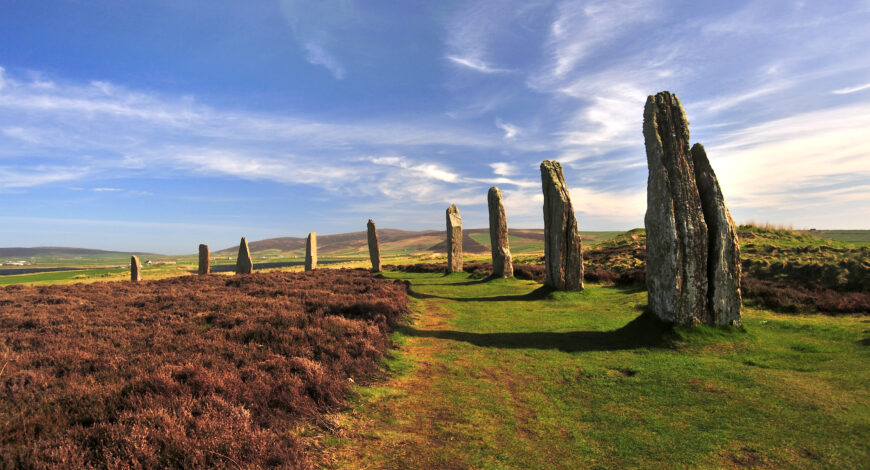
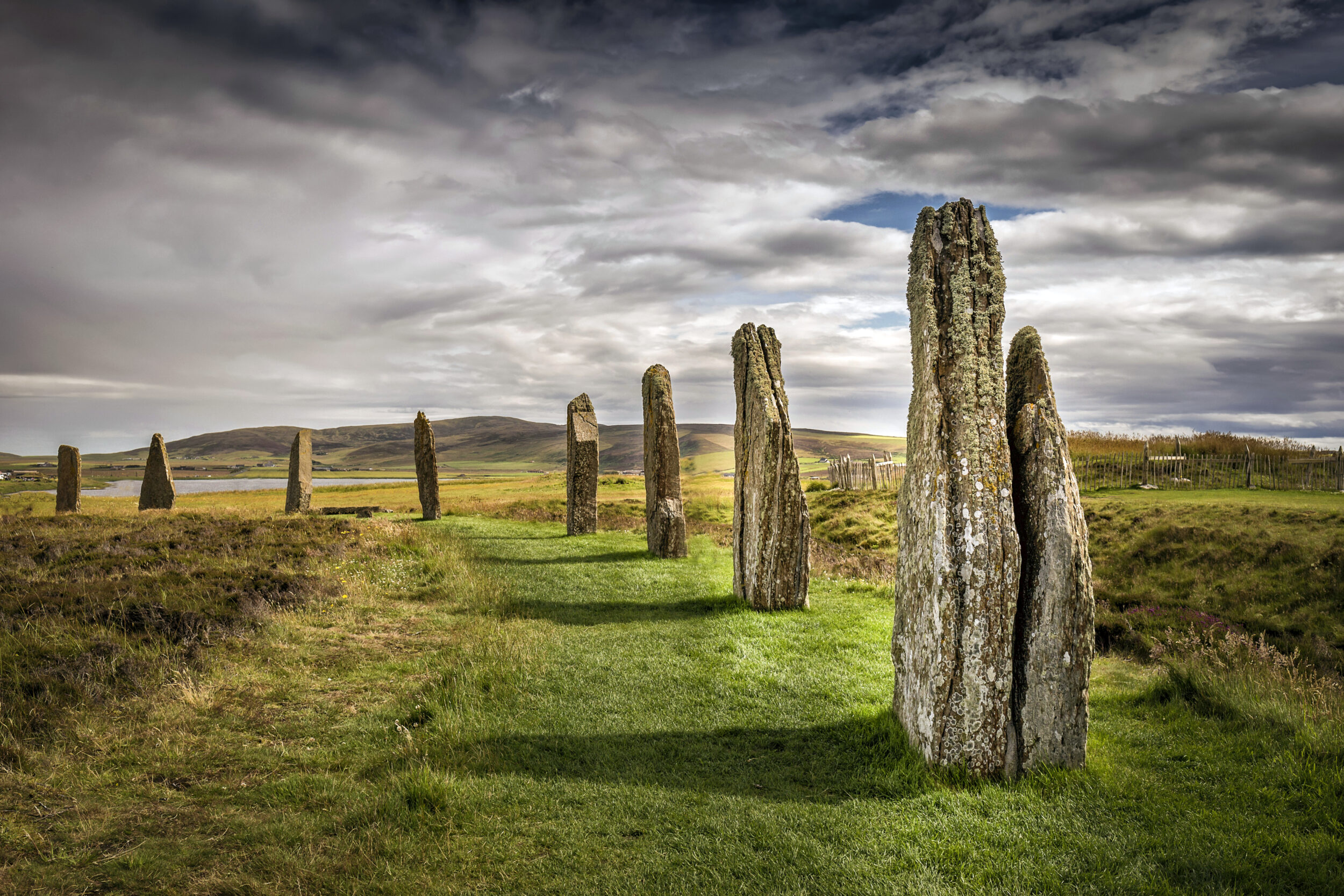
The Ring of Brodgar is one of the last of the stone circles. The third largest stone circle in Britain, it covers an amazing 8500 square metres, and all its stones had been brought from a different part of the island. There have been limited archaeological investigations at the Ring of Brodgar, so we don’t know its age for sure. In the absence of scientific dates, our best guess is that the main ring was constructed sometime between 2600 and 2400 BCE.
The Ring of Brodgar may have played a role in ceremonies that celebrated connections between the living and their ancestors. Some researchers have also suggested that surrounding sites were used to observe the moon from the ring, although there is little firm evidence about exactly what activities took place there or why. Surrounded by hills and lochs, the site sits in a dramatic landscape, and standing at its centre creates the feeling of being within a natural amphitheatre—an ideal setting for gatherings or rituals.
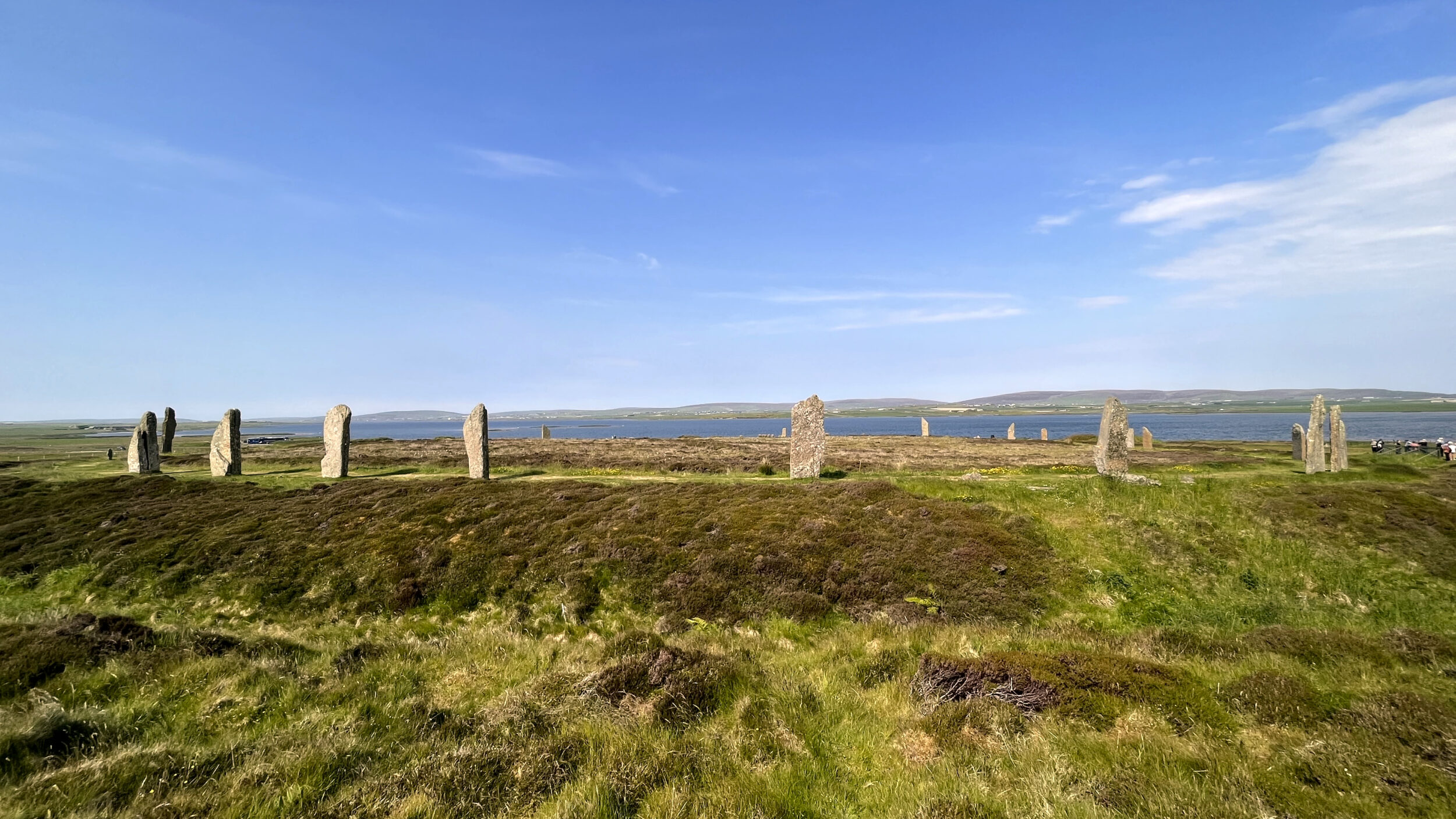
The monument is notable for its near-perfect circular design. Of the original 60 standing stones, 36 remain today, ranging from about 2.1 to 4.7 metres in height. The circle itself measures 104 metres in diameter and is enclosed by a rock-cut ditch, or henge, about 136 metres across. This makes it one of the largest and most impressive stone circles in the British Isles. The erection of the stones and the excavation of the massive ditch would have required significant labour and careful organisation.
Beginning in 2004, twenty years of excavation at the Ness of Brodgar uncovered an extensive complex of monumental Neolithic buildings dating to the centuries around 3000 BCE. Covering around three hectares, the site contains large stone structures and remarkable archaeological finds. With no close parallel in Atlantic Europe, the discoveries have made the Ness one of the most significant archaeological sites in the world, transforming our understanding of Neolithic Orkney and shedding new light on the prehistory of northern Europe. Fieldwork concluded in 2024, and attention has now turned to analysing the wealth of data collected. A virtual tour with project director Nick Card will explore the site and its discoveries.
Skara Brae, the Oldest Neolithic Village in Europe
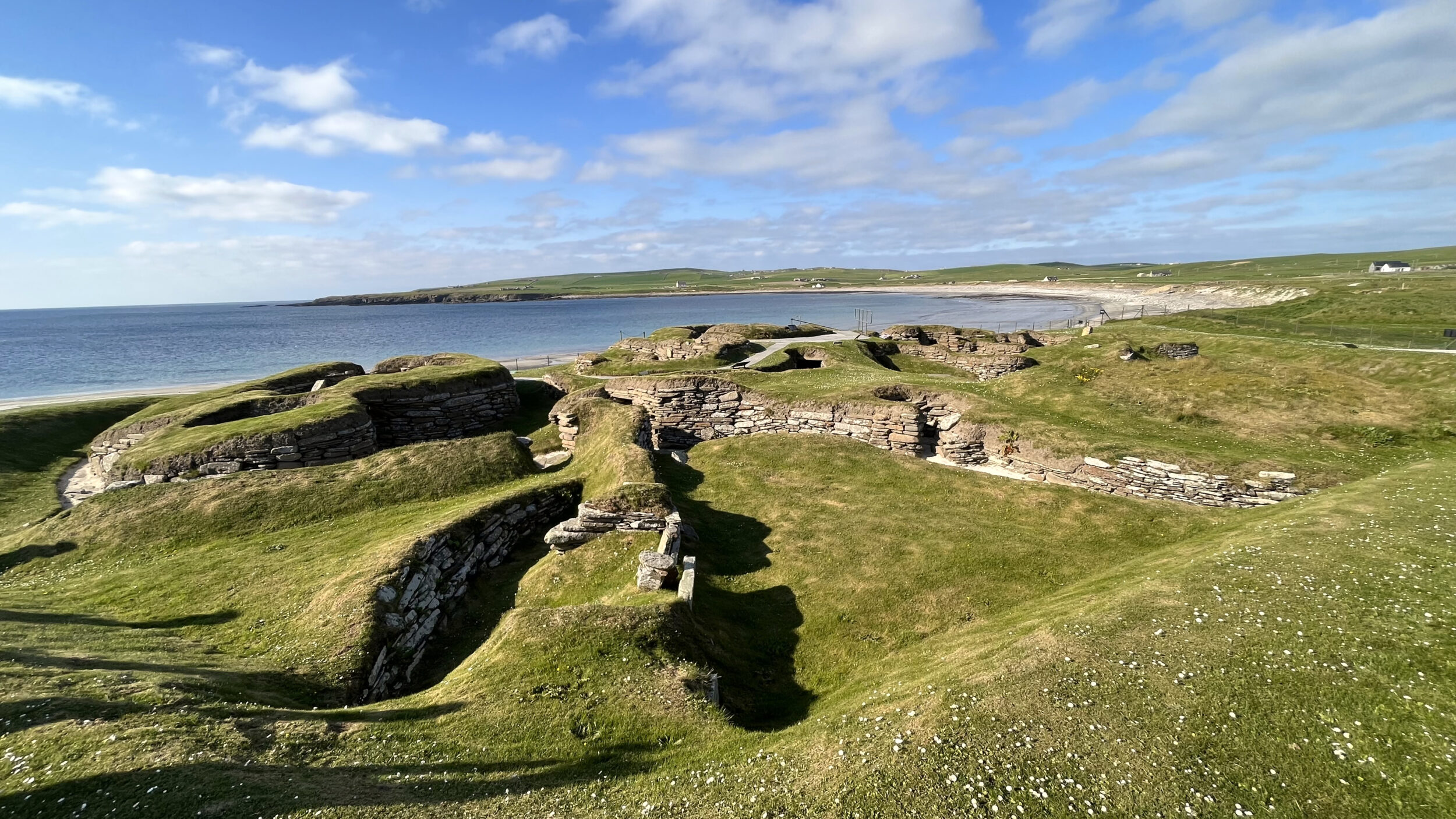
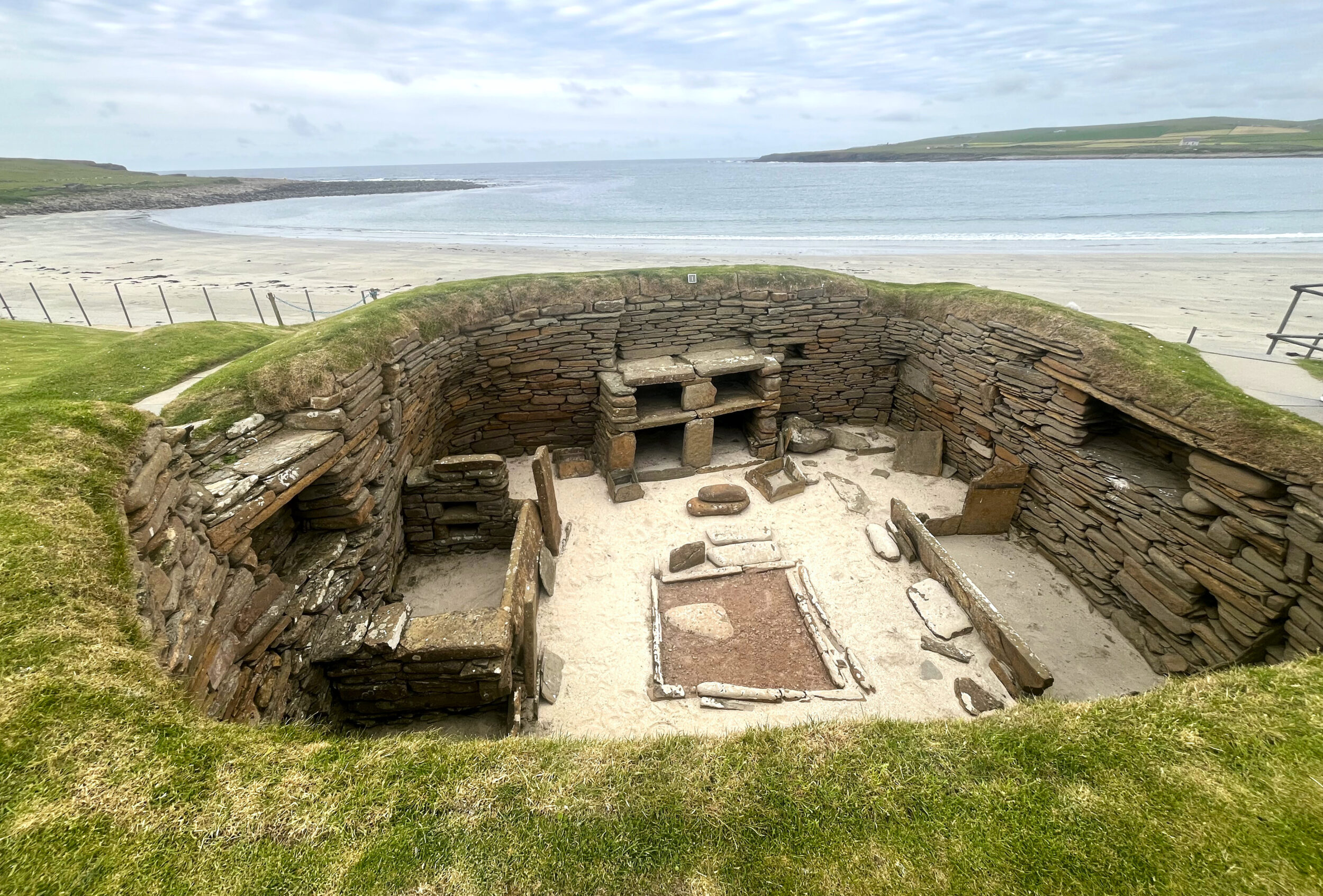
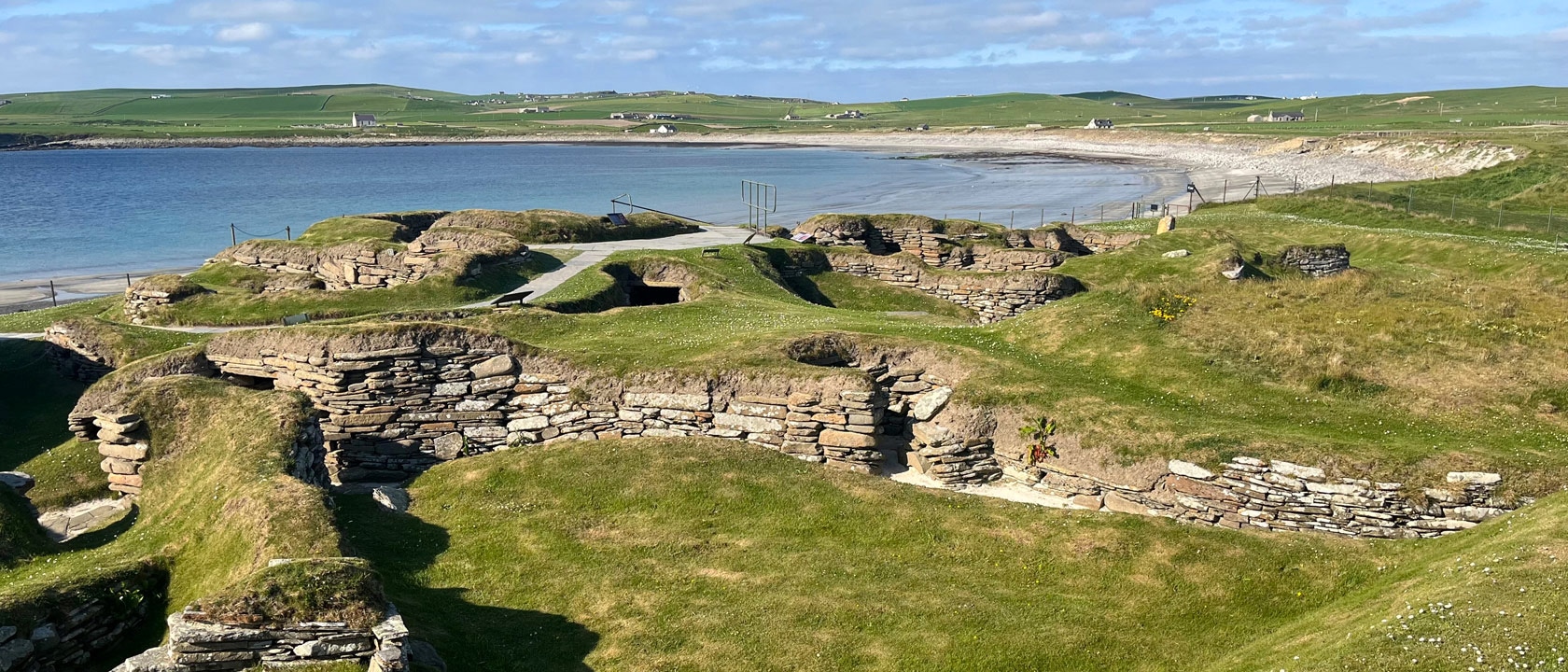
Located on the shores of the Bay of Skaill, this site was revealed after a terrifying winter storm blew the sand dunes away in 1850. The homes had survived virtually intact, protected by the sand that filled them; hearths, beds, dressers (or altars), storage tanks and even indoor toilets survive, all dated from between 3300 BCE and 2200 BCE. The people who lived here would have seen, or even taken part in, the building of the stone circles of the Stones of Stenness, the Ring of Brodgar and the Ness of Brodgar ceremonial centre.
The Neolithic homes themselves are fragile and not open to the public. However, we will take a special out-of-hours guided tour of these extraordinary structures and feel for ourselves just how homely they were.
Explore the rugged natural beauty and prehistoric sites of Shetland & Orkney with Gillian Hovell, archaeologist and ancient historian, award-winning writer and lecturer at the British Museum and York University on our tour Shetland & Orkney: Archaeology and Wildlife of the Northern Isles.
 Shetland & Orkney: Archaeology and Wildlife of the Northern Isles 2027