
Sicilian Baroque: Splendour Reborn from Ruin
by David Henderson
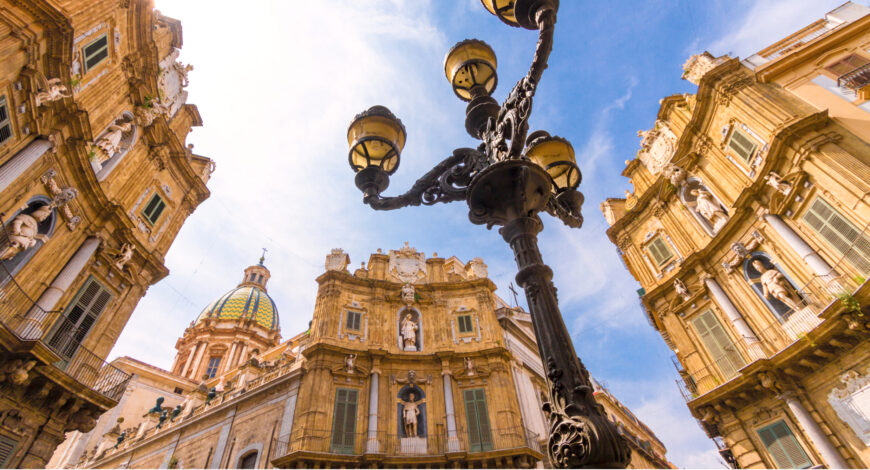
 Experiencing the Sicilian Baroque brings the visitor closer to the authentic flavour of this most remarkable of all Mediterranean islands than perhaps any other architectural style. Exuberant and dramatic, the sunlit facades of 17th and 18th century Sicily proclaim the authority of churchmen and nobles, even as they allow stone carvers and architects to pursue fantasy and invention with great freedom.
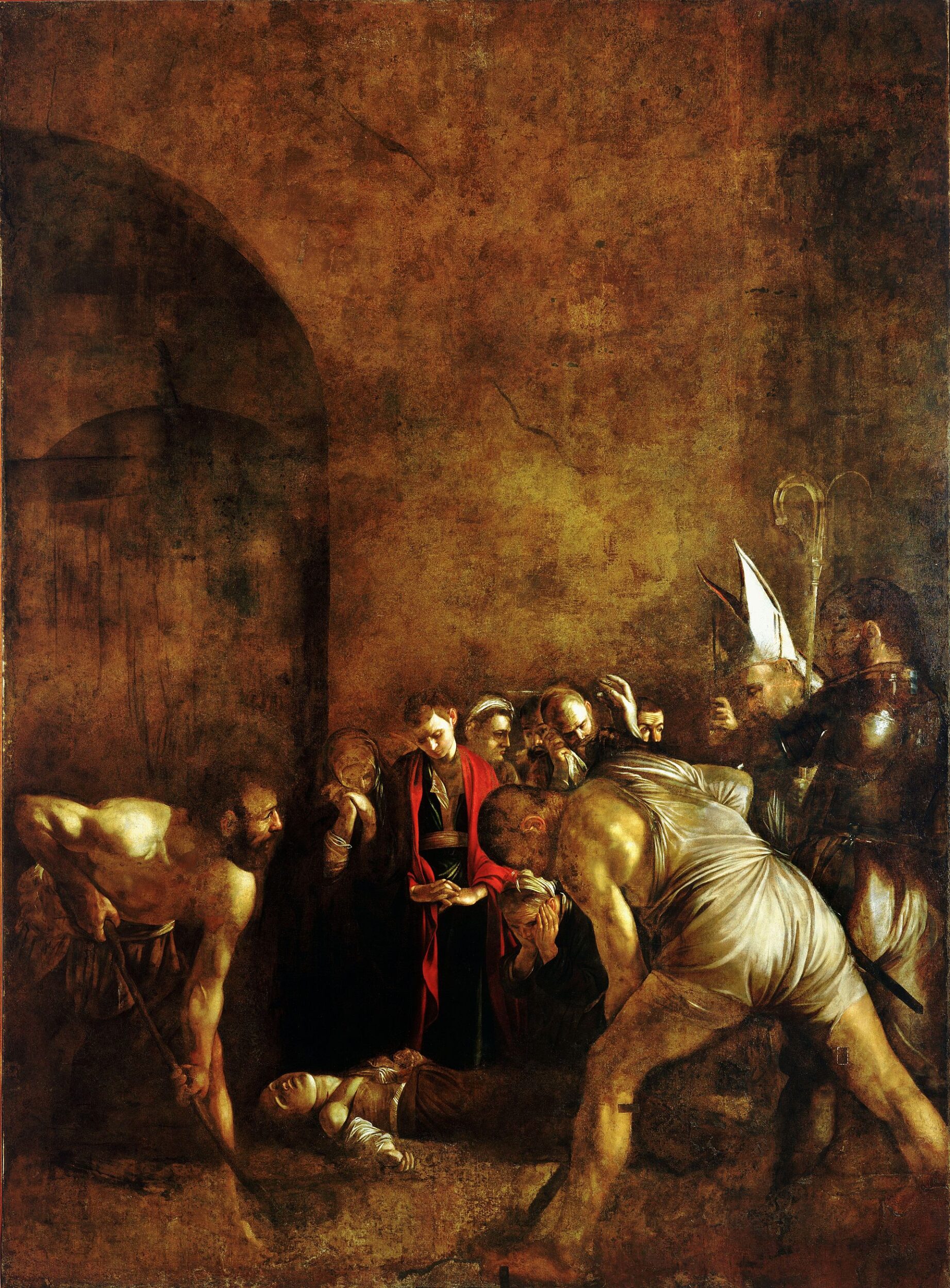
The Lombard painter Caravaggio, while not considered an exponent of the fully developed Baroque style, made an essential contribution to its genesis. His Burial of St Lucy (1608) in Syracuse was commissioned to acknowledge the place of both martyrdom and interment of the saint in late antiquity. Here, the painter favours a direct, indeed visceral engagement with the viewer emphasising the pathos of the event. While highly personal, his interpretation of the subject reflects typically Counter-reformation concerns, emphasising the importance of pious works, and the imperative of reconnecting with the faithful. The works Caravaggio produced in Sicily towards the end of his brief, tempestuous life, were some of the most important of his career, and their intense theatricality would leave its mark on local schools of painting.
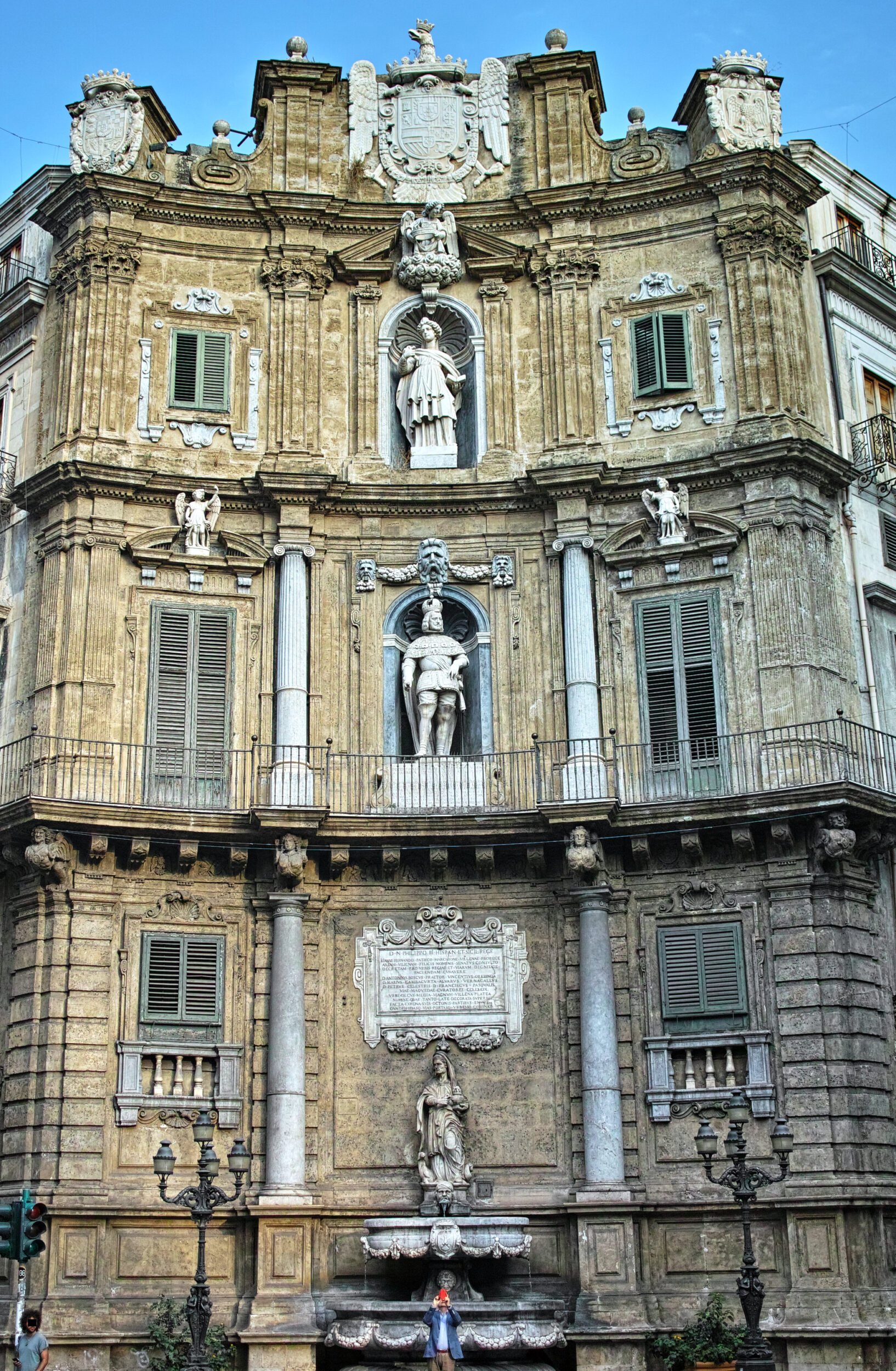 A theatricality of quite a different kind can be seen in one of Palermo’s most ambitious architectural set pieces, the so-called Quattro Canti, also begun in 1608. Here, curved facades were added to the buildings facing one of the city centre’s major intersections, creating a space of great dynamism. This scheme represents one of the first examples since antiquity of the use of concave walls, inviting a sense of active participation in the architectural ensemble. This device would later be exploited to great effect by one of the Roman Baroque’s leading exponents, Francesco Borromini. As with all the grand urban projects of this period, the unifying sweep of the design underlines political authority, one made explicit in this case by sculpted representations of the Spanish kings whose viceroys once ruled the island, and who continue to gaze over the bustling streets of Palermo.
According to convention, Baroque architecture in Sicily is divided into two main periods: pre- and post-earthquake. While in its way both imposing and vital, the Quattro Canti looks quite static by comparison with the often flamboyant architectural projects which followed the catastrophic events of 1693. In this year, devastating earth tremors laid waste to much of south-eastern Sicily, necessitating extensive rebuilding. By then, the Baroque was fully developed thanks to a group of brilliant architects and artists working in Rome such as Gian Lorenzo Bernini. This influential style emerged from the chrysalis of Counter-Reformation anxieties to celebrate the triumph of the Catholic faith not only in Europe, but throughout the Americas and Asia. The Sicilian buildings of this period have a distinctly expressive personality which more than makes up for any lack of refinement they may have when compared to their Roman antecedents.
Images above: Burial of Saint Lucy by Caravaggio, Public domain, via Wikimedia Commons / Quattro Canti Palermo Piazza Vigliena by Elisauer, CC BY-SA 4.0 <https://creativecommons.org/licenses/by-sa/4.0>, via Wikimedia Commons
Siracusa and its Cattedrale della Natività di Maria Santissima
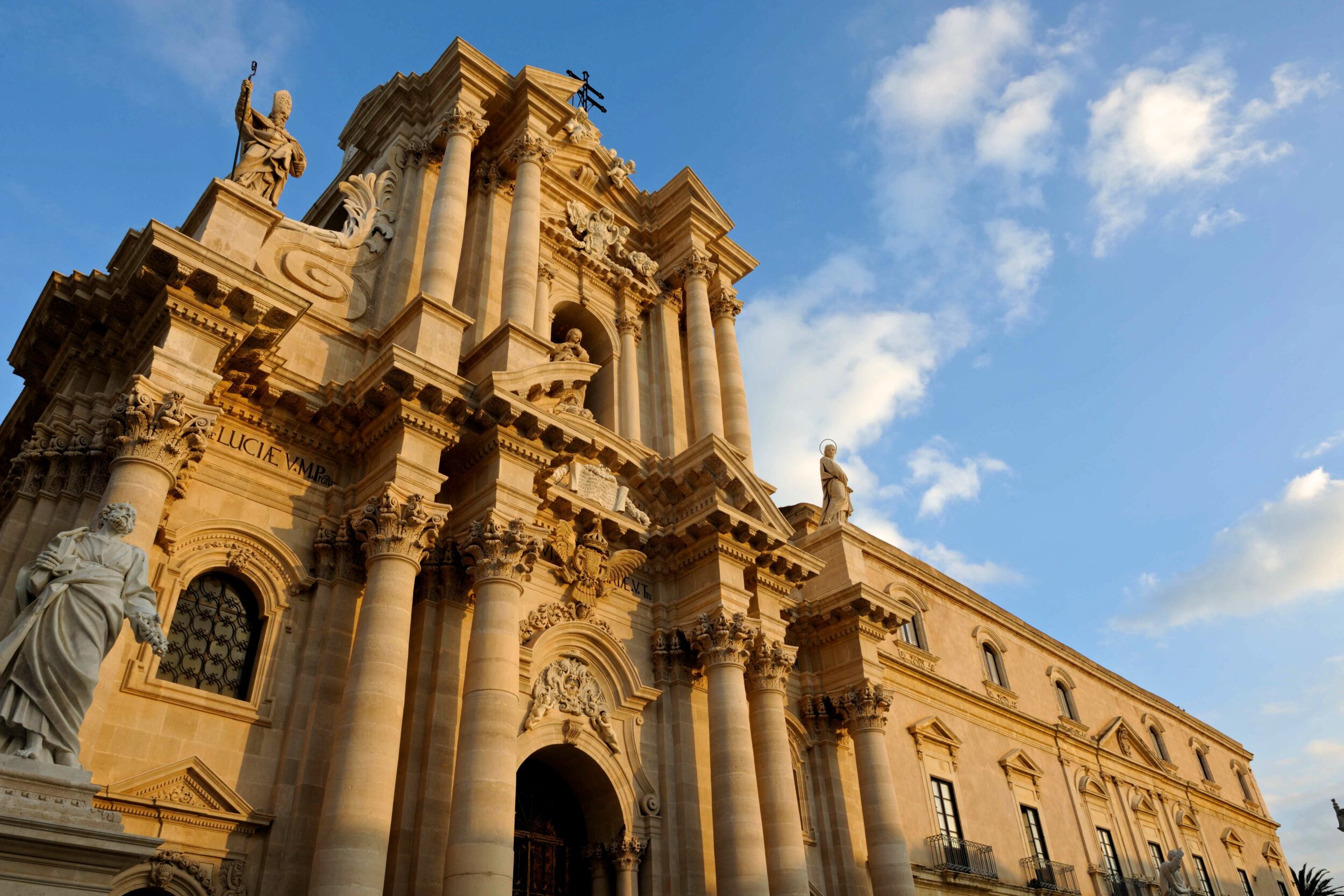
While Syracuse was spared the worst of the effects of the earthquake of 1693, its cathedral was in need of a new facade. Carved from warm-hued local stone, Andrea Palma’s design makes reference to the component parts of ancient Roman buildings as revived by Leon Battista Alberti centuries earlier: volutes, triumphal arches, and temple pediments. While the 15th century favoured stillness and harmony, Palma’s architecture is full of restless energy, the play of light and shadow across its surfaces as calculated as in any painting by Caravaggio. Strong contrasts draw attention to the facade’s emphatically vertical orientation, one of the most distinctive characteristics of the Sicilian Baroque.
It may seem paradoxical that buildings erected immediately after the tragedy of a natural disaster communicate an upbeat mood. However, this was a deliberate choice by the authorities who wanted to instill in communities a sense of renewal and hope. The exuberant facades of Noto, deployed with such confidence across a hillside some seven kilometres from the original, abandoned town are a reminder that the Baroque style is often best appreciated in open spaces.
The Baroque Architecture of Noto: Palazzo Nicolaci & San Domenico
The first half of the 18th century saw possession of Sicily pass from one foreign power to another as a result of a series of distant geopolitical struggles. The Spanish Hapsburgs, followed by the Savoy, the Austrian Hapsburgs, and finally the Bourbons all exercised nominal control of the island during this period. This meant that in Noto the initiative for building projects was above all the prerogative of the local aristocracy, and church architecture was more likely than ever to announce the dependable authority of Rome. The site is as notable for its application of contemporary principles of urban planning as for its buildings. The Baroque idea of unity through hierarchy is made explicit in the separation of nobility, clergy and commoners into distinct quarters of the town. Each social group is juxtaposed against the other in a coherent fashion, and each ranked according to its position on the slope of the hill.
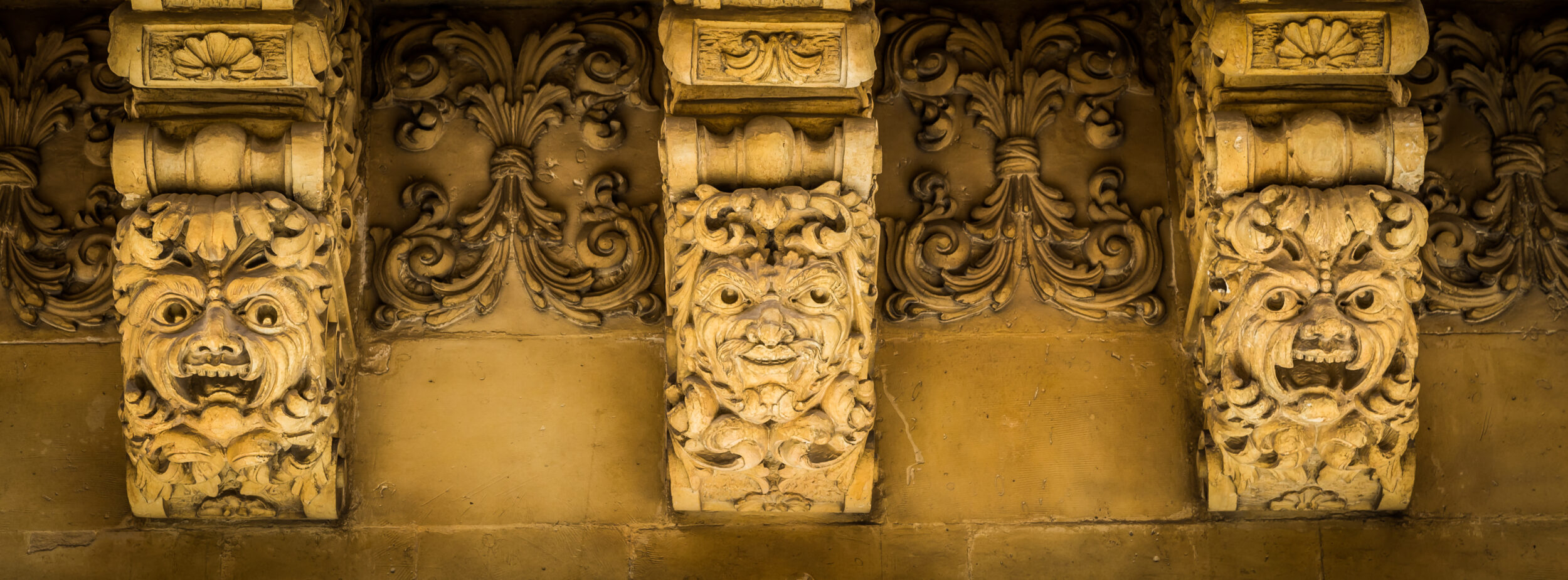
While there may be a satisfying integrity to the siting of construction within this layout, the real pleasure of Noto is in its individual buildings. The most distinctive features of the city are the balconies of Palazzo Nicolaci where a series of corbels representing mythological creatures, and stylised figures project over the street. Their profusion of deeply carved ornament, and whimsical, ironic character represent another iteration of the Baroque unique to Sicily.
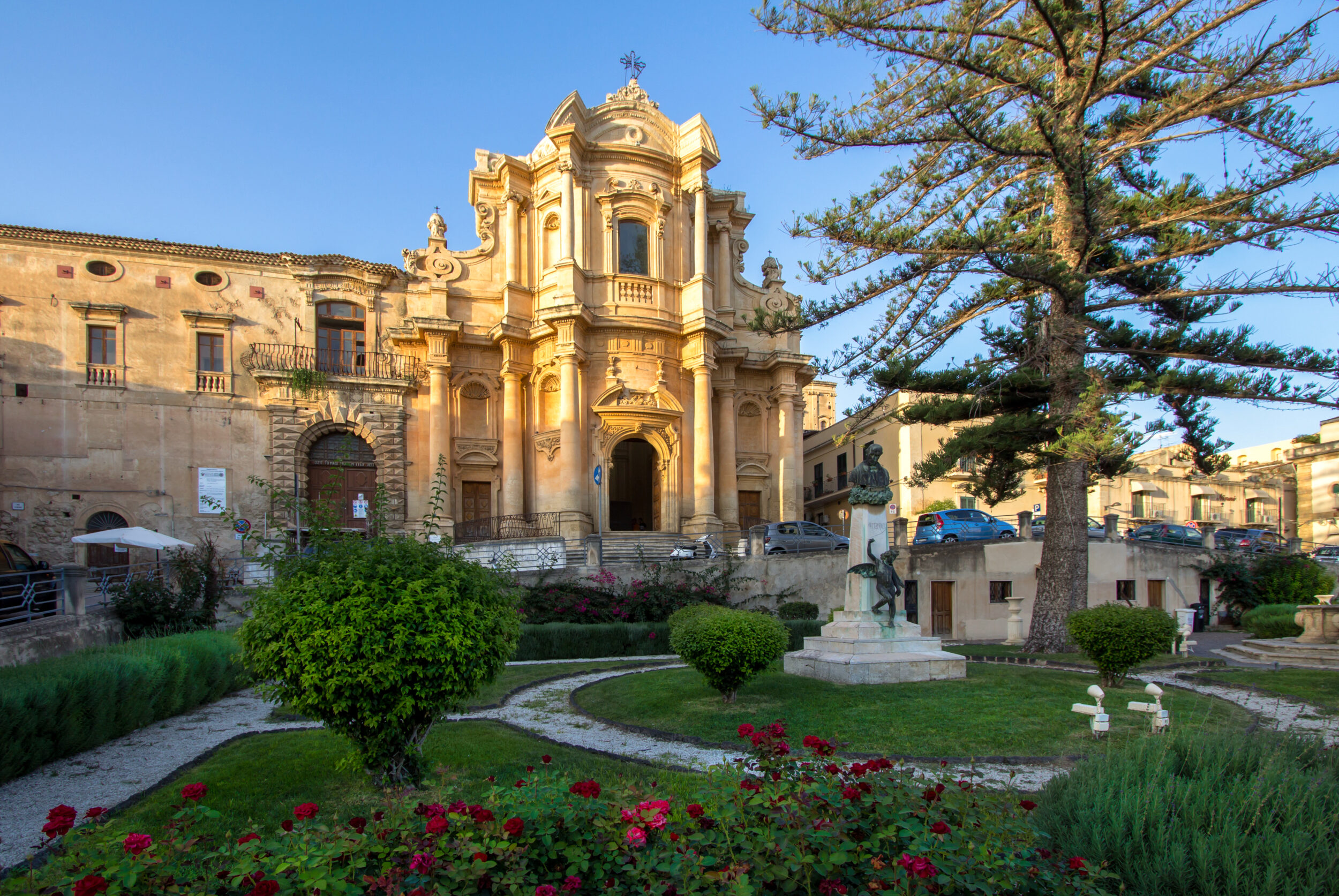
Rosario Gagliardi, perhaps the most gifted of the period’s architects left a number of memorable designs in Noto, most notably the church of San Domenico. Its facade combines a sure understanding of the syntax and grammar of classical architecture with a bold arrangement of convex walls and broken pediments. The eloquent juxtaposition of angle, curve, and counter-curve is reminiscent of the playful conceits of cubist painting.
San Giorgio in the Historic City of Ragusa
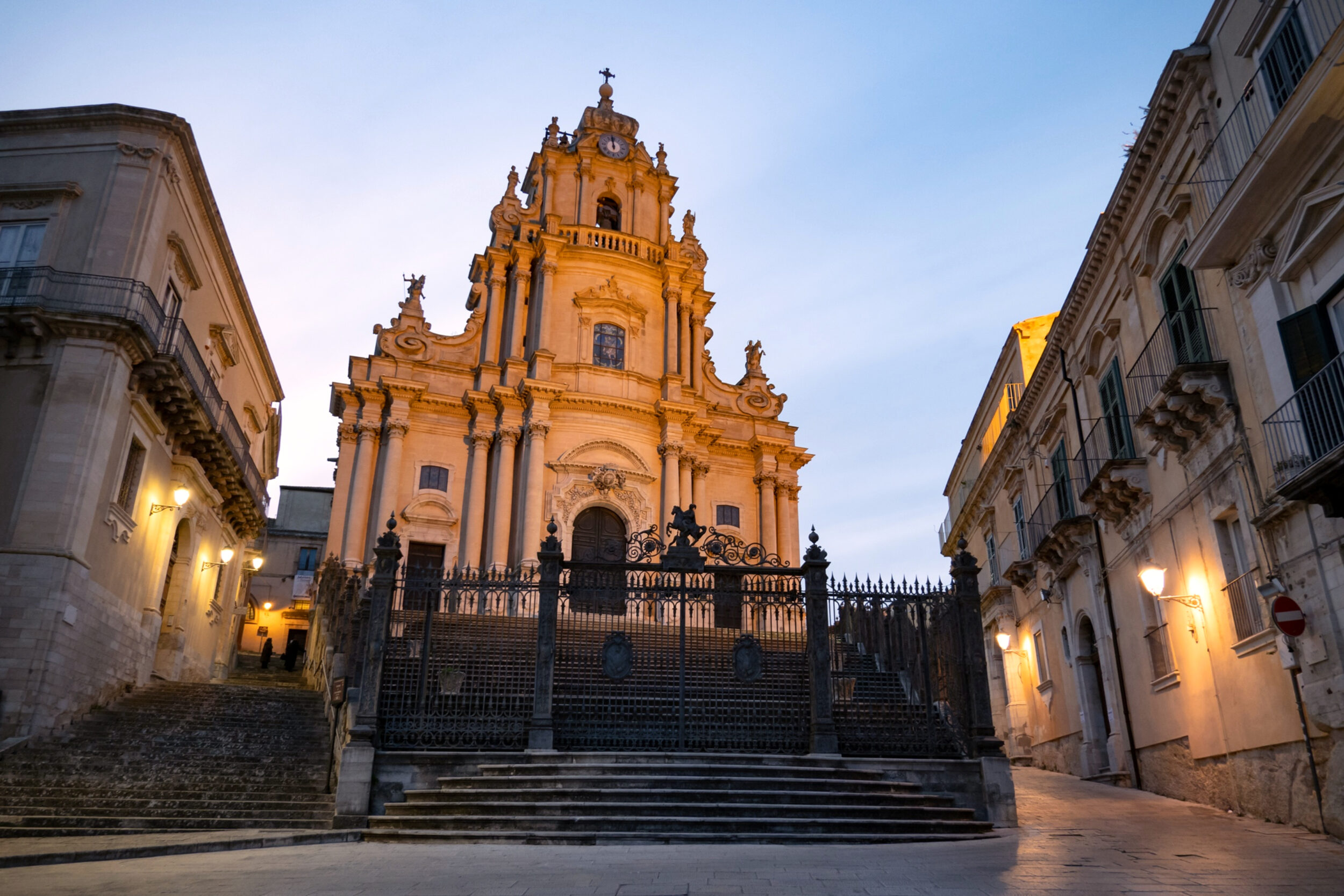
Gagliardi’s masterpiece is the church of San Giorgio in Ragusa, where the tall central section, a synthesis of facade and bell tower dominates completely. The resultant pagoda-like silhouette is a vivid reminder of Baroque’s declamatory function.
Learn about the art, history and archaeology of Sicily from artist and art historian David Henderson on our tour Sicily and the Aeolian Islands. David will be joined by a number of guest archaeologists during the program.
 Sicily and the Aeolian Islands 2026
  Sicily and the Aeolian Islands 2027