Slovenia: Europe’s Hidden Garden of Natural Wonders
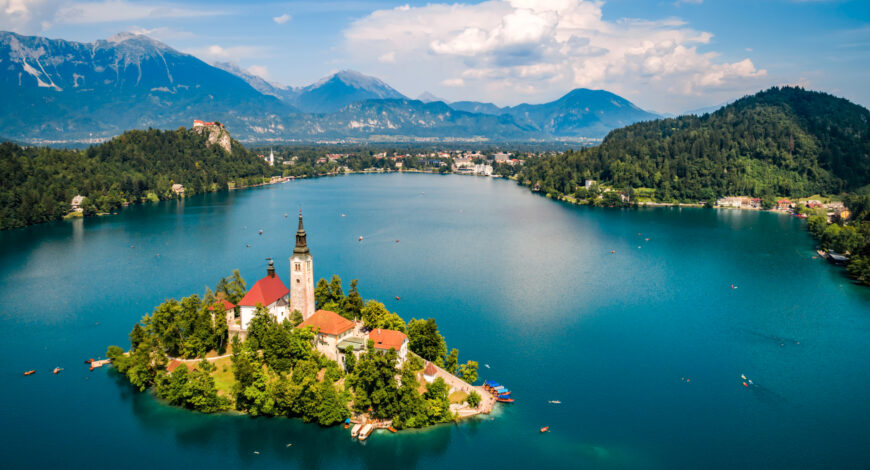
Nestled between the Alps and the Adriatic Sea, Slovenia offers a remarkable natural beauty packed into a relatively small landscape. Towering peaks of the Julian Alps rise above emerald valleys and glacial lakes, while vast forests blanket much of the countryside, making the country one of the greenest in Europe. Beneath the surface, dramatic karst caves reveal a hidden world of limestone formations. From alpine meadows and rushing rivers to tranquil lakes and underground wonders, Slovenia’s landscapes create a rich tapestry of natural scenery that has earned it a reputation as a paradise for nature lovers.
The Julian Alps and Triglav National Park
Extending from northeastern Italy into Slovenia, the Julian Alps lie within the Southern Limestone Alps. As its names suggest, the distinction from the Central Alps, where the higher peaks are located, is based on differences in geological composition. Forming a natural border between Italy, Austria and Slovenia, the range takes its name from Julius Caesar of the gens Julia, possibly in reference to a road he initiated and that was later completed by Augustus. Their highest summit is Mount Triglav, which rises to 2,864 metres and is also the tallest mountain in Slovenia.
The landscape of the Julian Alps has been shaped by glaciers, river erosion, and porous karst formations composed mainly of limestone and dolomite. Snowfall averages around 4 metres annually, typically peaking in April. Because most of the ranges run west to east, they receive increased precipitation and experience reduced runoff. Orientations of these ranges block warm southerlies carrying Mediterranean winds.
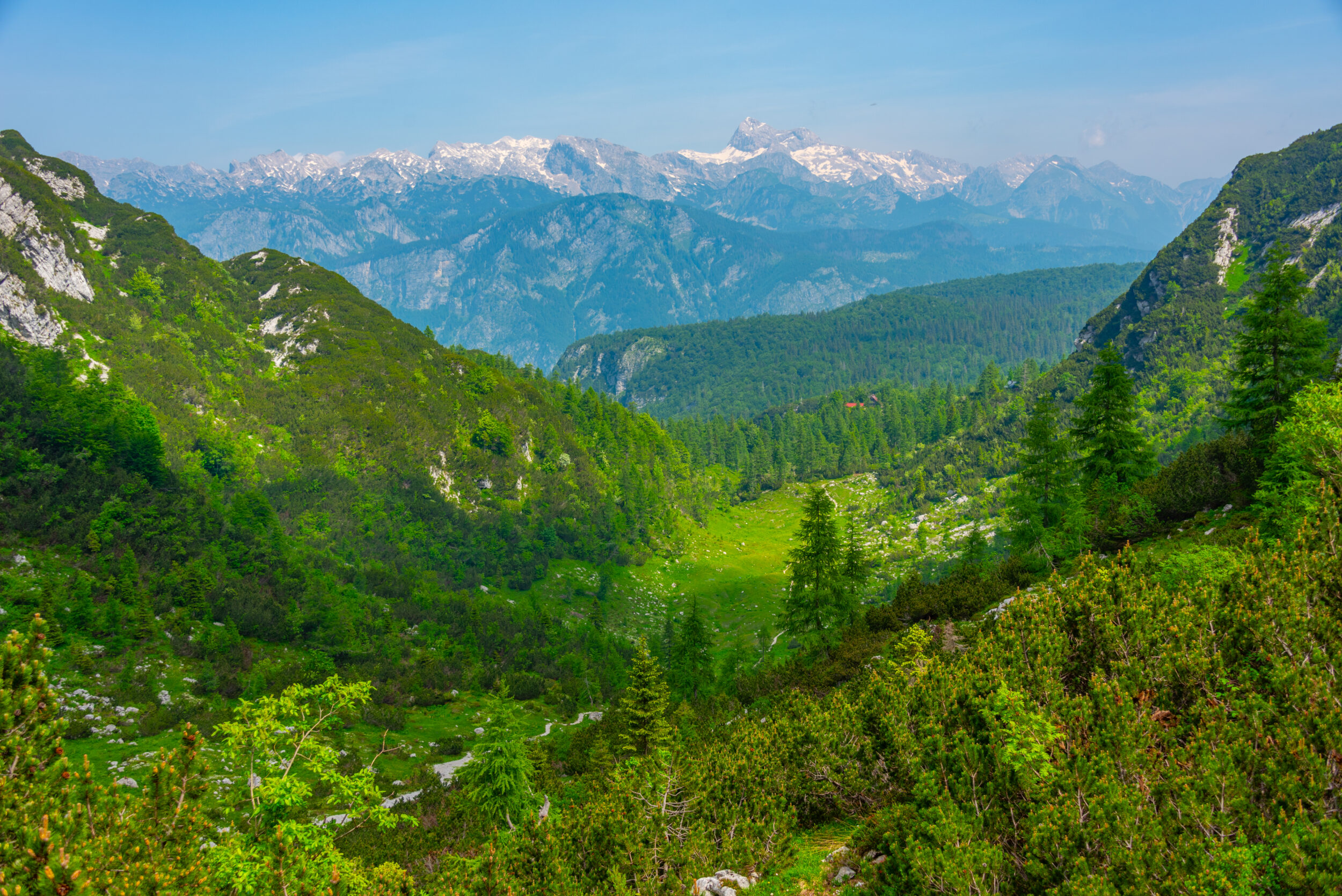
Triglav National Park, established in 1981, is Slovenia’s only national park and encompasses much of the range. Mount Triglav stands near its centre, from which valleys radiate outward. These valleys feed two major river systems originating in the Julian Alps: the Soča, which flows toward the Adriatic Sea, and the Sava, which ultimately drains into the Black Sea. It is part of the Slovenian Julian Alps Biosphere Reserve, which constitutes an important Alpine corridor, notably for large carnivores as well as birds. The area is also a meeting place of the Latin and Slav worlds, with millennia of cultural interaction testified to by its multitude of dialects, settlement methods, and agricultural and artistic practices.
Uplands Valley of the Isonzo/Soča River and Tolmin Gorge
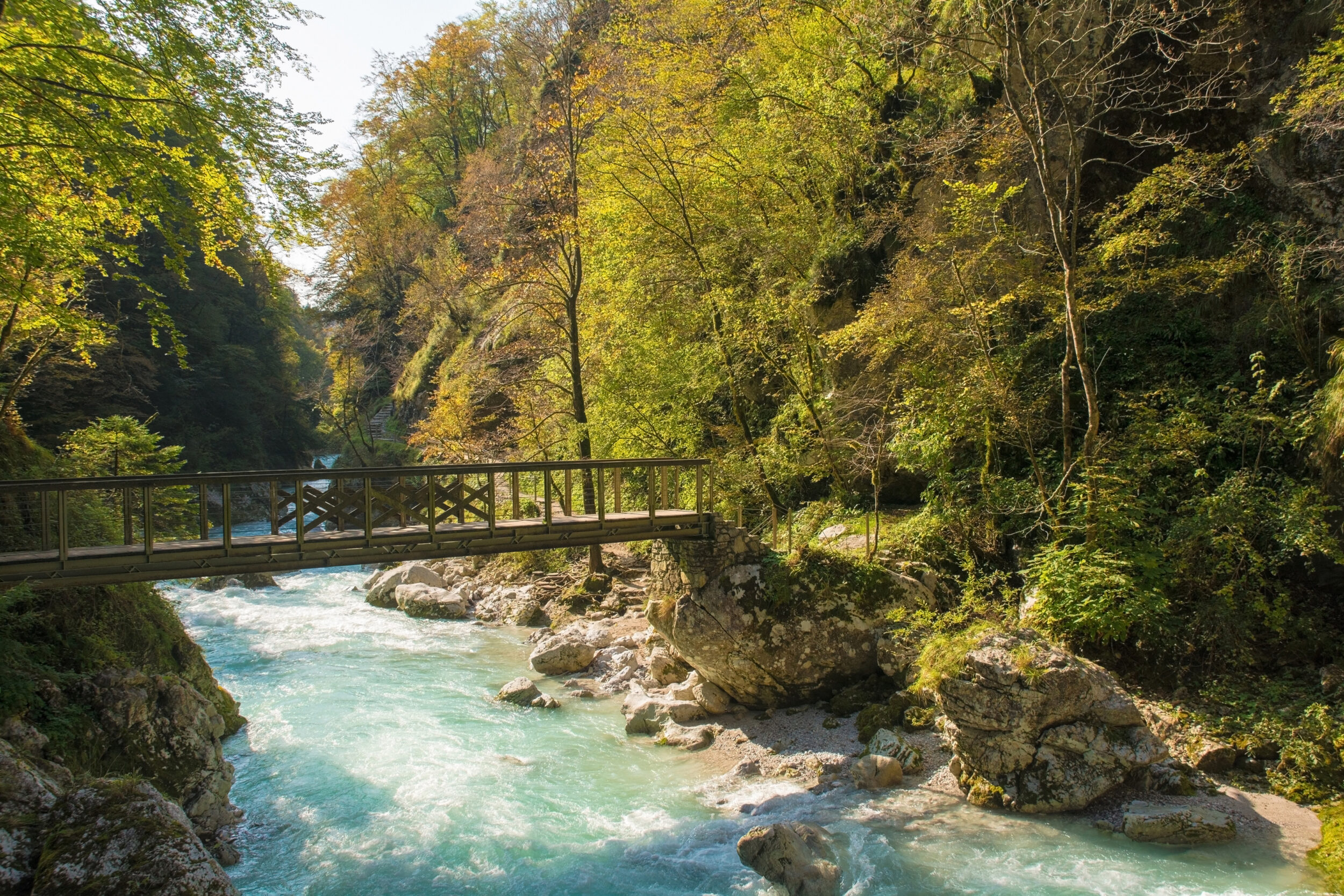
The emerald-green Soča—known in Italy as the Isonzo—flows from the heart of the Julian Alps and cuts through glacial moraines, carrying their sediments to the Adriatic Sea. Often considered as one of the most beautiful rivers in Europe, this area has also been recognised as a UNESCO World Biosphere Reserve since 2017. In the upper Soča-Isonzo Valley, glacial runoff interacting with the karst limestone near Mount Kanin (2,587 m) has created remarkable vertical shafts. Two of these plunge more than 1,000 meters deep, while three others exceed 500 meters—including the appropriately named ‘Vertigo Cave’.
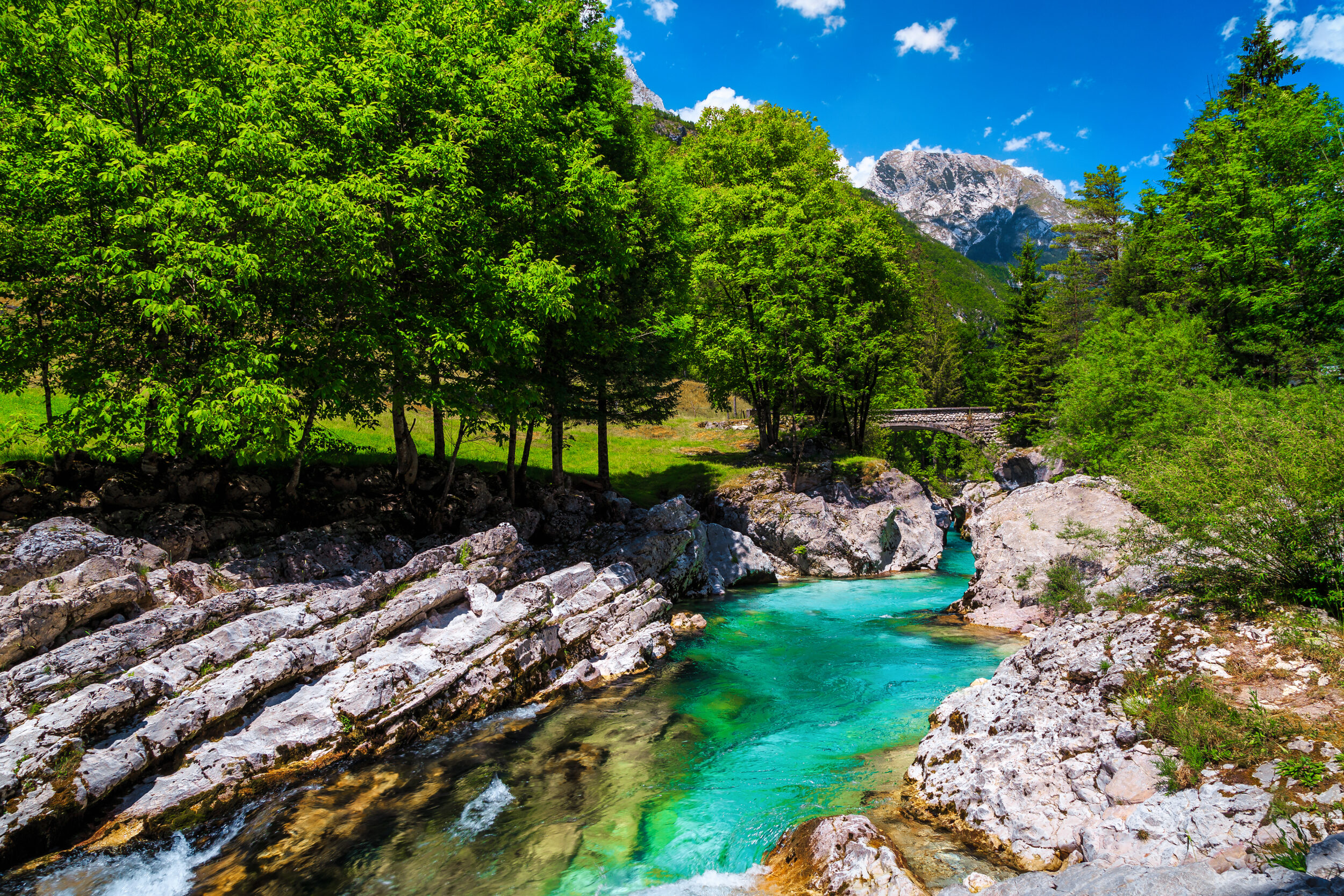
Carved by the crystal-clear Tolminka and Zadlaščica rivers, the Tolmin Gorge is the lowest, and arguably most beautiful, entrance to Triglav National Park; it is considered one of Slovenia’s most spectacular natural landmarks. According to legend, the Italian poet Dante Alighieri visited the gorge around 1319. Often touted as inspiration for his Inferno, this visit is believed to have occurred while he was hosted by the Patriarch of Aquileia after being exiled from Florence.
Lake Bohinj & Lake Bled
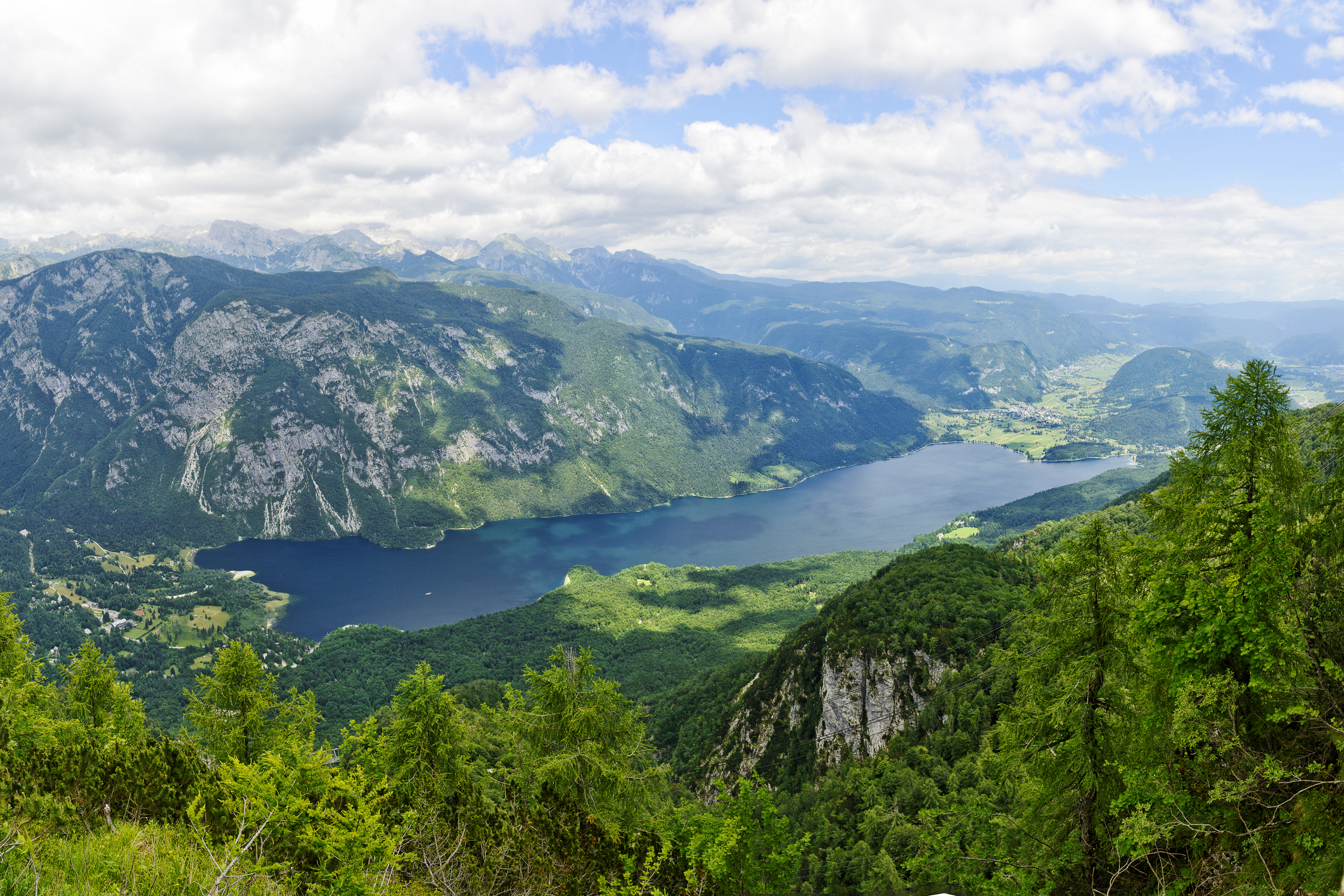
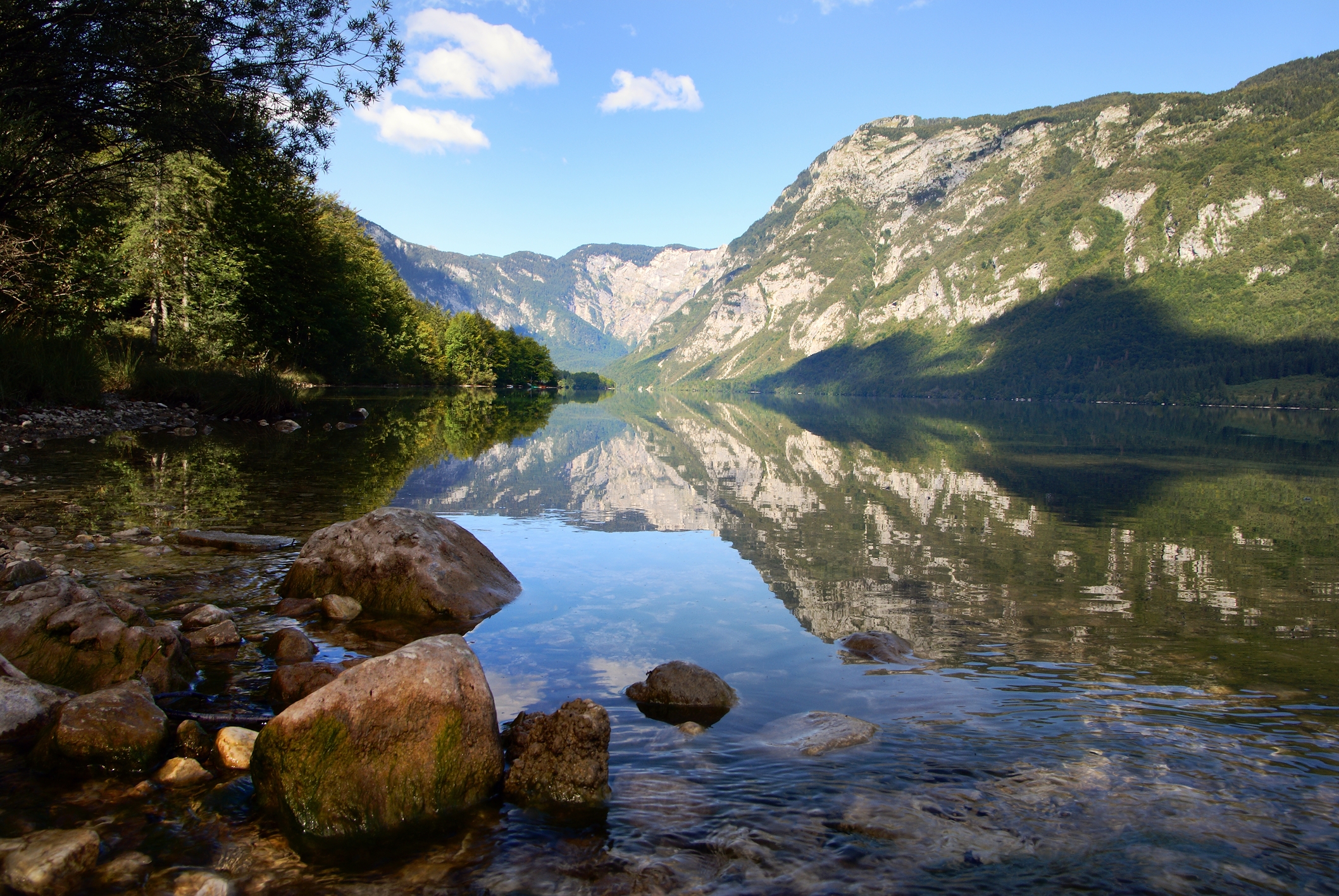
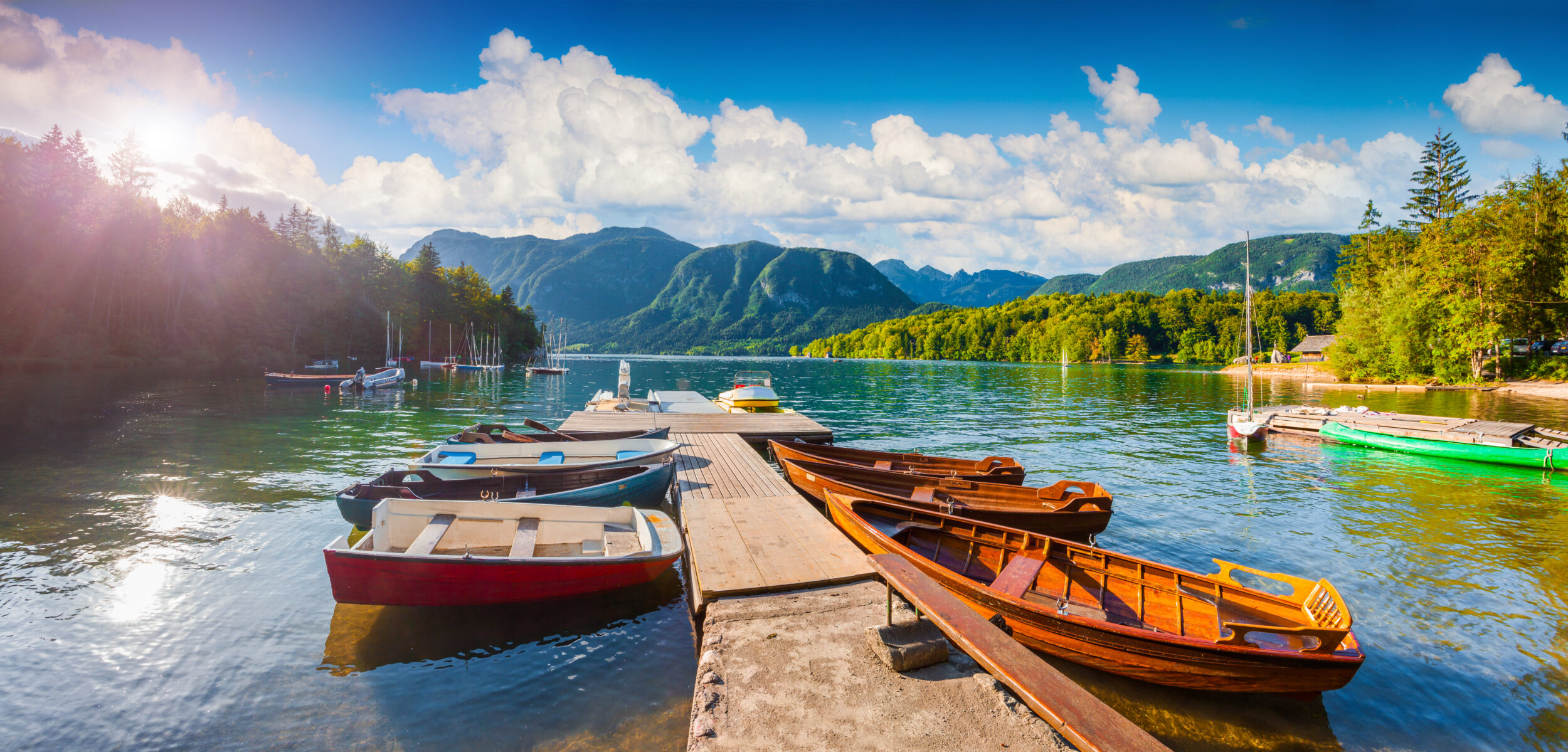
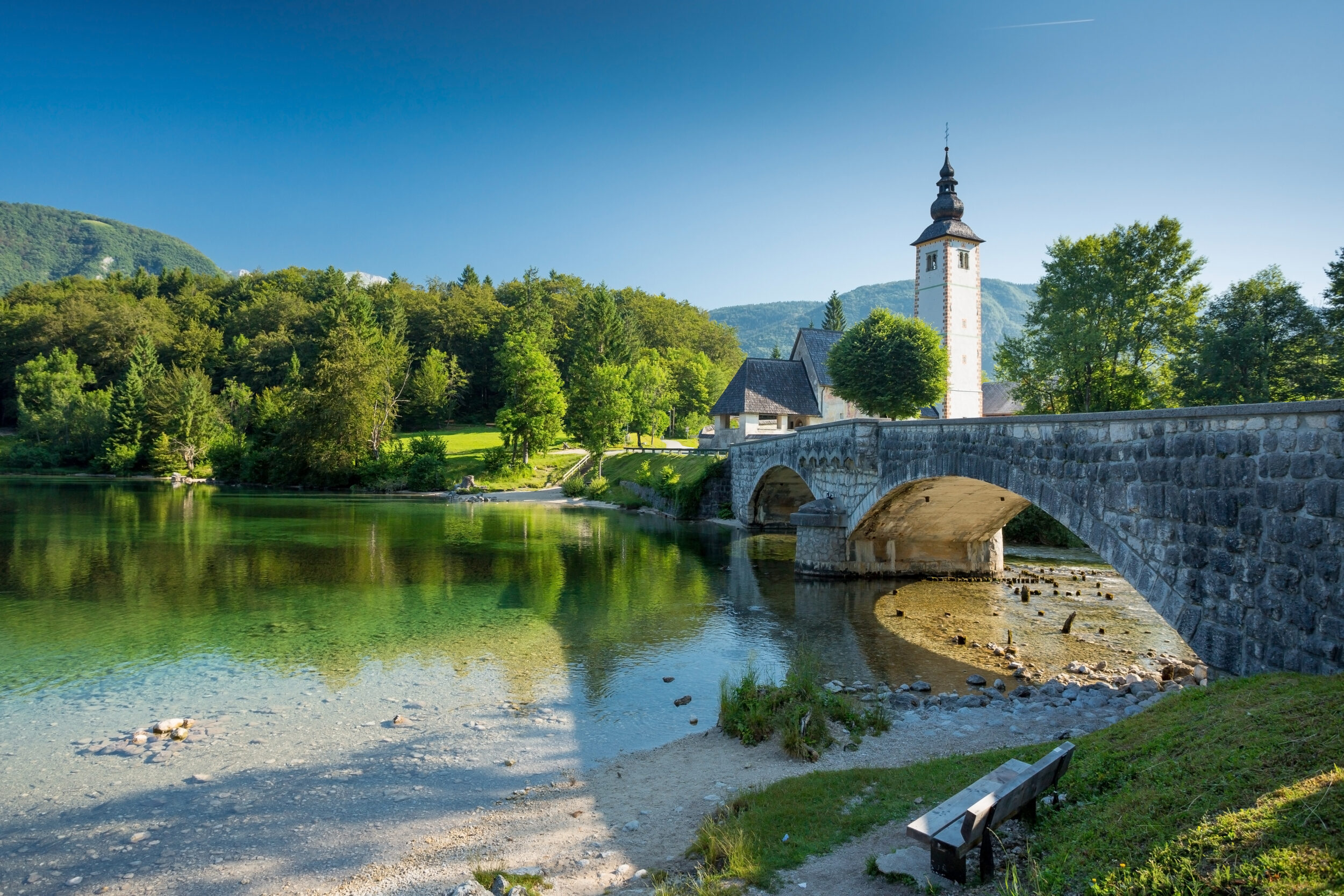
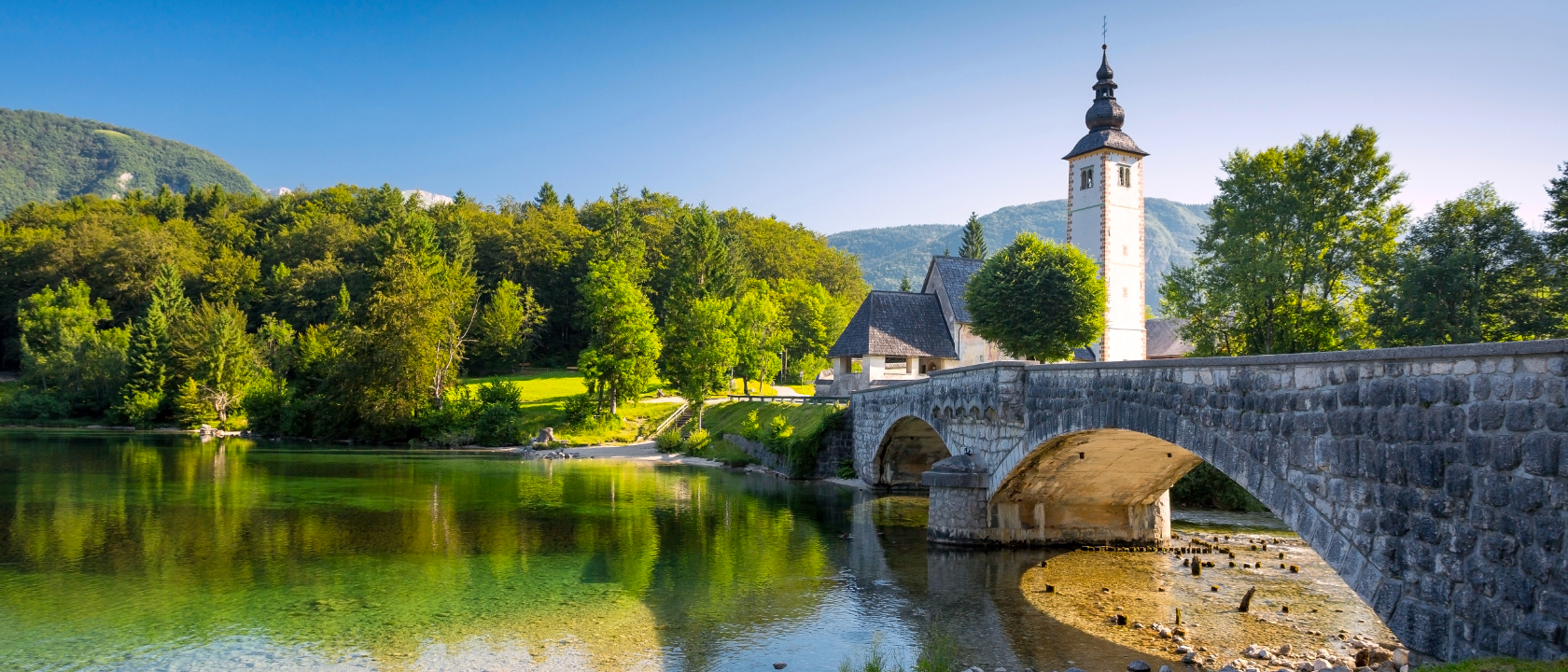
Lake Bohinj is a natural lake formed by tectonic activity and fed primarily by underground karst springs. Archaeological evidence shows that Celtic communities were prospecting for iron in the area as early as the 6th century BCE. Its water is exceptionally clear, primarily because it is a pristine glacial lake, fed by clean, cold mountain streams from the Julian Alps. The water is completely replaced by this alpine inflow roughly three times per year.
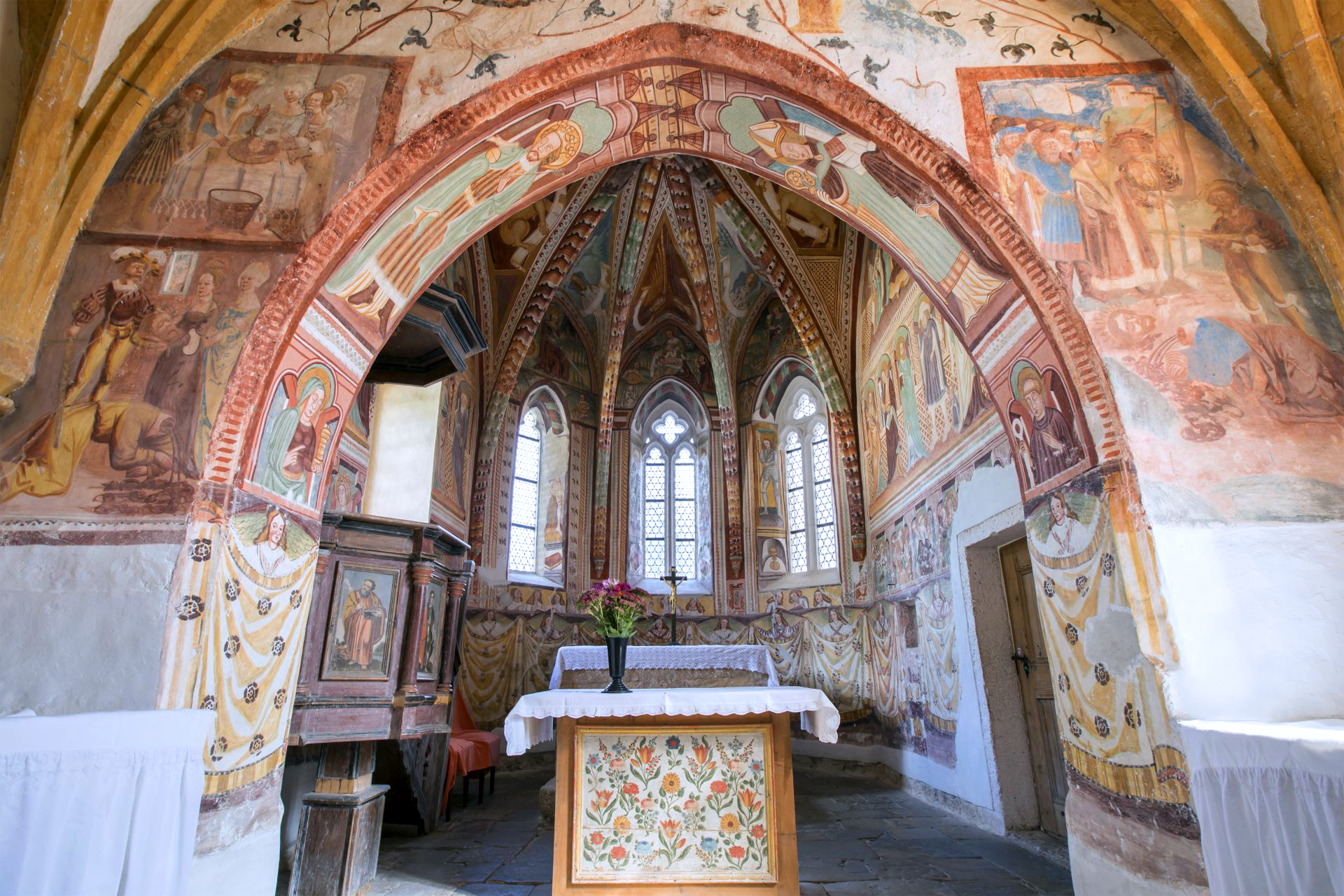
Along its shore stands the Church of St. John the Baptist, originally built in the 13th century, and especially noted for its remarkable frescoes. The earliest date from the 13th century, while most were painted in the 15th and 16th centuries. These works depict scenes from the life and death of St. John the Baptist, as well as the Old Testament story of Cain and Abel, offering insight into the spiritual concerns of the local parish community at the time.
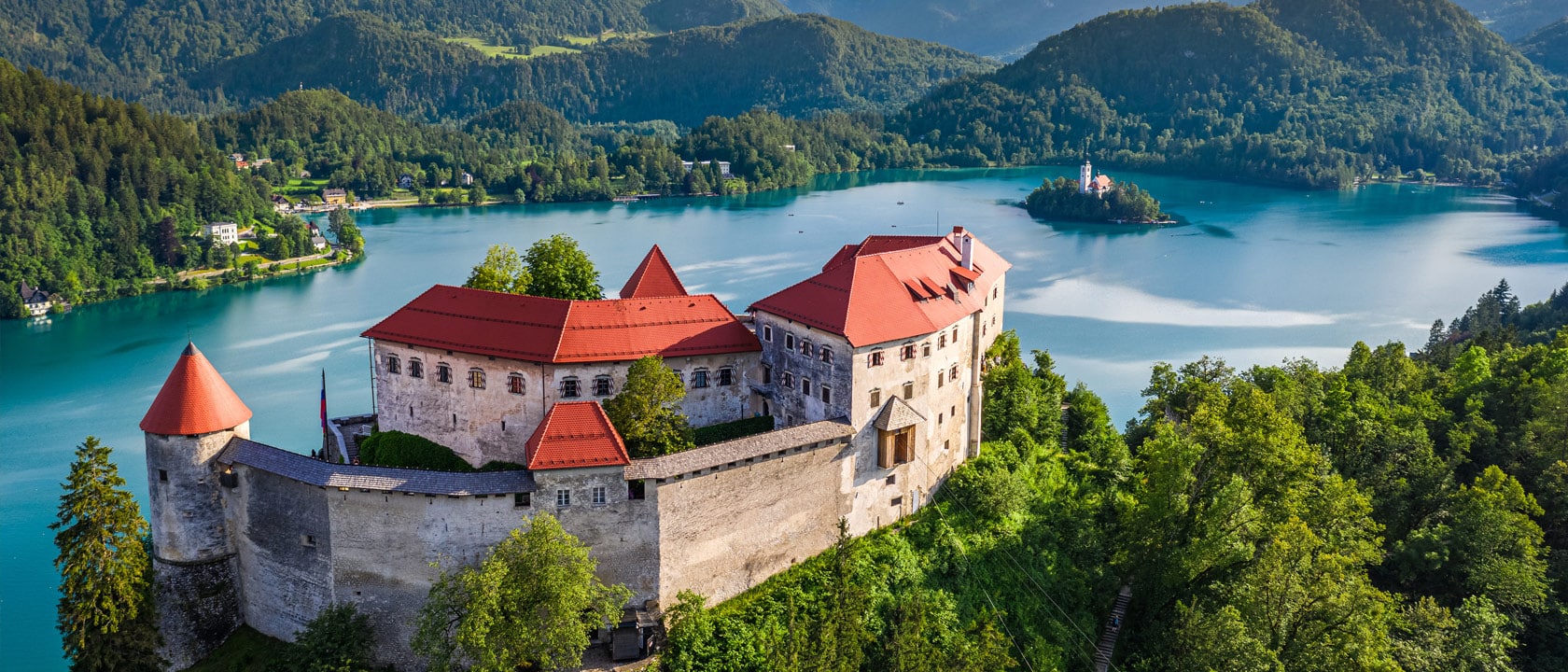
During the Bronze Age, Lake Bled served as an important cult centre. Gold appliqués dating to the 13th–12th centuries BCE have been discovered in deposits along its shore. For centuries now, Europeans have been drawn to the lake for recreation as well as for its reputed healing qualities. The Holy Roman Emperor Henry II was so taken with the site that he built Bled Castle in 1004 on the northern shore, establishing it as an estate overlooking the lake.
The Škocjan Caves
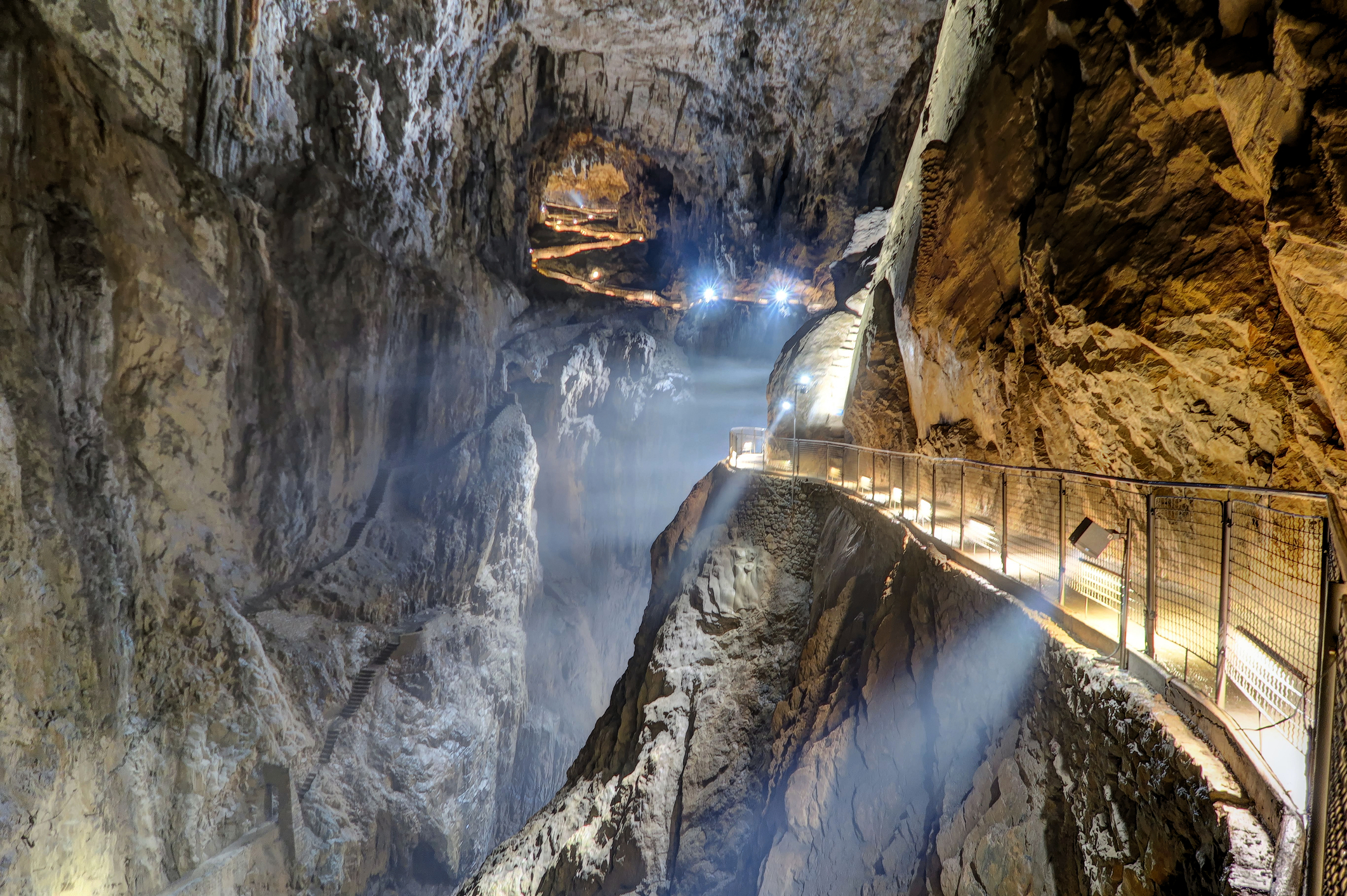
Sculpted by the subterranean Reka River, these caves rank among Slovenia’s most extraordinary natural wonders and were the first natural monument in Slovenia to be inscribed on the UNESCO World Heritage List in 1986. The cave system is famous for containing one of the world’s largest known underground river canyons. Its vast subterranean chamber stretches approximately 2.5 kilometres in length and rises up to 130 metres high. These caves are also home to the remarkable olm—a rare, cave-dwelling white salamander uniquely adapted to life in complete darkness. Ongoing archaeological studies have revealed a long history of human occupation since prehistoric times with strong evidence that our ancestors used the area for settlement but also as a burial ground as well as for rituals.
Travel to Slovenia on our tour Slovenia: Villages, Castles, Vineyards, Scenic Valleys and the Julian Alps with Dr Adrian Jones and Martin Muhek to experience its stunning natural landscapes, including the soaring snow-capped Julian Alps, subterranean Postojna and Škocjan caves, and sparkling sapphire-blue lakes and rivers. Visit Art Nouveau Ljubljana, the old wine-producing city of Maribor, and enjoy the country’s fine gastronomy.
 Slovenia: Villages, Castles, Vineyards, Scenic Valleys and the Julian Alps 2027