
Sümela Monastery: A Highlight of the Black Sea Region
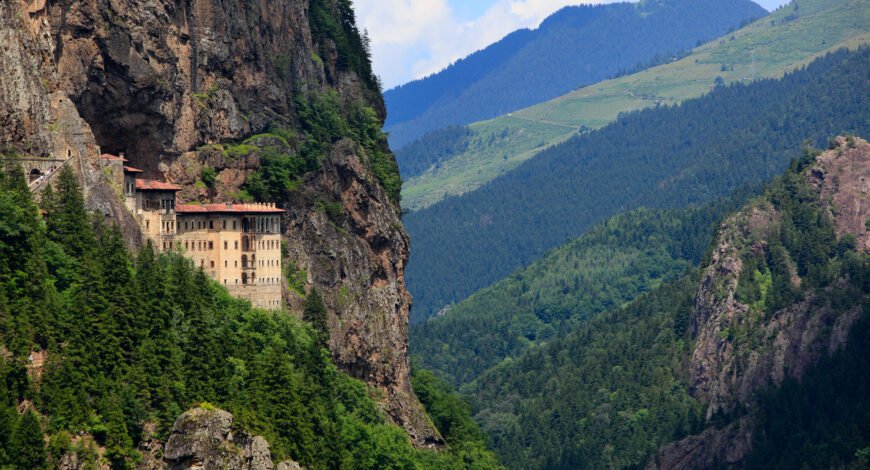
The Sümela Monastery Clings to a Sheer Cliff High Above Evergreen Forests
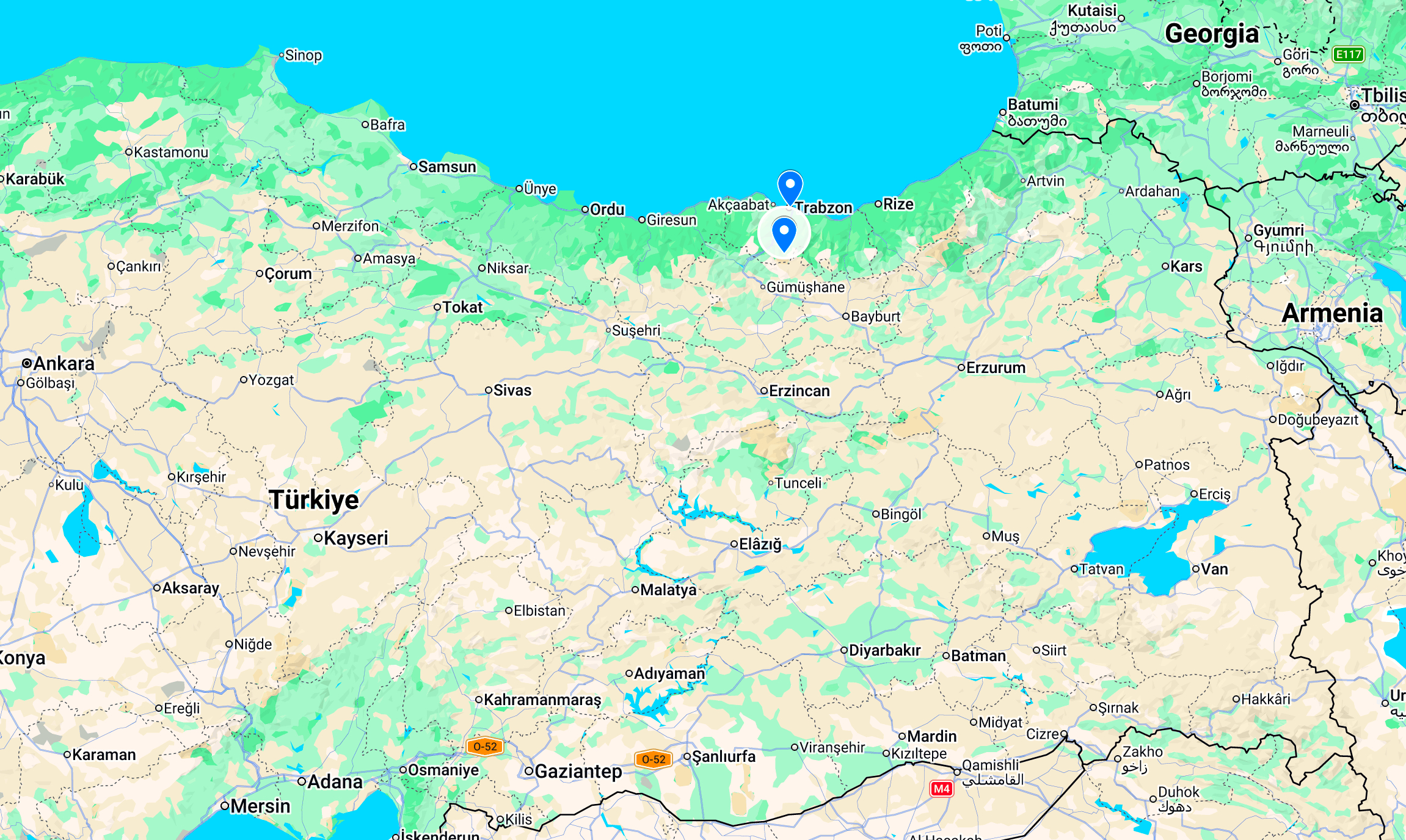
Sümela Monastery on Mount Melá is dedicated to the Virgin Mary (‘Panagia’ – ‘All Holy’). It occupies a steep cliff aerie about 1,200 metres above the Altındere Valley, 10 kilometres south of Trabzon. In 2000 it was included in the UNESCO Tentative List of World Heritage.
History of the Monastery
It is believed that the monastery was founded in 386 CE during the reign of the Emperor Theodosius I (375 – 395 CE). Legend has it that two priests founded the monastery after discovering a miraculous icon of the Virgin Mary, believed to have been painted by the Apostle St. Luke, in a cave on the mountain. The two priests deepened the cave to form a small church and a monastic community grew up around this original core.
Having fallen into ruin a number of times, Sümela was restored by various Byzantine emperors including Justinian I (483 – 545) who ordered his general Belisarius (500 – 565) to restore the complex. The monastery attained its present form during the 13th century, in the reign of the Comnene Emperor Alexius III (1349 – 1390); although one scholar believes some paintings in the monastery to be much earlier and by the same hand as the artist of Hagia Sophia, Trabzon. Alexios III, his son Manuel III, and subsequent Trapezuntine princes provided the monastery further endowments and grants of land and it came to derive much wealth from extensive agricultural holdings in its vicinity. Comnene patronage of churches and monasteries in their independent empire reinforced their claim to universal imperial status, against those imperial Byzantine dynasties of Nicea and Epirus. The monastery possibly also protected the mountain routes into their imperial city.
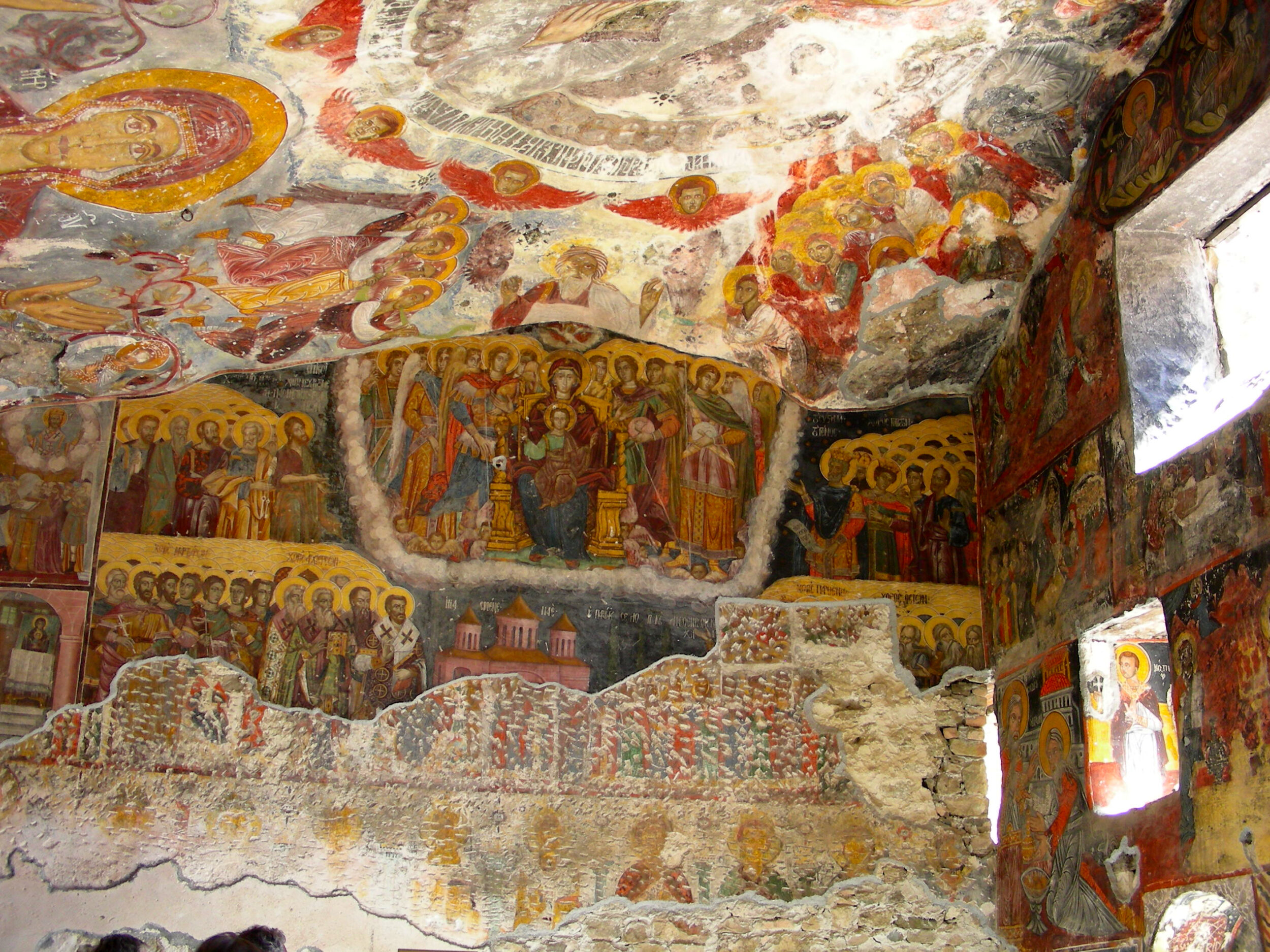
When Mehmet II conquered Trapezus in 1461, he gave the monastery his protection and its rights and privileges were renewed by his Ottoman successors. The community of monks survived over the centuries and pilgrims and other travellers regularly visited the complex. Before the advent of 19th and 20th century nationalism, the culture of Anatolia, especially in Eastern Türkiye, was highly syncretic and it is known that local Muslims respected the monastery’s religious status and even visited as pilgrims. For a few decades following 1682, the monastery housed the Phrontisterion of Trapezus, founded by the great educator and former director of the Patriarchal Academy in Istanbul, Sevastos Kyminitis (1630 – 1703). This language school became the most influential centre of Greek education in Pontus, charged with the cultivation of the national and religious identity of the local Greek communities. Donations by wealthy Greek families of the Black Sea merchant diaspora, such as the Velissarides and Kallivazis clans, supported the school and its students. In the 18th century, frescoes depicting the Life of the Virgin and the Life of Christ were painted on the outer walls of the monastery buildings.
The Russians seized the monastery during their 1916-18 occupation of Trabzon and it was abandoned in 1923 when the Turkish and Greek governments exchanged populations. The departing monks were not permitted to take any property with them, so they buried Sümela’s famous icon under the floor of the monastery’s St. Barbara chapel. In 1930 a monk secretly returned to Sümela, retrieved the icon, and took it to the new Panagia Soumela Monastery, on the slopes of Mount Vermion, in Greek Macedonia.
The Monastery Complex
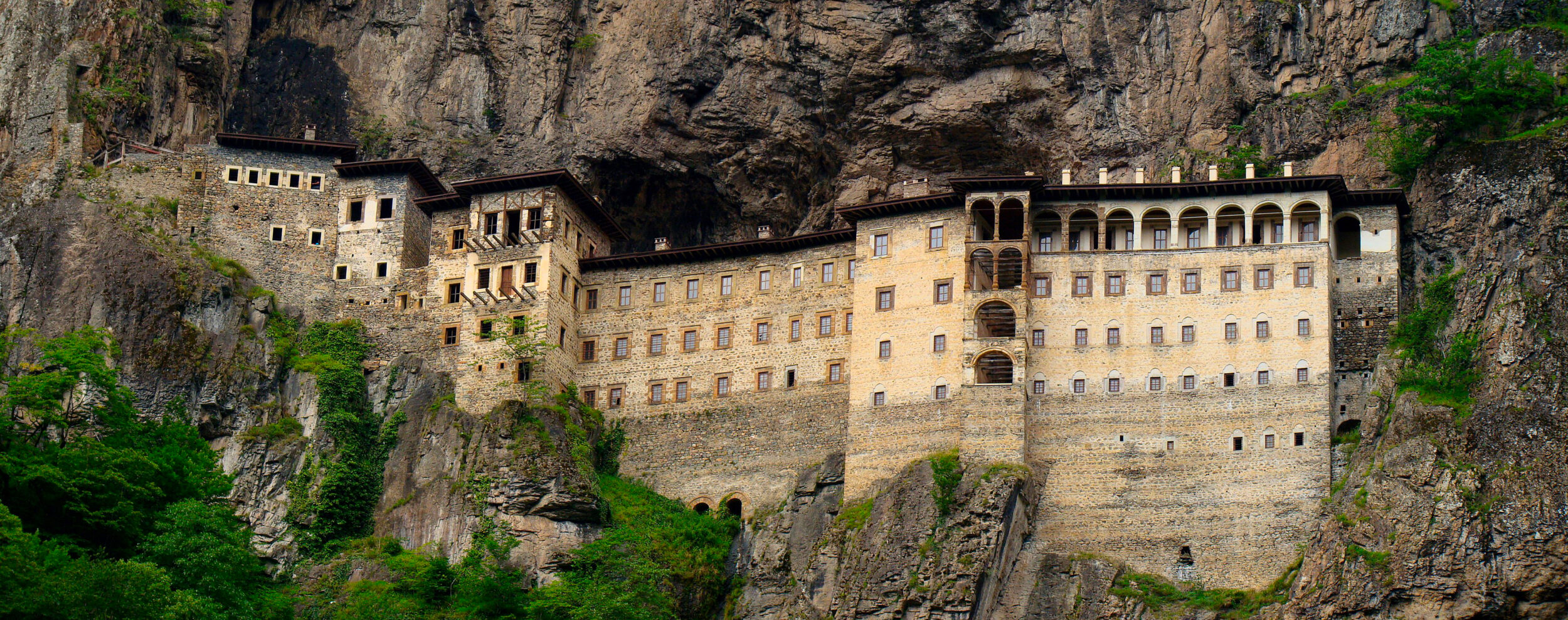
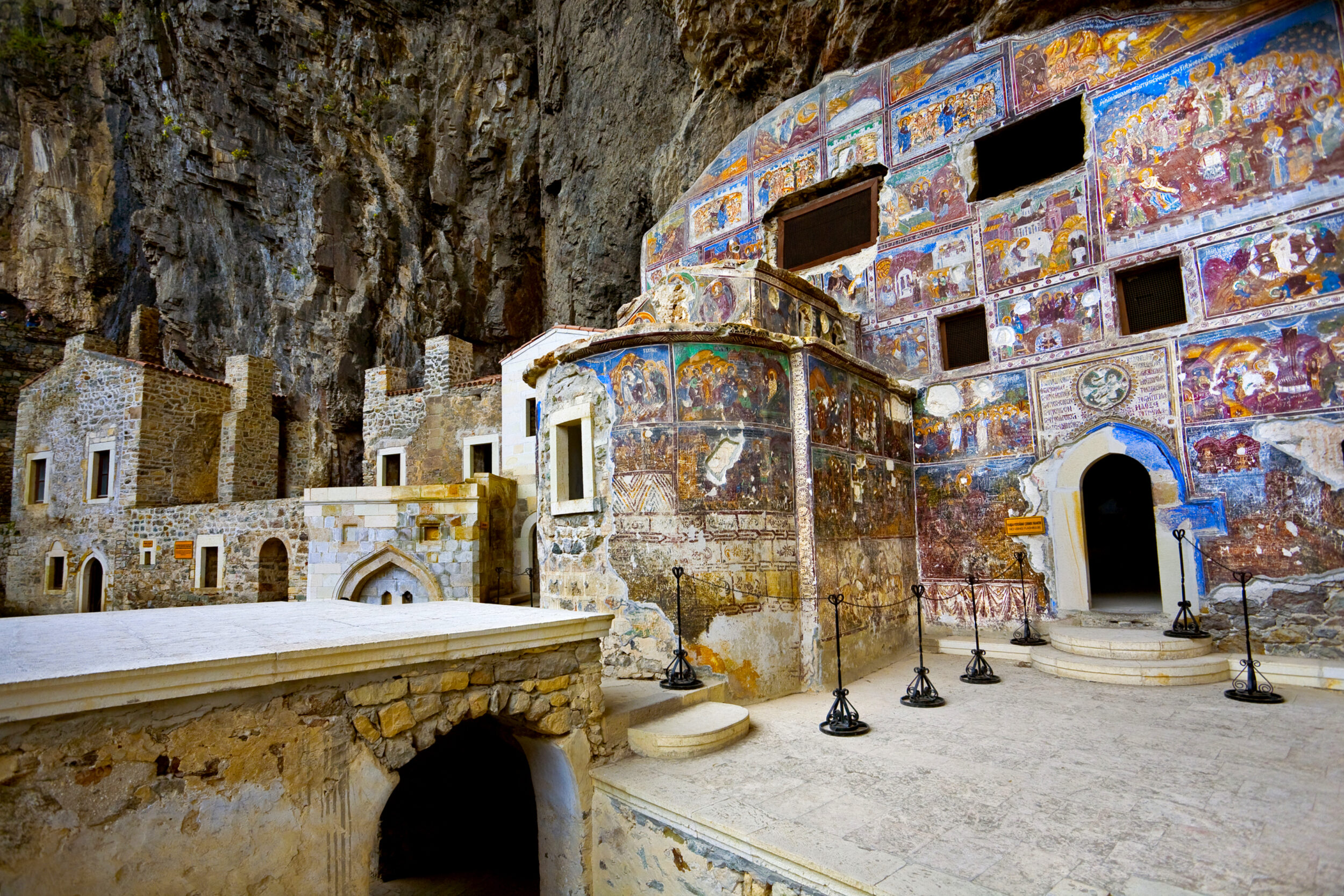
The Monastery complex, approached along a steep path through the surrounding forest, includes the original Cave Church, several chapels, kitchens, student rooms, a guesthouse, a library, and a much-revered sacred spring. A large balconied building facing out over the valley was built in 1840 to house monks’ cells and provide accommodation for guests. An aqueduct that supplied the monastery with water runs along the side of the cliff to the entrance guardhouse. From this guardhouse stairs lead down to an inner courtyard. Several monastic buildings stand around the courtyard facing the sacral core of the monastery – its ancient cave church – and their interior detailing (cupboards, niches and fireplaces) reflects Ottoman influences. The monastic library stands off to the right. The inner and outer walls of the Cave Church and the walls of the adjacent chapel are decorated with frescoes. The inner wall of the Cave Church facing the courtyard is covered with much damaged frescoes believed to date from the reign of Alexius III, while other frescoes date from the 18th century.
Restoration of the Frescoes Commenced in 2024
In May 2024 the Ministry of Culture and Tourism’s General Directorate of Cultural Assets and Museums initiated the restoration of wall paintings, focusing on five scenes on the church’s exterior facade. This includes the Last Supper scene which has finally been unveiled.
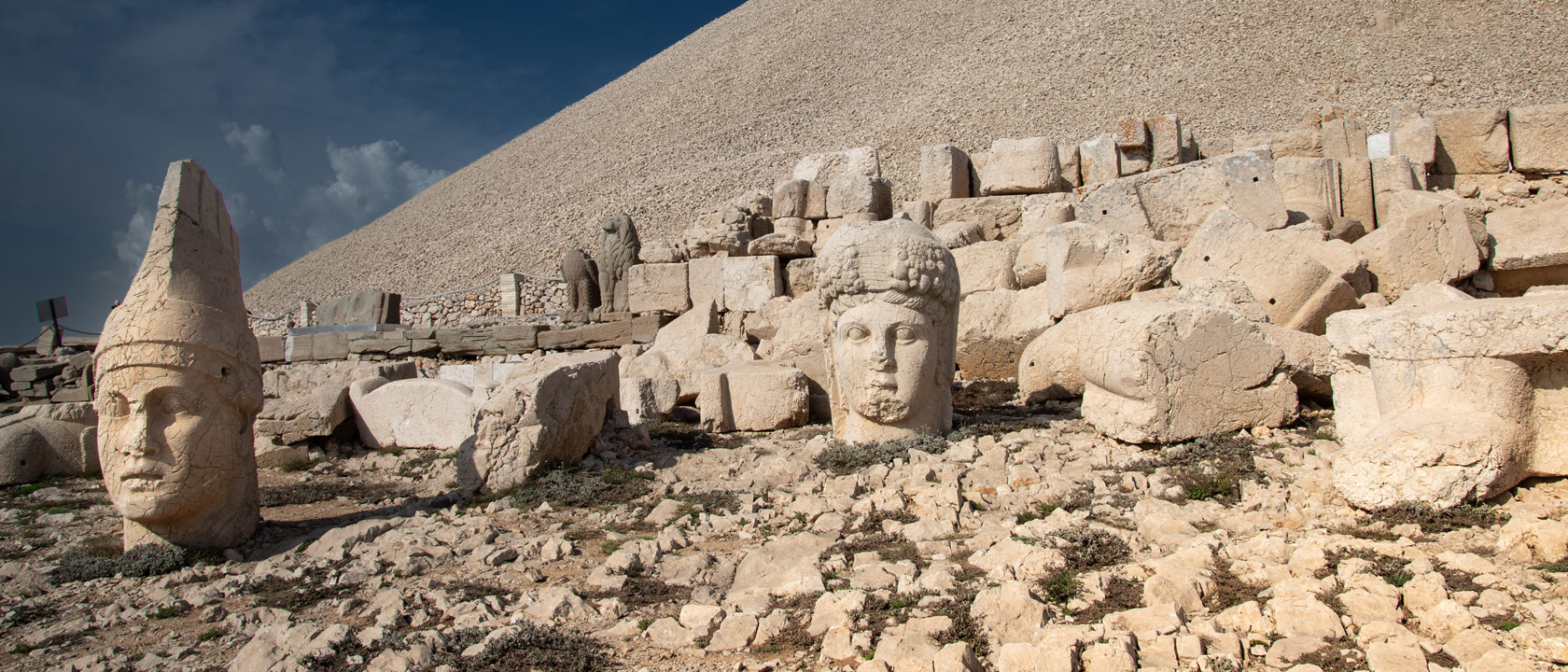
To visit Sümela Monastery join historian and well-known author, Terry Richardson, on our tour Türkiye Beyond the Euphrates: Discovering the Eastern Frontier. This journey takes us from Gazientep to the Black Sea visiting a variety of spectacular architecture and scenery including the World Heritage listed sites of Ani, Göbekli Tepi and Nemrut Dag.
 Türkiye Beyond the Euphrates: Discovering the Eastern Frontier 2027