
The Forts of Rajasthan: Strategic Integration Into the Landscape
by Em. Prof. Bernard Hoffert
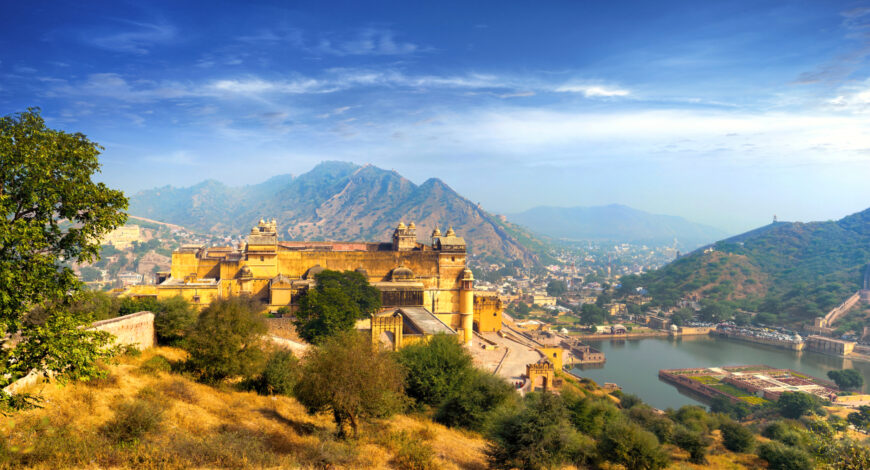
The great fortresses crowning the hilltops of the Aravalli range, six of which are UNESCO World Heritage listed, echo the mystery and romance of Rajasthan like no other. These engineering marvels preside over the desolation of a rock-strewn landscape, protecting the trade routes once filled with exotic goods, spices (pepper and cardamom), textiles (silk and cotton), precious gemstones (garnets, topaz, rich-coloured dyes, rubies, pearls and sapphires), ivory and perfumes – luxuries which found their way along the pathways of the Silk Road to the Middle East, Constantinople and Europe. The Rajput overlords of these fortresses grew rich from taxes and tolls, ploughing their wealth into the grandeur of their palaces and the magnificence of the forts which protected them.
Amber Fort
The great fort of Amber, capital of the state of Amber, now Jaipur, was begun by Raja Man Singh of the Kachwaha Rajput clan in 1592. He had grown rich in the service of the Mughal emperor Akbar, leading his campaigns and extending the boundaries of his empire. Part of Akbar’s inner governing circle, he was regarded as one of the 9 jewels of his court and acted as general and governor over the long period he served the Emperor. His aunt Jodhabai had been given in marriage to Akbar by the Raja Barmahl as part of an alliance between the Mughal court and Amber. Man Singh’s military prowess and his aunt’s support strengthened his position at court, and he gradually took increasing responsibility from Akbar in terms of the administration of more troublesome parts of the empire. He also led the campaign at Haldighati against Rana Pratap Singh of Mewar in 1576. Although he was victorious, Rana Pratap continued to wage guerrilla war against Akbar and Mewar remained the only Rajput state not to form a treaty with the Mughals.
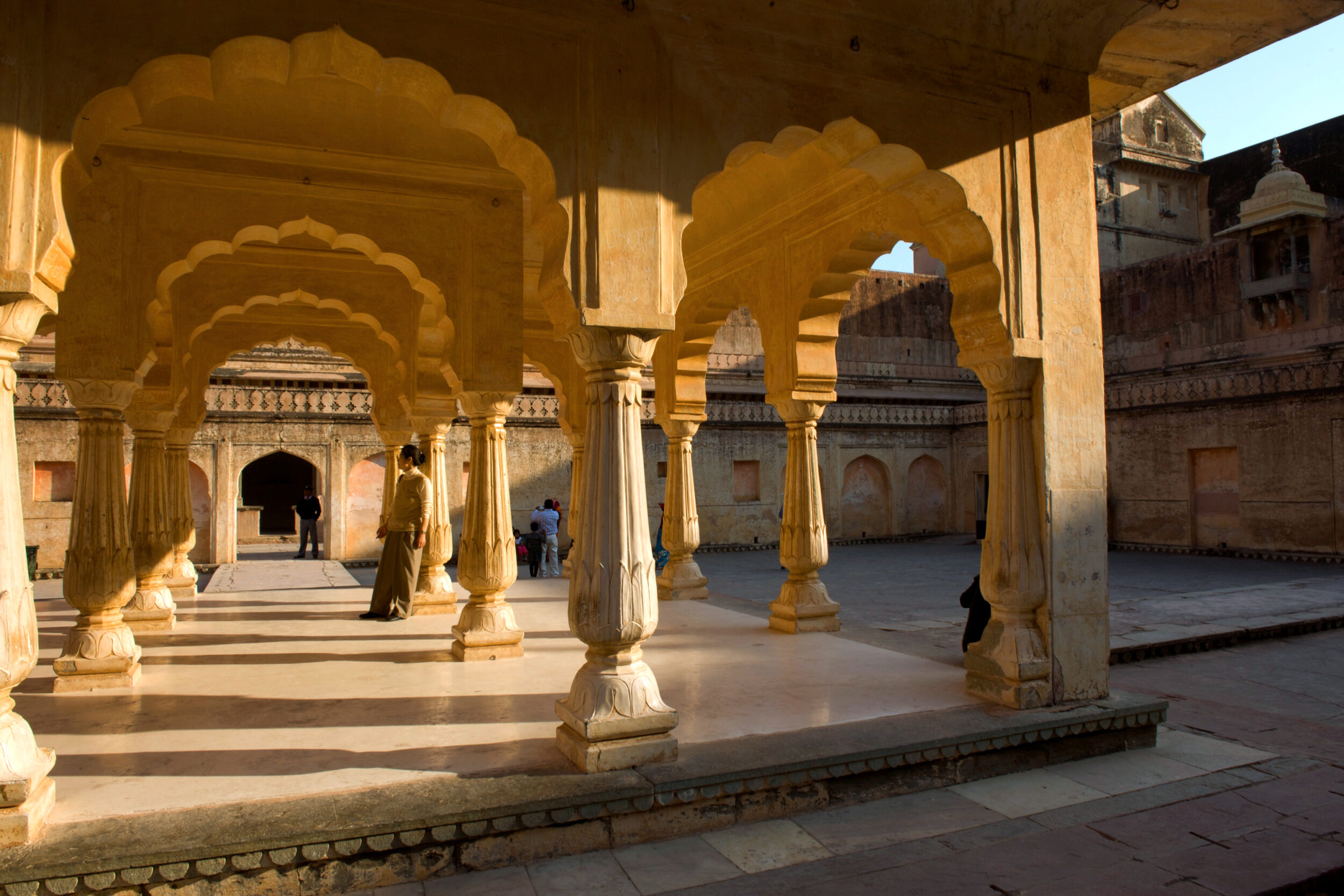
The fort is constructed from red sandstone and white marble in a mixture of Hindu and Mughal architectural styles. The strong geometry of the post and lintel forms of the Hindu’s with their rich decorative carving stands against the pointed Islamic archways and cluster columns. The richness of Akbar’s Agra Fort strongly influenced Man Singh’s taste, and the Amber fort blends the two styles together. He also integrated the Mughal Hall of Public Audience and Hall of Private Audience into the administrative areas, and rich arabesques and floral forms into the decoration of the palace areas. Man Singh had 12 wives, and he built identical apartments for each of them below his quarters, with private access to each room.
Jaigarh Fort
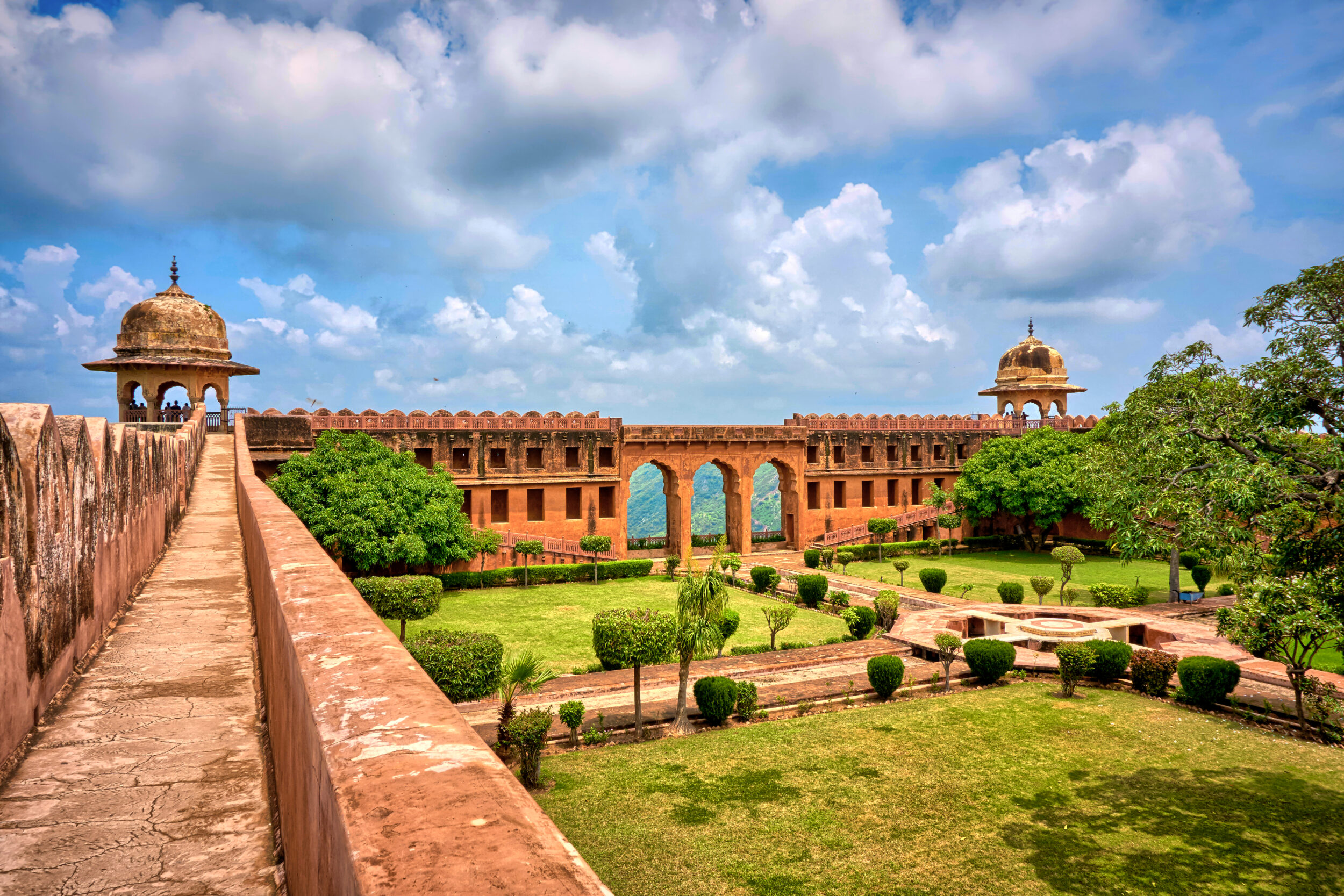
Above the Amber fort stretching for 3 kilometres along a ridge of the Aravellis, is the rugged Jaigarh Fort. The two forts are connected by an underground passage for escape in case of siege. The treasury of the Kachwahas was in the fort as well as the legendary secret hiding place for treasure in one of the reservoirs. There is a sophisticated drainage system to harness water, still in use. The Emperor Shah Jahan established a canon foundry in the fort creating a huge tunnel to harness the high winds of the fort’s location, achieving temperatures as high as 1320 degrees Celsius. The fort still houses a museum of artillery and the largest canon on wheels ever smelted with a barrel of 6.1 metres. It was fired only once with a charge of 100 kilos of powder.
Taragarh Fort
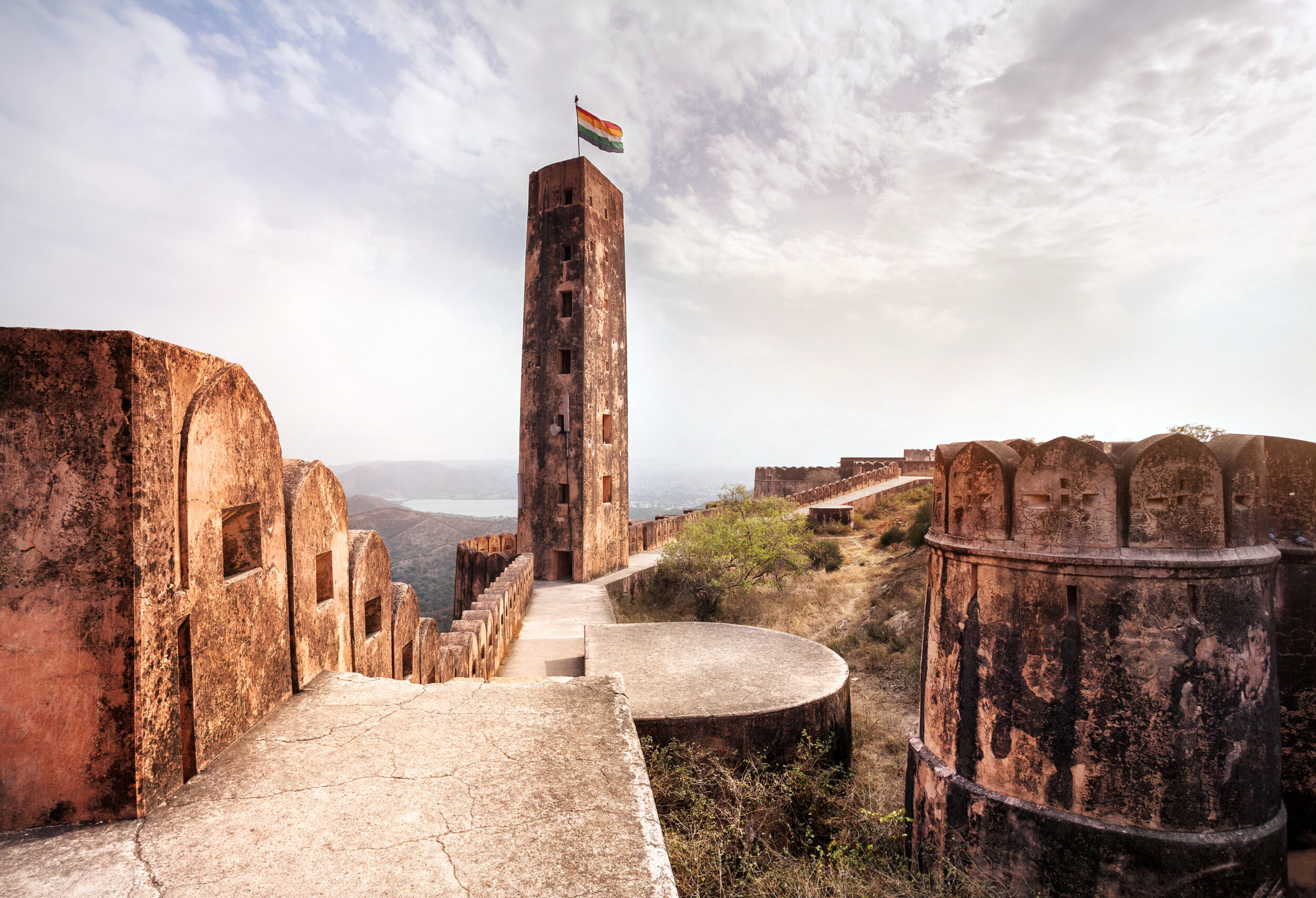
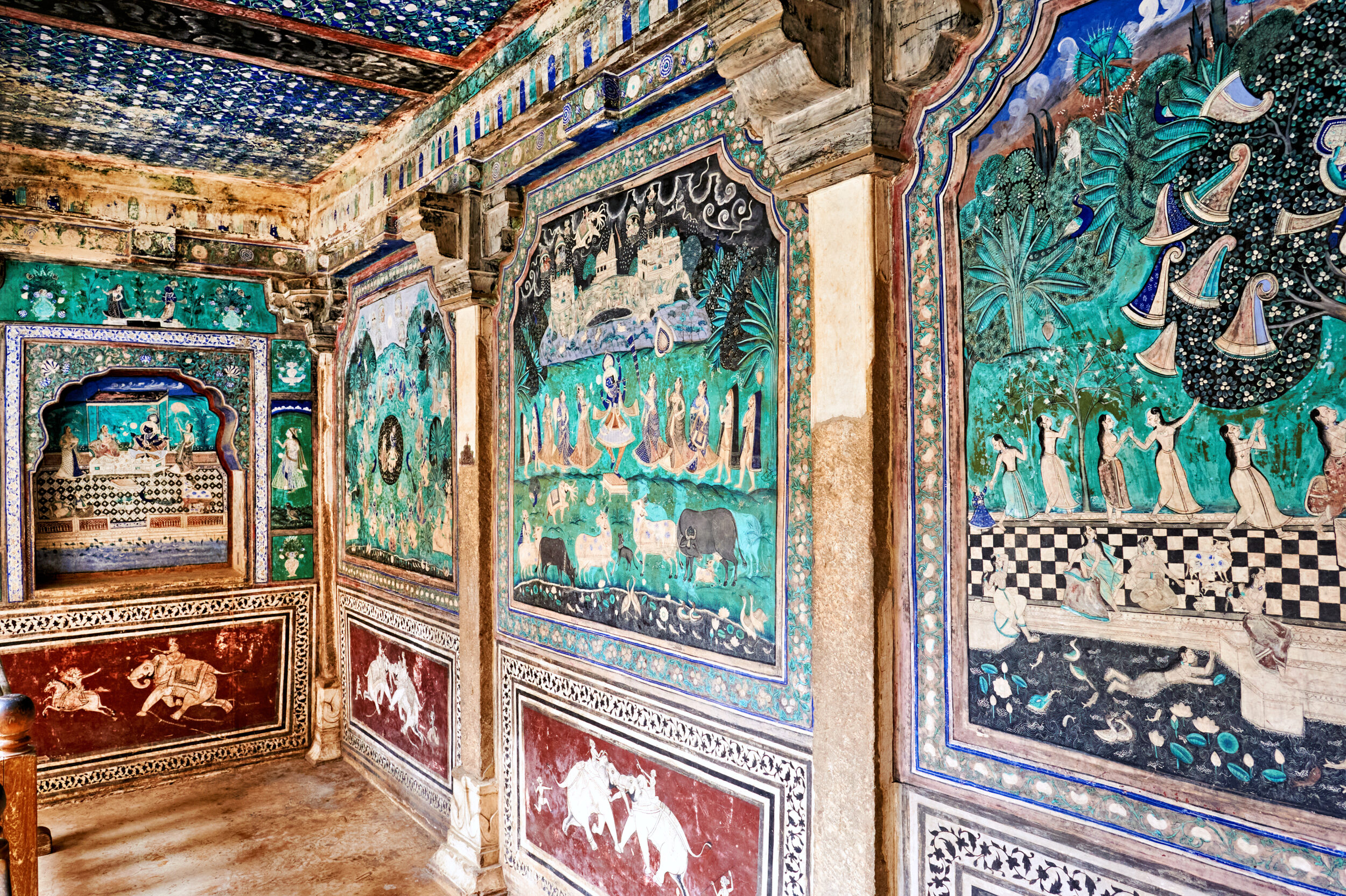
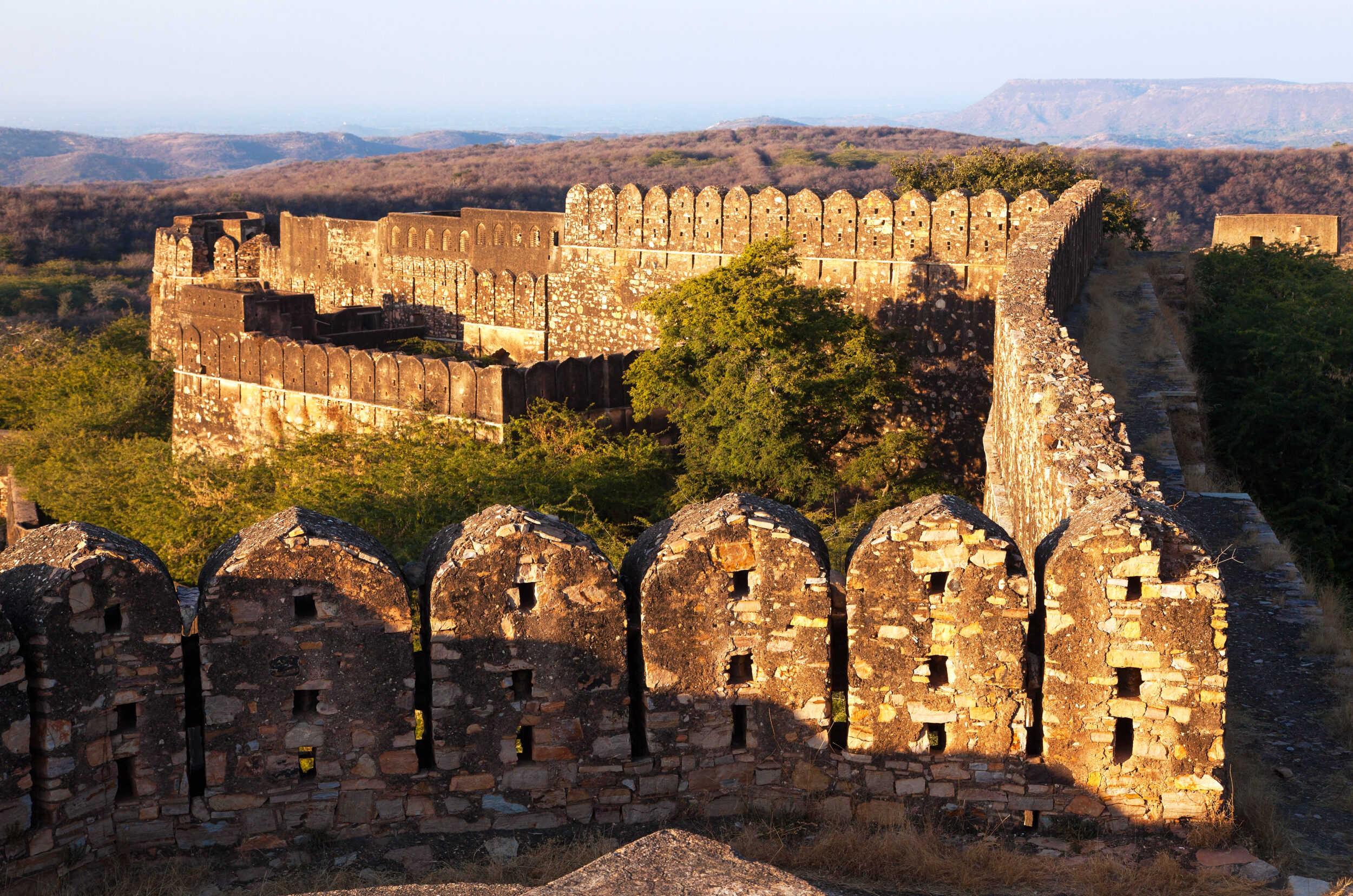
The Mughals brought artillery to India with the first Mughal Emperor Babur in 1526. Despite their effectiveness in battle, the Rajputs, accustomed to hand to hand combat, regarded guns as cowardly and did not take them up initially. Eventually guns were integrated into their arsenal which also instigated changes in their fort construction. Bastions were introduced to enable crossfire, and external walls were angled to deflect cannon balls. An interesting modification can be seen in the great Taragarh Fort at Bundi. Built in medieval times the battlements were designed to protect archers. They had to be modified to allow for rifles and directional slots were pierced through the battlements at different angles to allow marksmen to fire in lower or higher, side or angled directions.
Jodhpur Fort
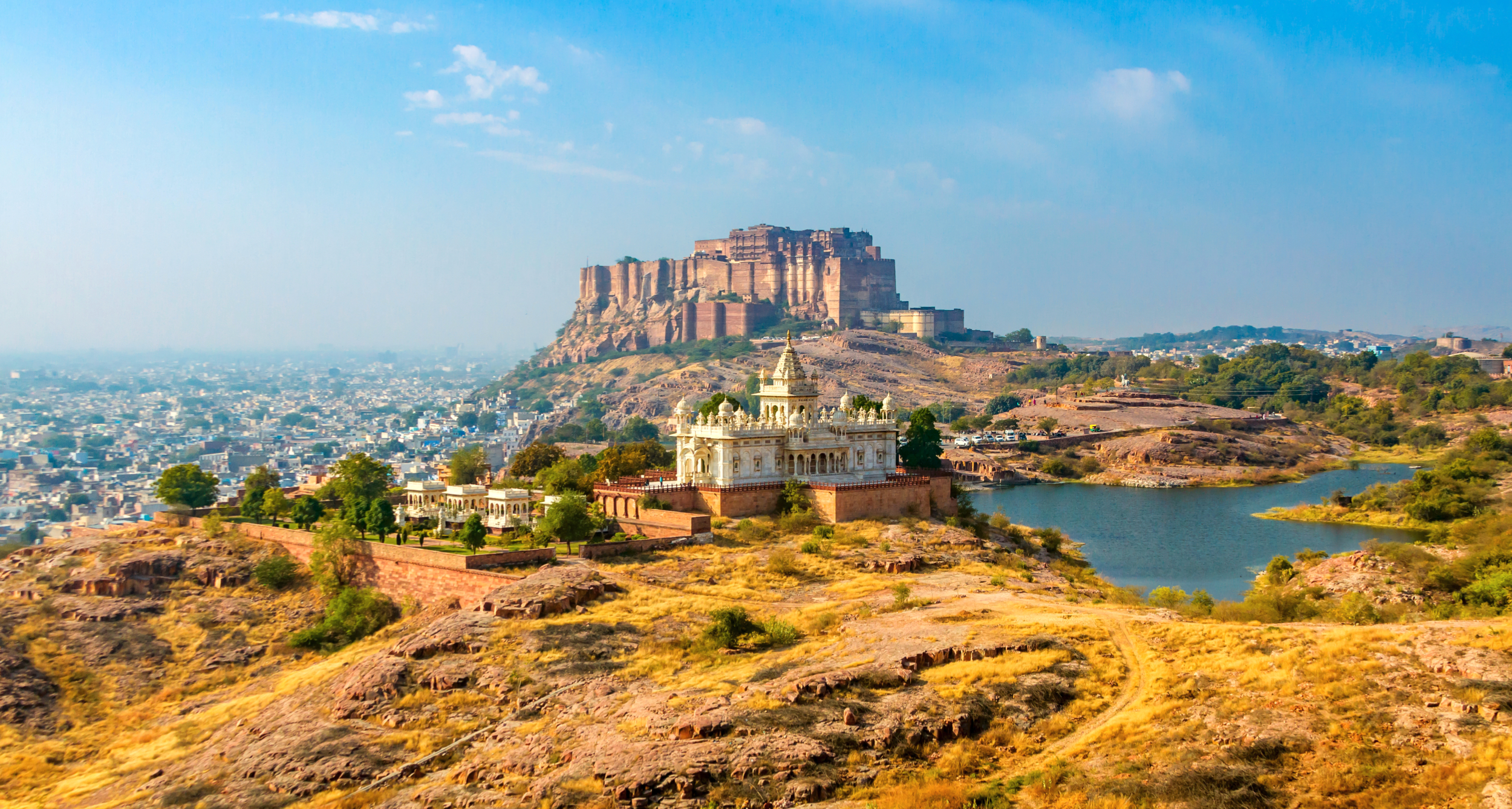
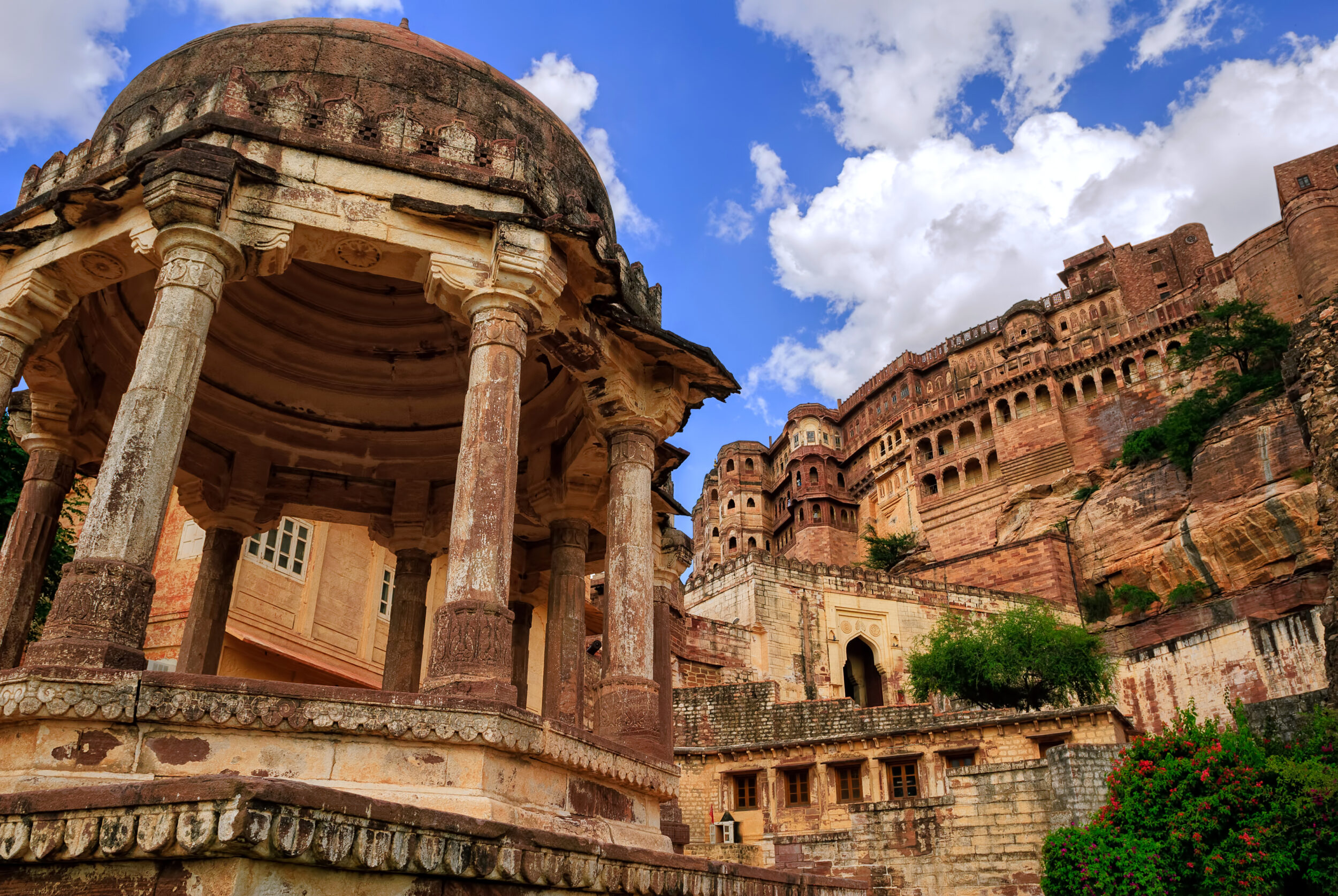
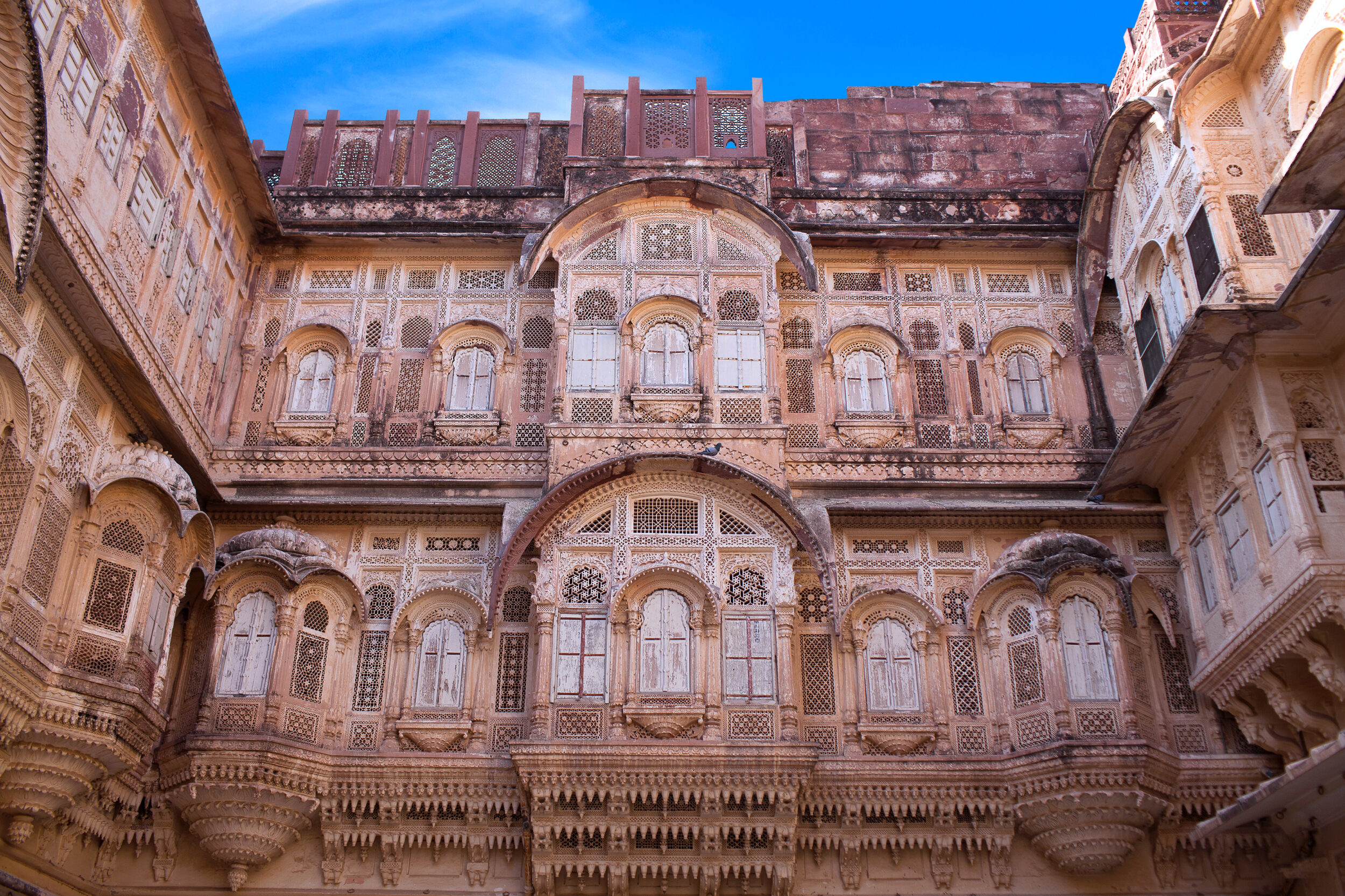
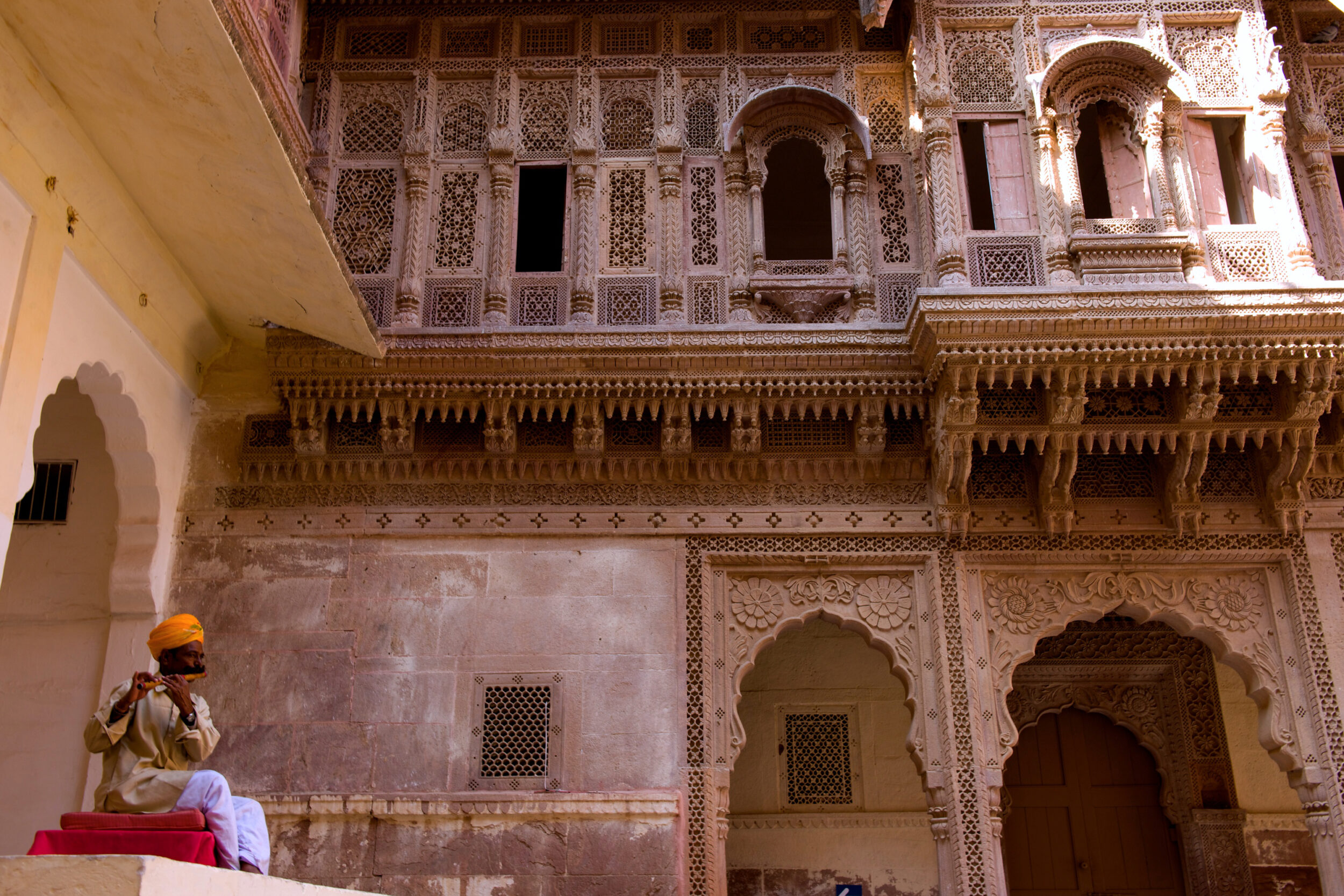
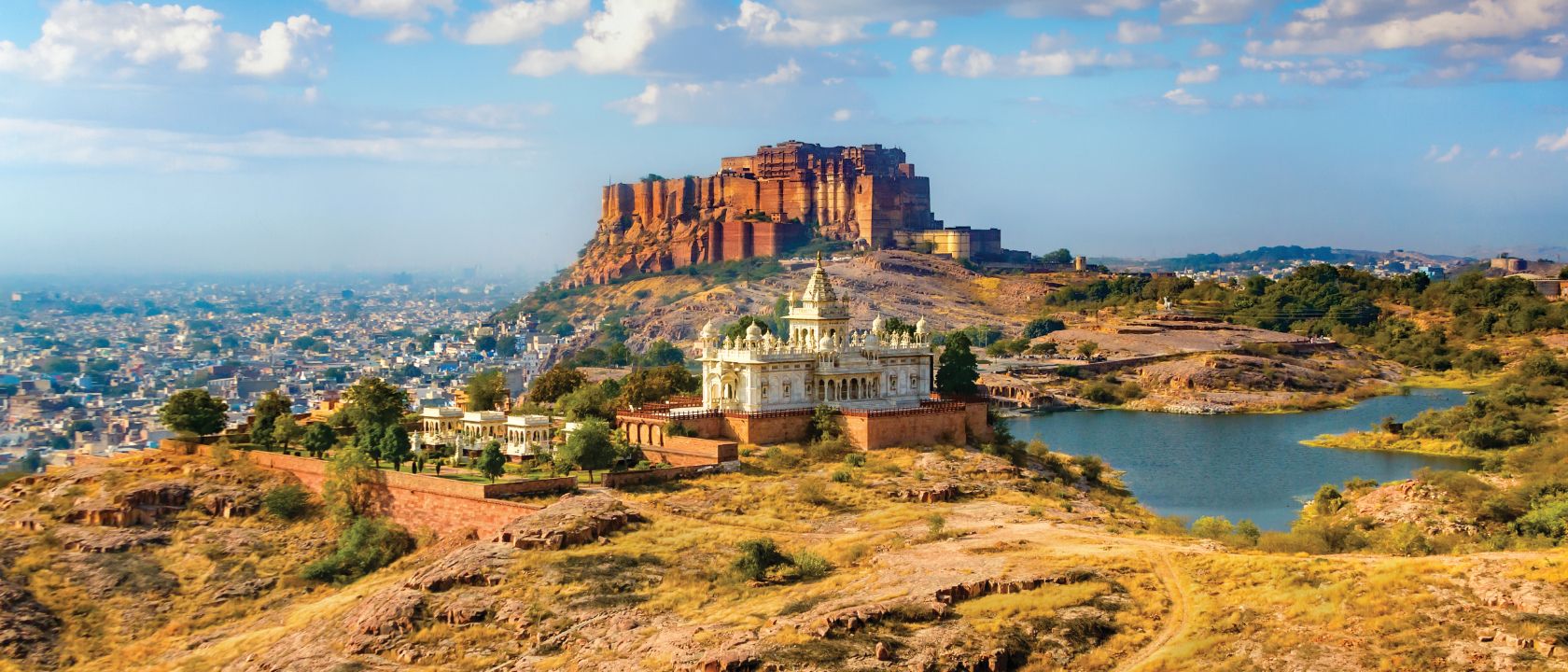
The Mehrangarh fortress/palace in Jodhpur is one of Rajasthan’s most spectacular forts, looming high over the city of Jodhpur. Built on a massive sandstone rock 120 metres high, approached by a long winding road overshadowed by battlements, the formidable palace of the Rathore Rajput dynasty has never been conquered. Built by Rao Jodha Singh in 1459 when he moved the Rathore capital from nearby Mandore, it houses an extensive museum filled with exquisite examples of the Rajput life, palanquins, howdahs, weapons, costumes as well as magnificent textiles and miniature paintings recording stories, legends and images of the religious life. The walls of the palace and zenana (women’s quarters) are a fantasy of carved jalis (screens) and sculptures; every surface alive with delicate patterns intricately shaped in stone. The lavish interiors similarly reflect the vivid decoration and vibrant colours of the Rajput way of living.
Jaisalmer Fort
Another of the great forts was built by the Batti Rajputs in Jaisalmer. The Batti’s had long made their fortunes by raiding the rich caravans trecking from the coast across the great Thar desert. The fort was commenced in 1156 by Rawal Jaisal Singh, who lends his name to the fort. It was built adjoining an artificial lake to ensure water in the parched climate of the Thar and it was located to take advantage of the few natural features of the desert. It was placed to gain protection from the hills of the Aravelli Range to its southwest and against the open desert on its east. Jaisal recognised that the sands of the Thar were eternally shifting with the winds and provided potential protection from attack. He angled the walls so the eastern winds from the coast would blow the sand against them building a soft and shifting surface which was too unstable to climb and would not sustain assault ladders, thus using nature as an added protection against attack.
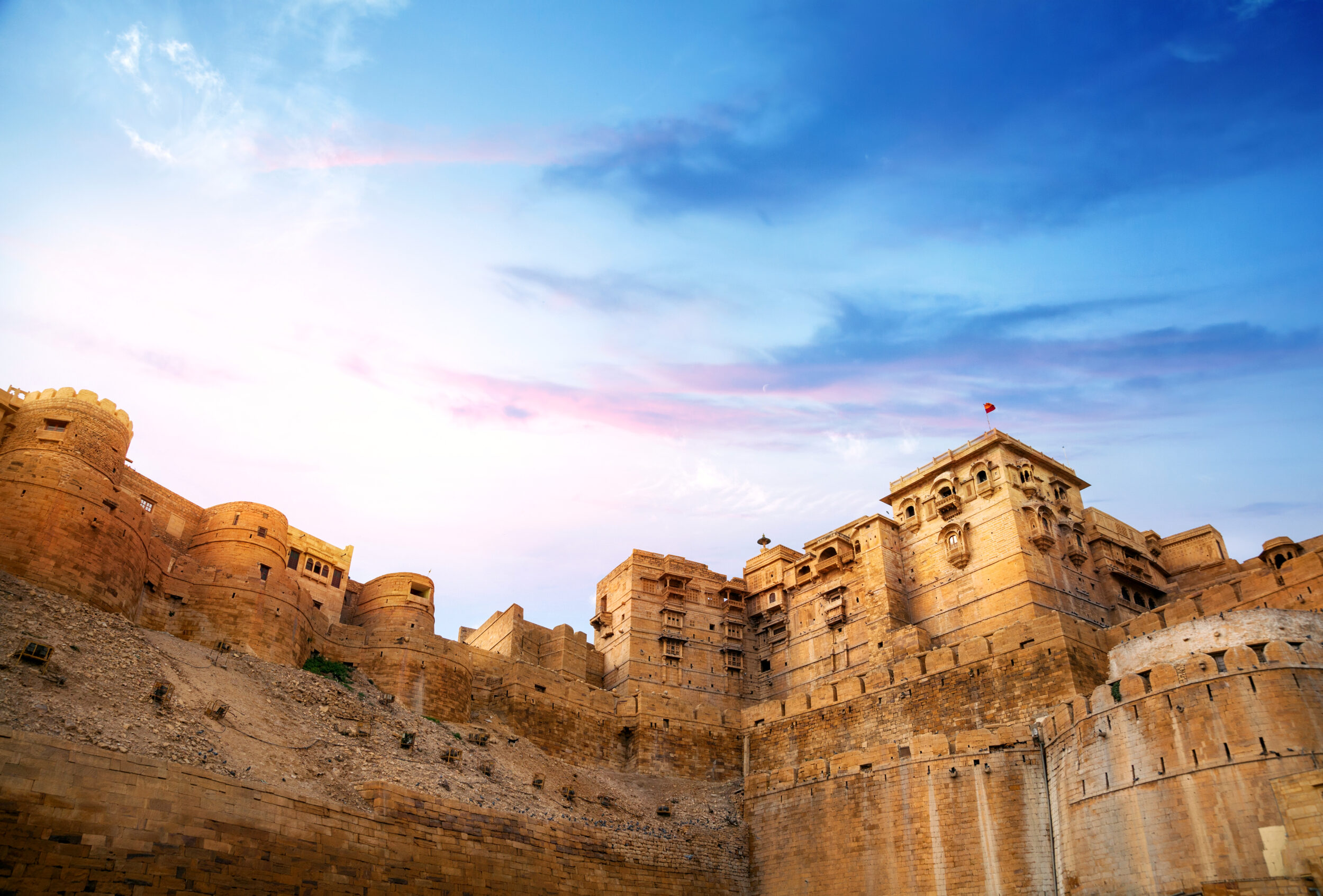
The fort is built of a rich honey coloured sandstone, quite soft and easily carved when fresh and gradually hardening with an external protective patina. The rich decorative carving on the fort palace and nobles havellis are amongst the finest in Rajasthan. Even the tiny narrow streets have a decorative richness, and the 99 immense bastions which reinforce the battlements provide fire power in all directions for bowmen and lookouts across the desert expanse. They also act as massive buttresses to strengthen the walls. The entrance road moves upwards through several gates, each narrow to control access with hidden chambers above for bowmen. Once an enemy was inside, they could be trapped between successive gates with no way out and cut down with arrows. A particular type of weapon used in Jaisalmer were large balls of the heavy sandstone which were rolled down the streets with their austere walls and no side protection for attackers to hide. These balls could also be dropped from the bastions, where they would roll down the angled walls.
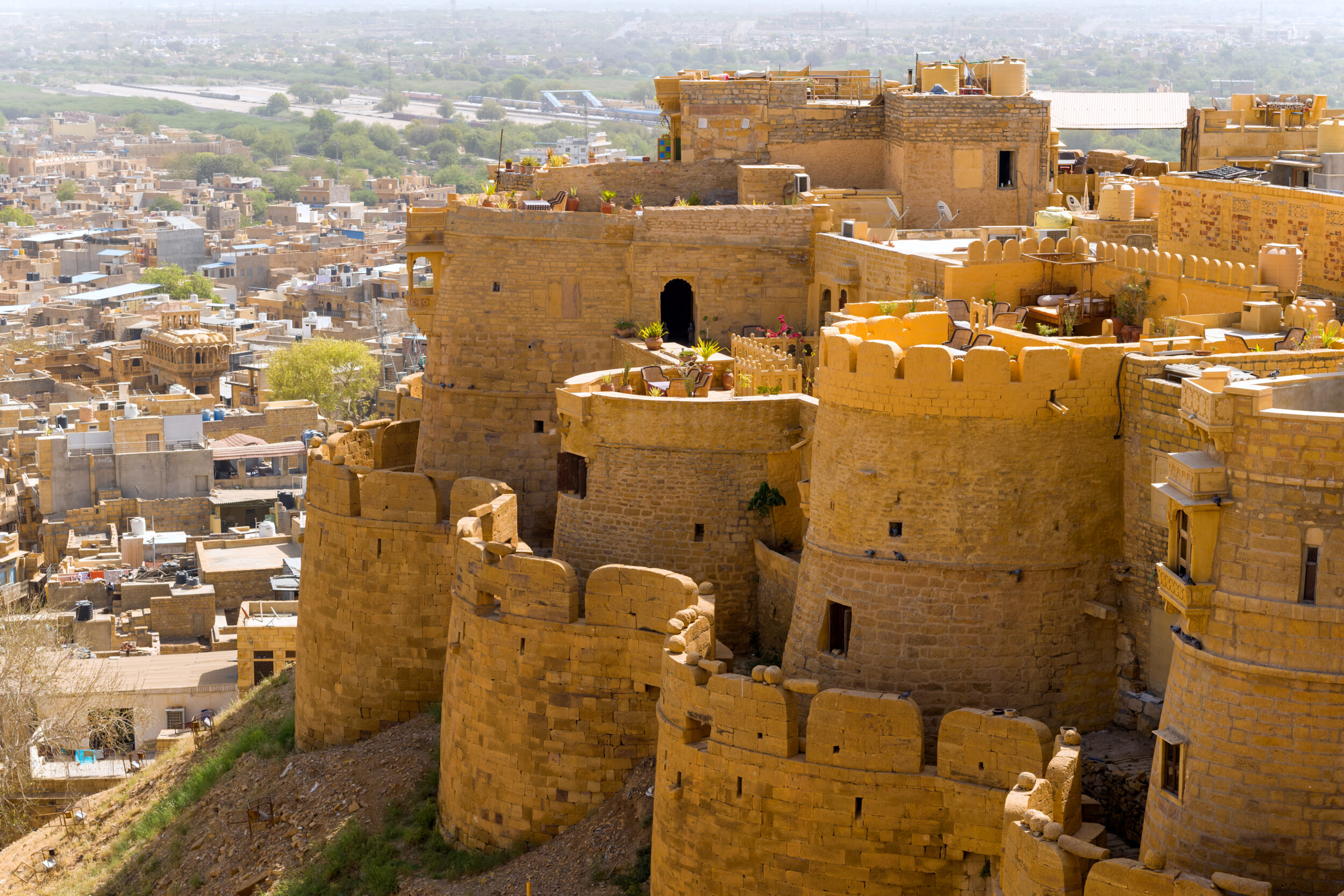
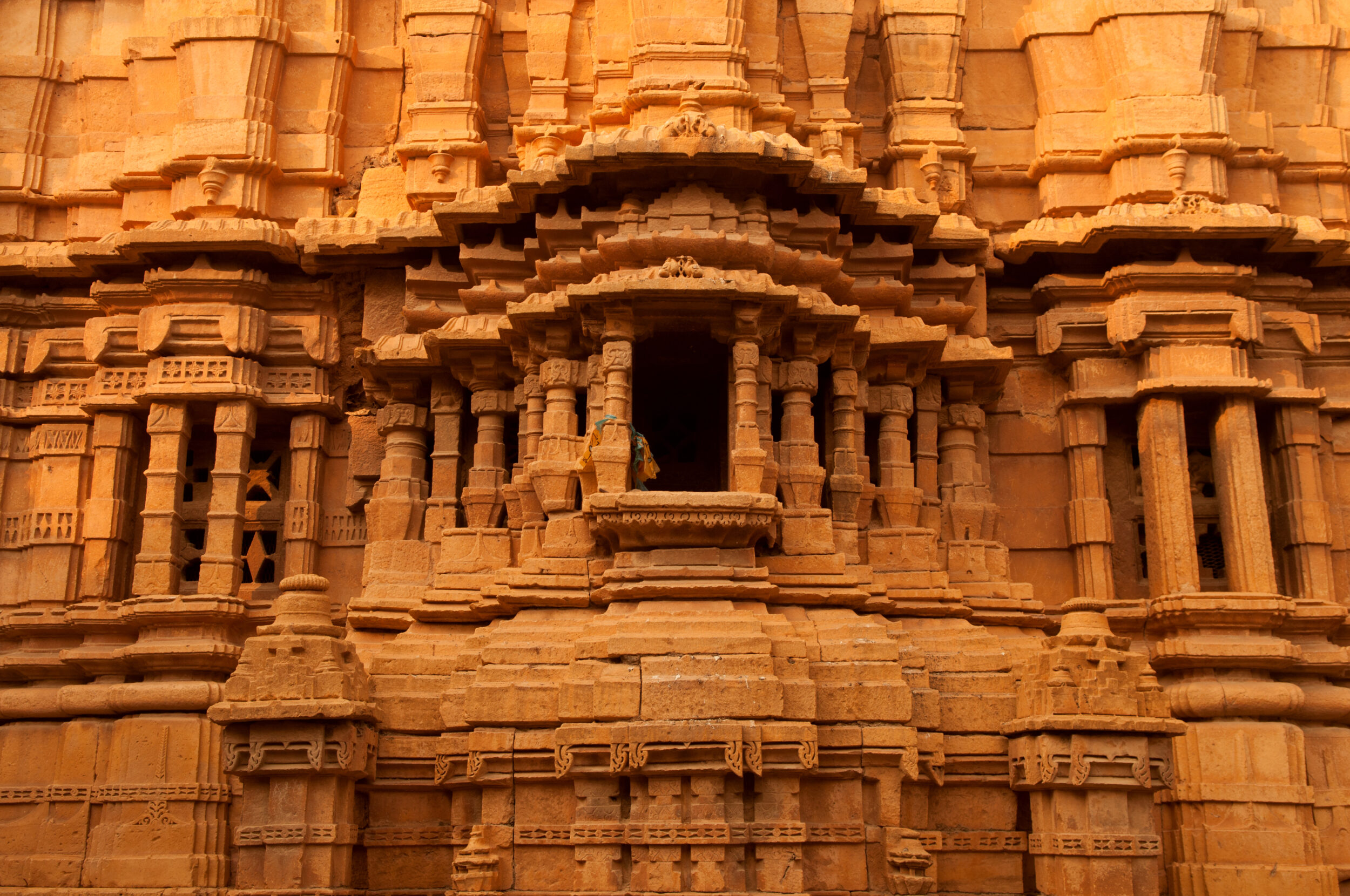
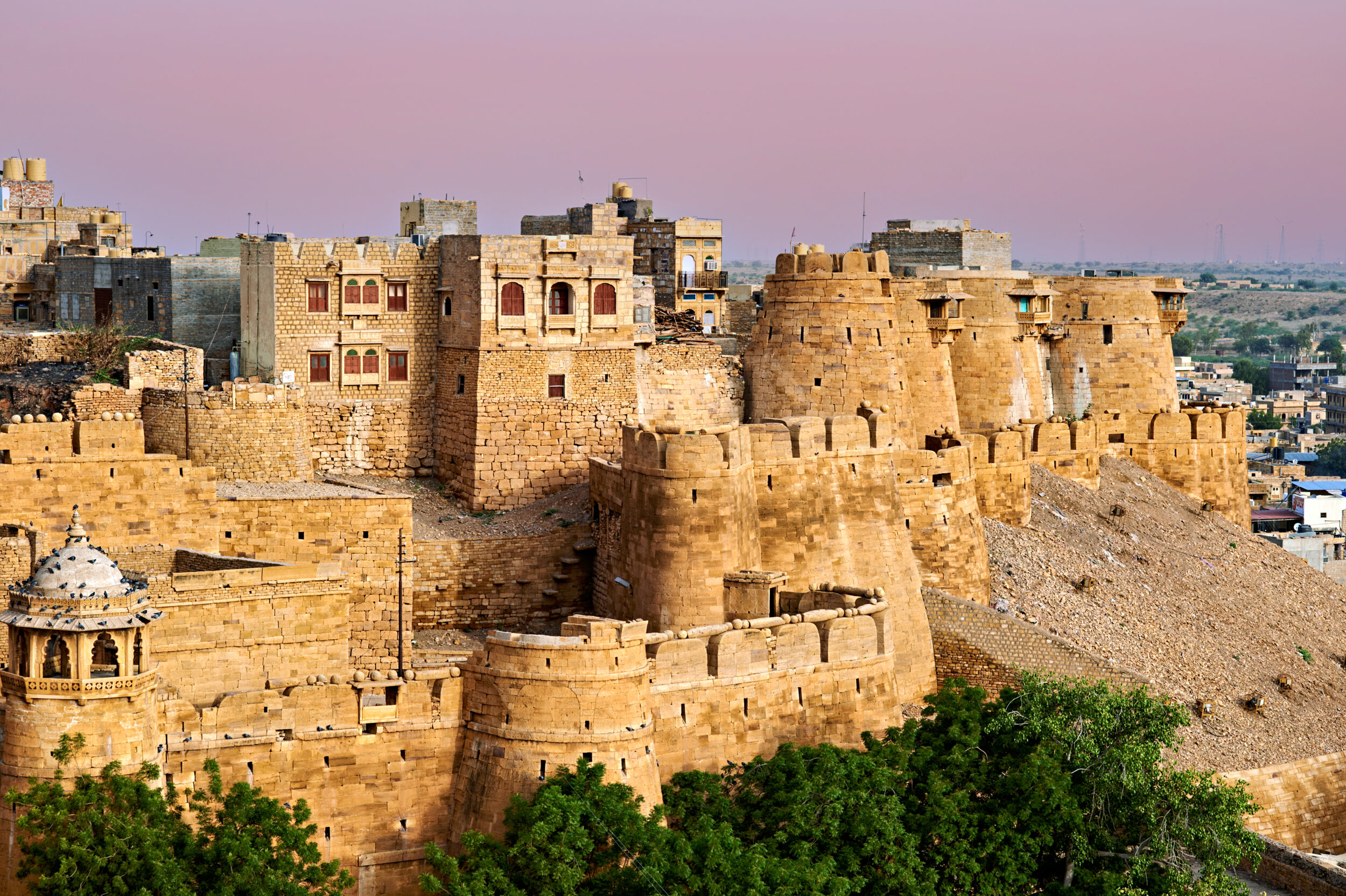
Jaisalmer is a remarkable construction with unique defensive features and a majesty in its appearance. Although remote in its location it is one of the great wonders of the Rajasthan and was given UNESCO World Heritage status in 2013.
The forts of Rajasthan offer an insight into Rajput life, its grandeur, its danger and its disaster. Most of the great forts fell to Islamic invaders attracted by the riches of the courts; many of them still resound with the echos of Jauhar (immolation to avoid dishonour) and the pounding hooves of the Saka (the final charge to death). These great forts survive, testament to the courage and bravery of the Rajput ethos.
Professor Bernard Hoffert, former World President of the International Association of Art-UNESCO, leads this tour to North India, visiting three princely capitals in the heartland of the Mughal Empire – Delhi, Agra and Fatehpur Sikri – and a number of great Rajput fortress cities in Rajasthan. It explores the fusion of Hindu and Islamic cultures at Mughal monuments such as Agra’s Red Fort, Shah Jahan’s exquisite Taj Mahal, and Akbar the Great’s Fatehpur Sikri.
 Mughals, Rajputs & Villages: The Cultural Heritage of North India 2027