
Gardens, Art, Villages & Châteaux of Normandy and Brittany 2027
Status: Places Available
6 Jun – 21 Jun 2027


Your leaders


Gardens, Art, Villages & Châteaux of Normandy and Brittany 2027
Tour Highlights
Led by Stephen Ryan, with the assistance of Craig Lidgerwood, this tour explores the gardens, art, villages, towns and great monuments of two of France’s most beautiful and historic regions: Normandy and Brittany.
- Visit private gardens, several designated ‘Jardin Remarquable’ and many hosted by their owners, including the Château de Miromesnil, birthplace of Guy de Maupassant.
- Against the backdrop of Normandy’s stunning coastline, discover Le Bois des Moutiers, a masterpiece of the Arts and Crafts movement, designed by Sir Edwin Lutyens and Gertrude Jekyll. Nestled nearby is Le Jardin du Vastérival, residence of the late Princess Sturdza, which features one of the finest plant collections in France.
- Visionary landscape designer Pascal Cribier created Le Bois de Morville in 1982; enjoy a special tour of this garden, Cribier’s most personal project and the laboratory in which he tested his ideas throughout his career.
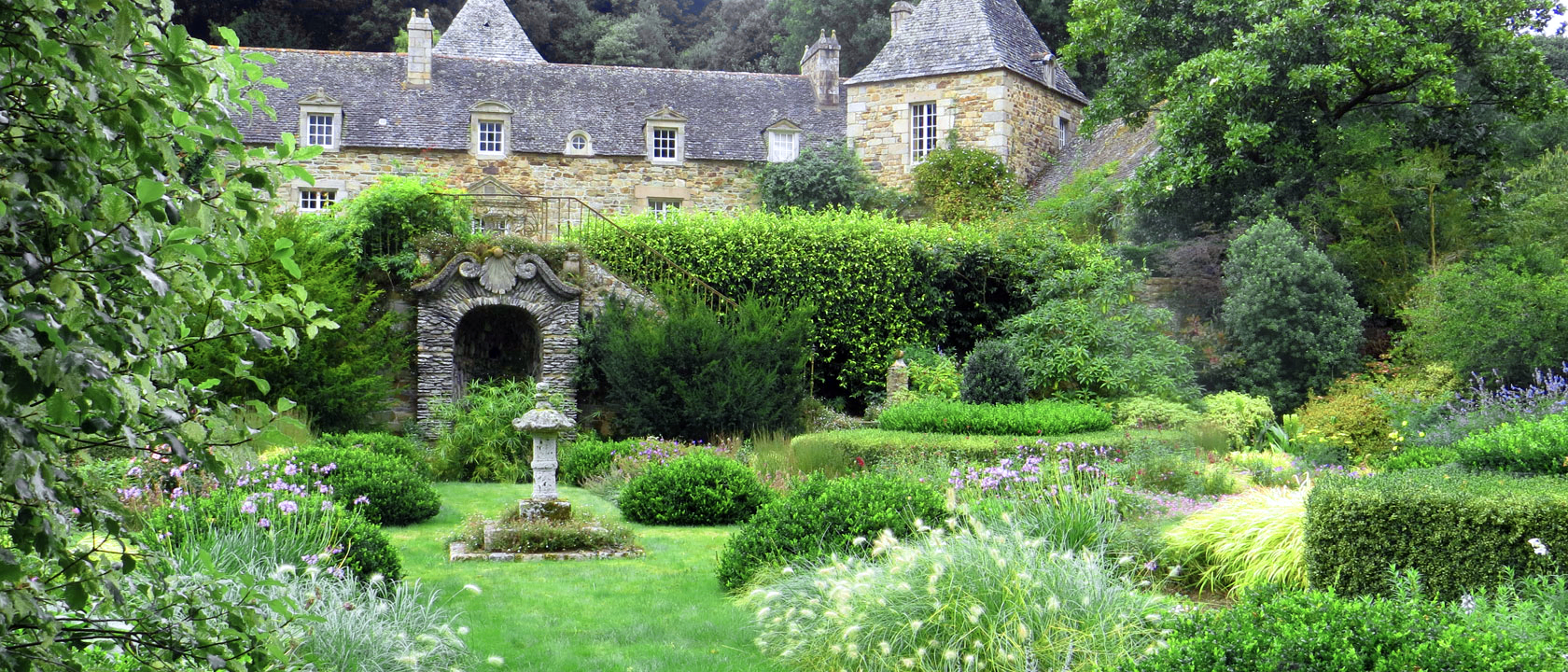
- The pristine northern coast of Brittany benefits from an exceptional climate due to the Gulf Stream. Visit two horticultural treasures – the Jardins de Kerdalo, celebrated for its rich and diverse collection of plants, and the private manor house garden Le Jardin du Pellinec.
- Journey in the footsteps of the Impressionists, from the port town of Honfleur to the white cliffs of Étretat that Monet painted, and Le Havre’s Musée d’Art Moderne André Malraux, which houses one of France’s most extensive Impressionist art collections.
- Tour significant landmarks such as the Abbey of St-Georges de Boscherville, as well as the Romanesque and Gothic Cathedrals of Notre-Dame in Rouen and St-Étienne in Caen.
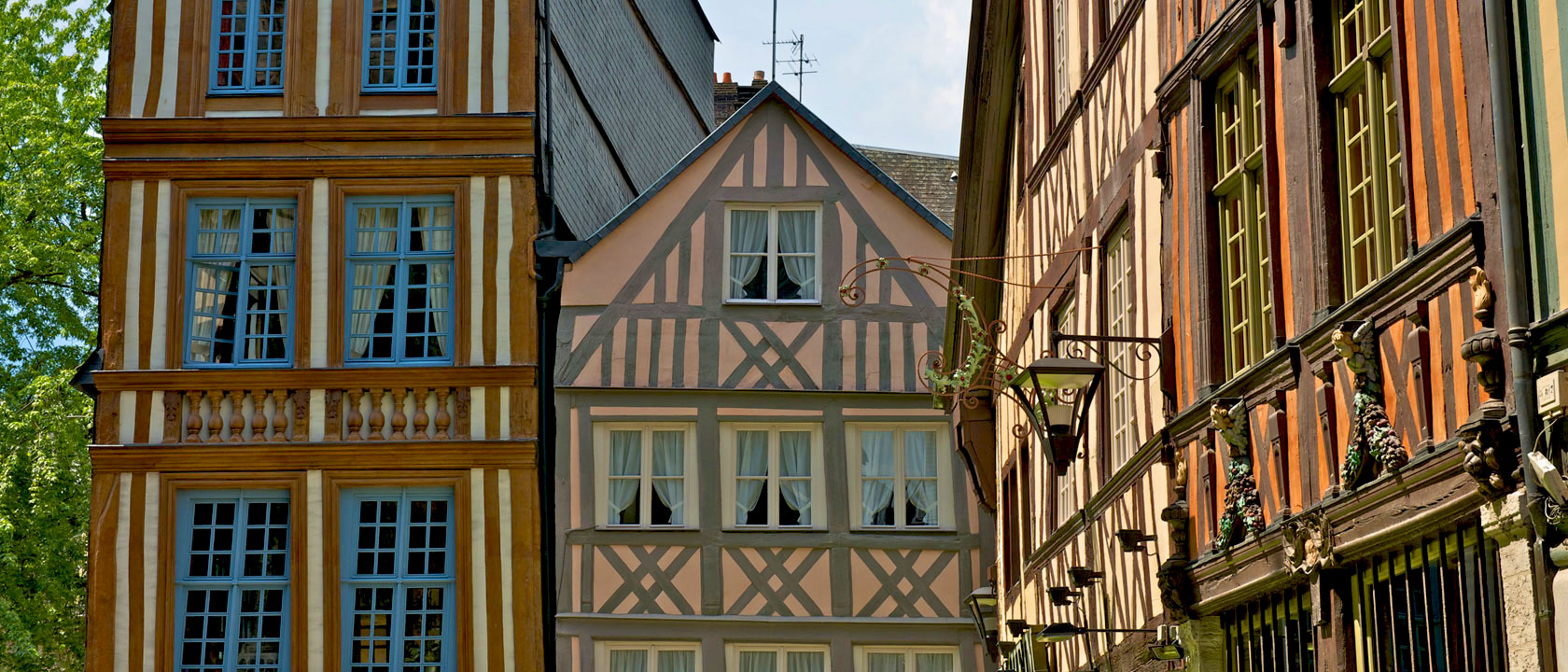
- Explore villages designated as ‘Les Plus Beaux Villages de France,’ including Lyons-la-Forêt and Tréguier with their picturesque half-timbered houses, and the fortified city of Saint-Malo with its well-preserved ramparts, cobbled streets and old stone buildings.
- Visit lively local markets and dine in fine restaurants; enjoy the flavours of Normandy’s Livarot and Pont l’Évêque cheeses and calvados; and Brittany’s crêpes and famous Far Breton.
Overnight Rouen (5 nights) • Honfleur (2 nights) • Bayeux (3 nights) • Saint-Malo (2 nights) • Perros-Guirec (3 nights)
Testimonials
This tour certainly exceeded our expectations. The mix of history and wonderful (often private) gardens made for a memorable tour. David & Chris, QLD.
Three French Collectors Gardens presented by Stephen Ryan
Itinerary
This itinerary lists a range of private gardens and estates which we plan to visit, some of which require special permission and therefore may only be confirmed closer to the tour’s departure. The daily activities described in this itinerary may change or be rotated and/or modified to accommodate alterations in opening hours and confirmation of private visits. Meals included in the tour price are indicated where: B=breakfast, L=lunch and D=dinner.
Rouen - 5 nights
Day 1: Sunday 6 June, Paris CDG – Lyons-la-Forêt – Rouen
- Tour commences at the Novotel Paris Roissy CDG Convention in Paris at 10am
- Lunch in Lyons-la-Forêt village
- Introductory Meeting
Meeting Point: Please meet your group leaders at the Novotel Paris Roissy CDG Convention at 10.00am.
This morning we drive from Paris to the historic city of Rouen, where we begin our exploration of the gardens, landscapes, great houses, villages and historic monuments of Northern France. We stop en route for lunch in Lyons-la-Forêt, one of France’s most picturesque villages, renowned for its exceptionally well-preserved 17th- and 18th-century half-timbered houses. Henry I of England, son of William the Conqueror, built a castle here to exploit the magnificent hunting grounds in the nearby beech forest. The village has served as the backdrop for two film adaptations of Gustave Flaubert’s masterpiece Madame Bovary and has been painted by several artists including Yolande Ardissone and Paul-Émile Pissarro, the youngest son of Camille Pissarro and godson of Claude Monet. Lyons-la-Fôret has a beautiful 18th-century timber-framed covered market and we shall also pass the house where composer Maurice Ravel lived. We arrive in Rouen mid-afternoon and the rest of the day is at leisure. (Overnight Rouen) L
Day 2: Monday 7 June, Rouen – Buchy – Bosc-Roger-sur-Buchy – Montmain – Rouen
- Buchy village market
- Le Jardin de Valérianes, Bosc-Roger-sur-Buchy
- Les Jardins d’Angélique, Montmain
- Welcome dinner
Our day begins with a visit to the Monday market in the small village of Buchy to purchase ingredients for our lunch. Buchy’s picturesque farmer’s market showcases the regional products of the Pays de Bray like the cheese of Neufchatel, known for its characteristic heart shape. The medieval covered market hall has fixed wooden tables that were originally butchers’ blocks.
Located nearby is Le Jardin de Valérianes, created by Michel and Maryline Tissait. The garden is a testament to their commitment to preserving and showcasing a wide variety of plant species and visitors are invited to wander the paths of this lovely English-style garden that harmoniously blends perennials, roses, trees and bushes.
We next visit the Jardins d’Angélique at Montmain, comprising two wonderful gardens. South of the manor house is an Italianate formal garden with walkways and clipped hedges, box-edged beds of perennials and ornamental grasses, yew topiary and a central fountain. It provides marvellous panoramas of the surrounding countryside. To the north is a flowing romantic ‘English-style’ garden with grassy paths winding between shrubs, plants and trees.
Tonight we dine together in one of the local restaurants. (Overnight Rouen) BD
Day 3: Tuesday 8 June, Rouen – Saint-Martin-de-Boscherville – Rouen
- Romanesque Abbey of St Georges-de-Boscherville
- Manoir de l’Aumoonerie
- Guided tour of Rouen
This morning we visit the remarkable Abbey St Georges-de-Boscherville, located in a meander of the Seine. In the 7th century, a chapel dedicated to St George was built here over an earlier Celtic shrine. Then in the 11th century, the great chamberlain Raoul de Tancarville founded a collegiate for canons, which was in turn succeeded by a Benedictine monastery. We shall visit the abbey with its fine Romanesque carvings and and explore its garden, where the monks cultivated plants believed to possess healing properties for the soul.
Next we visit the 13th-century Manoir de l’Aumônerie consisting of a stone lodge surrounded by farm buildings. Two magnificent gables, each 15 metres high, characterise this gothic manor. It is built of Caumont stone whose quarries have been exploited since the Gallo-Roman era. There is also the 16th- century Saint-Gorgon chapel decorated with frescoes representing the apostles and the sibyls. The property belonged to the Abbey of Saint-Georges-de-Boscherville between the 15th and 18th centuries and was called “l’Aumônerie” (the chaplaincy). The cartulary of the Abbey tells us that in the middle of the 12th century, the land on which the house was built was given by Henry II Plantagenet to his chamberlain, who gave it to the monks of the Abbey of Saint-Georges. One version of the story is that the Templars built the manor. The owners have recreated the medieval garden which includes vegetables (cultivated in the properties of Charlemagne in the year 800): broad beans, mogettes, crambe, parsnips, and lovage; medicinal and aromatic herbs; fruits and flowers; and also saffron, which was brought back from the Crusades by the pilgrims. A ring of apple, quince, and pear trees forms a circular orchard around the chapel. A boxwood labyrinth can also be seen to the west of the park. More than 300 varieties of flowers, plants, and trees have been planted. We will enjoy drinks in the 13th-century salon and lunch in the newly restored Pressoir (press room).
We return to Rouen for an orientation walking tour. Once an important city of Roman Gaul, Rouen became an ecclesiastical centre from the 3rd century and over time became an integral part of the Norman kingdom, until it was ceded to the French crown by King John in 1204. It changed hands during the tumultuous Hundred Years’ War and by the conclusion of the 15th century, had blossomed into a flourishing hub of the French Renaissance.
The city has some of France’s finest Gothic architecture. Its cathedral façade fascinated Monet, who painted it at different times of the day. Other churches include 15th-century St Ouen and St Maclou (1437), two notable examples of French flamboyant Gothic architecture. The Renaissance Gros-Horloge pavilion contains a 15th-century clock, and the Tour Jeanne d’Arc is where the saint was imprisoned before her execution. The Hôtel de Bourgheroulde (1501-37) is the best example of the city’s fine medieval domestic architecture. (Overnight Rouen) BL
Day 4: Wednesday 9 June, Rouen – Varengeville-sur-Mer – Tourville-sur-Arques – Rouen
- Le Bois des Moutiers, Varengeville-sur-Mer
- Le Bois de Morville, Varengeville-sur-Mer
- Château de Miromesnil, Tourville-sur-Arques: birthplace of Guy de Maupassant
Today we head north to the coastal village of Varengeville-sur-Mer where we explore two remarkable gardens. Our first visit is to Le Bois des Moutiers, a notable historic property that has been in the same family’s possession since 1898. At that time, a young English architect, Edwin Luytens, who was to become famous for his houses and for the layout and architecture of imperial New Delhi, was asked to modify both the residence and the garden. Luytens designed Munstead Wood for Gertrude Jekyll, and the influence of both of these great English designers is evident in the gardens of Le Bois des Moutiers. Gertrude Jekyll’s distinctive style and emphasis on vibrant colours, harmonious plant compositions, and structured layouts is seen everywhere, including in the front garden, which slopes toward the sea.
Following lunch in Varengeville-sur-Mer, we visit Le Bois de Morville, created in 1982 by landscape architect Pascal Cribier, one of the most influential French landscape gardeners of his generation. It has the distinction of being a “botanical, aesthetic and scientific laboratory garden”. The complex consists of multiple intimate gardens or great landscapes: the rhododendron valley, the orange gardens, the holly labyrinth, the flowered meadow, the large cut oak that thrones in the middle of an amphitheatre, the wild trail, rare species trees, and incredible views of the sea.
In the late afternoon we continue to the Château de Miromesnil at Tourville-sur-Arques, a splendid 17th-century château, where Guy de Maupassant was born. Located in a large plantation dominated by two 200-year-old cedars of Lebanon, it contains a very fine kitchen garden with vegetable plots surrounded by a bewildering variety of flowers. The park, enclosed by old brick walls, features fruit trees, rose trees, magnolias, arborescent peonies and a magnificent variety of clematis. We enjoy dinner at the Château de Miromesnil tonight. (Overnight Rouen) BLD
Day 5: Thursday 10 June, Rouen – Auzouville-sur-Ry – Rouen
- Le Jardin Plume, Auzouville-sur-Ry
- Afternoon at leisure in Rouen
This morning we drive to Auzouville-sur-Ry to visit Le Jardin Plume, where owners Sylvie and Patrick Quibel have converted an orchard and much flat space, formerly occupied by sheep, into a vast parterre with long grass marking the divisions. Le Jardin Plume, or Feather Garden, was named after the effect of vertical grasses around the garden. There is also a spring garden, summer garden and autumn garden. The summer garden is a modern knot garden with a formal layout of clipped box. Within the parterre of boxwood, however, the plants run riot, in a limited but not quiet palette of red, yellow, orange, and gold.
We return to Rouen arriving around lunchtime. The rest of the day will be at leisure for you to explore the ‘city of a hundred bell towers’. You might want to visit Rouen’s Musée des Beaux-Arts, established in 1801 by Napoléon and housing one of the largest art collections in France. Its Impressionist collection is particularly impressive. Géricault was a native of Rouen, and we see some of his works there, along with those of Fragonard, Boucher, Monet, David, Degas, Renoir and Sisley. A highlight is one of Monet’s images of Rouen Cathedral. (Overnight Rouen) B
Honfleur - 2 nights
Day 6: Friday 11 June, Rouen – Varengeville-sur-Mer – Sainte-Marguerite-sur-Mer – Honfleur
- L’Etang de Launay, Varengeville-sur-Mer
- Le Jardin du Vastérival, Ste Marguerite-sur-Mer
We leave Rouen this morning and visit L’Etang de Launay, the meticulously tended private garden of Jean-Louis Dantec. With its highly-pruned specimen trees leading to a lake and ponds, vibrant flower beds, and one of Europe’s finest woodland plantings beyond, the garden stands as a reflection of Dantec’s commitment to preserving the beauty of nature and sharing it with visitors who seek to indulge in the serenity of the French countryside.
After lunch, we continue to Marguerite-sur-Mer to visit the gardens of Vastérival, residence of the late Princess Sturdza, which showcases one of France’s finest plant collections. Cleverly designed paths wander through this ‘informal’ garden, passing rich under plantings of the woodlands, into lovely glades. The garden is famed for its collections of rhododendrons, hydrangeas, maples, birches, viburnums and camellias.
We then make our way to the old trading and fishing port of Honfleur, situated at the mouth of the Seine, where we shall spend two nights. Its picturesque port was painted by artists like Courbet, Boudin and Monet but Honfleur is also famous for its lovely Sainte Catherine church, the largest timber church in France. (Overnight Honfleur) BL
Day 7: Saturday 12 June, Honfleur – Étretat – Le Havre – Honfleur
- The Cliffs of Étretat
- Les Jardins d’Étretat
- Musée d’Art Moderne André Malraux, Le Havre
- Dinner at Le Manoir des Impressionistes, Honfleur
Étretat’s beach is familiar to anyone who loves French art. Its chalk cliffs painted by Eugène Boudin, Charles Daubigny, Gustave Courbet and Claude Monet form three natural arches and a pointed formation called The Needle (this area is called the Alabaster Coast). Guy de Maupassant spent most of his childhood at Étretat and wrote the short story The Englishman at Étretat.
Here we visit the Jardins d’Étretat created in 1905 by French actress Madame Thébault. Inspired by her friend Claude Monet, she decided to create a garden at the top of the Amont cliff with emblematic views of La Manche (The Channel) and the cliffs that inspired famous painters such as Jean-Baptiste Camille Corot, Eugène Delacroix, Edouard Manet and Vasily Poleno. A century later, in 2017, landscape architect Alexandre Grivko revived and expanded the garden, drawing from the methodology of André Le Nôtre. The space of Les Jardins d’Étretat is arranged with the help of impressively scaled plant compositions, the shapes of which are evocative of the landscapes and natural features of Normandy. Alexandre has set about creating an experimental, avant-garde garden integrating contemporary art installations.
Next we drive south to Le Havre, located at the mouth of the Seine River, to visit the André Malraux Modern Art Museum, which contains the second most extensive collection of Impressionist paintings in France. There are paintings by Claude Monet and other artists who worked in Normandy including Camille Corot, Eugène Boudin, Eugène Delacroix, Gustave Courbet, Edgar Degas, Édouard Manet, Pierre-Auguste Renoir, Paul Gauguin, Alfred Sisley, Camille Pissarro, Paul Sérusier and Édouard Vuillard. Modern art is well represented with works by Henri Matisse, Albert Marquet, Raoul Dufy, Kees van Dongen, Fernand Léger, Alexej von Jawlensky and Nicolas de Staël.
Our day ends with dinner at Le Manoir des Impressionistes, a converted 18th century Norman manor overlooking the estuary of the river Seine. The restaurant offers panoramic views of the sea and surrounding park and a refined gastronomic menu crafted from locally sourced, fresh market produce. (Overnight Honfleur) BD
Bayeux - 3 nights
Day 8: Sunday 13 June, Honfleur – Ouilly-le-Vicomte – Mézidon-Canon – Bayeux
- Château de Boutemont, Ouilly-le-Vicomte
- Château de Canon, Mézidon-Canon
On our way to Bayeux, we make a stop at the Château de Boutemont. Dating back to the 12th century, it is today surrounded by an 11-hectare park. Achille Duchène’s early 20th century French gardens have since been augmented by landscape architect Georges Hayat’s Renaissance Italian garden, rose trees-decorated arches and small ‘scent garden’. Lunch will be served in the Château’s tearoom.
We next visit the gardens of the Château de Canon, an 18th-century house created by Jean-Baptise-Jacques Elie de Beaumont, a prominent figure of the Age of Enlightenment, and his wife Anne-Louise. The family has owned this property since the Middle Ages. The present splendid two-storey Neo Classical structure is surrounded by contemporary gardens and a park that showcase a harmonious blend of French formal and English landscape styles. (Overnight Bayeux) BL
Day 9: Monday 14 June, Bayeux – Castillon – Bayeux
- Cathedral Notre-Dame & historic centre of Bayeux
- Les Jardins de Castillon-Plantbessin, Castillon (to be confirmed for 2027)
- Afternoon at leisure in Bayeux
We begin today with a walking tour of Bayeux’s historic centre and the fine Cathedral of Notre-Dame (1077), a gem of Norman architecture. The city was founded as a Gallo-Roman settlement in the 1st century BCE and there is no evidence of any major pre-existing Celtic town. In 1077, William the Conqueror’s half-brother Odo of Bayeux completed Notre-Dame, however the city began to lose prominence when William placed his capital at Caen. From the end of Richard the Lionheart’s reign to the end of the Hundred Years’ War, Bayeux was repeatedly pillaged until Henry V of England captured the city in 1417. After the Battle of Formigny, Charles VII of France recaptured the city and granted a general amnesty to its populace in 1450. The capture of Bayeux heralded a return to prosperity as new families replaced those decimated by war, and they built some 60 mansions scattered throughout the city, with stone supplanting wood.
After lunch at leisure, we drive to the Jardins de Castillon-Plantbessin, created by Colette Sainte Beuve as a water garden to complement her plant nursery. This botanical haven seamlessly integrates elements of Japanese gardening traditions and includes beautiful samples of Japanese plants as well as herbs and heather. (Overnight Bayeux) B
Day 10: Tuesday 15 June, Bayeux – Caen – Brécy – Bayeux
- Fine Arts Museum, Caen
- Abbaye-aux-Hommes & its abbatial church St Étienne, Caen
- Château de Brécy, St-Gabriel-Brécy
This morning we visit Caen’s excellent small art museum built within the ruined walls of William the Conqueror’s castle. Among its treasures are works by Van der Weyden, Perugino, Poussin and Veronese.
After lunch, we explore Caen’s Abbaye-aux-Hommes and its church, St Étienne. This masterpiece of Romanesque church architecture was begun by William the Conqueror as his mausoleum. One reason for the finesse of this building, which influenced many later Romanesque churches, was this region’s abundance of good building stone.
We make our way back to Bayeux, stopping at the Château de Brécy, owned by M. and Mme Didier Wirth, to visit its wonderful formal French garden. The house dates from the 17th century, and bears many hallmarks of the great François Mansart’s architecture. The garden immediately behind the house consists of five terraces, fine stone work, elegant parterres, pools, topiary and beautiful wrought-iron gates. (Overnight Bayeux) BL
Saint-Malo – 2 nights
Day 11: Wednesday 16 June, Bayeux – Granville – Bazouges-la-Pérouse – Saint-Malo
- Musée Christian Dior, Granville
- Chateau de la Ballue, Bazouges-la-Perouse
This morning we travel to Granville on the Cotentin Peninsula. The art of dress design reached a peak with Christian Dior. The Belle Epoque villa ‘Les Rhumbs’, perched on the cliffs at Granville, was his childhood home and is the only museum in France dedicated to a couturier. We will visit the museum and will learn more about how the son of a fertilizer manufacturer came to found one of the iconic fashion houses of the world.
We then journey south to the Château de la Ballue, located between Normandy and Brittany. This 17th-century château, once visited by writers like Balzac and Victor Hugo, is surrounded by dramatic theatrical gardens. The original Italian-style gardens were abandoned and in the 1970s, visionary architects François Hebert Stevens & Paul Maymont used imaginative topiary and Yin Yang inspirations to create a side garden in the purest mannerist style. Former owners Marie-France Barrière and Alain Schrotter also later redesigned and reinterpreted the gardens with a modern twist. There are neat traditional geometric terraces, a lush fernery and scented groves.
In the late afternoon, we arrive in Saint-Malo, where we’ll be staying for the next two nights. (Overnight Saint-Malo) BL
Day 12: Thursday 17 June, Saint-Malo – Plévenon – Saint-Malo
- Les Jardins de Ker Louis, Plévenon
- Afternoon at leisure in Saint-Malo
The English garden of Ker Louis near Cap Fréhel was started by Louis Tranchant in 1980 (Ker meaning home in Breton dialect), and the decision was made to make the most of the slope of the land, with an optimised view from the house. Each curve brings a new perspective and the garden blends into the environment in complete harmony. Following the gardening principles laid down by Gertrude Jekyll, the garden is centered around roses, acid-loving plants, and beds of perennials in pastel shades structured with warm hues. Ker Louis includes a Zen garden and a lake forming the centrepiece of the garden. Enthusiasts can discover 300 rhododendrons, 250 camellias, 100 roses, hydrangeas, 60 magnolias, several dozen araliaceae, trees with patterned bark – snakebark acer, prunus serrula, prunus maackii, acer griseum, betulas – oaks and ash trees, and many varieties of maple.
After this visit we return to St Malo where the rest of the day is at leisure for you to explore the walled city and its ramparts. (Overnight Saint-Malo) B
Perros-Guirec – 3 nights
Day 13: Friday 18 June, Perros-Guirec – Gouarec – Guingamp – Kerdalo – Perros-Guirec
- Un Jardin en Ville, Gouarec
- Lunch at leisure in Guingamp
- Les Jardins de Kerdalo
This morning we continue our journey to Gouarec to visit Un Jardin en Ville, the garden of Marylin Le Moign, located at the junction of two rivers. In the early 19th century, ambitious planning resulted in the construction of the Nantes–Brest canal. Owing to the very real possibility of flooding, the living quarters of the family home begin on the first floor. During the 1990s, garden designer Michel Gesret took this into consideration and created a garden that could be enjoyed from this level. The 8,000 square meters of gardens is made up of structuring elements: walls, terraces, a pond, yews, and arbors. They divide the space into themed gardens: the French garden, the natural garden which runs along the river, the Japanese garden, and various flowerbeds reminiscent of English gardens.
After lunch at leisure in Guingamp, we visit the gardens of Kerdalo. The gardens, in a valley near the Brittany coast, were the subject of a book by its owner-designer, Prince Peter Wolkonsky: Kerdalo: Un Jardin d’Exception (Paris, 1995). Originally a manor farm with natural springs, the formal garden merges into a wooded valley with a lake, pools and grotto and a rich collection of trees and shrubs. (Overnight Perros-Guirec) B
Day 14: Saturday 19 June, Perros-Guirec – Ploëzal – Paimpol – Plouguiel – Perros-Guirec
- Château de la Roche-Jagu, Ploëzal
- Lunch at leisure in Paimpol
- Jardin Botanique du Kestellic
This morning we visit Le Château de La Roche-Jagu, a 15th-century fortress located on a wooded promontory with panoramic views of the Trieux estuary. Dating back to the Middle Age, it is the only survivor of some ten fortresses that once guarded the traffic on the Trieux River to the river port of Pontrieux. It features a re-created medieval kitchen garden, a medicinal garden, and a flower garden. There are wonderful walks in the woodlands where you can find areas of palms and camellias and water features.
Following lunch at leisure in the lovely port town of Paimpol, we drive to Plouguiel to visit the Jardin Botanique du Kestellic. In 1880, Aristide Tallibart, a merchant returning from Constantinople, was quarantined on his sailboat a short distance upstream from the town of Tréguier. He fell in love with the place and decided to build a Breton villa with an oriental influence. Upon his arrival, he carved into the rock to create pathways, waterfalls, a fountain, and several pools that still form the main layout of the garden today. His son, not a fan of his father’s “Turkish” influences, demolished the house and commissioned the architect Félix Ollivier, who distinguished himself at the 1900 Universal Exhibition, to build a manor house in the neo-Breton style. In 1965, agricultural engineer Yann de Keroüartz began designing a garden where native and exotic plants mingle. In 1992, nearly 30 years later, his passionate dedication to the garden led to its listing on the supplementary inventory of the Monuments Historiques. The estate’s varied topography, with its slopes, small valleys, and promontories that sometimes plunge vertically to the Jaudy River, naturally lends the garden a very romantic feel. Kestellic is also unique for the diversity of its 1,800 species, spread across three themed gardens covering seven hectares. (Overnight Perros-Guirec) B
Day 15: Sunday 20 June, Perros-Guirec – Penvénan – Tréguier – Lanrivain – Perros-Guirec
- Jardins de Pellinec, Penvénan (to be confirmed for 2027)
- Lunch at leisure in Tréguier
- Le Grand Launay, Lanrivain
This morning we explore Le Jardin de Pellinec, a private manor house garden nestled at the bottom of the bay of Pellinec on excellent soils and a particular microclimate that has enabled passionate gardener Gérard Jean to grow a huge diversity of plants. The 4 hectares are organised according to themes: the exotic, Japanese water iris, Australian and English gardens, the Himalayan alley and the lily pond. The view is ever changing and at high tide the sea laps at the garden’s edges, a spectacular sight.
We continue to the port town of Tréguier dominated by the 14th-century Cathedral of Saint-Tugdual and dotted with half-timbered houses dating from the 15th century.
Following time at leisure for lunch and to explore this charming town, we continue inland to Le Grand Launay, featuring a unique design, perfectly shaped topiary and beautiful hedging. The garden was designed by its owners, Jean and Jacqueline Shalit, in collaboration with the landscape designer Gael Boedec. Their modern garden of mostly green plants and some white climbing hydrangeas is built around an old castle which gives it a specific charm. In the fascinating ‘garden of temptation’, boxwood snakes climb the apple tree as in the garden of Eden. In the evening we enjoy a farewell dinner at a local restaurant. (Overnight Perros-Guirec) BD
Day 18: Monday 21 June, Saint-Malo – Rennes. Tour Ends.
- Transfer to Rennes TGV Station
Our tour ends today with a coach transfer from Perros-Guirec to Rennes TGV Station (arriving at approximately 1200hrs) where you will be able to take a train to your airport or next French destination. B
Accommodation
ASA has selected 3- to 5-star hotels that are themselves historical buildings and/or are located in historical centres. All hotels provide rooms with en suite bathroom. Double/twin rooms for single occupancy may be requested – and are subject to availability and payment of the Double (as Single) Supplement. A hotel list will be given to all participants prior to departure.
- Rouen (5 nights): Mercure Rouen Centre Cathedral Hotel
- Honfleur (2 nights): Hôtel du Dauphin
- Bayeux (3 nights): Grand Hôtel du Luxembourg
- Saint-Malo (2 night): La Maison des Armateurs
- Perros-Guirec (3 nights): L’Agapa Hôtel-Spa
Single Supplement
Payment of this supplement will ensure accommodation in a double (or twin) room for single occupancy throughout the tour. The number of rooms available for single occupancy is extremely limited. People wishing to take this supplement are therefore advised to book well in advance.
How to Book
ASA RESERVATION APPLICATION FORM
Please complete the ASA RESERVATION APPLICATION and send it to Australians Studying Abroad together with your non-refundable deposit of AUD $1000.00 per person payable to Australians Studying Abroad.
Practical Information
Fitness Criteria
Level 2 INTERMEDIATE
For people with energetic lifestyles and very good mobilityYou must be able to:
- manage at least five to six hours of physical activity per day with ease.
- walk at a regular to moderate pace on flat or undulating terrain; some stretches may include steeper slopes or several flights of stairs.
- stand for one to two hours during visits to galleries and museums without the need to sit.
- manage your own luggage at some hotels.
Fitness Levels
Please also view the fitness criteria required for our tours, graded from Level 1 to Level 3, at www.asatours.com.au/fitness-level/
All ASA tours are active programs suitable for people with a good level of mental and physical fitness and good mobility. They are not suitable for people who lack stamina, have difficulty walking at the group’s pace or who have mobility issues. An unavoidable aspect of every tour is the need to manage walking, stair-climbing and standing for long periods of time.
It is a condition of travel that all participants agree to accept ASA’s directions in relation to their suitability to participate in activities undertaken on the tour, and that ASA retains the sole discretion to direct a tour participant to refrain from a particular activity on part of the tour. Before enrolling on an ASA tour please read the fitness requirements carefully.
Tour Price & Inclusions
AUD $13,980.00 Land Content Only – Early-Bird Special: Book before 30 June 2026
AUD $14,380.00 Land Content Only
AUD $2390.00 Single Supplement
Tour Price (Land Content Only) includes:
- Accommodation in twin-share rooms with private facilities in 3-5 star hotels
- Meals as indicated in the tour itinerary where: B=breakfast, L=lunch & D=dinner
- Drinks at welcome and farewell meals. Other meals may not have drinks included
- Transportation by air-conditioned coach
- Airport-hotel transfers according to the times as outlined in the tour itinerary
- Porterage of one piece of luggage per person at hotels (not at airports)
- Lecture and site-visit program
- Entrance fees
- Tour Notes
- Use of audio headsets during site visits
- Tips for the coach driver, local guides and restaurants for included meals
Tour Price (Land Content Only) does not include:
- Airfare: Australia-Paris, Rennes/Paris-Australia
- Personal spending money
- Luggage in excess of 20kg (44lbs)
- Travel insurance
- Visas (if applicable)
Tour Map
Gallery
Deposits
A non-refundable deposit of $1000.00 AUD per person is required to reserve a place on this ASA tour.
Cancellation Fees
If you decide to cancel your booking the following charges apply:
- More than 75 days before departure: your initial deposit of $1000.00 is non-refundable.**
- 75-31 days prior 50% of total amount due
- 30-0 days prior 100% of total amount due
**$500.00 of this amount (ie 50% of your deposit) may be credited to another ASA tour departing within 12 months of the original tour you booked. We regret, in this case early-bird discounts will not apply.
We take the day on which you cancel as being that on which we receive written confirmation of cancellation.
Unused Portions of the Tour
We regret that refunds will not be given for any unused portions of the tour, such as meals, entry fees, accommodation, flights or transfers.
Will the Tour Price or Itinerary Change?
If the number of participants on a tour is significantly less than budgeted, or if there is a significant change in exchange rates ASA reserves the right to amend the advertised price. We shall, however, do all in our power to maintain the published price. If an ASA tour is forced to cancel you will get a full refund of all tour monies paid. Occasionally circumstances beyond the control of ASA make it necessary to change airline, hotel or to make amendments to daily itineraries. We will inform you of any changes in due course.
Travel Insurance
ASA requires all participants to obtain comprehensive travel insurance. A copy of your travel insurance certificate and the reverse charge emergency contact phone number must be received by ASA no later than 75 days prior to the commencement of the tour.
Final Payment
The balance of the tour price will be due 75 days prior to the tour commencement date.
Limitation of Liability
ASA is not a carrier, event or tourist attraction host, accommodation or dining service provider. All bookings made and tickets or coupons issued by ASA for transport, event, accommodation, dining and the like are issued as an agent for various service providers and are subject to the terms and conditions and limitations of liability imposed by each service provider. ASA is not responsible for their products or services. If a service provider does not deliver the product or service for which you have contracted, your remedy lies with the service provider, not ASA.
ASA will not be liable for any claim (eg. sickness, injury, death, damage or loss) arising from any change, delay, detention, breakdown, cancellation, failure, accident, act, omission or negligence of any such service provider however caused (contingencies). You must take out adequate travel insurance against such contingencies.
ASA’s liability in respect of any tour will be limited to the refund of amounts received from you less all non-refundable costs and charges and the costs of any substituted event or alternate services provided. The terms and conditions of the relevant service provider from time to time comprise the sole agreement between you and that service provider.
ASA reserves the sole discretion to cancel any tour or to modify itineraries in any way it considers appropriate. Tour costs may be revised, subject to unexpected price increases or exchange rate fluctuations.
Interested in this tour?
Take the next step
or alternatively Download PDF Reservation Application