
The Taj Mahal: Shah Jahan’s Vision of Paradise
by Em. Prof. Bernard Hoffert
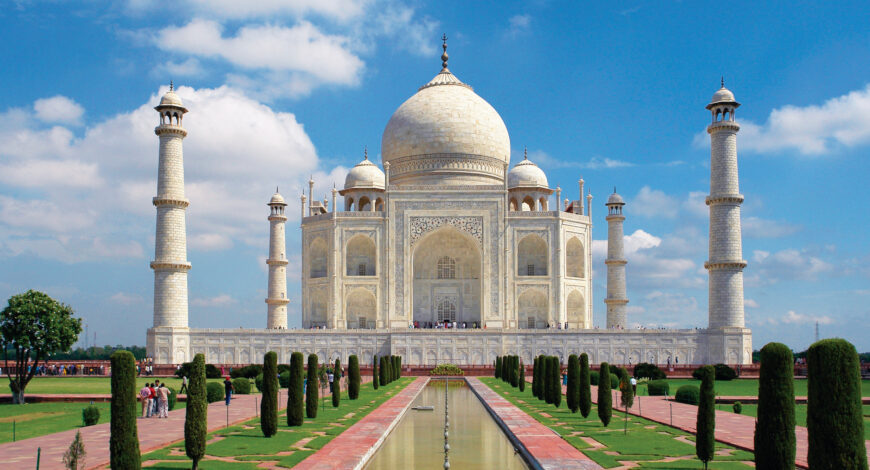
When UNESCO listed the Taj Mahal as a World Heritage monument in 1983, it was referred to as ‘the Jewel of Islamic Architecture’. It has also been referred to as the Eighth Wonder of the World and celebrated in countless descriptions as a perfect image of love.
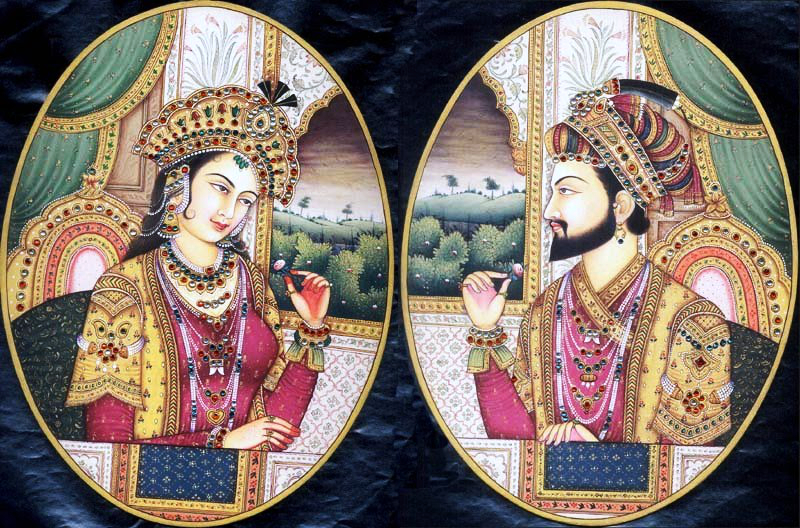
The Mughal Emperor Shah Jahan commenced construction of the Taj in 1631, to commemorate his favourite wife, Arjumand (1593-1631) who had died in childbirth. The Emperor was devastated by her death and retreated from public life for the next two years. Arjumand had been his constant companion even accompanying him on military campaigns; it was during the campaign at Burhanpur on the Deccan in central India that she died. To commemorate her memory and celebrate their love, Jahan decided to build a tomb. He called for designs and of the many submitted finally chose that of the Turkish architect Ustad Isa Afandi.
Construction started in December 1631 and lasted until 1648 with 20,000 workers employed in the task. A further 5 years were spent on the associated buildings. Red sandstone was brought from Fatehpur Sikri, white marble from Makhrana, yellow marble from Narbads, black marble from Charkoh, precious stones and metals were contributed by nobles of the court, and the design and construction were overseen by Shah Jahan himself. Known for his avid interest in architecture, he actively participated in his building projects including the Taj and the construction of Shah Jahanabad (Old Delhi) as his capital.
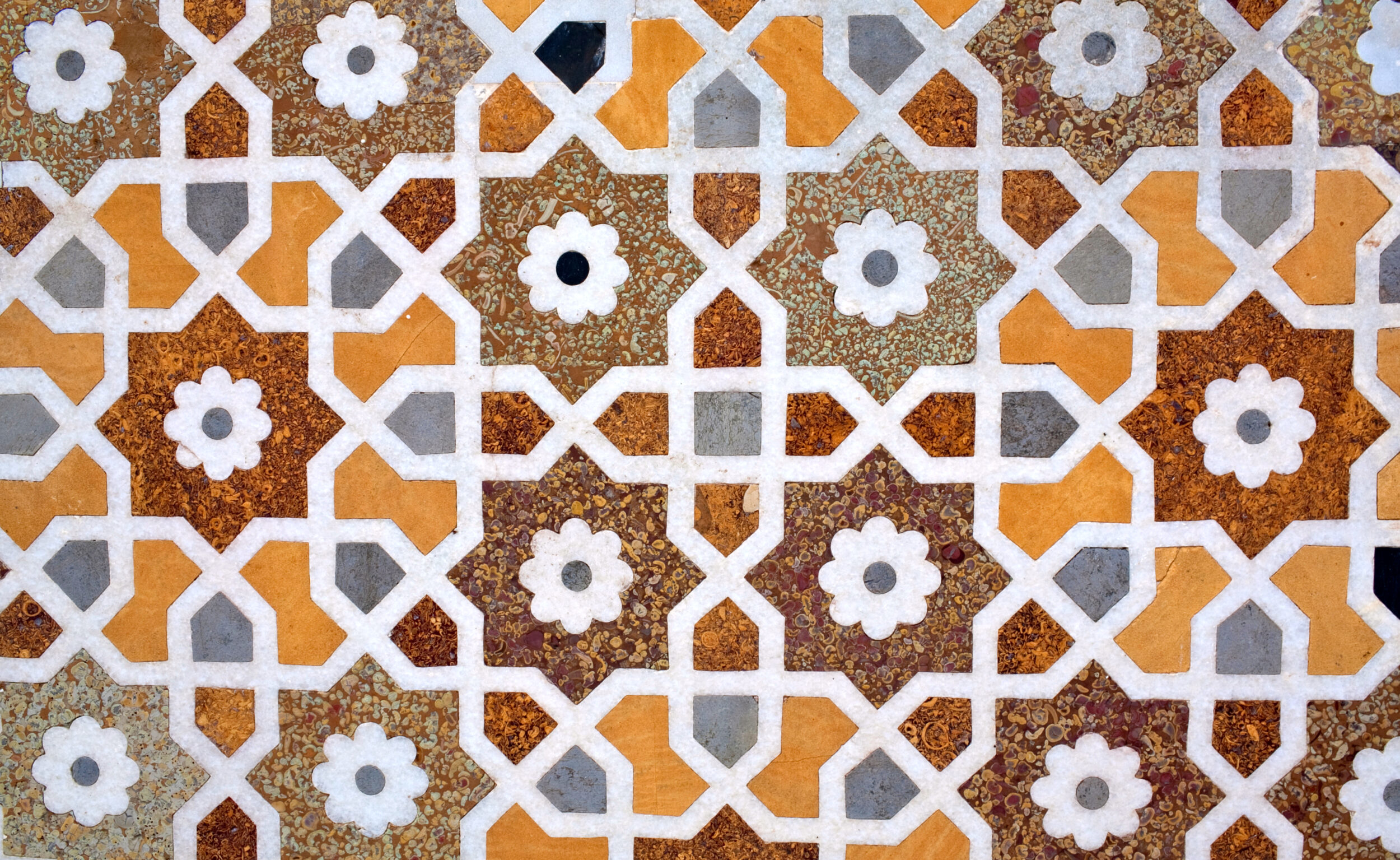
There are two aspects to the wonder of the Taj, its design, the balance, structure and harmony of the building itself and the delicacy and richness of its decoration. Together they form a superb balance of harmonious beauty, integrating to transcend their individual excellence. But while the Taj is unique in its achievement, it has sources for both design and decoration.
Humayun’s Tomb: the First Charbagh on the Indian Subcontinent
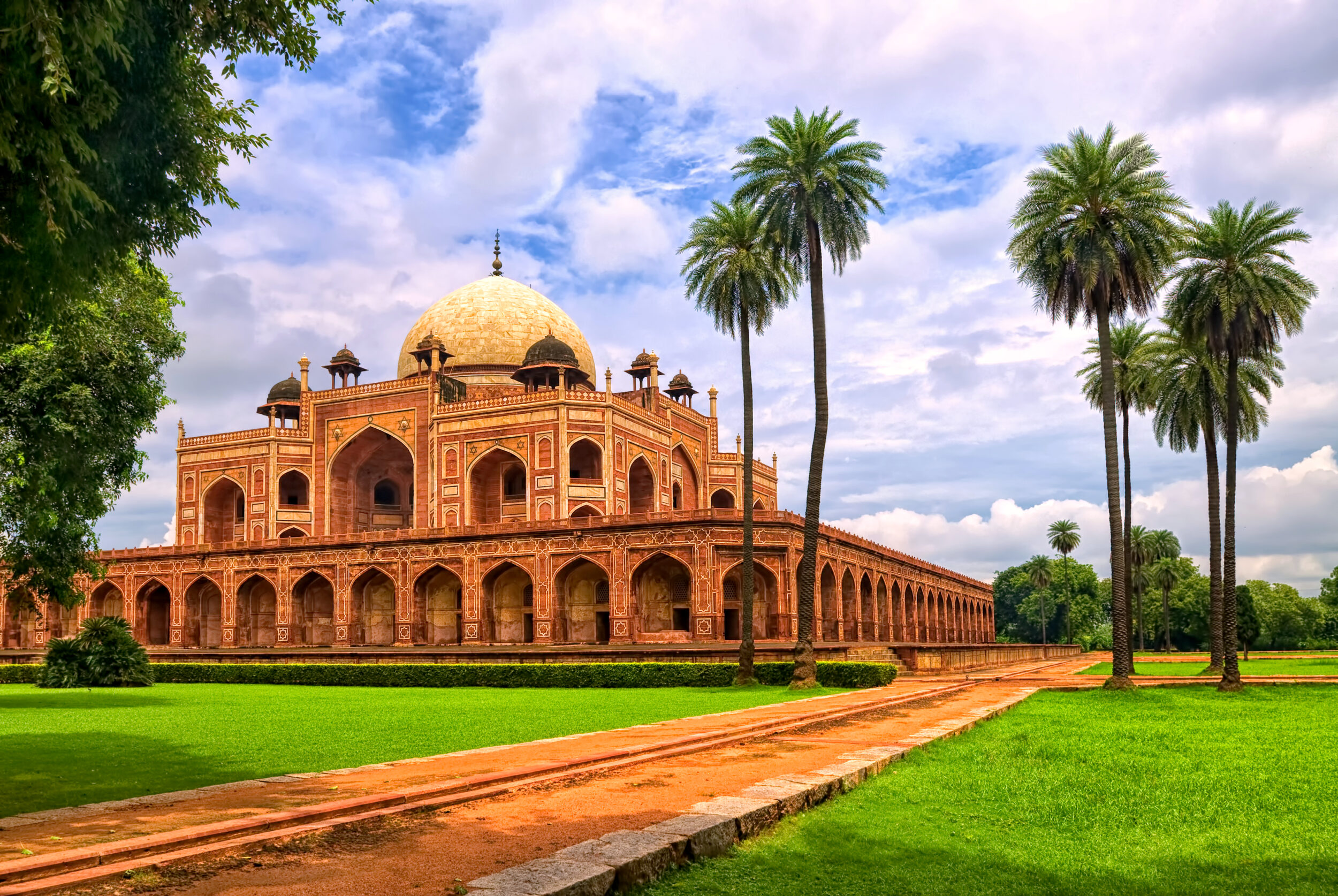
In 1556 the Empress Bega Begum, also called Haji Begum senior wife of the Mughal Emperor Humayun (1508-56), Shah Jahan’s great grandfather, commissioned a mausoleum for her husband in Delhi; the building was finished in 1571. It was designed by the Persian architect Mirak Miriam Ghiyas and his son Sayyid Muhammad who took over after his father died. The tomb was the first garden tomb or Charbagh, to be built in India and consisted of a square garden subdivided into 4 further squares with the tomb located at the centre; the garden was considered a representation of paradise. The material used was red sandstone with a white marble covered dome and inlaid white marble decoration. The result is one of the most beautiful monuments in India. Humayun’s Tomb was declared a UNESCO World Heritage site in 1993.
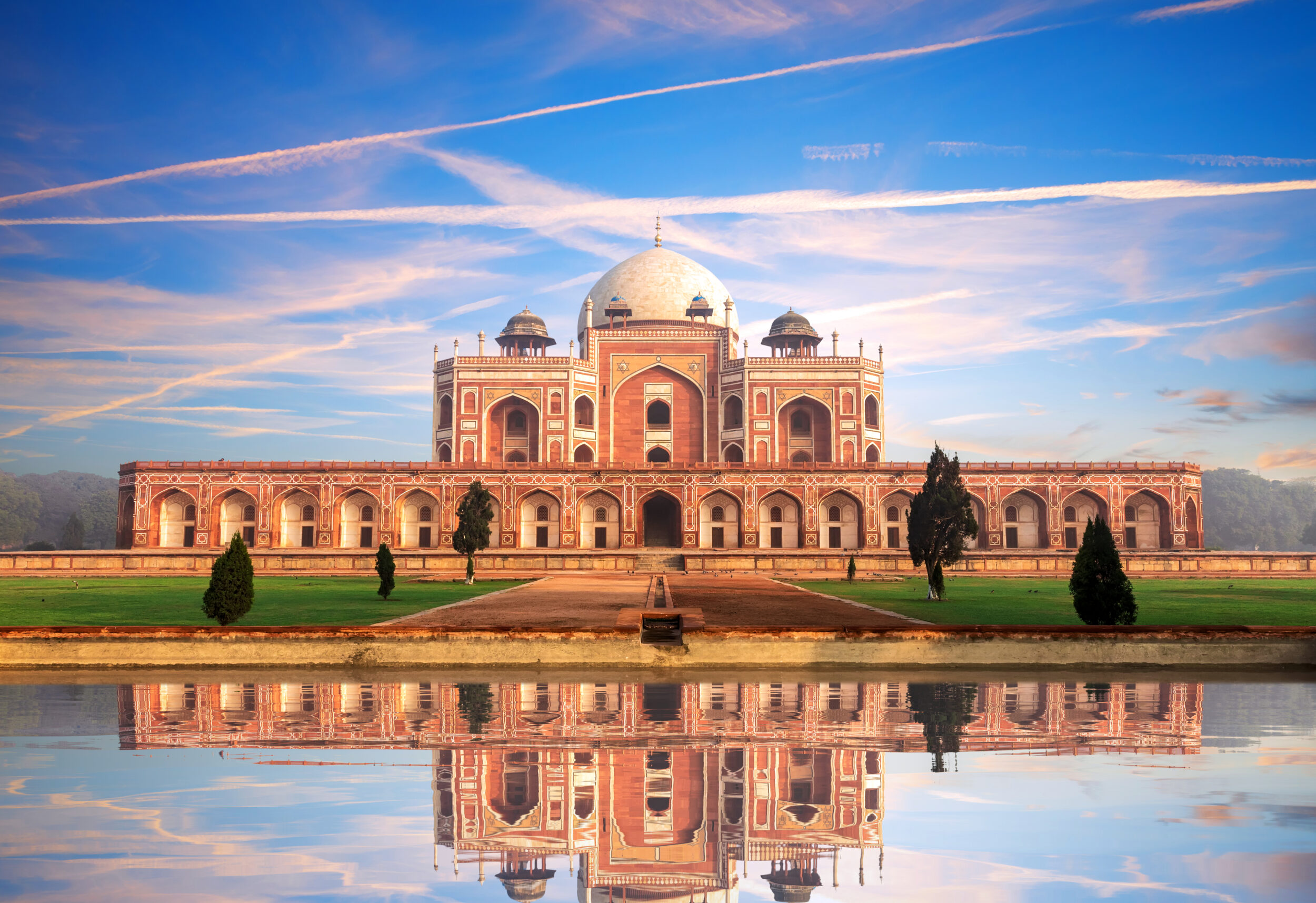
The design in elevation is the same from each of the 4 sides and blends geometry with numerical proportion to create a transcendent harmony. It combines Persian features in the base and the dome with what were to become a Mughal style of architecture using red sandstone and white marble. There are also clear Hindu aspects to the design with the decorative use of the umbrella-like chhatri along the top of the wings, structures used for the cenotaphs of Maharajas and stylised lotus blooms at the tops of pinnacles; there is also the use of the 6 pointed star symbolising the unity of earth and sky or in more practical terms, the unification of the earthly and the spiritual.
The geometric structure allows for clearly defined elements, base, arches, facade, wings, dome and drum beneath it, but it is in the relationship of these elements that the visual harmony is achieved. The mathematical basis to the proportions uses an approximation to the golden section or mean, called the divine number, a proportion used in varying cultures but best known as the basis of classical Greek architecture, revived and celebrated by the Romans and again during the Renaissance. Not a measurement but a proportion, it equates to 1.618 in numerical terms and just under 2/3 along a line if considered as a measurement. A line is divided according to the golden ratio when the ratio of the smaller segment to the larger segment is the same as the ratio of the larger segment to the whole line. It is generally regarded as the pinnacle of harmonious design and the most aesthetically pleasing proportion, and Humayun’s Tomb employs the proportion to emphasise this harmony.
The golden ratio is applied in several ways that strongly influence the visual composition of the tomb. The height of the facade, measured from its base to its summit, is in golden proportion to the height of the structure from the base to the top of the dome. A similar relationship exists horizontally: the width of the central facade is in golden proportion to the distance from its outer edge to the end of the adjoining wing, a relationship that is mirrored on the opposite side. The height of each wing also relates to the height of the dome and its supporting drum in approximately the same proportion. These recurring proportional relationships create a sense of harmony throughout the design. The overall composition of the mausoleum and its platform is further unified by a 90-degree triangle that can be drawn from either end of the base to the apex of the dome.
Islam, like Christianity uses numbers to refer to aspects of doctrine. The design of Humayun’s Tomb is predicated on such a system. 1 refers to Allah or God, represented by the great dome or the great central arch; 2 signifies Allah and His Prophet Muhammed, represented by the 2 large wing arches and the 2 large chhatris. The number 3 represents the Sunnah or directions of the faith, the Quran, the Hadith and the traditions of the community at the time of the Prophet; the 3 dominant arches convey this. The number 5 is of particular importance as it symbolises the 5 daily prayers but also the 5 pillars of Islam (faith, prayer, charity, fasting and the Haj), accounting for the 5 arches in the wings on either side of the main facade. There are also 17 arches in the base of the tomb which represents the essence of the tomb as a place of death; the Quran refers to the word death 17 times.
From the geometry and numerical interaction of the tomb the sophistication of the design is evident. Humayun’s Tomb is not just a burial place but a document of faith and a monument to architectural magnificence.
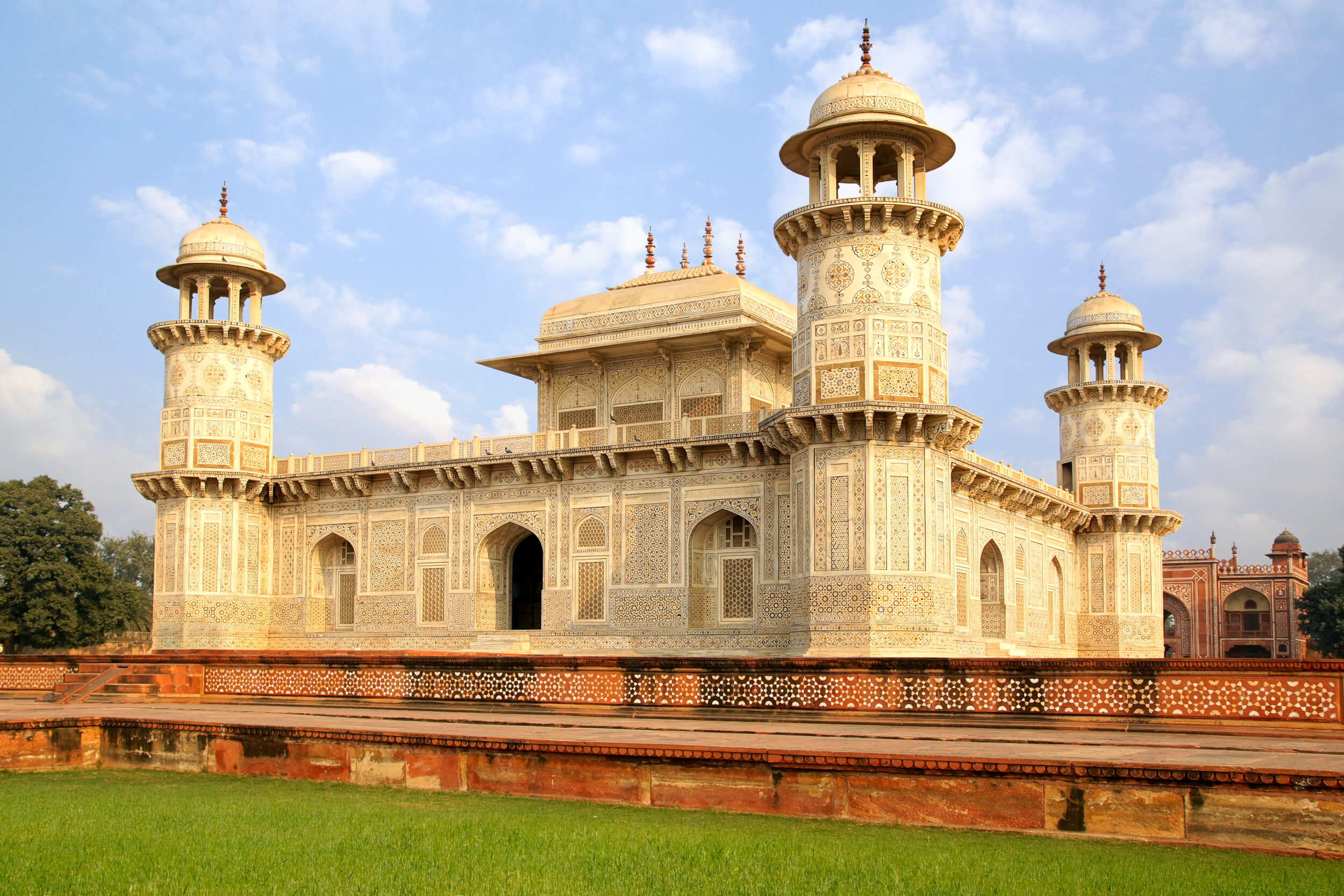
The Mausoleum of Itmad Ud Daulah
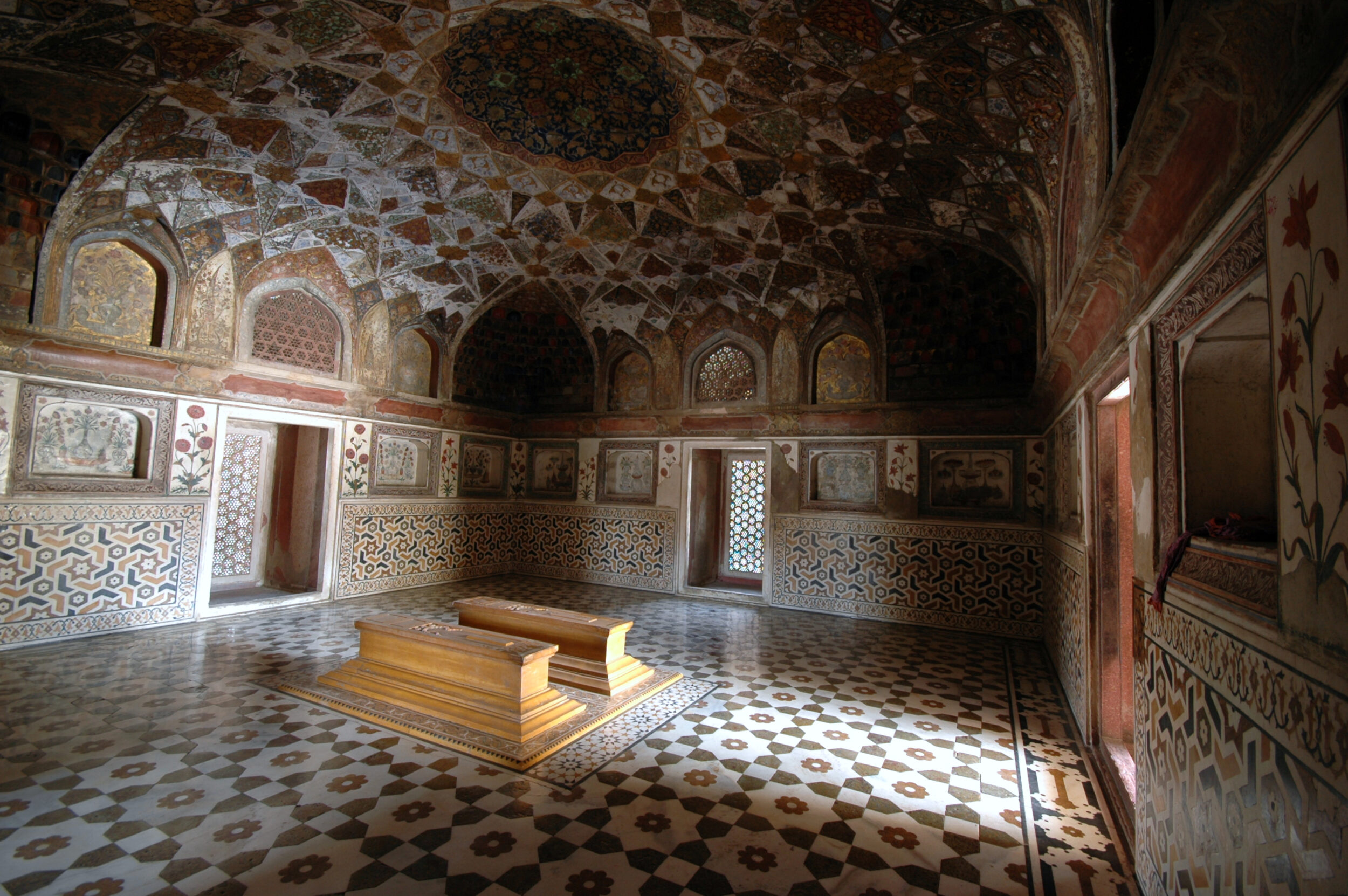
The decoration of the Taj also has inspiration from an earlier building. Nur Jahan, the principal wife of the Emperor Jahangir, Shah Jahan’s father, had a tomb built for her father, Mirza Ghiyas Beg, who had been prime minister of the Mughal Court. He was referred to as Itmad Ud Daulah, or Pillar of the State, such was his importance in managing the administrative functions of the empire. The tomb was built between 1622 and 1629. Sometimes referred to as the ‘Baby Taj’, it is made of white marble and richly adorned with stone inlay much of it using the Pietra Dura technique where richly coloured stone is embedded in a marble background in decorative patterns.
The technique is more closely associated with Florence in the 15th and 16th centuries than with India, and it is unclear if the craftsmen who did the work were trained by local artisans or by an imported master of the skill, which seems more likely. Certainly, Shah Jahan’s is known to have employed the skills of the French Master of pietra dura Austin de Bordeaux. Ferdinand II de Medici had sent de Bordeaux and his assistants to the court of Shah Jahan to obtain precious stones only available in India at the time. De Bordeaux decided to remain in India in the service of Jahan and is believed to be responsible for the inlay work of the famous ‘peacock throne’.
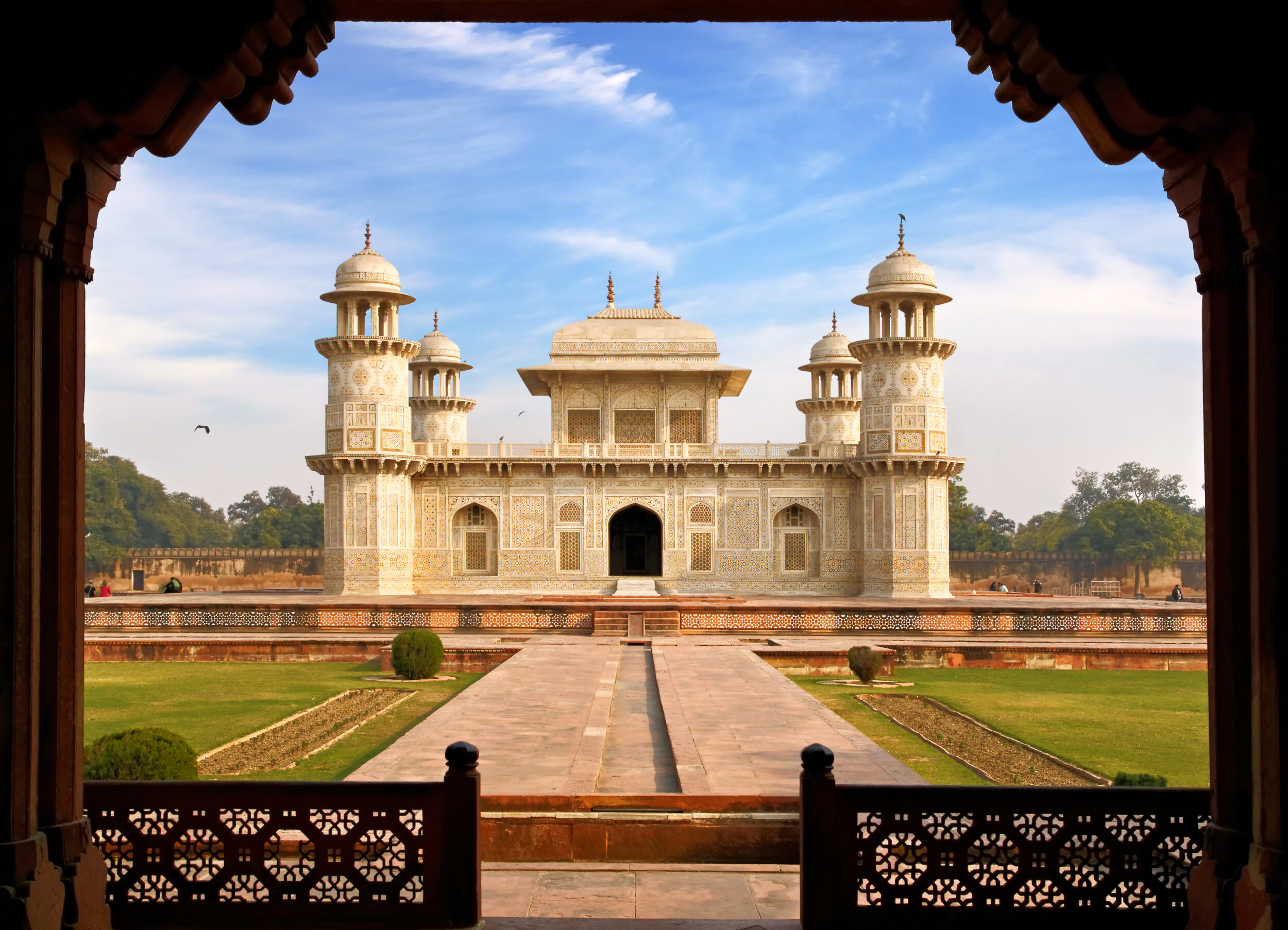
Inside and out the tomb is richly decorated with stone mosaic and pietra dura. Images of Cyprus trees, stylised flower patterns, wine flasks and vases are just a few of the rich patterns. These celebrate not just the imagery or materials, but the exquisitely beautiful decorations which can be achieved by master craftsmen in stone. A fair comparison of the building’s beauty would be a delicate, richly decorated jewel box on a grand scale. The building was unique in India to its time and even now is only surpassed in magnificence by the Taj.
The Taj Mahal: the Finest Example of Indo-Islamic Architecture
Comparable with Humayun’s Tomb, the Taj in elevation is the same from all four sides and is built on a geometric theme; it is also based on mathematical proportions. Like Humayan’s Tomb, it is elevated on a base and dominated by a large central dome. It also shares other characteristics with proportions built around the golden mean. The height to width of both the facade and central arch are in the golden proportion, as are the distance from minaret to facade / facade to opposite minaret and facade to minaret / minaret to minaret. Other smaller applications of the mean are also built into the design giving an effect of overall visual harmony.
However, there are differences. There is a 1 / 2 proportion also used throughout the design. The height of the dome with barrel is the same as the height of the facade, and the width of the base is twice the height of the building. Also, the height of the mausoleum including dome is equal to the width. The whole building could be subsumed within a square of the building’s width. This creates a visual unity to the structure, reinforced by the dome which, unlike the bulbous shape of Humayun’s tomb, approximates to a sphere with tapered top.
Several aspects of the Taj design are derived from Humayun’s Tomb, but the modifications create a more delicate and unified structure visually. It is likely that Jahan was responsible for the final outcome, for although a planning board assisted the architect, it was Jahan who had the final say. The same is true of the decorative elements of the Taj. The delicacy of the rhythmic shapes which weave across the inner and outer surfaces, the colour patterns and the ever-present references to nature with identifiable flowers and vines embellishing the walls and jalis (screens) create a mesmerisingly delicate effect.
Almost certainly the hand of de Bordeaux is behind the designs as the extraordinary level of skill required is masterful and reminiscent of Florentine examples of the technique. This is most evident in the screen surrounding the cenotaphs of Mumtaz Mahal and Shah Jahan (their actual tombs are directly beneath the cenotaphs in the basement). The richness of the pietra dura, the vibrancy of the stones and the delicacy of the overall effect create a sublime visual spectacle surrounding the equally dazzling cenotaphs. While the spectacle of the Itmad Ud Daulah provides inspiration, the transcendent beauty of the Taj stands alone.
The Taj is also set in a geometric garden, symbolic of paradise, the Charbagh. The usual location of a tomb within a Charbagh is at the centre as with Humayun’s. However, the Taj is placed at the back of the garden so one approaches the tomb along walkways by the side of the water canals which divide the garden into four equal parts. The placing of the Taj has a marked effect on how it is viewed. When approaching it, and similarly if it is viewed from behind across the Yamuna River, where Jahan had a beautiful viewing garden built, the Taj seems to float on the horizon. Nothing is seen behind the tomb, only the ever-changing sky, altering the interplay of shadow and light on the mausoleum and enhancing its majesty further. Again, it was Jahan who located the tomb outside convention, turning the tomb into an even more beautiful spectacle, placing the tomb in heaven. It is said that Jahan regarded the Taj as a replica of Mumtaz’ home in paradise.
Like Humayun’s tomb, the presence of number gives meaning in terms of faith, reiterated by the quotes from the Quran which embellish the grand entrances. Also, the presence of tiny chhatris at the base of the dome reflects inspiration from Hindu architecture, as does the pinnacles with lotus carvings and the lotus base to the pinnacle above the dome. There is another more subtle reference to Hinduism hidden in both tombs. The Mughals as outsiders and non-Hindus were regarded as untouchables, beings beneath the caste system which dominated Indian society. In the Silpa Shastra, which documents Hindu building requirements, different colours and different materials feature. White is the colour of the Brahmins or priests, the learned class, the highest of the castes and red is the colour associated with the Kshatriyas or warrior caste, second only to the Brahmins in the caste system. In using the white marble and red sandstone, the Mughal emperors were reflecting the social position they aspired to. Their wealth and power gave them authority but in this they established how they expected to be seen within the broader social system.
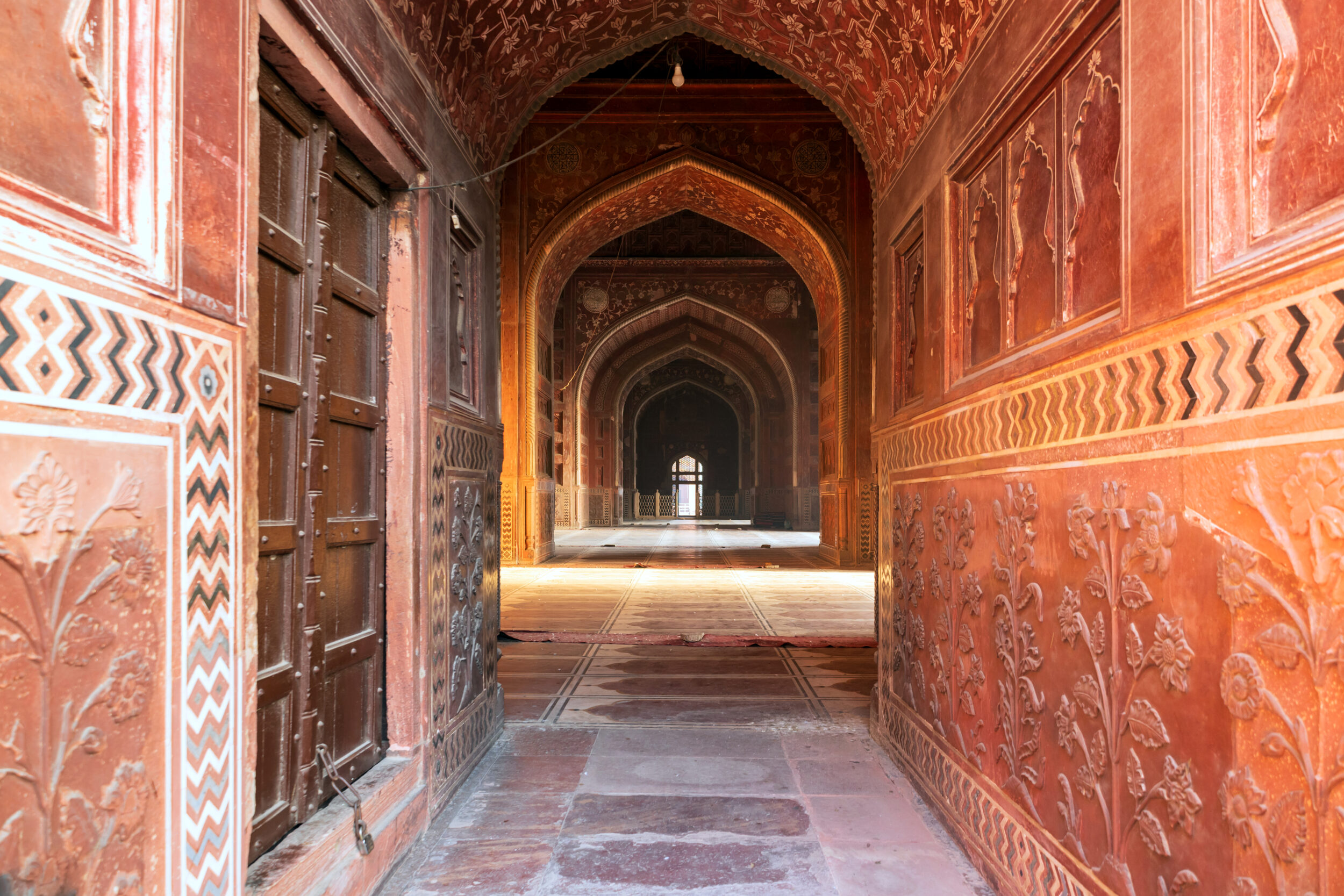
The Taj Mahal is an extraordinary building, one that lives up to its vast reputation. Whether viewed by day or night, in vivid sunlight or from the haunting mysteries of an Agra mist, it offers a breathtaking and unforgettable experience. As a spectacle of transcendent beauty.
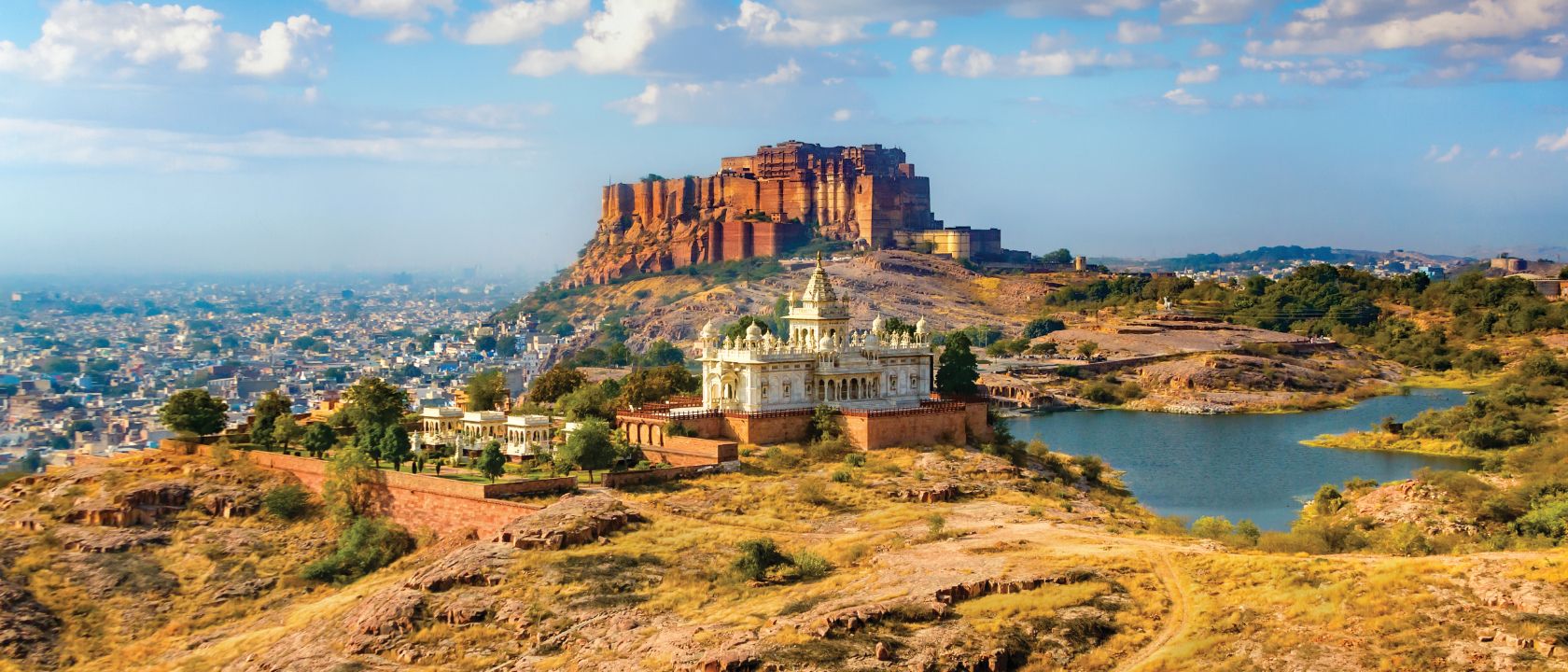
Professor Bernard Hoffert, former World President of the International Association of Art-UNESCO, leads this tour to North India, visiting three princely capitals in the heartland of the Mughal Empire – Delhi, Agra and Fatehpur Sikri – and a number of great Rajput fortress cities in Rajasthan. It explores the fusion of Hindu and Islamic cultures at Mughal monuments such as Agra’s Red Fort, Shah Jahan’s exquisite Taj Mahal, and Akbar the Great’s Fatehpur Sikri.
 Mughals, Rajputs & Villages: The Cultural Heritage of North India 2027