
Maintaining the World: Greek Gods – Part II
by Dr Heather Sebo
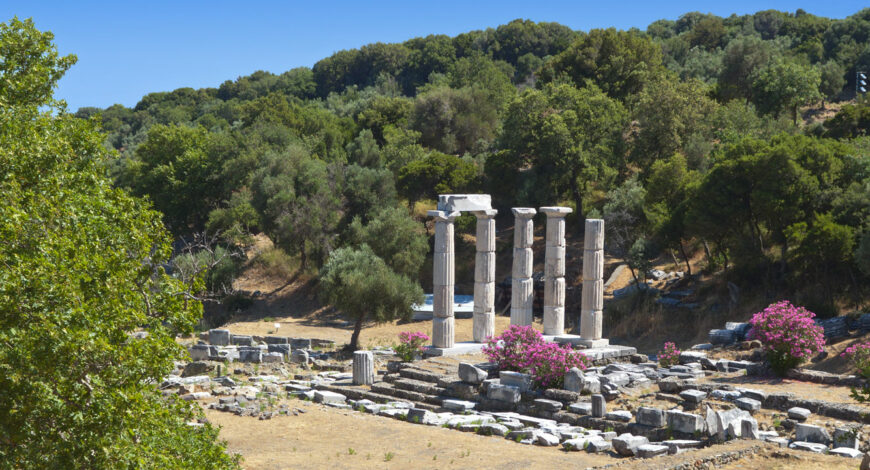
To the Greek way of thinking Gaia, the Earth, is the primordial Mother, the uncaused cause. Self-created out of the cosmic nothingness in the time of origins, Gaia is, as the the Greeks say, the foundation of everything on the land, and in the sea, and all that fly. Gaia filled the world with plants and flowers along with the nymphs to tend them at the beginning of time. However, she remains in the background supporting the underlying fecundity of all things while other gods oversee specific aspects of human, plant and animal fertility.
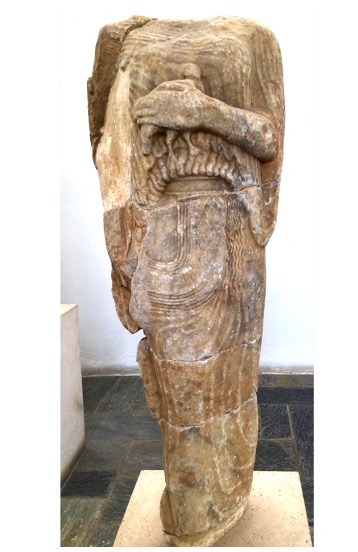
Let’s start with the love and sex goddess, Aphrodite. In the early stories, she is the oldest of the Olympian gods and her domain is the crucial business of human and animal conception through sexual union. Aphrodite is the mistress of all the delusions, longings and obsessions of sex and desire. She is mistress of beauty, adornment, perfume, laughter, of every aid and accessory to seduction. The whole animal and human world, even the gods, are subject to the passions of sex and love. The only ones who escape Aphrodite’s sway are the three virgin goddesses, Athene, Artemis and Hestia. Nevertheless, as you would expect, Athene and the goddess of marriage, Hera, are often very effective at thwarting Aphrodite in the interests of maintaining the family unit, social order and decorum. In the Iliad, they gang up on her and mock her mercilessly for her softness and lack of stamina. Hera is a very ancient protector of women, her sanctuary on the island of Samos is one of the oldest in the Greek world. The image below is so early the Greeks have not yet mastered the representation of the human form. However, it is a special favourite of mine because of its crude strength and protectiveness. It is such a pity the head is missing.
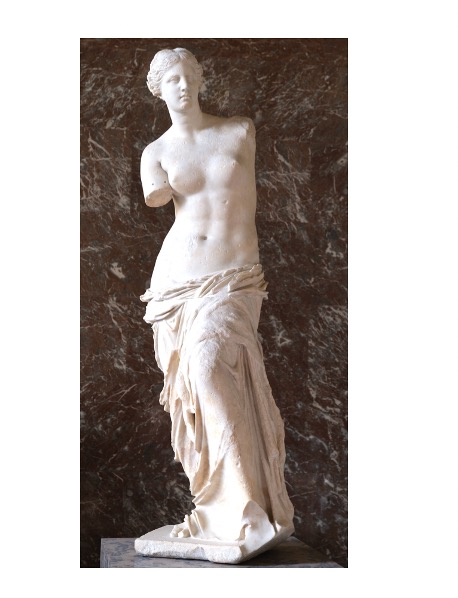
Even the domain of agricultural fertility is not the exclusive province of a single divinity. If our concern is with olives, then the relevant goddess will be Athene who planted the first olive tree. If our concern is with the primary cereal foods, barley, wheat, rye, millet, then the relevant goddess will be Demeter. However, an important aspect of the Greek way of thinking about the gods is that they may exercise their powers destructively, this is very much the case in an important story about Demeter and the abduction of her daughter, Persephone, to the Underworld by Hades. In her grief at the loss of her child, Demeter prevents all the seed on earth from germinating and the world becomes a wasteland. One of the extraordinary aspects of this story is that none of the other gods, not even Gaia, can intervene. In order to save humanity from starvation, Zeus, King of the gods, dispatches Hermes (who else?) to cross the boundary between the living and the dead and to bring Persephone back to Olympos. Demeter’s rage is appeased and Zeus agrees that henceforth Persephone’s annual return will be permanent, that “she would spend one-third of the year in the misty darkness and two-thirds with her mother and the other immortals”. And there is more. The myth tells us that, having experienced the pain of loss, Demeter extends a new blessing to humankind. She establishes the ritual cult known as the Mysteries of Eleusis, which offers initiates the hope that, as the seed germinates into new life in the springtime, so they will find joy and renewal after death. It was one of the most esteemed religious experiences in the Ancient world.
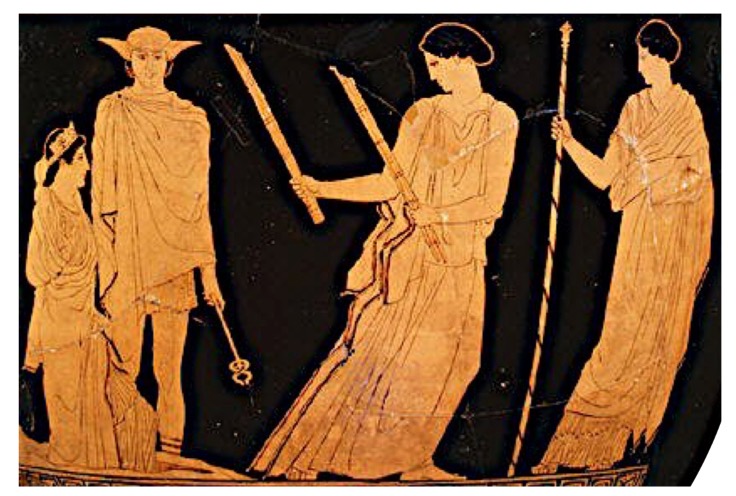
I have already mentioned Dionysos as a complementary opposite to Apollo. Dionysos is also profoundly important as a fertility god. He is different from all the other Olympians because he has a mortal mother and has a special relation to Zeus because his gestation was completed in the paternal body. He is said to have arrived in Attica at the same time as Demeter and to have given a vine shoot to an old man called Ikarios. He also taught Ikarios how to cultivate the grapes and transform them into wine. But wine is an ambiguous gift, it has the power to deceive us and to transform reality. When Ikarios shared his wine with others, they became drunk and thought they had been poisoned. In their fear and anger they killed Ikarios. After this, Dionysos taught the Greeks to mix wine with water. Used in a civilized manner, wine has the power to make convivial relationships and to erase all care. However, the story of Ikarios illustrates the dangerous capacity of wine to alter our psyche.
Ironically, the androgynous male god Dionysos, rather than a female figure like Demeter, is the closest the Greeks come to a universal fertility god. Dionysos maintains all the wet, lifegiving, flowing things in nature, the sap that drives the flower (apologies to Dylan Thomas), all the fluids in our bodies. Dionysos even descends to the Underworld to bring his mother Semele back from the dead. He becomes increasingly important in the Hellenistic world and in Northern Greece as a god who, having descended to the Underworld, could offer immortality and eternal life.
The three gods I have not yet discussed are the brothers Zeus, Poseidon and Hades. They are powerful male nature gods from the older generation before Ares, Apollo, Hermes and Dionysos (all of whom are sons of Zeus). The Greeks told a brutal story that the primal Titan god Kronos, father of this older generation, swallowed his children as soon as they were born. Only Zeus, the youngest, escaped this fate and was hidden by Gaia in a cave on Crete. When he came into his adult strength Zeus forced his father to regurgitate his siblings and because Hades and Poseidon had been swallowed most recently, they were ‘reborn’ from their father’s stomach before their sisters Demeter and Hera (which made the brothers older on a technicality).
Zeus could have asserted his supremacy as King of the gods then and there. But instead, he and his brothers agreed to draw lots for the three realms of Sky, Sea and the Underworld. As I think you know, Zeus became master of the Sky which automatically gave him hegemony over the Cosmos; Poseidon became master of the Sea with all its rich diversity and destructive power, and Hades became King of the Underworld, the Land of the Dead. (Because Hades’ realm is the Underworld he is not counted among the twelve who live on Olympos.) The brothers are always depicted as mature bearded men and each is identified by the emblem of their power. Zeus carries the thunderbolt, Poseidon, the trident and, perhaps surprizingly, Hades the cornucopia, the horn of plenty.
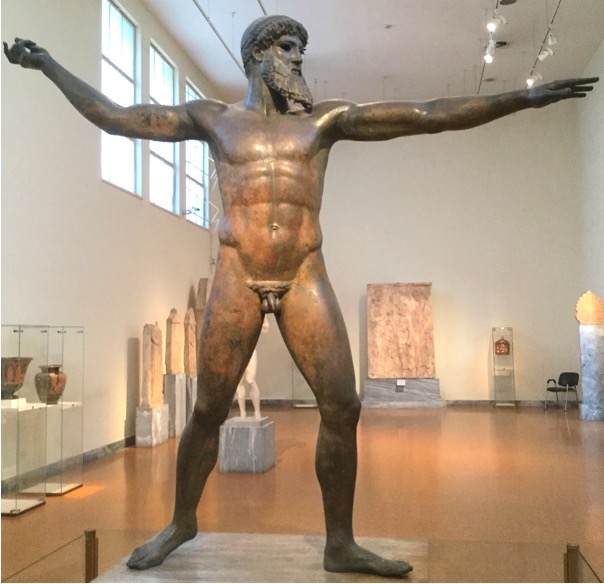
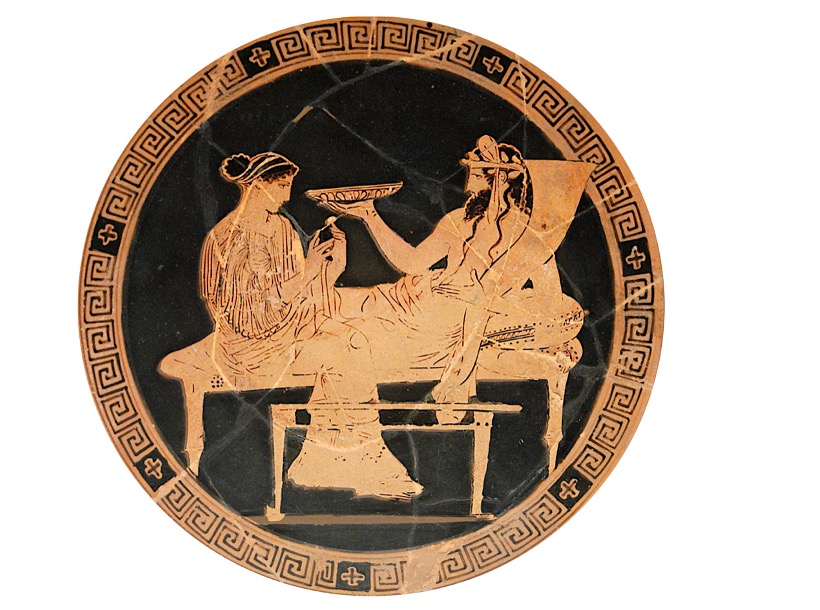
Why does Hades carry a cornucopia? It is because, as King of the Underworld, Hades has stewardship of Gaia’s deep mineral wealth and the fertility of the soil. However, I must emphasize that he has no access to this power, he is a custodian only. Indeed, Earth’s hidden bounty would be locked away forever if Demeter’s daughter Persephone had not consented to become Hades’ wife. It turned out to be an excellent match. In his formal proposal, Hades agreed to Persephone’s annual return, he promised that he would not be an unworthy spouse and finally that, as Queen of the Underworld, Persephone would have ultimate power over all that lives and moves. The text tells us that “thoughtful Persephone leapt up for joy”. As the dread Queen of the Dead she is honoured, feared and propitiated by mortals and immortals. As Kore, the Maiden, she is the embodiment of new life in the spring and her annual joyful reunion with Demeter releases the otherwise hidden underworld power of Gaia into the human world:
…the fields ripple with long ears of grain,
the rich furrows grow heavy on the ground
And the whole wide earth burgeons with leaves and flowers.
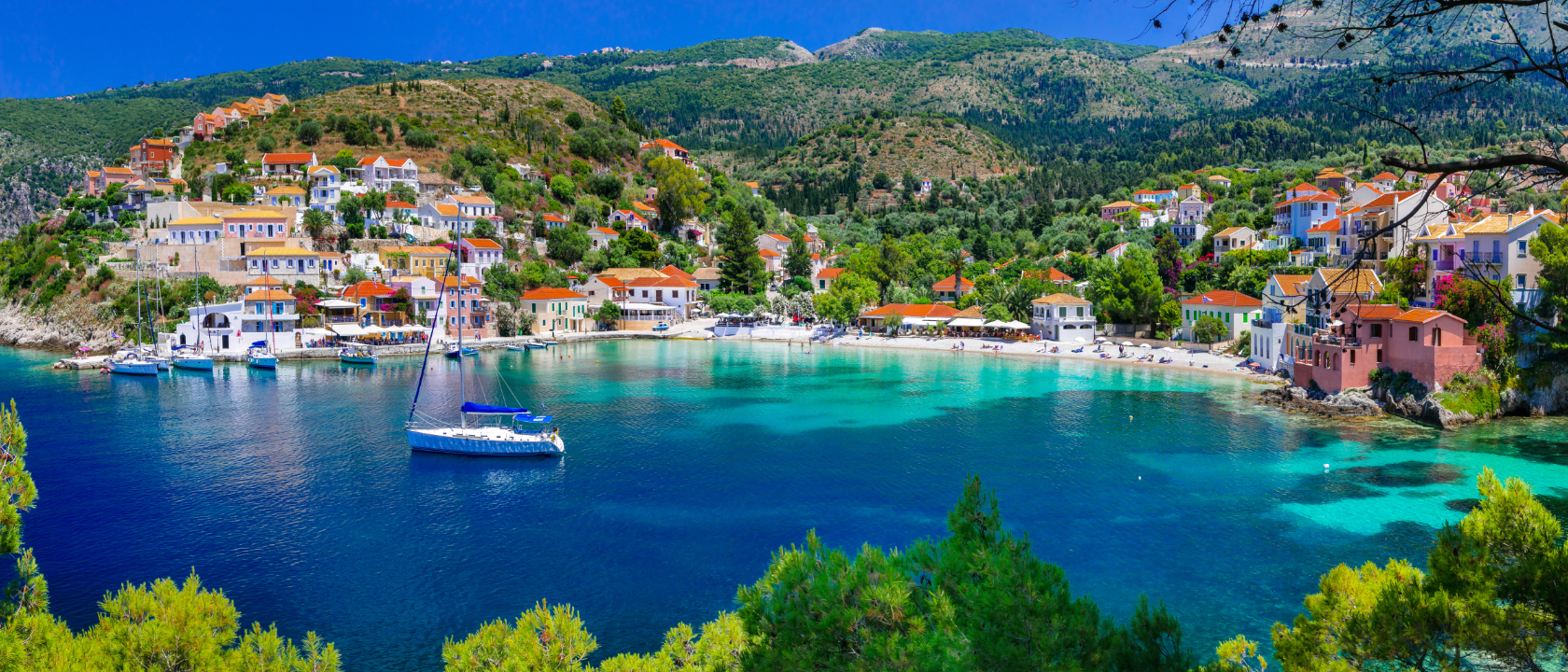
Join Dr Heather Sebo on a journey through Northern Greece, in Macedonia, a landscape dotted with lakes and waterfalls, into the mountains and plains of Thrace and finally cross the northern Aegean Sea to the islands of Samothrace and Lemnos; or travel to the fabled palace kingdoms of Minoan Crete, the citadels of Mycenaean Greece, as well as Corinth, Olympia, Messene, the ancient oracle at Dodona and the Ionian islands of Kefalonia, Ithaca & Corfu on Between Sea and Sky: Homer’s Greek Islands.
Related article
Read Maintaining the World: Greek gods – Part I
- View Tours Heather is currently leading
- Watch her online talk The Labyrinth and the Dancing Floor: Homer’s Mythic Crete
View our current selection of programs to Greece
Article images
Temple of the Great Gods at Samothraki Island in Greece. Image ID: 20248706 Copyright Panagiotis Karapanagiotis | Dreamstime.com https://www.dreamstime.com/karapas_info
Hera protecting a young bird, circa, 560 BCE. Image: author
Aphrodite, circa 150 BCE. Image: CC BY-SA 3.0
Persephone rises up from the Underworld guided by Hermes and met by Hekate (with torches) and Demeter far right, circa 440 BCE. Image: MetMuseum OA.
Zeus preparing to throw the thunderbolt, circa 480 BCE. Image: author
Persephone with Hades. She is holding a pomegranate, he is holding the cornucopia and honouring her with a libation, circa 440 BCE. Image: Creative Commons Attribution 2.5 Generic license
These images have been resized for this website.
 Between Sea and Sky: Homer’s Greek Islands 2026
  Between Sea and Sky: Homer’s Greek Islands 2027