
Autumn Gardens and Landscapes in Japan – A Symphony of Colour 2027
Status: Places Available
3 Nov – 16 Nov 2027

Your leaders



Autumn Gardens and Landscapes in Japan – A Symphony of Colour 2027
Tour Highlights
Travel with Jim Fogarty, award-winning landscape architect and author, and one of Australia’s most knowledgeable experts on Japanese gardens. He won the award for Best Design at the 2009 World Garden Competition in Shizuoka Prefecture, and Gold and Best in Show at the 2011 Gardening World Cup Nagasaki. Over many years Jim has carried out his own research into Japan’s most iconic gardens uncovering layers of fascinating history not widely known, and has a passionate interest in contemporary influences of Japanese garden design.
- Journey through Japan’s Honshu in autumn, when the countryside explodes into symphonies of glorious colour. Explore towns and villages removed from busy tourist centres and enjoy the tranquillity of Japanese gardens and landscapes.
- Visit the Edo-era’s ‘Three Great Gardens of Japan’: Kenroku-en in Kanazawa, Koraku-en in Okayama, and the rarely visited Kairaku-en in Mito. These beautiful stroll gardens illustrate the careful blending of nature and artistry as paths wind around lakes and water courses, through glades of autumnal trees, over charming bridges and past decorative stone lanterns.
- In Kyoto visit traditional temple gardens including: Kinkaku-ji (the Golden Pavilion), Ginkaku-ji (the Silver Pavilion) and Ryoan-ji (Dragon Peace Temple). By special appointment view temple sub-gardens that follow a spiritual and artistic tradition.
- Explore Takayama, Bitchu-Takahashi and Okimachi, where ancient streets are lined with the traditional wooden houses and shops.
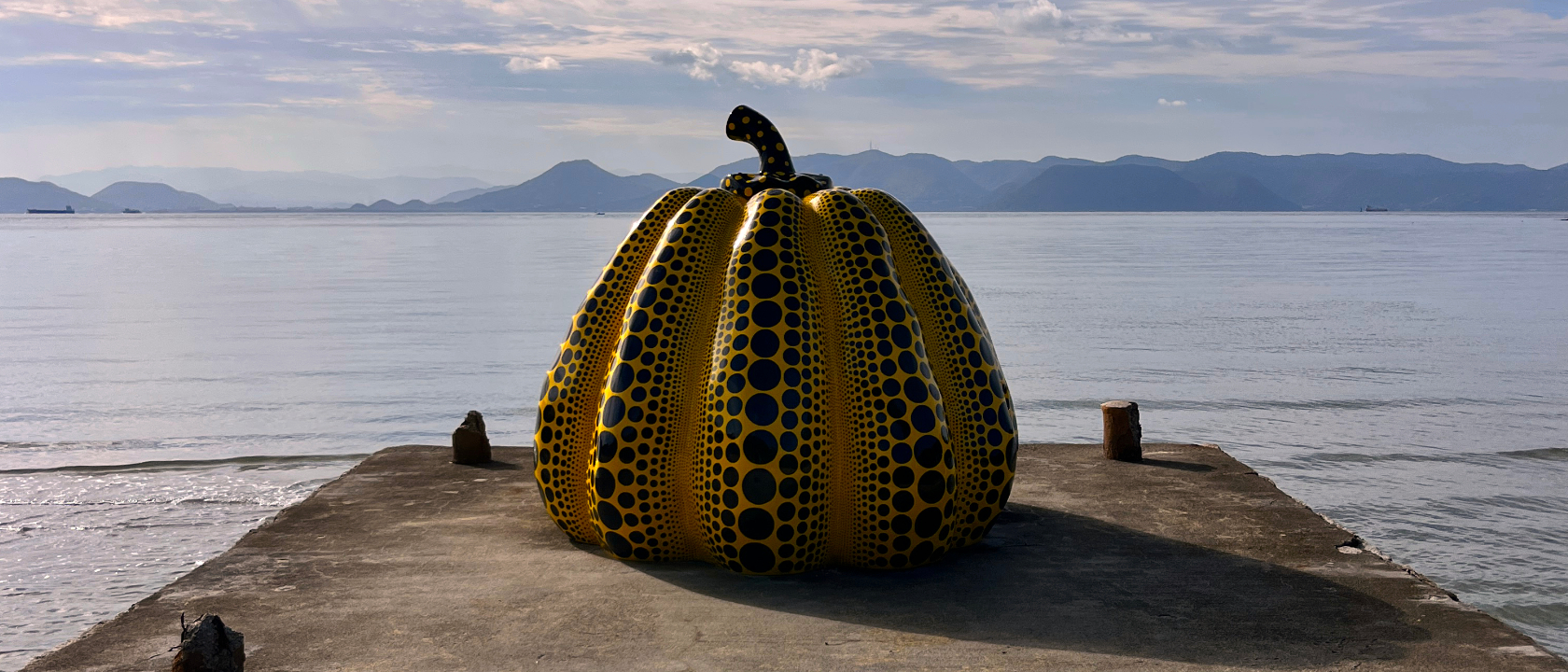
- Spend a day on Naoshima, one of Japan’s famed ‘art islands’, to experience the ever-evolving world of contemporary art and enjoy lunch at the Benesse House Museum.
- Visit historic house museums, where careful restoration and preservation of their delicate interiors reveals the private worlds of merchants, samurai and social elites.
- Step into the enchanting Mirei Shigamori Garden Museum in Kyoto’s quiet Sakyo Ward. The landscape gardener’s former home highlights the master’s love of working with stone.
- Sample Japanese sake and an array of traditional cuisine including the delicious small dishes presented as a kaiseki feast.
- Visit the Adachi Museum of Art where contemporary Japanese art is harmoniously set within one of the most beautiful and admired contemplative gardens in the country.
Overnight Tokyo (1 night) • Nikko (2 night) • Kanazawa (1 night) • Takayama (2 nights) • Kyoto (3 nights) • Okayama (3 nights) • Matsue (1 night)
Itinerary
The following itinerary describes a range of gardens, museums and other sites which we plan to visit. Many are accessible to the public, but others require special permission which may only be confirmed closer to the tour’s departure. The daily activities described in this itinerary may change or be rotated and/or modified in order to accommodate alterations in opening hours, train schedules and confirmation of special visits. The tour includes meals indicated in the detailed itinerary where: B=breakfast, L=lunch and D=dinner.
Tokyo - 1 night
Day 1: Wednesday 3 November, Arrive Tokyo
- Tour commences at 10.00am in the foyer of the Keio Plaza Hotel
- Welcome Meeting
- Koishikawa Koraku-en Garden
- Nezu Museum
- Welcome Dinner
Meeting Point: The tour commences at 10.00am in the foyer of the Keio Plaza Hotel. Check-in time is not until 3.00pm, however your luggage may be securely stored until we return from our day’s program late this afternoon.
After a short welcome meeting we visit a rare surviving 17th-century strolling garden, located in the west of the city. Koishikawa-korakuen was designed in part by Zhu Shun Shui, a Ming dynasty refugee from China, and the garden recreates both Japanese and Chinese landscapes. Here we will find waterfalls, ponds, stone lanterns, a small lake with gnarled pines and humped bridges.
We then make a visit to the Nezu Museum, showcasing traditional Japanese and Asian works of art once owned by Kaichiro Nezu, a railroad magnate and politician. Architect Kengo Kuma designed an arched roof that rises two floors and extends roughly half a block through the Minami Aoyama neighbourhood. At any one time the vast space houses some of the collection’s 7000 works of calligraphy, paintings, sculptures, bronzes, and lacquer ware.
Tonight we enjoy a welcome dinner together at our hotel. (Overnight Tokyo) D
Nikko - 2 nights
Day 2: Thursday 4 November, Tokyo – Mito – Nikko
- Train (regional) Tokyo to Mito
- Kairaku-en Garden, Mito
- Kirifuri Falls, Nikko
This morning we take a train north to Mito to visit the first of the ‘Three Great Gardens of Japan’ on our program. This garden was completed in 1842 by Nariaki Tokugawa, 9th Lord (daimyo) of Mito. It is less commonly visited than its counterparts in Kanazawa and Okayama, but it was the opening of this vast garden to the samurai class that gave rise to public parks in Japan. The garden is known for its plum blossom during spring and its vibrant autumn foliage, and also has a cedar grove, bamboo grove and a charming pavilion that was used for poetry competitions.
From Mito we drive to Nikko, an historic city in the mountainous Tochigi Prefecture known for its UNESCO World Heritage listed temples and beautiful natural landscapes. We stop at Kirifuri Falls, a splendid 75 meter two-tiered waterfall located a short distance from the town. The autumn leaves of the surrounding countryside provide a beautiful backdrop to the roaring cascade. (Overnight Nikko) B
Day 3: Friday 5 November, Nikko
- Tamozawa Imperial Villa
- Rinnoji Temple and Shoyo-en
- Toshogu Shrine
This morning we visit one of the largest wooden buildings in Japan. At the heart of the Tamozawa Imperial Villa is the old home of the Tokugawa clan and became an imperial property in1842. The structure we see today is a residence brought from Tokyo in 1899 as a summer residence for Crown Prince Taisho. The 109 room villa combines Japanese and Western architectural style and was used as a safe haven for Emperor Hirohito.
We then visit two of Nikko’s UNESCO World Heritage Listed temples. Rinnoji is the most important temple in the city. It was founded in the 8th century by Shodo Shonin who introduced Buddhism to Nikko. Today the complex features a sequence of buildings including the main Sanbutsudo which contains three great golden statues of three deities regarded as Buddhist manifestations of Nikko’s mountain deities, a treasure house and Shoyoen, a small garden with colourful maple trees around a central pond.
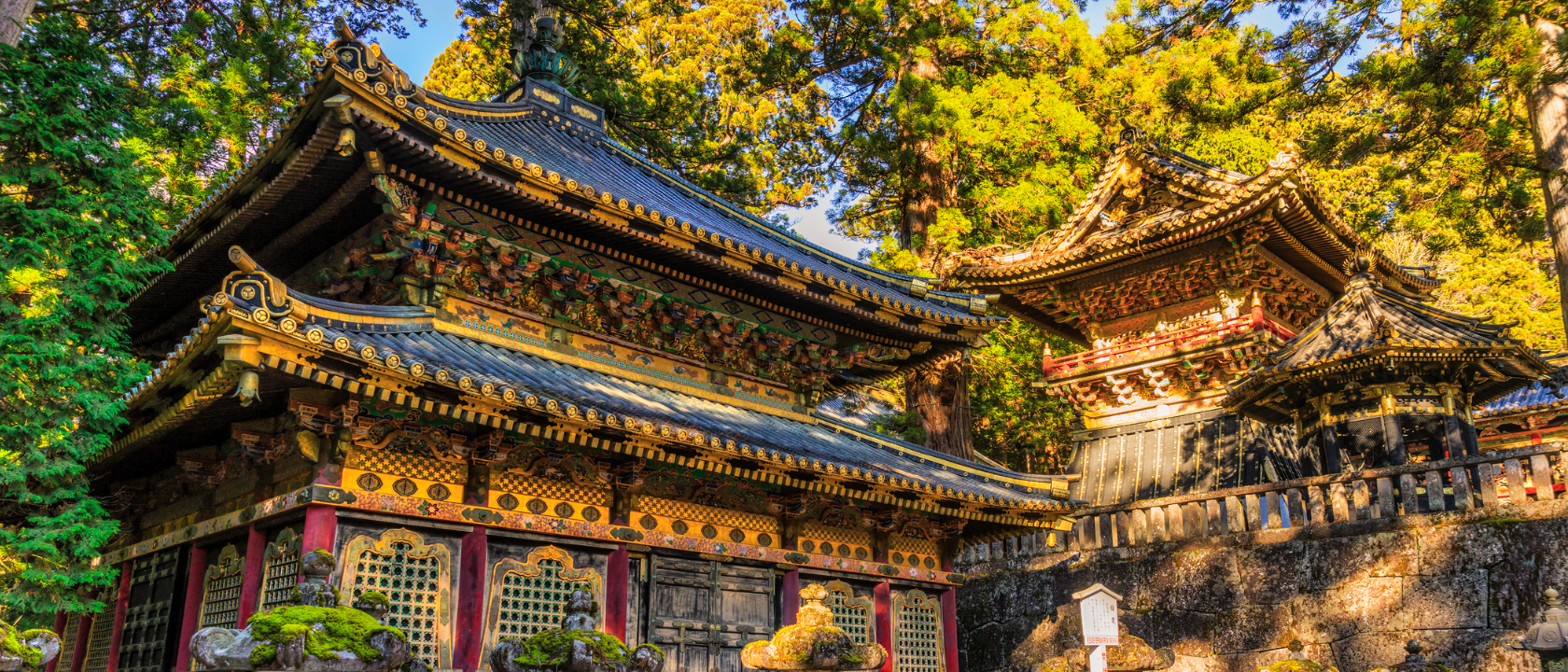
We finish the day with one of the city’s major sights, Tosho-gu Shrine. Built in 1616, this was once the simple mausoleum of Tokugawa Ieyasu, the first Shogun of the name, but it was extended and ornamented by his grandson twenty years later, and over 200,000 cedar trees were planted. Of these, over 12,000 still stand today. (Overnight Nikko) B
Kanazawa - 1 night
Day 4: Saturday 6 November, Nikko – Utsunomiya – Kanazawa
- Shinkansen train Utsunomiya to Kanazawa (via Omiya)
- Kanazawa Castle (exterior)
- Kenroku-en, Kanazawa
This morning we travel by train to Kanazawa, considered one Japan’s best-preserved Edo-period cities. Kanazawa is a popular place for the Japanese to visit but perhaps because of its remote location and very cold winters few foreigners make the journey to experience its rich cultural legacies.
The feudal atmosphere of Kanazawa still lingers in the Nagamachi district, where old houses of the Nagamachi Samurai line the streets that once belonged to Kaga Clan. The T-shaped and L-shaped alleys are distinct characteristics of the feudal town, and the mud doors and gates of the houses remain as they were 400 years ago. The houses with their samurai windows (bushimado) and mud walls under the yellow Kobaita wooden roofs, which were protected from snow by straw mats (komo), evoke a bygone era.
Our first destination is Kanazawa Castle, the seat of power of the local Maeda clan, hereditary feudal lords (daimyo) of the Kaga province from 1583. Burnt down on a number of occasions, only the superb Ishikawa Gate and the Sanjikken Nagaya samurai dwelling survive from the original construction.
Kenroku-en is the second of the ‘Three Great Gardens of Japan’ that we visit on this tour. Kenroku-en was once the outer garden of Kanazawa Castle and there has been a garden on the site since the late 1600s. The original garden, begun by the fifth Maeda lord, Tsunonori Maeda, was called ‘Renchi tei’ but it was almost entirely burnt out in 1759. It was restored in the 1770s and in 1822 became known as Kenroku-en, a name that means ‘the garden of six sublimities’ or, ‘a garden combining the six aspects of a perfect garden’. These six features were what the Chinese traditionally believed were necessary for the ideal garden – spaciousness and seclusion, artifice and antiquity, water-courses and panoramas: all these characteristics are to be found in the 25 acres of this beautiful garden. (Overnight Kanazawa) B
Takayama - 2 nights
Day 5: Sunday 7 November, Kanazawa – Ogimachi – Takayama
- Nomura-ke (restored samurai residence & house garden)
- Ishikawa-ken History Museum
- Ogimachi Village
During the Edo Period (1603-1867), the scale and dispensation of land to samurai families was a fairly accurate indicator of rank. A large estate was assigned to senior official Nomura Denbei Nobusada. The reforms that accompanied the Meiji Restoration in 1868 decimated the lifestyles of the socially privileged. The samurai, whose social class was nullified, not only had their stipends terminated, but their estates were also appropriated by the state. Consequently, the Nomura family, whose considerable land holdings dated back 12 generations, lost their home and were reduced to turning a section of the remaining part of their property over to the cultivation of fruit and vegetables. Though they were discouraged from public displays of ostentation, merchant families and those of former samurai were not prohibited from commissioning the construction of exquisite gardens.
This morning we visit the restored residence of Nomura, displaying the lifestyle and artifacts of the era, and a charming garden which features trees that are over 400 years old. Broad, irregularly shaped stepping stones provide access to the inner garden whose attractive entrance is flanked by a Chinese maple tree with leaves that turn a brilliant red in autumn. We also visit the Ishikawa-ken History Museum that is dedicated to the history of this prefecture.
We then drive into Gifu prefecture and the UNESCO-listed site of Shirakawa-go, an area of historic villages that preserve traditional thatched farmhouses (gassho-zukuri). We visit the largest of these, Ogimachi, where we stroll amongst the historic buildings before continuing on to Takayama. (Overnight Takayama) B
Note: Our luggage will be transported directly from Nikko to our hotel in Takayama. An overnight bag will be needed for use in Kanazawa.
Day 6: Monday 8 November, Takayama
- Miyagawa Morning Market
- Takayama Jinya
- Sanmachi Suji historic district
- Higashiyama temple area and walking path
Set in Gifu’s mountainous landscape, Takayama is known for its exceptionally well-preserved Edo-era townscape. The streets of the historic centre are lined with traditional wooden houses and the city is known for its artisan shops and sake breweries. This morning we walk through the Miyagawa Morning Market at the gates of the Takayama Shrine. This is primarily a food market for locals that extends along a 350 meters stretch of the river bank.
We then enter the Takayama Jinya, a fascinating building that gives an insight into the life of a regional governor in Edo-era Japan. The jinya is the former magistrate’s office and home, and is the only surviving building of its type in Japan and was in use from approximately 1868 until 1969. Of particular note is the vast tatami-matted reception hall, and the two oshirasu – rooms where investigations were carries out and judgements announced.
After time at leisure to stroll the streets of the historic town centre (Sanmachi Suji) we take a walk along the Higashiyama Walking Course, a 3.5km scenic path that leads past the city’s former caste, many temples and through woodlands. (Overnight Takayama) B
Kyoto - 3 nights
Day 7: Tuesday 9 November, Takayama – Nagoya – Kyoto
- Shinkansen Train from Nagoya to Kyoto
- Renge-ji
- Shisen-do
This morning we drive to Nagoya station to take the train south to Kyoto. Kyoto was the capital of Japan from the late 8th century (c.794 AD) until 1868, when the court was moved to Tokyo. It is home to 17 World Heritage Sites, 1600 Buddhist temples and 400 Shinto shrines, yet much of the city centre is modern. One of the finest of its contemporary buildings is its dramatic railway station.
The intimate gardens of Shisen-do are considered masterworks of Japanese gardens. Its street walls mask the tranquillity and beauty to be found within. Raked sand, clipped azaleas and the tree covered hillsides of Higashiyama form the main components of this garden designed by Ishikawa Jozan (1583-1672). Clipped azaleas give way to natural vegetation beyond the garden boundary but it is the close harmony between the indoor spaces of the pavilion and the garden beyond that is most striking. The verandah offers a transition between its dark interior and the light-filled garden.
This afternoon visit Renge-ji. The temple is known for its garden, which reflects the beauty of seasonal change. Autumn when the maple leaves change colour, is the best season to visit. Capturing the essence of Japanese gardens, it includes a central pond surrounded by plantings linking to the hillside beyond. Stones, bridge and plantings are all reflected on the water-surface, giving a sense of spaciousness. (Overnight Kyoto) B
Day 8: Wednesday 10 November, Kyoto
- Ryoan-ji (Dragon Peace Temple)
- Kinkaku-ji (Temple of the Golden Pavilion)
- Daitoku-ji Buddhist Complex incl. the Ryogen-in
Kyoto is notable for its extraordinary diversity of Japanese gardens, including many of the finest traditional temple gardens.
We first visit Ryoan-ji – the Dragon Peace Temple – simple, elegant and refined. The garden comprises 15 rocks in a sea of raked gravel surrounded by a compacted mud wall coated in oil. The garden dates from 1500 as part of a temple of the Renzai sect of Zen Buddhism and constitutes the supreme example of a dry garden where gravel and rock symbolise plant and water elements. Indeed, apart from the moss on the rocks, no other plants grow in it. The meaning of the garden remains unknown. It might symbolise islands in a sea, mountains seen through clouds or tigers and cubs crossing a river, but this doesn’t matter since this is a garden to encourage contemplation, the enclosing wall separating the visitor from the world outside, and the verandah creating a horizontal boundary.
We then visit the Golden Pavilion (Kinkaku-ji). During the 15th century the Chinese Sung Dynasty exercised an enormous influence in Japan as artists, poets and Zen priests were gathered together by Yoshimitsu, the third Ashikaga shogun (1358-1409). Yoshimitsu began construction of the Golden Pavilion just before he retired in 1394, handing power to his nine-year-old son so that he could move to his estate. Little of his work remains but we can sense the character of the garden in its pond, rockwork and extensive plantings.
The pavilion at Kinkaku-ji recalls Sung period architecture but it is a recreation, having been burned down in the 1950s. The present building is an exact replica, except that where Yoshimitsu proposed only to gild the ceiling of the third storey with gold, now the whole building is gilded. Yoshimitsu positioned his palace on the edge of a lake. The ground floor was a reception room for guests and departure point for leisure boating, the first storey was for philosophical discussions and panoramic views of the lake while the upper floor acted as a refuge for Yoshimitsu and was used for tea ceremonies. The size of the gardens is increased visually by the water’s convoluted edge, the use of rocks and clipped trees and by visually ‘borrowing’ a distant view of Mt Kinugasa that creates a sense of gradation between foreground, middle-ground and deep distance.
We conclude the day with a visit to Daitoku-ji, a large complex of Zen temples with prayer halls, religious structures and 23 sub-temples with some of the most exquisite gardens in Kyoto, some quite small, including raked gravel gardens and, in the Daisen-in, one of the most celebrated small rock gardens in Japan. The temple received imperial patronage and grew out from its centre in an organic way. The central north-south walkway is most formal with wide paths to accommodate processions and ceremonies, while to the side are sub-temples with gates. As you walk through one of these gates you immediately come upon a less formal world with narrow paths, turns and walkways. (Overnight Kyoto) B
Day 9: Thursday 11 November, Kyoto
- Mirei Shigemori Garden Museum
- Ginkaku-ji (Temple of the Silver Pavilion)
- Afternoon at leisure
This morning we first visit the Mirei Shigmori Garden Museum, a beautiful 20th century garden surrounding a beautiful Machi-ya (traditional town house) from the 18th century Edo period. Within the garden Shigemori included two tea pavilions where screens open to reveal tranquil moss slopes with gravel paths, mature trees and rock configurations.
Originally constructed as the retirement villa of the Shogun Ashikaga Yoshimasa (1435-1490), the Ginkaku-ji (Silver Pavilion) became a Zen temple upon his death. The garden is complex, comprising two distinct sections, a pond area with a composition of rocks and plants, and a sand garden with a truncated cone, the ‘Moon-Viewing Height, suggesting Mt Fuji; and a horizontal mound, the ‘Sea of Silver Sand’ named for its appearance by moonlight.
The afternoon is at leisure to further this city’s rich culture. You may wish to stroll along the Philosophers Walk located close to Ginkakuji, visit the market or another of the city’s numerous temple complexes. (Overnight Kyoto) B
Okayama - 3 nights
Day 10: Friday 12 November, Kyoto – Okayama
- Tofuku-ji Temple Complex (incl. Hojo Teien and Reiun-in), Kuoto
- Shinkansen to Okayama
- Korakuen Garden, Okayama
This morning visit the superb Tofuku-ji Hojo, a garden designed in 1939 by Shigemori Mirei. This will be familiar to many who have read books on Japanese gardens for it combines 20th-century design with elements from Japanese tradition. Mirei implements subtle, restrained design themes such as chequer-boards of stone in moss to allow the natural form and colour of maples on the surrounding hills to make full impact.
We then depart Kyoto and travel by train to Okayama where we visit the third of the ‘Three Great Gardens of Japan’, Koraku-en. This garden dates from the Edo period when the daimyo (feudal lord) Ikeda Tsunamasa ordered its construction in 1687. Completed in 1700, it has retained its overall appearance with only a few minor changes made over the centuries. The garden was used for entertaining guests and also as a retreat for the daimyo. (Overnight Okayama) B
Note: As we will be travelling by train today, our luggage will be transferred directly to the Okayama hotel.
Day 11: Saturday 13 November, Okayama – Takamatsu – Okayama
- Ritsurin koen, Takamatsu
- Ismanu Noguchi Garden Museum
Today we drive south over the Seto Ohashi and Kita Bisanseto bridges to Shikoku Island. Here we visit Ritsurin koen garden, one of the largest and most beautiful stroll gardens in Japan. It was built during the edo period for the local feudal lords, evolving and expanding over the course of 300 years until it was opened to the public in 1875. It features six ponds and thirteen landscaped hills, with a backdrop provided by Mt Shiun. Paths lead visitors past rock arrangements, seasonal flower plantings and carefully maintained trees, all designed to create changes from one season to the next.
Isamu Noguchi (1904-1988) was an important Japanese sculptor of international renown, who also designed gardens, landscaped projects, furniture, stage sets and lighting fixtures. This afternoon we visit the Isamu Noguchi Garden Museum, his former home and studio that is now an extension of the Noguchi Museum in New York (Queens). His sculptures, many unfinished and some on loan from New York, are displayed throughout the garden and studio. (Overnight Okayama) BLD
Day 12: Sunday 14 November, Okayama – Naoshima – Okayama
- Ferry to Naoshima ‘Art Island’
- Benesse House Museum & Lunch
- Chichu Art Museum
- Ferry back to Uno Port on Honshu
The island of Naoshima in the Seto Inland Sea is home to a number of contemporary art museums and outdoor sculpture exhibitions. The Benesse Corporation installed much of the art on Naoshima and the neighbouring islands, and commissioned the design and construction of several museums by Tadao Ando. This commission included the Benesse House Museum, the Chichu Art Museum and the Lee Ufan Museum.
This morning we take a ferry from the mainland to Naoshima Island and spend a day visiting some of the remarkable art exhibitions, sculpture and architecture the island has to offer. We enjoy lunch at the Issen Restaurant at Benesse House Museum, where the focus of the cuisine is on the sustainability and exquisite presentation of each dish.
In the late afternoon, we return to the mainland by ferry. (Overnight Okayama) BL
Matsue - 1 night
Day 13: Monday 15 November, Okayama – Bitchu-Takahashi – Matsue
- Bitchu-Takahashi historic mountain village
- Rakiyuji Temple
- Farewell Dinner
In the mountains overlooking Okayama is the historic Bitchu-Takahashi village, once a thriving town at the base of Matsuyama Castle. We will walk the well-preserved streets near the castle and visit the restored houses once inhabited by merchants, craftsmen and samurai.
Of particular importance is the Zen Buddhist temple Rakiyuji. This was once the residence of Korori Enshu (1579-1647), a local feudal lord, garden designer, architect and tea ceremony master. He created the dry garden we see today at Rakiyuji, using many of the elements typical of his work, particularly the use of borrowed scenery and the creation of ‘island’ representing a crane and turtle.
We then continue our drive north to the small regional town, Matsue. After checking in to our hotel we enjoy a traditional farewell dinner. (Overnight Matsue) BD
Day 14: Tuesday 16 November, Depart Matsue
- Adachi Museum of Art
- Transfer to Izumo Airport
This morning we travel to the Adachi Museum of Art, located in the rural landscape of the Sinmane region. This is a contemporary art museum set within a large garden, considered by many to be one of the most beautiful gardens in Japan. The museum was founded by Adachi Zenko who felt a strong resonance between the sublime sensibility of the Japanese-style garden and the paintings of Yokoyama Taikan whose work he collected. This is a contemplation garden which visitors observe from various carefully designed points within the museum. Each season reveals itself through different aspects of the garden, and during our visit we can expect the hills that form the backdrop to the vista before us to be a blaze of autumnal colour while vivid reds enliven the foliage of the garden.
We then transfer to Izumo Airport with an estimated arrival time of 3.00pm. Note: we recommend allowing 2 hours for your flight check-in. B
Accommodation
All hotels are rated 3- or 4-star locally and are comfortable and conveniently situated. All rooms have en suite bathroom.
- Tokyo (1 night): Keio Plaza Hotel
- Nikko (2 nights): Kinugawa Onsen Hotel – offering traditional ryokan accommodation and onsen facilities. Japanese-Western rooms have been booked for our stay.
- Kanazawa (1 night): Hakuchoro Hotel Sanraku
- Takayama (2 nights): Hotel Amanek Hida – opening late 2026, offering views over the town and mountains, and a traditional onsen.
- Kyoto (3 nights): Hotel Monterey
- Okayama (3 nights): ANA Crowne Plaza
- Matsue (1 night): Hotel Gyokusen – located in the Tamatsukuriyu area, offering onsen facilities and set within a charming garden. Japanese-Western rooms have been booked for our stay.
Single Supplement
Payment of this supplement will ensure accommodation in a double room for single occupancy throughout the tour. The number of rooms available for single use is extremely limited. People wishing to take this supplement are therefore advised to book well in advance.
How to Book
ASA RESERVATION APPLICATION FORM
Please complete the ASA RESERVATION APPLICATION and send it to Australians Studying Abroad together with your non-refundable deposit of AUD $1000.00 per person payable to Australians Studying Abroad.
Practical Information
Fitness Criteria
Level 1 ACTIVE
For people with active lives and good mobilityYou must be able to:
- manage at least five hours of physical activity per day with ease.
- walk at a regular pace up to 5-7km per day on flat or undulating terrain; some stretches include steeper slopes or several flights of stairs (eg at temple complexes).
- keep up with the group at all times.
- stand for one to two hours during visits to galleries and museums without the need to sit.
- board/alight transport including coaches and trains unassisted.
- to carry your hand luggage up and down stairs as you change platforms with a limited time to make the train connection.
Fitness Levels
Please also view the fitness criteria required for our tours, graded from Level 1 to Level 3, at www.asatours.com.au/fitness-level/
All ASA tours are active programs suitable for people with a good level of mental and physical fitness and good mobility. They are not suitable for people who lack stamina, have difficulty walking at the group’s pace or who have mobility issues. An unavoidable aspect of every tour is the need to manage walking, stair-climbing and standing for long periods of time.
It is a condition of travel that all participants agree to accept ASA’s directions in relation to their suitability to participate in activities undertaken on the tour, and that ASA retains the sole discretion to direct a tour participant to refrain from a particular activity on part of the tour. Before enrolling on an ASA tour please read the fitness requirements carefully.
Overnight Bags & Luggage Transfer
This tour involves several journeys on Japan’s high-speed bullet trains. Larger suitcases are not permitted on these trains; the group’s luggage will therefore be transferred by truck to the hotel. There are three occasions when a small overnight bag will be required rather than a large suitcase:
- Matsumoto-Kanazawa & Kanazawa-Kyoto: these journeys are both by bullet train. The group’s luggage will be transferred by truck from Matsumoto directly to Kyoto and will be ready for the group when they arrive in Kyoto. For the one night in Kanazawa, an overnight bag MUST be used – suitcases cannot be taken on the bullet train.
- Kyoto-Okayama-Matsue: this journey is by bullet train. The group’s luggage will be transferred by truck from Kyoto directly to Matsue and will be ready for the group when they arrive in Matsue.
Tour Price & Inclusions
AUD $14,990.00 Land Content Only – Early-Bird Special: Book before 31 December 2026
AUD $15,390.00 Land Content Only
AUD $1680.00 Single Supplement
Tour Price (Land Content Only) includes:
- Accommodation in twin-share rooms with private facilities in hotels generally of 3- or 4-star standard.
- Buffet or served breakfast, lunches & evening meals as indicated in the itinerary where: B=breakfast, L=lunch & D=dinner.
- Drinks at welcome and farewell meals. Other meals may not have drinks included.
- Transportation by air-conditioned coach and rail as outlined in the itinerary
- Departure airport transfer
- Porterage of one piece of luggage per person at hotels (not at airports or train stations)
- Lecture and site-visit program
- Entrance fees to all sites
- Use of audio headsets during site visits
- Tour notes
- Tips for the coach driver, local guides and restaurants for included meals
Tour Price (Land Content Only) does not include:
- International Airfare: Australia-Tokyo, Matsue-Australia
- Arrival airport transfer in Tokyo
- Personal spending money
- Airport-hotel transfers if not travelling on the ASA ‘designated’ departure flight from Matsue
- Luggage in excess of 20kg (44lbs)
- Travel Insurance
Tour Map
Gallery
Deposits
A non-refundable deposit of $1000.00 AUD per person is required to reserve a place on this ASA tour.
Cancellation Fees
If you decide to cancel your booking the following charges apply:
- More than 75 days before departure: your initial deposit of $1000.00 is non-refundable.**
- 75-31 days prior 50% of total amount due
- 30-0 days prior 100% of total amount due
**$500.00 of this amount (ie 50% of your deposit) may be credited to another ASA tour departing within 12 months of the original tour you booked. We regret, in this case early-bird discounts will not apply.
We take the day on which you cancel as being that on which we receive written confirmation of cancellation.
Unused Portions of the Tour
We regret that refunds will not be given for any unused portions of the tour, such as meals, entry fees, accommodation, flights or transfers.
Will the Tour Price or Itinerary Change?
If the number of participants on a tour is significantly less than budgeted, or if there is a significant change in exchange rates ASA reserves the right to amend the advertised price. We shall, however, do all in our power to maintain the published price. If an ASA tour is forced to cancel you will get a full refund of all tour monies paid. Occasionally circumstances beyond the control of ASA make it necessary to change airline, hotel or to make amendments to daily itineraries. We will inform you of any changes in due course.
Travel Insurance
ASA requires all participants to obtain comprehensive travel insurance. A copy of your travel insurance certificate and the reverse charge emergency contact phone number must be received by ASA no later than 75 days prior to the commencement of the tour.
Final Payment
The balance of the tour price will be due 75 days prior to the tour commencement date.
Limitation of Liability
ASA is not a carrier, event or tourist attraction host, accommodation or dining service provider. All bookings made and tickets or coupons issued by ASA for transport, event, accommodation, dining and the like are issued as an agent for various service providers and are subject to the terms and conditions and limitations of liability imposed by each service provider. ASA is not responsible for their products or services. If a service provider does not deliver the product or service for which you have contracted, your remedy lies with the service provider, not ASA.
ASA will not be liable for any claim (eg. sickness, injury, death, damage or loss) arising from any change, delay, detention, breakdown, cancellation, failure, accident, act, omission or negligence of any such service provider however caused (contingencies). You must take out adequate travel insurance against such contingencies.
ASA’s liability in respect of any tour will be limited to the refund of amounts received from you less all non-refundable costs and charges and the costs of any substituted event or alternate services provided. The terms and conditions of the relevant service provider from time to time comprise the sole agreement between you and that service provider.
ASA reserves the sole discretion to cancel any tour or to modify itineraries in any way it considers appropriate. Tour costs may be revised, subject to unexpected price increases or exchange rate fluctuations.
Interested in this tour?
Take the next step
or alternatively Download PDF Reservation Application