
Access to your government’s embassy while travelling
Australia www.dfat.gov.au
New Zealand www.mfat.govt.nz
Canada www.travel.gc.ca
United Kingdom www.gov.uk
America www.usembassy.gov
Time Zones
Brussels, Belgium is GMT +1 hour
Belgium does observe European Summer Time. GMT+ 1 hours (end of March – end of October).
To obtain the current local time and date in the cities and countries you are travelling to, please visit: www.timeanddate.com
Electricity and Plugs
Belgium uses 220-240 volts. Belgium has 2 associated plug types: type F (2 round pins) and type C – www.korjo.com/adaptor-guide
Currency
To obtain the most up-to-date exchange rate you may wish to visit: www.xe.com/currencyconverter
The official currency of Belgium is the Euro (EUR). Bank notes come in denominations of EUR5, 10, 20, 50, 100, 200 and 500. The 200 and 500 are seldom used. Coins come in denominations of Cents 1, 2, 5, 10, 20, 50, Euro1 and 2 (100 Cents in 1 Euro).
Most banks, exchange bureaux (only in larger cities) or hotels will exchange major currencies in cash, including US dollars (USD) and British pounds (GBP). However, Euro’s are easy to purchase prior to departure and this will save you time when arriving in Belgium.
Credit cards are widely accepted in Belgium and often are more readily accepted than cash.
ATMs are readily available; however please note many banks are now lowering the limits for cash withdrawals from ATM machines. ATM machines will also charge a withdrawal fee.
Most Belgium people pay for things on a day-to-day basis with card – from their morning coffee to dinner and everything in between. Keep some cash for small purchases like taxis, outdoor food stands and markets.
Visa
Belgium is a member of the EU and Europe’s 27-member border-free Schengen Zone.
Citizens of more than 60 countries are permitted to travel to Belgium and other countries in the Schengen Zone visa-free for a total of 90 days within a 180-day period. This only applies if you are travelling as a tourist or visiting family and friends. These nations include the USA, UK, Canada, Australia, New Zealand, Japan and Singapore, as well as certain South American countries. Ensure your passport is valid for a minimum of six months after your departure date and has at least 2 clear pages in your passport. You may be asked to provide documentation outlining the reason for your visit and confirming your departure date. Check the Service-public.fr to see if your country qualifies for visa-free travel.
Telephone & Communication
Mobile Telephones
Most mobile telephones work in Belgium and coverage is generally very good in all areas. Check with your local provider regarding ‘Global Roaming’ and coverage in the places you are visiting. If you are planning to purchase a local sim card, please check with your local provider prior to departure to make sure your phone is unlocked and will accept another sim card.
Another way to access data for your phone overseas is by purchasing an e-sim. Please ensure that your phone is suitable, it usually requires a phone not older than a few years old. Look for companies like Airalo or Holafly.
WhatsApp Messenger is an economical way to stay in touch with friends and family. WhatsApp is free and offers simple, secure, reliable messaging and calling service.
ASA tour leaders use WhatsApp to communicate with tour participants while travelling, so the app should be downloaded to your mobile device prior to joining the program.
Internet
Wi-fi is common in across most areas of Belgium.
Check with your local provider to see what they offer for international travel, some have a simple daily cost. Alternatively you may wish to purchase a pre paid sim card prior to your departure from your home country. For Australians you may wish to look at https://www.prepaidsims.com.au.
If you do not have a plan that allows you to use the data network at no extra cost, we recommend using the Wi-Fi networks in Belgium. As well as the free Wi-Fi networks in Belgium provided by hotels and on transport, such as Wi-Fi on trains, you can also use Wi-Fi offered free of charge by many commercial establishments, such as bars and restaurants, attractions, cultural venues, etc.
Personal Safety
-
Where there are crowds, there will pickpockets. Petty crime and theft are serious issues in tourist areas and on buses and trains. Pickpocketing, bag snatching, and slashing luggage to steal belongings are common. Pay close attention to your belongings. We strongly recommend the use of a money belt to keep your cash, cards and travel documents safe. This should be kept under your clothes at all times. This is a precaution that should be taken anywhere due to the difficulties that can be experienced when trying to replace stolen items. Avoid keeping your wallet or phone in your hip/ back pocket.
-
Take photocopies or photos of all important documents (passport, credit cards, E-tickets, insurance).
It is generally helpful to take a business card from the hotel you are staying at. This can assist hugely if you get lost or if there is a language barrier. If you have a key card for your hotel, make sure you keep these two cards separate.
Australians Studying Abroad takes the health and safety of its travellers seriously and every measure is taken to ensure that trips are safe, fun and enjoyable. We recommend that all travellers check with their government or national travel advisory organisation for the latest information before departure:
Australia Smart Traveller
New Zealand Safe Travel
Canada Canada Travel Information
United Kingdon UK Foreign Travel Advice
USA US Department of State
The World Health Organisation also provides useful health information.
Health
It is advisable to consult with your doctor or local travel clinic in the weeks leading up to your departure, allowing enough time to obtain any relevant vaccinations or travel medication that may be required.
Travelling with Medication
Not all medications available in your home country, over the counter or by prescription, are available in other countries. Some may be considered illegal or a controlled substance, even if prescribed by a doctor. If unsure, travellers should check the regulations on importing or transporting medicines to their chosen destination by contacting the relevant embassy or high commission for clarification.
All medication should be carried in their original packaging and in your hand luggage. If you are taking medication whilst travelling, please make sure you have enough for the duration of your trip.
Carry a letter from your doctor stating:
- what the medication is and what it is for
- your required dosage
- that it is for personal use
For more information, contact the Belgian Embassy in your country.
Australia www.dfat.gov.au
New Zealand www.mfat.govt.nz
Canada www.travel.gc.ca
United Kingdom www.gov.uk
USA US Department of State
What to Pack
Clothing (general)
The time of the year you visit this destination will dictate the type of clothing it is appropriate to bring. It is always advisable to take a raincoat or a waterproof windbreaker. For daytime activities, we suggest a wardrobe that is versatile, casual and comfortable. It is recommended that “layered” clothing might offer the best comfort in a variety of conditions. Always expect the weather to be changeable.
Beyond the normal wardrobe, we suggest the following:
- Day pack (with a lock) or a cross-body handbag. Site visits often involve walking on uneven ground, up numerous steps and may be of a reasonable duration. You will want to have your hands free to hold rails or steady yourself as applicable. A day pack will allow you to easily carry your ancillary items: camera, torch, waterproof, sunhat, sunscreen, bottled water, sunglasses etc.
- A hiking pole (fold-up) should be considered as many sites have steps and uneven ground, often without handrails.
- Comfortable walking shoes are very important (hiking boots are not required); sandals or open shoes are only suitable for the evening.
- Sunglasses, sunscreen and a hat.
- Rain/wind jacket or cardigan for the cooler or wet days.
- Wet wipes and hand sanitiser.
- Camera: Please take all necessary equipment/spares as it will be difficult to purchase additional supplies while on tour.
- Extra prescription eyeglasses (if required).
Toilets: Occasionally, there is a small fee for use of a public toilet. Should you use a toilet in a café you are expected to purchase something small, like a coffee. Carry your own supply of soap/sanitiser and toilet paper, as they may have run out.
Etiquette
-
When visiting religious sites shoulders and knees should be covered and hats are not allowed. Shorts are not generally acceptable for men or women.
-
When taking photographs, please be aware of your fellow travellers. Photography is usually allowed in museums however FLASH is PROHIBITED. Please do not take any photographs of police, military personnel or military installations. Please follow the advice of your leader and guide who will advise you where photography is not appropriate.
-
There is not a strong tradition of tipping in Belgium, particularly among the locals, but it’s expected that tourists leave a small tip. In restaurants it’s common to leave a cash tip for servers (10 – 15% is standard).
-
Try to respect the locals to the same degree you would want to be respected at home.
Climate
The climate in Belgium is similar across the country. We suggest checking the weather forecast for the most up-to-date information, prior to your departure.
We suggest checking the weather forecast for the most up-to-date information, prior to your departure.
www.worldweatheronline.com or www.weather-finder.com
Average minimum/maximum Temperatures (˚C)
| City | Jan | Feb | Mar | Apr | May | Jun | Jul | Aug | Sep | Oct | Nov | Dec |
| Brussels | 1/6 | 2/7 | 3/11 | 5/15 | 9/18 | 12/21 | 14/23 | 14/23 | 11/20 | 8/15 | 4/10 | 2/7 |
The information above has been compiled with care and provided in good faith however it is subject to change.
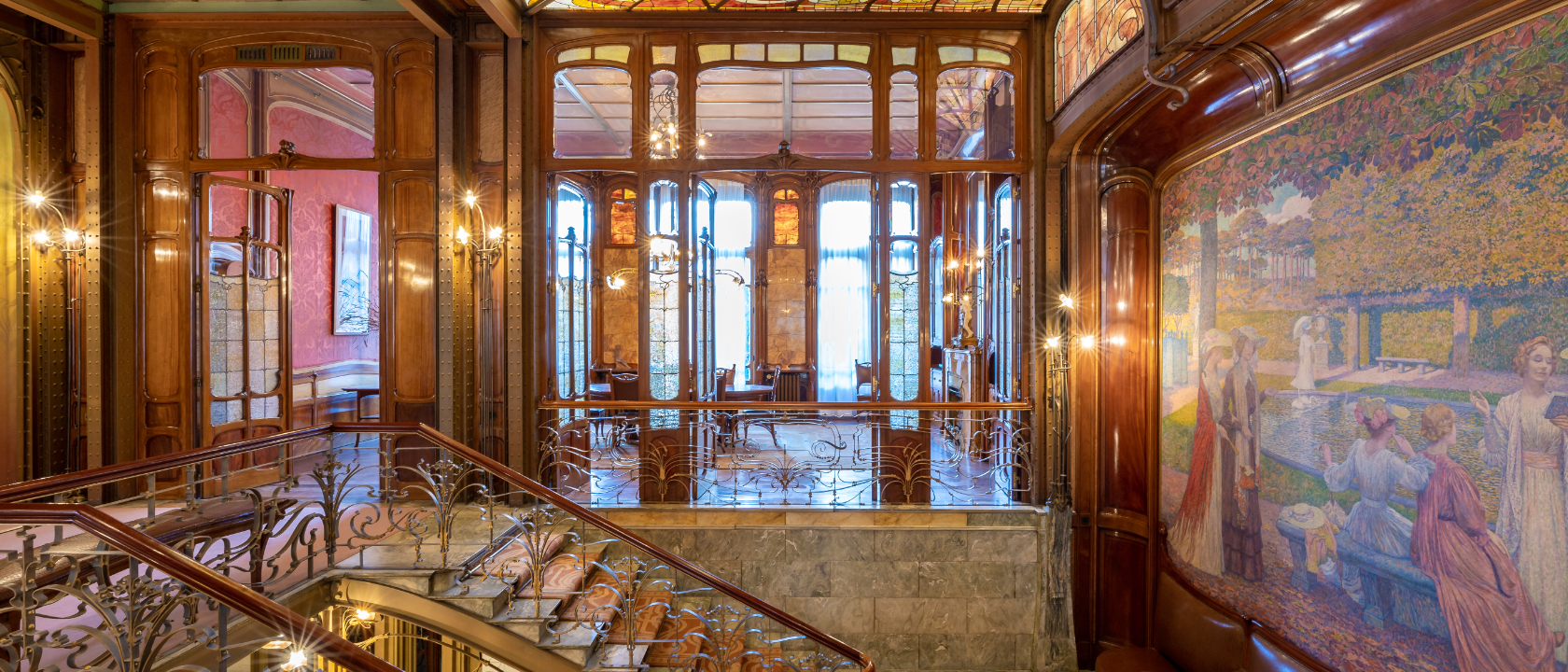 From Belgian Art Nouveau to Dutch Modern 2026
 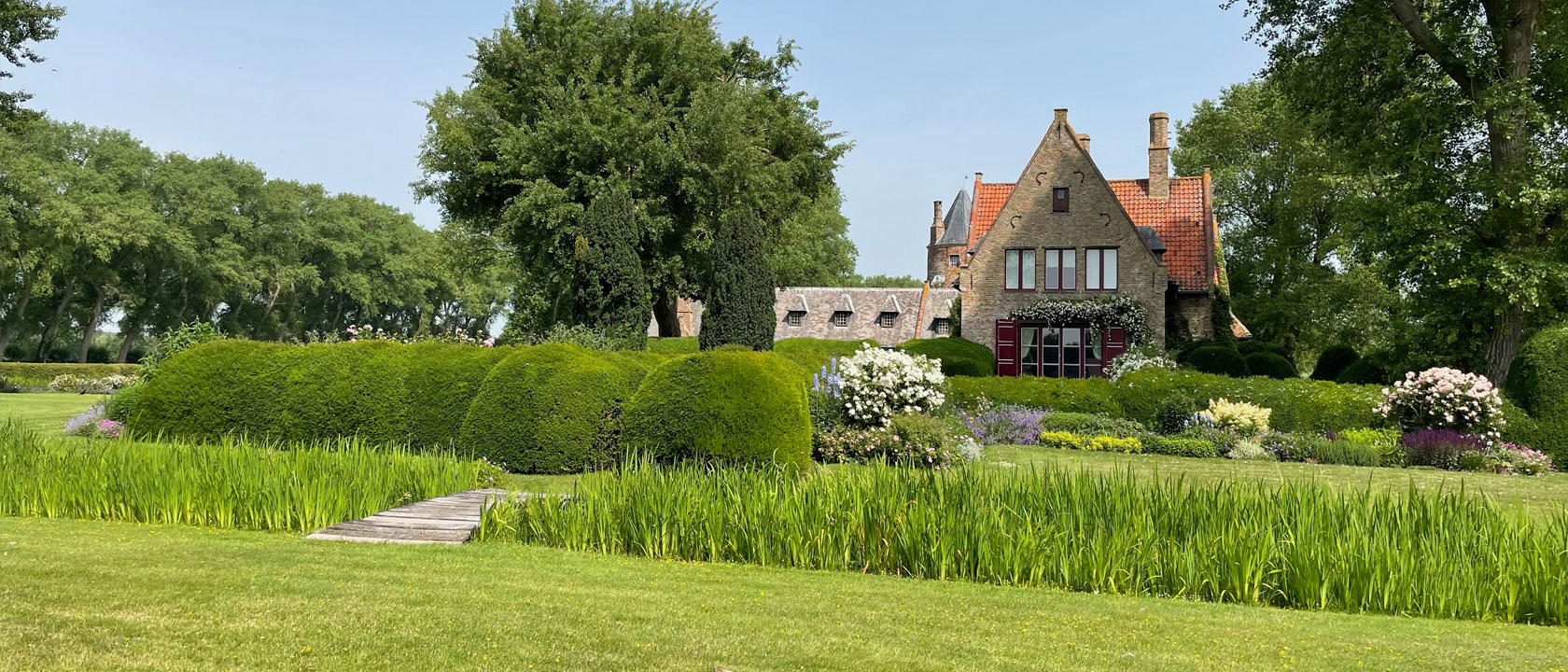 Belgium: Art, Architecture & Garden Design 2028